Table of Contents
- Two Genuinely Different Species
- The Real Origin Story of the Global Varroa Crisis
- Why Apis Cerana Copes and Apis Mellifera Doesn’t
- The Real Numbers Behind the Grooming Difference
- Physical and Colony Differences
- Apis Cerana vs. Apis Mellifera at a Glance
- Why You Can’t Legally Keep Apis Cerana in the US
- What This Means for Modern Mite-Resistant Breeding
- Honey Production Differences
- A Related Threat: The Asian Giant Hornet
- Common Mistakes
- Other Honey Bee Species Worth Knowing About
- Viral and Disease Load Differences
- Sensory and Cognitive Differences
- Temperament and Defensive Behavior
- Why Researchers Still Study Apis Cerana Closely
- How This Connects to Modern Varroa Treatment
- A Note for Beekeepers Traveling to Asia
- The Direct Link to Russian and Purdue Ankle-Biter Bees
- Pollination Roles in Native Ecosystems
- The Bigger Lesson for American Beekeepers
Two Genuinely Different Species
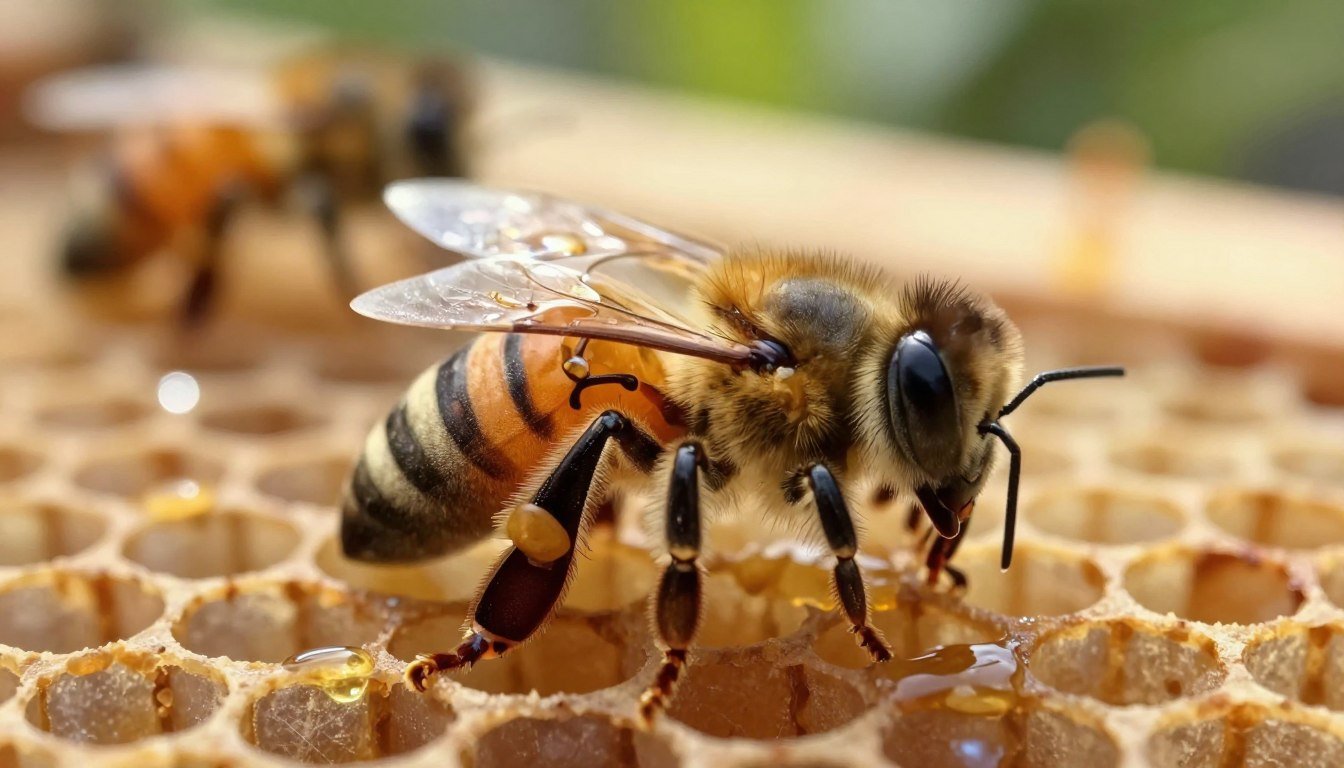
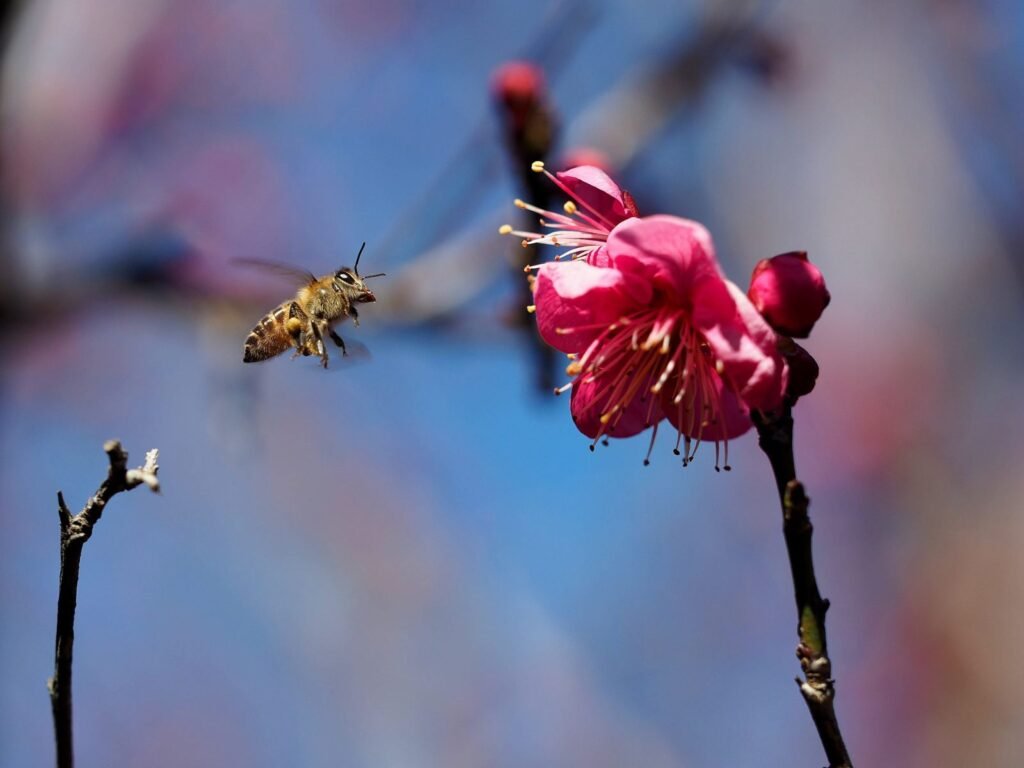
Apis cerana, the Asian or Eastern honey bee, and Apis mellifera, the Western honey bee kept throughout the Americas and Europe, are genuinely distinct species rather than simply different races or breeds the way Italian and Carniolan bees are variants within Apis mellifera. Apis cerana is native to South and Southeast Asia, generally smaller in body size with correspondingly smaller colonies than the Western honey bee most American beekeepers work with.
The Real Origin Story of the Global Varroa Crisis
Here’s the detail most Western beekeepers never learn despite living with its consequences daily: the varroa mite, the single most damaging pest in modern beekeeping, originally evolved alongside Apis cerana as its natural host, causing relatively minimal damage in that long-established relationship. Varroa destructor only became catastrophic after making a host jump onto Apis mellifera, a genuinely novel host with no evolved defenses against it, and it’s this jump, not the mite’s mere existence, that created the varroa crisis the entire Western beekeeping industry has been fighting for decades.
Why Apis Cerana Copes and Apis Mellifera Doesn’t

Apis cerana has evolved genuinely effective defenses against varroa over its long coevolutionary history, including notably faster and stronger hygienic behavior (detecting and removing infested brood before mites can reproduce inside capped cells) and an enhanced grooming response that research suggests is triggered partly by genuine sensory detection of the parasite and partly by an internally-driven, semi-automatic behavioral pattern. Apis mellifera simply never had the evolutionary time to develop these same defenses, which is the core biological reason varroa remains manageable in its native host but requires constant chemical and management intervention in Western colonies.
A 2016 freeze-killed-brood study by Lin, Page, and colleagues, published in PLoS ONE, put an actual number on the hygienic-behavior gap: within the first three hours of testing, Apis cerana workers had uncapped and removed more than twice as much freeze-killed brood as Apis mellifera workers, in both spring and autumn trials. At the 24-hour mark, Apis mellifera colonies had removed only 38.9% (spring) to 59.2% (autumn) of freeze-killed brood on average, well behind Apis cerana’s pace at the same checkpoint. This is the same freeze-kill assay methodology American breeders now use to screen for hygienic behavior in Apis mellifera breeding stock, covered in more depth in our guide to the freeze-kill assay.
The Real Numbers Behind the Grooming Difference
The grooming-speed gap between the two species is large enough to be worth stating precisely rather than just qualitatively. Research on auto-grooming (an individual bee cleaning itself) and allo-grooming (nestmates helping remove mites from each other) found that 88.6% of Apis cerana worker bees began auto-grooming within 60 seconds of a mite attaching, and allo-grooming behavior, recruiting up to four nestmates to help, appeared in 33.3% of infested bees within five minutes. That speed matters mechanically: mites dislodged and damaged quickly have less time to feed and reproduce. Separate research comparing damaged-mite counts found roughly 30% of mites removed from Apis cerana colonies showed visible damage from grooming, compared to about 12.5% in Apis mellifera colonies, a real, measurable difference in how effectively each species fights back once a mite is already on a bee’s body. For general background on why bees groom at all, independent of species, see our piece on why bees groom each other and themselves.
Inside The Hive TV, a beekeeping education channel, captured this grooming response on camera, showing an Apis cerana worker actively detecting and biting at a varroa mite in real time:
Physical and Colony Differences
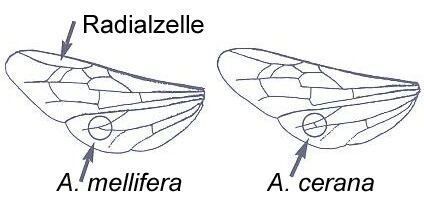
Beyond the varroa relationship, Apis cerana is generally smaller-bodied with a more compact build than Apis mellifera, and its colonies tend to be smaller overall, reflecting a different ecological niche and management history across its native range. In practical numbers, a mature Apis mellifera colony (such as the Carniolan and Italian stock most US beekeepers keep) typically holds roughly 12,000 to 16,000 workers at population peak, compared to around 9,000 to 12,000 for an Apis cerana colony. Forewing venation, specifically the shape of the radial cell shown above, is actually one of the more reliable ways entomologists visually distinguish the two species where ranges overlap, since general body size and color vary enough within each species that they’re not fully reliable on their own.
Royal jelly production shows a similarly large, genuine gap in the opposite direction: Apis mellifera colonies produce more than ten times as much royal jelly as Apis cerana colonies, which is part of why virtually all commercial royal jelly production worldwide relies on Apis mellifera rather than Apis cerana, despite the latter being the more locally native species across much of Asia’s royal jelly-producing regions. Traditionally, Apis cerana has often been kept in simpler hive setups, including log hives and wall cavities, across parts of its native range, in contrast to the standardized movable-frame equipment that dominates Western beekeeping.
Apis Cerana vs. Apis Mellifera at a Glance
| Trait | Apis Cerana | Apis Mellifera |
|---|---|---|
| Native range | South, Southeast & East Asia | Europe, Africa, Middle East (native); worldwide (managed) |
| Typical colony size | ~9,000–12,000 workers | ~12,000–16,000 workers |
| Auto-grooming onset vs. varroa | 88.6% of bees within 60 seconds | Slower, less frequent onset |
| Freeze-killed brood removed at 3 hours | More than 2x Apis mellifera’s rate | Baseline (slower) |
| Royal jelly production | Baseline | 10x+ higher than Apis cerana |
| Varroa destructor relationship | Original, long-coevolved host | Novel host after 20th-century host jump |
| Colony stability | More prone to absconding | Selectively bred for stationary, docile behavior |
| Legal to import/keep in the US | No (federal biosecurity restriction) | Yes (the standard managed species) |
Why You Can’t Legally Keep Apis Cerana in the US
Importing Apis cerana into the United States is illegal under federal law, a restriction driven by real biosecurity concerns rather than arbitrary bureaucracy: introducing this species could provide a pathway for additional bee viruses and pathogens to enter the country, creating genuine risk to both managed Apis mellifera populations and native pollinator species already under pressure from existing threats. USDA-APHIS treats ongoing monitoring against new pest and pathogen introductions, including anything connected to Apis cerana, as a genuinely high biosecurity priority.
What This Means for Modern Mite-Resistant Breeding
Since importing Apis cerana genetics directly isn’t a legal option, modern mite-resistant breeding programs in Apis mellifera, covered in our guides to Russian bees, Purdue Ankle-Biter bees, and VSH genetics, essentially work to breed the same kinds of hygienic and grooming behaviors Apis cerana evolved naturally back into the Western honey bee through selective breeding rather than cross-species introduction. Understanding this connection helps explain why these specific traits, rather than some other characteristic, became the focus of decades of dedicated breeding effort.
Honey Production Differences
Apis cerana’s smaller colony sizes generally translate into meaningfully lower honey yield per colony compared to Apis mellifera, part of why Western honey bees became the dominant species for commercial honey production and pollination services worldwide despite Apis cerana’s genuine varroa-resistance advantage. This trade-off, lower yield in exchange for better natural pest resistance, is a recurring theme across bee breeding generally, echoing similar honey-yield-versus-resistance trade-offs seen when comparing highly productive races like Italian bees against more resistant but less prolific stock.
Other Honey Bee Species Worth Knowing About
Apis cerana and Apis mellifera are just two of several recognized honey bee species worldwide, alongside others like Apis dorsata (the giant honey bee) and Apis florea (the dwarf honey bee), both also native to Asia and each with their own distinct nesting behaviors and management challenges. None of these other species are kept commercially in the United States either, and Apis mellifera remains the overwhelmingly dominant managed species across the Americas, Europe, and much of the rest of the world.
Viral and Disease Load Differences
Research comparing seasonal viral infection patterns between the two species has found genuine differences in how various bee viruses circulate and affect each species differently, generally reflecting Apis cerana’s longer coevolutionary relationship with many of the pathogens both species now share since Apis mellifera’s introduction into Asia in some regions. Overall, Apis cerana tends to show meaningfully better general health status and lower parasite and pathogen burden than Apis mellifera, a pattern consistent with its stronger natural hygienic and grooming defenses discussed earlier.
Sensory and Cognitive Differences
The two species also differ in ways that have nothing to do with disease resistance. Apis mellifera workers show 1.3 to 2.7 times higher antennal sensitivity to queen mandibular pheromone compounds than Apis cerana workers do, a real physiological difference in how strongly each species’ queen chemically controls colony behavior. In the other direction, published learning and memory studies testing bees on color and grating-pattern discrimination tasks found Apis cerana performed significantly better than Apis mellifera on both tasks, suggesting genuine species-level differences in visual learning ability rather than a general intelligence gap in either direction. Neither difference has an obvious practical management implication the way the varroa-grooming gap does, but both are a useful reminder that “Apis cerana vs. Apis mellifera” is a genuinely deep biological comparison, not just a single-trait story about mites.
Temperament and Defensive Behavior
Apis cerana colonies are often described as more prone to absconding, the behavior of an entire colony abandoning its hive site, compared to the more thoroughly domesticated Apis mellifera stock that’s been selectively bred for centuries specifically for docility and stationary colony behavior suited to managed beekeeping. This reflects Apis cerana’s generally less domesticated relationship with human beekeepers across much of its range, where traditional management often works with the bee’s natural tendencies rather than selectively breeding them out over many generations the way Western apiculture has.
Why Researchers Still Study Apis Cerana Closely
Despite the import restrictions preventing direct genetic use in American breeding programs, Apis cerana remains a genuinely valuable subject of ongoing scientific research, since understanding exactly how its grooming and hygienic behaviors work at a mechanistic level offers real potential insight for improving selective breeding techniques within Apis mellifera. Some of this research examines the specific genetic and behavioral pathways involved, aiming to identify markers that could accelerate breeding progress in Western bee lines without ever requiring actual cross-species genetic material.
How This Connects to Modern Varroa Treatment
Understanding the host-jump origin of the varroa crisis helps explain why American beekeepers still rely heavily on active chemical and mechanical treatments like oxalic acid vaporization and formic acid strips rather than simply trusting natural colony defenses the way Apis cerana beekeepers largely can: Apis mellifera genuinely lacks the evolved tools to manage the mite on its own in most cases. This context reframes varroa treatment not as a failure of beekeeping technique but as ongoing management of a fundamentally mismatched host-parasite relationship that nature never had time to balance.
A Note for Beekeepers Traveling to Asia
American beekeepers traveling through parts of Asia where Apis cerana is kept should be aware that observing or photographing local beekeeping operations is a wonderful educational opportunity, but bringing back any bee-related material, equipment that’s had contact with live colonies, or biological samples carries genuine biosecurity risk and may violate the same import restrictions discussed throughout this article. Enjoying and learning from a genuinely different beekeeping tradition doesn’t require attempting to bring any part of it home.
The Direct Link to Russian and Purdue Ankle-Biter Bees
Russian honey bees, covered in our dedicated guide, developed a real measure of varroa tolerance specifically because Russian Apis mellifera populations coexisted with the mite for far longer than American stock did before the mite’s arrival in the US, giving them a genuine head start compared to newly-exposed colonies elsewhere. Purdue Ankle-Biter bees, also covered separately, were bred specifically for an aggressive mite-biting behavior discovered and selected for within Apis mellifera itself, a distinctly different breeding path from Russian bees’ longer natural exposure but aiming at the same underlying goal: closing the defensive gap that separates Apis mellifera from Apis cerana’s naturally evolved resistance.
Pollination Roles in Native Ecosystems
Within its native range, Apis cerana plays a genuinely important pollination role for many local plant species that co-evolved alongside it, some of which are pollinated less effectively or not at all by introduced Apis mellifera colonies in the same region. This ecological dimension is a real, separate reason biosecurity authorities take introducing new bee species seriously in any direction, since a novel pollinator species can disrupt existing plant-pollinator relationships in ways that aren’t always immediately obvious or easily reversed.
The Bigger Lesson for American Beekeepers
Understanding this species-level backstory offers genuine practical perspective for any beekeeper managing varroa day to day: the mite isn’t an inherently unbeatable enemy, it’s a threat Apis mellifera simply hasn’t had evolutionary time to adapt to yet, and every generation of selective breeding for hygienic and grooming traits is a real, if slow, step toward closing that gap. This reframes ongoing mite management less as an endless losing battle and more as active participation in a breeding process that Apis cerana already completed over a much longer timescale nature didn’t grant to Western honey bees. It also explains why patience matters so much in evaluating any new mite-resistant line: real evolutionary and selective-breeding progress happens across many bee generations, not within a single season of hopeful observation. A beekeeper choosing a mite-resistant line today is, in a real sense, buying into the accumulated progress of that ongoing selection process rather than a finished, permanent solution, which is worth keeping in mind when comparing marketing claims against realistic, evidence-based expectations for any specific queen line’s actual measured performance in a given apiary, climate, and region over multiple full seasons rather than judging it based on a single, possibly unrepresentative year that could easily mislead an otherwise careful and generally well-informed beekeeper into drawing entirely the wrong conclusion about what is actually a genuinely promising line well worth sticking with over the longer haul.
A Related Threat: The Asian Giant Hornet
Apis cerana’s coexistence with predatory hornets in Asia isn’t purely academic background. See this site’s guide to the Asian giant hornet, and why Apis cerana’s evolved thermal defense against it left Apis mellifera colonies so vulnerable when the hornet briefly reached the US.
Common Mistakes
Assuming Apis cerana and Apis mellifera are simply different breeds or races, the way Italian and Carniolan bees are, misunderstands that these are genuinely distinct species with a much deeper evolutionary separation. Believing varroa mites are inherently, universally destructive to all honey bees overlooks that the mite causes comparatively minimal damage in its original coevolved host, Apis cerana – the destructiveness is specific to the host-jump relationship with Apis mellifera. Assuming modern mite-resistant Apis mellifera breeding programs involve any actual Apis cerana genetics ignores that cross-species introduction isn’t how these programs work, given the legal import restrictions discussed throughout this article.
Sources
Findings reflect published entomological research on Apis cerana biology, varroa mite host-jump evolution, and USDA-APHIS biosecurity guidance on Apis cerana import restrictions, including Lin, Page, et al.’s 2016 freeze-killed-brood hygienic behavior comparison published in PLoS ONE and published grooming-behavior research on auto- and allo-grooming response rates. See the USDA Agricultural Research Service’s Honey Bee Breeding, Genetics and Physiology Research Unit for additional authoritative detail.
FAQ
Is Apis cerana just another honey bee breed like Italian or Carniolan?
No. Apis cerana is a genuinely distinct species from Apis mellifera, the species that includes all common Western races like Italian, Carniolan, and Caucasian bees, with a much deeper evolutionary separation than exists between those races.
Why does the varroa mite devastate Western honey bees but not Asian honey bees?
Varroa mites originally evolved alongside Apis cerana, which developed effective grooming and hygienic defenses over a long coevolutionary history. Apis mellifera never had that evolutionary time after the mite jumped hosts, leaving it without comparable natural defenses.
Can I legally keep Apis cerana bees in the United States?
No. Importing Apis cerana into the US is illegal under federal law due to genuine biosecurity concerns about introducing additional bee viruses and pathogens beyond the threats already established.
Do modern varroa-resistant bee breeds contain Apis cerana genetics?
No. Programs like Russian bees, Purdue Ankle-Biters, and VSH breeding work entirely within Apis mellifera, selectively breeding for similar hygienic and grooming traits rather than introducing actual Apis cerana genetics, which isn’t a legal option.
Image credits: Photo: Japanese honeybee (Apis cerana japonica) by Greg Peterson, licensed CC BY-SA 3.0, via Wikimedia Commons; Photo: Apis mellifera vs Apis cerana wing diagram, drawing by Fernando Biole, modified by MikePhobos, licensed CC BY-SA 3.0, via Wikimedia Commons.