Table of Contents
- What “Ankle Biter” Actually Means
- Origin: Discovered, Not Engineered
- The Mechanism: Biting Mite Legs, Not Detecting Infested Brood
- Ankle Biter vs. VSH: Two Different Resistance Strategies
- Reported Performance and Honey Production
- Sourcing Ankle Biter Queens
- Combining Ankle Biter Genetics With Other Resistant Lines
- Limitations and Realistic Expectations
- Who Should Consider This Line
- What the Evidence Actually Shows
- Introducing an Ankle Biter Queen to an Existing Colony
- How to Tell If the Trait Is Actually Expressed in Your Colony
- Ongoing Management and Requeening Considerations
- Fitting Ankle Biter Genetics Into a Broader IPM Plan
- Why This Kind of Naturally Occurring Trait Matters
- Regional Considerations
- Common Mistakes
What “Ankle Biter” Actually Means
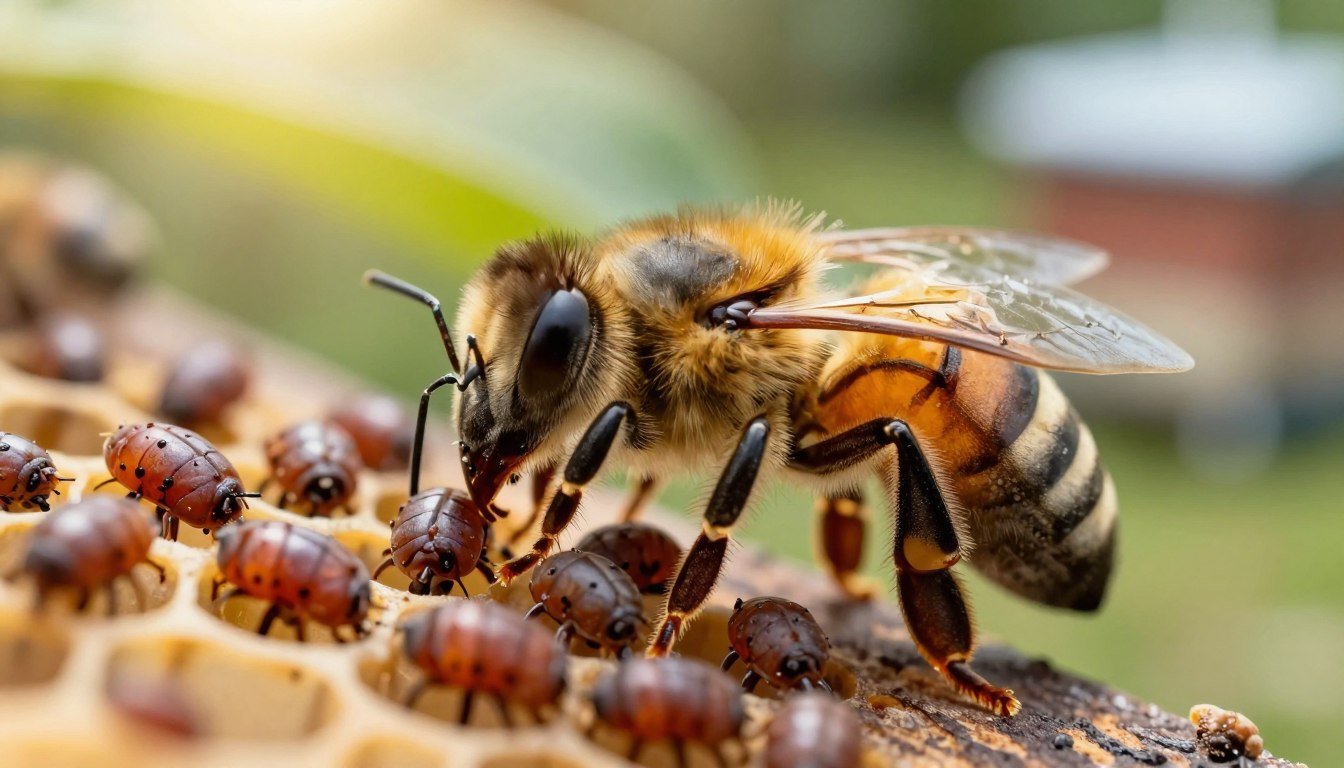
Purdue Ankle Biters are a honey bee line selected for a specific defensive behavior: workers biting and damaging the legs of varroa mites, physically disabling or killing them rather than simply detecting and removing mite-infested brood the way hygienic behavior does. The name is a literal, if informal, description of the trait — bees observed biting mite legs, leaving mites with visibly damaged or missing legs unable to feed and reproduce effectively.
Origin: Discovered, Not Engineered
Unlike Saskatraz, which was developed through a directed, multi-generation crossbreeding program targeting several traits simultaneously, the Ankle Biter trait was identified through observation at Purdue University’s bee research program in colonies that survived without mite treatment longer than expected, where researchers found unusually high rates of physically damaged mites on hive-bottom debris. Subsequent selective breeding concentrated on colonies showing this leg-biting behavior specifically, isolating and strengthening a trait that was already present at low levels in the general bee population rather than introducing something entirely new through hybridization.
The Mechanism: Biting Mite Legs, Not Detecting Infested Brood
This is the key mechanistic distinction from hygienic behavior and from Varroa Sensitive Hygiene (VSH) specifically: hygienic and VSH bees detect mite-infested brood cells by scent and respond by uncapping and removing the pupa (and the mite with it), while ankle-biting behavior acts directly on adult phoretic mites riding on adult bees, physically damaging their legs during grooming interactions between bees. Because it targets the phoretic (adult-bee-riding) mite population rather than the brood-sheltered population, ankle-biting behavior is mechanistically closer to how oxalic acid or formic acid treatments work — affecting mites on adult bees — than to how hygienic removal of infested brood works.
Ankle Biter vs. VSH: Two Different Resistance Strategies
| Factor | Purdue Ankle Biter | VSH (Varroa Sensitive Hygiene) |
|---|---|---|
| Mechanism | Physically bites/damages mite legs on adult bees | Detects and removes mite-infested brood cells |
| Targets | Phoretic mites on adult bees | Mites sheltered under brood cappings |
| Discovery method | Observed in untreated survivor colonies | Selected through directed breeding for hygienic response |
| Commercial availability | More limited, fewer breeders | More established, wider breeder network |
Because the two mechanisms act on different parts of the mite population — adult-bee-riding mites versus brood-sheltered mites — they’re genuinely complementary rather than redundant, similar to how oxalic acid (phoretic-only) and formic acid (penetrates capped brood) complement each other as chemical treatments. A colony carrying both traits, if such a cross exists in your local breeder network, would in principle address mites in both life-cycle locations simultaneously — similar in spirit to how Saskatraz’s multi-trait breeding approach stacks resistance with cold hardiness and yield rather than optimizing a single trait alone.
Reported Performance and Honey Production
Because the Ankle Biter line was selected primarily for the mite-biting trait rather than as a broader multi-trait breeding program, reported honey production and temperament are more variable across different breeder stocks than with a more established, uniformly maintained commercial line — expect more variation between individual breeders’ stock than you’d see comparing, for example, two different Italian queen suppliers. This isn’t a flaw so much as a reflection of the trait’s relatively recent isolation and the smaller, less standardized breeder network currently propagating it.
Sourcing Ankle Biter Queens
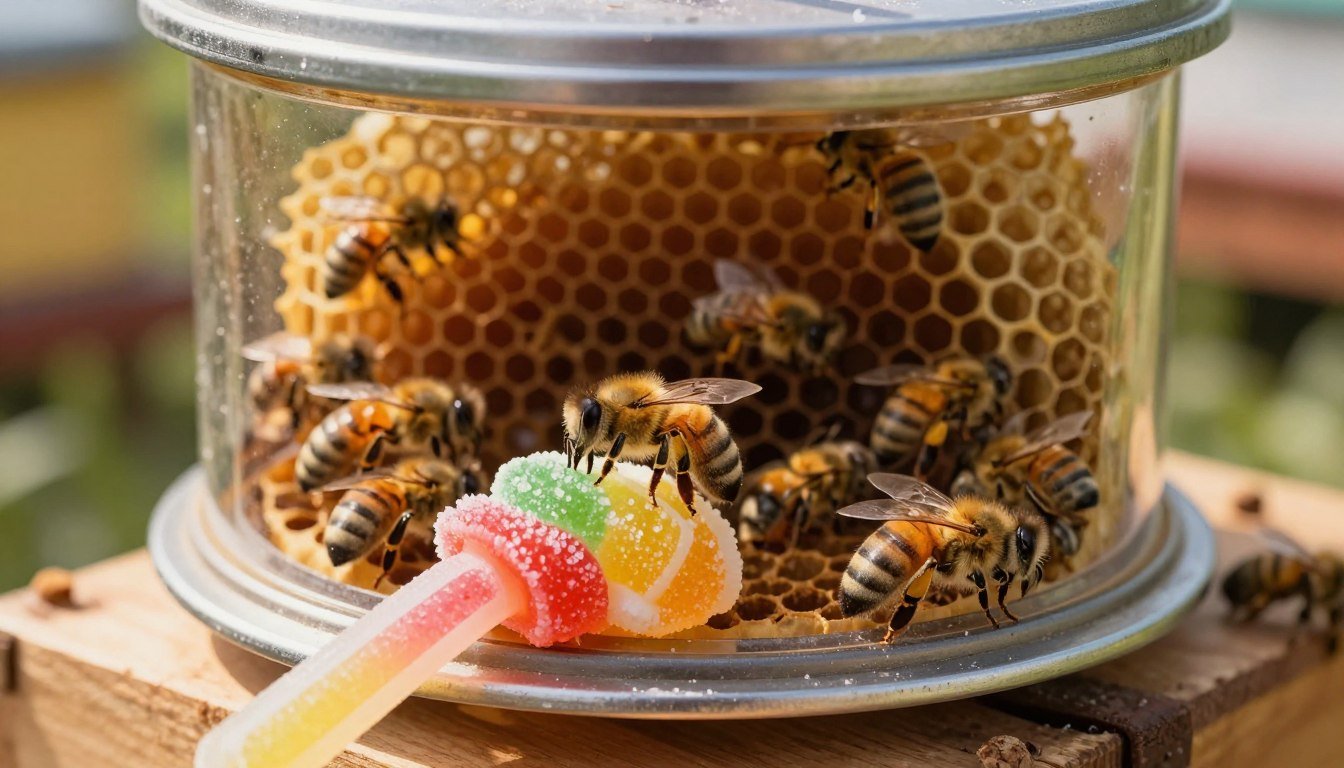
Ankle Biter queens are sold through a smaller number of specialty breeders compared to more commercially established resistant lines like VSH or Saskatraz, reflecting the trait’s more recent isolation and narrower current distribution. Availability is often seasonal and limited, so if you specifically want to trial this line, expect to research current breeder sources each season rather than assuming year-round availability from a fixed supplier list. As with any specialty genetic line, verify a breeder’s actual affiliation and selection methodology before paying a premium, since demand for “resistant” genetics has led to inconsistent labeling across the wider queen-rearing market.
Combining Ankle Biter Genetics With Other Resistant Lines
Some breeding programs have begun crossing Ankle Biter stock with VSH or other hygienic lines specifically to stack both resistance mechanisms in one colony, given how mechanistically complementary the two traits are. If you can source a stock explicitly bred for both traits, this is worth pursuing over choosing one line exclusively — though verify the breeder’s actual selection claims rather than assuming any resistant-labeled stock automatically carries both mechanisms, since marketing claims in this space sometimes outrun actual breeding verification.
Limitations and Realistic Expectations
As with any resistant genetic line, ankle-biting behavior reduces mite population growth, it doesn’t eliminate mites from a colony entirely — regular mite monitoring (alcohol wash or sugar roll) remains necessary, and treatment thresholds should still trigger an actual treatment rather than being waved off because the colony carries resistant genetics. The trait’s relative newness and smaller breeder network also mean less long-term field data exists compared to more established lines like VSH, so treat early performance reports as promising rather than definitive.
Who Should Consider This Line
Beekeepers interested in genetic diversity within their mite-management approach, or specifically wanting to address phoretic mite pressure through bred-in behavior rather than relying solely on treatment products, are the clearest fit. Given the more limited and variable breeder network, this line currently suits beekeepers willing to source carefully and evaluate results themselves over a season or two, more than beekeepers wanting a single, uniformly predictable commercial product.
What the Evidence Actually Shows
Field observations documenting the ankle-biting trait relied on examining mite debris found on sticky boards and hive bottom boards beneath untreated survivor colonies, where researchers found a notably higher proportion of mites with visibly damaged or missing legs compared to debris from unselected colonies. This physical damage pattern is distinct from mites that die from other causes (disease, natural mortality, or chemical treatment), since leg damage specifically points to a mechanical rather than chemical or pathogenic cause. As with any relatively young line of research, ongoing field trials continue to refine understanding of exactly how much this behavior contributes to overall colony-level mite suppression compared to other resistance mechanisms operating in the same colonies.
Introducing an Ankle Biter Queen to an Existing Colony
Introduction follows the same standard slow-release practice used for any queen replacement — a candy-plug cage giving the existing worker population 3-5 days to acclimate to the new queen’s pheromone before she’s released to lay. There’s nothing specific to the Ankle Biter trait that changes this process; the behavioral trait is expressed by the worker population that develops from her eggs over subsequent brood cycles, not by anything about the queen herself during introduction.
How to Tell If the Trait Is Actually Expressed in Your Colony
Because ankle-biting behavior leaves physical evidence, you can get a rough sense of whether it’s active in a given colony by examining mite debris on a sticky board placed under a screened bottom board for a few days, looking specifically for mites with damaged, missing, or malformed legs rather than intact mites. This isn’t a precise scientific assay, but it’s a reasonable low-cost way for a hobbyist to get a qualitative read on whether the trait appears active, distinct from simply counting total mite drop, which doesn’t distinguish biting-caused mortality from other causes of mite death.
Ongoing Management and Requeening Considerations
As with any behaviorally selected line maintained through a smaller breeder network, expect some year-to-year and colony-to-colony variation in how strongly the trait is expressed, and plan to requeen periodically from a verified source if maintaining strong trait expression matters to your management goals — a colony’s own naturally raised daughter queens, mated with whatever local drones are available, won’t reliably carry the same trait strength as the original breeder stock.
Fitting Ankle Biter Genetics Into a Broader IPM Plan
Treat this trait as one input into an integrated pest management plan rather than a standalone solution, the same guidance that applies across every resistant line in this cluster. A reasonable approach combines Ankle Biter or other resistant genetics as a baseline mite-suppression layer with a monitored treatment schedule, adjusting treatment frequency downward only after you’ve confirmed through your own mite counts, over at least a full season, that the genetics are measurably reducing mite pressure in your specific colonies and local conditions — not before, based on breeder claims alone.
Why This Kind of Naturally Occurring Trait Matters
Traits discovered in untreated survivor colonies, rather than engineered through directed crossing, carry a particular kind of value for long-term breeding programs: they represent resistance mechanisms that arose and persisted under genuinely uncontrolled field pressure, not just under the specific conditions of a breeding trial. This doesn’t automatically make the trait more effective than a directed-breeding result like VSH, but it does suggest the underlying genetic basis was robust enough to help a colony survive real-world mite pressure without any human intervention at all, which is a meaningfully different kind of evidence than lab or breeding-program performance alone.
Regional Considerations
Because the trait was identified and initially concentrated in a Midwestern U.S. research program, breeder stock and anecdotal performance reports remain somewhat concentrated in that region, though the underlying behavior isn’t inherently climate-specific the way Saskatraz’s cold-hardiness trait is. Beekeepers outside the Midwest can reasonably trial the line, but may find fewer nearby breeders and less region-specific performance data to reference than beekeepers closer to where the trait was originally identified and is most actively propagated.
Common Mistakes
Assuming “Ankle Biter” and “VSH” describe the same resistance mechanism is a common and understandable mistake, given both are marketed under the general “mite-resistant genetics” umbrella — they work through genuinely different pathways, and understanding which population of mites each affects (adult phoretic vs. brood-sheltered) matters for realistic expectations. Skipping mite monitoring because the colony carries resistant genetics is the second common mistake, shared across every resistant-stock line covered in this cluster. Buying from an unverified source claiming Ankle Biter genetics without confirming actual breeding lineage risks paying a premium for standard stock.
Sources
Trait origin, mechanism, and breeding history reflect publicly available research and extension communications from Purdue University’s bee research program and general apicultural literature on mite-biting behavior in honey bees. See Purdue University’s research on the Indiana mite-biter breeding program for additional authoritative detail.
FAQ
Is Ankle Biter the same as VSH genetics?
No — Ankle Biter bees physically damage adult mites’ legs through grooming/biting behavior, while VSH bees detect and remove mite-infested brood cells. They target different parts of the mite population and can be complementary.
Do Ankle Biter bees still need mite treatment?
Yes — the trait reduces phoretic mite population growth but doesn’t eliminate mites; regular monitoring and treatment when thresholds are exceeded remains necessary.
Where did the Ankle Biter trait come from?
It was identified through observation in untreated survivor colonies at Purdue University’s bee research program, then isolated and strengthened through selective breeding, rather than being engineered from a directed cross like some other resistant lines.
Is Ankle Biter stock widely available?
Less so than more established resistant lines — availability comes from a smaller number of specialty breeders and can vary season to season, so research current sources each year rather than assuming a fixed supplier.
Can I identify Ankle Biter behavior myself without lab equipment?
You can get a rough qualitative read by examining mite debris on a sticky board under a screened bottom board for leg damage, though this isn’t a precise scientific measurement — it’s a reasonable low-cost check for a hobbyist wanting a general sense of whether the trait appears active.
Can Ankle Biter and VSH genetics be combined in one colony?
Some breeding programs have begun crossing the two, since the mechanisms are complementary rather than redundant, but verify a breeder’s actual selection claims before assuming any given “resistant” stock carries both traits together.