Last Updated September 16, 2026
Pol-line honey bees are a hygienic Italian breeding line built over roughly 20 years by USDA-ARS researchers in Baton Rouge, Louisiana, working with Louisiana State University and the University of Exeter, to combine the Varroa Sensitive Hygiene (VSH) trait with the honey production and pollination performance commercial beekeepers can’t compromise on.
Key Takeaways
- A 2022 peer-reviewed field trial across Mississippi, California, North Dakota, and South Dakota, published in Scientific Reports, found untreated Pol-line colonies survived winter at 62.5% versus just 3% for untreated standard colonies.
- Even with fall and December mite treatment, Pol-line colonies still outperformed: 72% winter survival versus 56% for treated standard colonies.
- Pol-line colonies also showed significantly lower levels of three major viruses (deformed wing virus A and B, and chronic bee paralysis virus).
- The line was built by outcrossing VSH queens into US commercial Italian stock from roughly 2008-2014, with field comparisons against standard stock beginning around 2011.
- Named researchers behind the program include Michael Simone-Finstrom and Frank Rinkevich (USDA-ARS Baton Rouge) and Thomas O’Shea-Wheller (University of Exeter, formerly LSU) — real, findable sources, not an anonymous “USDA program.”
Table of Contents
- What Pol-line Bees Are
- How the 20-Year Breeding Program Developed Pol-line
- Why Italian Stock Was Chosen as the Base
- How Pol-line Relates to the VSH Trait
- Why It’s a Closed Breeding Population
- Pol-line vs. Other Mite-Resistant Genetics
- Buying Pol-line Queens
- Real-World Performance Notes
- Who Should Consider Pol-line Stock
- A Documented Chalkbrood Resistance Bonus
- Adoption Among Commercial Operations
- Ongoing Research and Public Documentation
- Requeening Schedule for Maintaining Trait Consistency
- Fit for Pollination Contract Work
- Cost Compared to Standard Italian Package Queens
- Regional Availability and Ordering Timing
- Evaluating a Breeder’s Pol-line Claims
- Integrating Pol-line Into an Existing Apiary
- Tracking Pol-line Results in Your Own Apiary
- Common Mistakes
What Pol-line Bees Are
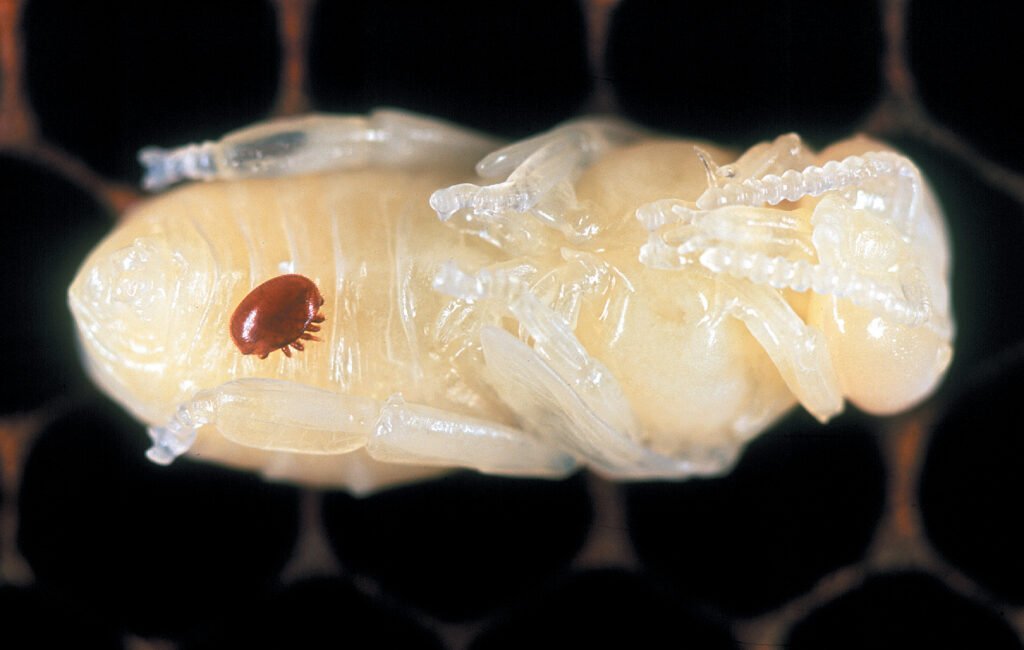
The population began by outcrossing VSH queens into US commercial Italian stock roughly from 2008 to 2014, with field comparisons against standard stock starting around 2011, and this line was specifically designed to answer a real commercial gap: strong varroa resistance paired with the honey production and pollination performance beekeepers actually depend on for their livelihoods.
How the 20-Year Breeding Program Developed Pol-line
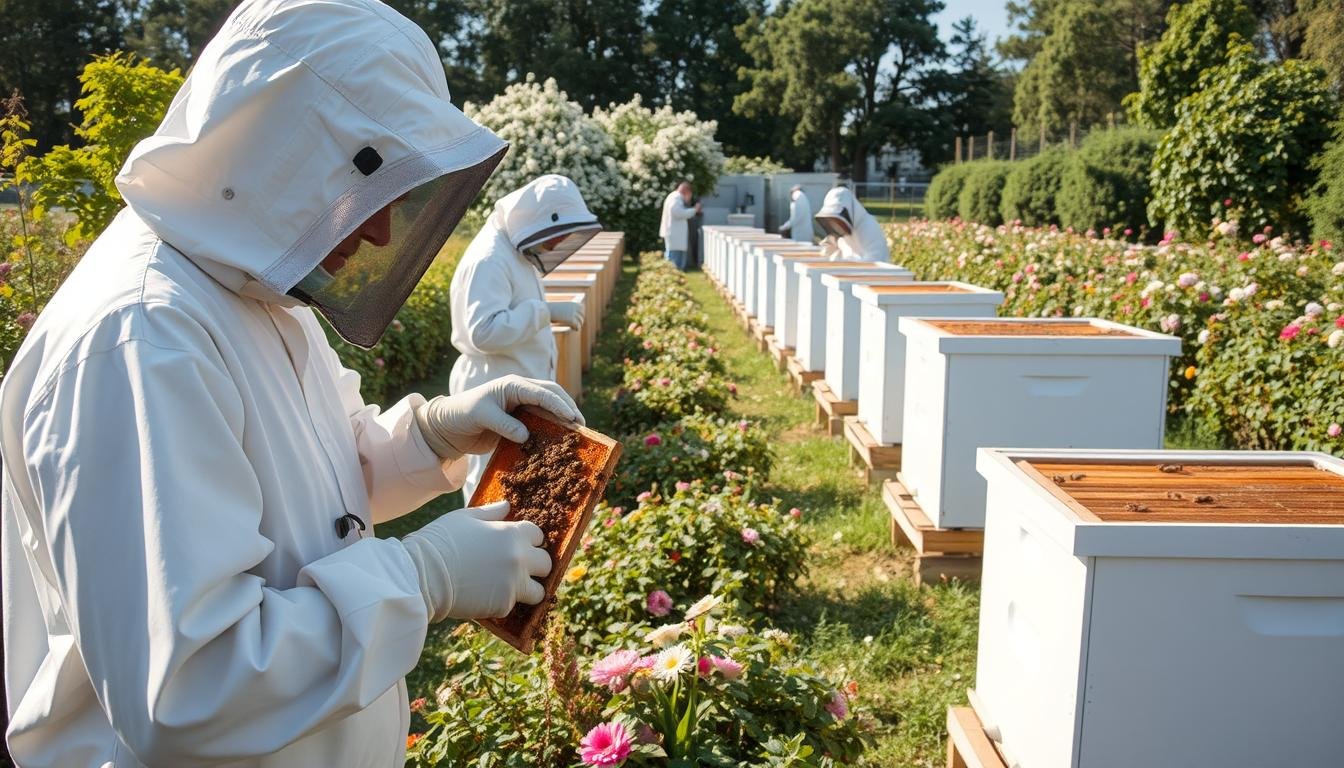
The Pol-line population was initiated from bees already expressing the VSH behavioral trait, then developed through targeted crosses with commercial honey bee populations and maintained over many successive years in a closed, controlled breeding program rather than released as a one-time cross. This extended, sustained selection timeline is a genuine differentiator: rather than a quick modern cross designed to hit the market fast, Pol-line represents two decades of iterative selection specifically balancing mite resistance against commercial productivity.
Why Italian Stock Was Chosen as the Base
The breeding team deliberately introduced the VSH trait into an Italian honey bee population specifically because Italian stock was already commercially proven for strong honey production and reliable pollination performance — the two traits most commercial beekeepers can’t compromise on, regardless of how strong a line’s mite resistance is. This is a meaningfully different starting point than VSH bred into a less commercially established base, and it’s the core reason Pol-line is positioned as a practical commercial option rather than primarily a research or hobbyist line.
How Pol-line Relates to the VSH Trait
Pol-line bees are primarily defined by strong expression of the VSH trait — the same targeted hygienic-removal behavior against mite-infested brood covered in dedicated VSH breeding stock — but Pol-line specifically represents that trait bred into and maintained within a defined, documented Italian-base population, rather than VSH as a general trait available across many different underlying stocks. If VSH is the mechanism, Pol-line is one specific, well-documented commercial product built around it.
Why It’s a Closed Breeding Population
Maintaining Pol-line as a closed breeding population — meaning breeders work from within the established line rather than continuously introducing new outside genetics — helps preserve consistent trait expression across generations, addressing the same genetic-drift concern that affects Buckfast and other selectively bred lines when open-mated with unrelated stock. This closed-program structure is part of why Pol-line queens from a legitimate USDA-connected breeder carry more reliable trait consistency than a loosely labeled “VSH-derived” queen from an unverified source.
Pol-line vs. Other Mite-Resistant Genetics
| Factor | Pol-line | Pure VSH stock | Russian |
|---|---|---|---|
| Base stock | Italian (commercially optimized) | Varies by breeder | Primorsky-region Russian |
| Development approach | 20-year closed program balancing resistance and productivity | Trait-focused selection | ~100 years natural evolution |
| Commercial track record | Specifically bred for honey/pollination performance | Varies by breeder priorities | Good, though secondary to resistance focus |
Pol-line’s specific positioning — VSH resistance deliberately paired with proven Italian commercial performance — is its clearest differentiator from the other lines in this cluster, each of which prioritizes a somewhat different balance of traits.
Buying Pol-line Queens
Pol-line queens are available through breeders working directly with the USDA-ARS program and affiliated queen producers, and as with other closed-program lines, sourcing from a breeder who can specifically reference the Pol-line program (not just a general “VSH-derived” label) gives the clearest assurance of genuine line consistency. Several commercial queen breeders now market Pol-line stock specifically, reflecting its growing adoption among beekeepers wanting a documented, research-backed resistant line rather than a less-verified alternative.
Real-World Performance Notes
| Condition | Pol-line survival | Standard stock survival |
|---|---|---|
| Untreated for varroa | 62.5% | 3% |
| Treated fall and December | 72% | 56% |
A 2022 field trial led by USDA-ARS researchers Michael Simone-Finstrom and Frank Rinkevich, with Thomas O’Shea-Wheller (then at LSU, now University of Exeter), tested Pol-line against standard stock in real commercial pollination operations across Mississippi, California, North Dakota, and South Dakota, and published the results in Scientific Reports. Untreated Pol-line colonies survived winter at 62.5% versus just 3% for untreated standard colonies; even with fall and December mite treatment, Pol-line still outperformed at 72% versus 56%. Pol-line colonies also carried significantly lower levels of three major viruses (deformed wing virus A and B, and chronic bee paralysis virus), though the researchers found only a weak direct correlation between viral load and survival. This kind of documented, published, multi-state field performance is relatively uncommon among resistant lines, many of which lean more on lab-scale or single-location results.
Who Should Consider Pol-line Stock
Commercial beekeepers and sideliners who can’t compromise on honey yield or pollination reliability but still want documented, research-backed mite resistance are the strongest fit for Pol-line stock. A hobbyist beekeeper less concerned with maximizing commercial productivity might reasonably prioritize a different line’s other strengths (Buckfast‘s calm temperament, or Russian honey bees‘ naturally evolved resistance, for example) over Pol-line’s specific commercial-performance-plus-resistance balance.
A Documented Chalkbrood Resistance Bonus
Recent research specifically examining VSH-selected stock, including Pol-line, found an additional documented benefit beyond varroa resistance: improved resistance to chalkbrood disease, likely because the same hygienic-removal behavior that clears mite-infested brood also helps clear chalkbrood-infected brood before the fungal disease spreads further. This kind of secondary, research-confirmed benefit adds real value beyond the headline mite-resistance trait most Pol-line marketing focuses on.
Adoption Among Commercial Operations
Because Pol-line was specifically designed to avoid the productivity trade-offs some resistant lines involve, it has seen growing adoption among sideline and commercial operations that previously stuck with standard non-resistant Italian stock specifically to protect honey yield and pollination-contract reliability. This adoption pattern is itself a useful signal: a line that only appeals to hobbyists focused purely on reduced treatment, without commercial beekeepers also finding it worthwhile, would suggest a real productivity compromise somewhere — Pol-line’s commercial uptake suggests the balance genuinely holds up under real operational pressure.
Ongoing Research and Public Documentation
USDA-ARS researchers involved in the Pol-line program have discussed the breeding process and its findings in public venues including beekeeping podcasts and published research papers, giving beekeepers a genuinely accessible way to evaluate the program’s methodology and results directly rather than relying entirely on secondhand marketing descriptions. Following this kind of primary-source material is a good habit generally when evaluating any specialty genetic line, and it’s especially easy to do with Pol-line given how actively the researchers behind it have documented their work publicly.
Requeening Schedule for Maintaining Trait Consistency
As with any closed-program selectively bred line, maintaining strong Pol-line trait expression in your own apiary over time benefits from periodic requeening from a genuine program-affiliated breeder rather than relying indefinitely on open-mated daughter queens, since local drone populations will gradually dilute the specific genetic balance the program worked to establish. Many beekeepers running Pol-line stock requeen every 1-2 years from a verified source specifically to keep both the resistance and productivity traits performing as documented.
Fit for Pollination Contract Work
Beekeepers running colonies under commercial pollination contracts (almonds and other large-scale crops) face particular pressure to maintain both strong colony populations and reliable health outcomes across large numbers of hives moved between diverse regional environments, exactly the combined resistance-plus-productivity profile Pol-line’s breeding program specifically targeted. This makes it a genuinely relevant option worth evaluating for operations balancing pollination-contract performance requirements against the practical need to reduce chemical treatment load across a large number of colonies.
Cost Compared to Standard Italian Package Queens
Pol-line queens typically cost more than a standard, non-selected Italian package queen, reflecting the decades of research and closed-program breeding maintenance behind the line, though the premium is often positioned as reasonable given the documented dual benefit of resistance plus productivity rather than a resistance-only trait costing extra without a clear productivity payoff. For an operation weighing the ongoing cost of chemical treatments and associated labor against a somewhat higher queen cost, the calculation often favors Pol-line once treatment-reduction savings are factored in over a full season.
Regional Availability and Ordering Timing
Pol-line breeder availability has expanded since the line’s initial development, with several regional queen producers now maintaining Pol-line stock across different parts of the country, though as with other closed-program specialty lines, ordering ahead of your planned requeening date rather than waiting until the last minute improves your odds of getting genuine program-affiliated stock rather than settling for a less-verified substitute when supply runs short during peak spring demand.
Evaluating a Breeder’s Pol-line Claims
Because Pol-line represents a specific, documented breeding population rather than a loosely defined marketing category, a legitimate breeder should be able to speak specifically to their connection with the USDA-ARS program or affiliated queen producers, not just describe their stock generically as “hygienic” or “mite-resistant.” Asking directly whether a breeder’s Pol-line stock traces to the actual program lineage, and how recently they’ve refreshed their breeding stock from a verified source, is a reasonable and fair question any credible breeder should welcome.
Integrating Pol-line Into an Existing Apiary
Introducing Pol-line queens into an established apiary alongside other stock follows standard requeening practice with no special handling requirements, though some beekeepers phase the transition gradually — requeening a portion of their colonies each season — both to spread the cost of switching and to directly compare Pol-line performance against their existing stock under identical local conditions before committing the whole apiary to the new line. This kind of gradual, comparative rollout gives genuinely useful real-world data specific to your own operation rather than relying entirely on the published research findings.
Tracking Pol-line Results in Your Own Apiary
Keeping simple season-over-season notes on mite counts and honey yield specifically for your Pol-line colonies, compared against any remaining standard-stock colonies in the same apiary, gives you concrete, locally relevant data on whether the line’s documented dual performance is actually translating into your specific climate and management style, rather than relying purely on the published research summarized here.
Common Mistakes
Confusing any “VSH-derived” marketing claim with genuine Pol-line lineage specifically overlooks that Pol-line represents a particular, documented closed breeding population, not a generic description of any VSH-influenced stock. Assuming Pol-line’s Italian base means it behaves identically to standard commercial Italian stock in every other respect ignores that decades of targeted selection have shaped this population’s mite-resistance behavior specifically, on top of (not instead of) its Italian productivity baseline. Skipping mite monitoring entirely because of the line’s strong VSH expression repeats the same overconfidence mistake relevant to any resistant stock — real resistance reduces but doesn’t eliminate the need to check.
Sources
Breeding program history verified against the USDA ARS press release on the 2022 winter-survival field trial, published as Simone-Finstrom et al., Scientific Reports (2022), and the original line-development paper by Danka et al., “Selection of VSH-derived Pol-line honey bees”. For current program detail, see the USDA Agricultural Research Service’s Honey Bee Breeding, Genetics and Physiology Research Unit.
FAQ
Is Pol-line the same thing as VSH bees?
Related but not identical — Pol-line is a specific, documented Italian-base breeding population developed to express the VSH trait strongly, while “VSH” more broadly refers to the trait itself, which can be bred into various underlying stocks.
Why was Italian stock chosen for the Pol-line program?
Italian honey bees were already commercially proven for strong honey production and reliable pollination performance, making them a practical base for combining with VSH resistance without sacrificing the productivity commercial beekeepers depend on.
How long has the Pol-line breeding program been running?
Roughly 20 years, through a collaboration between Louisiana State University, the University of Exeter, and the USDA Agricultural Research Service, with the line specifically renamed Pol-line in 2011.
Do Pol-line bees still need varroa treatment?
Most beekeepers still monitor mite levels periodically even with strong VSH expression — Pol-line significantly reduces mite pressure but doesn’t guarantee zero treatment will ever be needed.
Is Pol-line stock only suitable for commercial operations?
No — while it was specifically developed with commercial productivity in mind, hobbyist beekeepers can also benefit from Pol-line’s combined resistance and productivity profile; it’s simply a particularly strong fit for operations that can’t compromise on yield.
Can I combine Pol-line genetics with other resistant lines?
Some breeders do cross Pol-line with other resistant lines to explore combined benefits, though doing so outside a controlled program risks diluting the specific, documented balance of traits the original closed breeding program worked to establish — most beekeepers get more predictable results sourcing Pol-line queens directly from a verified program-affiliated breeder instead.
Image credits: Photo: Denis Anderson, CSIRO, Wikimedia Commons, CC BY 3.0.