Last Updated September 14, 2026
At the opposite end of the size spectrum from the giant honey bee already covered on this site sits the dwarf honey bee, the smallest recognized honey bee species in the world, building a delicate single comb barely larger than a hand around a thin twig or branch. Despite sharing the same fundamental open-nesting, single-comb architecture as its much larger relative, the dwarf honey bee is genuinely gentler and less defensive, and its exposed nest has made it an unusually valuable subject for scientists studying honey bee communication in broad daylight. This guide covers what the dwarf honey bee actually is, its distinctive small-scale exposed nest, why it’s played a uniquely important role in waggle dance research, and its documented spread beyond its historical native range.
Table of Contents
- Key Takeaways
- What the Dwarf Honey Bee Actually Is
- A Tiny, Exposed Single Comb on a Twig or Branch
- A Genuinely Gentler Temperament Than Its Giant Relative
- Why This Species Has Been Uniquely Valuable to Dance-Language Research
- A Documented Range Expansion Beyond Its Historical Territory
- Limited, Low-Tech Management Rather Than True Domestication
- Dwarf Honey Bee vs. Giant Honey Bee
- Frequent Colony Relocation, Even More Than Giant Honey Bees
- Natural Predators of a Small, Exposed Colony
- A Notably Short Foraging Range Compared to Larger Honey Bees
- Common Mistakes
- Frequently Asked Questions
Key Takeaways
- The dwarf honey bee (Apis florea), native to South/Southeast Asia and parts of the Middle East, is the smallest recognized honey bee species, building a small single comb around a thin branch or twig.
- Unlike its much larger relative the giant honey bee, it’s genuinely gentler and less aggressively defensive, though it still isn’t domesticated — its open-air nesting instinct resists hive confinement regardless of body size.
- It performs its waggle dance on an exposed, flat “dance floor” atop the comb in full daylight, making it uniquely valuable for direct dance-communication research that’s much harder to observe in cavity-nesting species.
- Apis florea has documented range expansion beyond its historical territory into parts of the Middle East and Africa, including Sudan — an active area of ecological monitoring.
- Colonies relocate frequently, sometimes multiple times per season, and forage across a shorter range than larger honey bee species.
- A closely related species, the red dwarf honey bee (Apis andreniformis), shares a similar small size and open-nesting lifestyle in overlapping parts of Southeast Asia.
What the Dwarf Honey Bee Actually Is
The dwarf honey bee (Apis florea) is genuinely the smallest of the currently recognized honey bee species, native to South and Southeast Asia and parts of the Middle East, with individual workers noticeably smaller than those of the Western honey bee, Apis cerana, or the giant honey bee already covered on this site. Despite the dramatic size difference, dwarf honey bees share the same fundamental single-comb, open-air nesting strategy as giant honey bees, a genuinely distinct approach from the enclosed-cavity nesting used by Apis mellifera and Apis cerana.

A Tiny, Exposed Single Comb on a Twig or Branch
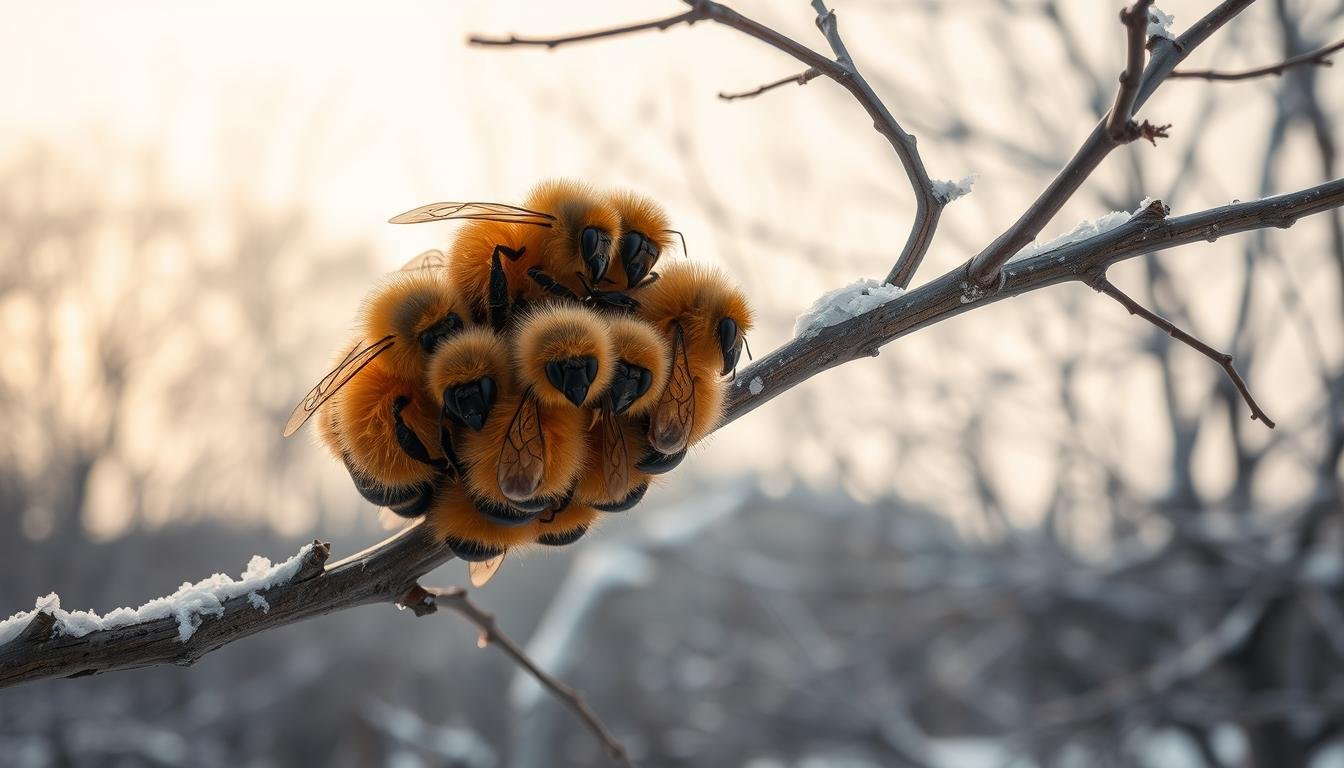
A dwarf honey bee colony builds a single small comb, often only a few inches across, wrapped around a thin branch, twig, or shrub stem, typically positioned much lower to the ground than the towering cliff and tree nests favored by giant honey bees. The comb’s small scale and low placement mean dwarf honey bee nests are sometimes mistaken at a glance for a small wasp nest or simply overlooked entirely, despite being a genuine, fully functional honey bee colony complete with brood, stored honey, and pollen. Close inspection of the honeycomb’s hexagonal wax cell structure and the presence of visible pollen and honey stores reliably distinguishes it from any wasp nest, which uses paper-like chewed wood pulp rather than wax.

A Genuinely Gentler Temperament Than Its Giant Relative
Unlike the intensely defensive giant honey bee, dwarf honey bees are considered genuinely gentler and less prone to aggressive mass defense, a real, meaningful behavioral contrast between two species that otherwise share the same basic exposed single-comb nesting strategy. That gentler temperament isn’t the same as weaker defenses overall, just less aggressively expressed toward large threats like people; dwarf honey bees still exhibit defensive behaviors against smaller predators and parasites, but the intense, far-ranging coordinated attack response documented in giant honey bees isn’t a comparable feature of dwarf honey bee behavior. This calmer temperament has made dwarf honey bee colonies considerably safer and more approachable for direct observation and research than giant honey bee colonies, which contributes directly to the species’ outsized role in behavioral research described in the next section.
Why This Species Has Been Uniquely Valuable to Dance-Language Research
Honey bee waggle dance research, the study of how foraging bees communicate the direction and distance to food sources, has traditionally been difficult to observe directly in Apis mellifera and Apis cerana colonies because their dances take place inside an enclosed, dark hive cavity, requiring artificial lighting or indirect methods to study. Dwarf honey bees perform their waggle dance on a distinctive flattened, horizontal platform area at the top of their exposed comb, sometimes called the “dance floor,” in full daylight and in plain view, giving researchers a genuinely rare, direct window into honey bee dance communication that’s been exploited specifically because this species doesn’t hide the behavior inside a dark cavity the way other honey bee species do.
A Documented Range Expansion Beyond Its Historical Territory
Beyond its traditional native range across South and Southeast Asia, Apis florea has been documented expanding into new territory in recent decades, with established populations recorded in parts of the Middle East and, notably, parts of Africa including Sudan, representing a genuine, scientifically tracked range expansion rather than historical native distribution. This spread has drawn some research and monitoring interest specifically because introducing a new honey bee species into a region can carry ecological implications for existing native bee populations and, potentially, for local beekeeping and disease dynamics. The full ecological impact of that spread remains an active area of research rather than a fully settled conclusion.
Limited, Low-Tech Management Rather Than True Domestication
Like giant honey bees, dwarf honey bees have not been successfully domesticated in the standard movable-frame hive box sense used for Apis mellifera and Apis cerana beekeeping worldwide, since their instinctive preference for open, exposed nesting resists confinement to an enclosed cavity. Some traditional, low-tech local practices in parts of the species’ native range do involve limited encouragement or protection of wild nests for small-scale honey harvesting, but this remains genuinely distinct from the structured, scalable hive management practiced with domesticated honey bee species. Individual colonies also produce only small quantities of honey given their small comb size, so dwarf honey bee honey remains primarily a local, small-scale resource in parts of its native range rather than a commercially significant export product the way honey from larger managed species is.
Dwarf Honey Bee vs. Giant Honey Bee
| Trait | Dwarf Honey Bee (A. florea) | Giant Honey Bee (A. dorsata) |
|---|---|---|
| Body size | Smallest honey bee species | Largest honey bee species |
| Nest size and placement | Small comb, low branches/twigs | Large comb, high tree branches/cliffs |
| Defensive temperament | Comparatively gentle | Intensely, dangerously defensive |
| Shared trait | Both build a single exposed comb in open air; neither is domesticated | |
Frequent Colony Relocation, Even More Than Giant Honey Bees
Dwarf honey bee colonies are known to relocate their nest site with genuine frequency, sometimes multiple times within a single season, abandoning one branch or twig location for another in response to disturbance, resource depletion nearby, or seasonal changes. This relatively high relocation frequency, combined with the small comb’s quick rebuilding time given its modest size, makes dwarf honey bee colonies genuinely more mobile and less tied to a fixed location than most other honey bee species covered on this site, reinforcing why any form of stable, long-term hive management remains fundamentally impractical for the species.
Natural Predators of a Small, Exposed Colony
Because the entire colony, comb, brood, and stored provisions are all fully exposed rather than protected inside a cavity, dwarf honey bee nests face genuine predation pressure from a range of animals including birds, ants, and other insects capable of directly accessing the unprotected comb surface. This exposure is part of why the species relies so heavily on rapid relocation and a functioning, if less intense, collective defense response rather than the kind of physical cavity protection that shields Apis mellifera and Apis cerana colonies from many of the same threats.
A Notably Short Foraging Range Compared to Larger Honey Bees
Dwarf honey bees generally forage across a considerably shorter maximum range from their nest than larger honey bee species, a difference researchers attribute at least partly to their smaller body size and correspondingly smaller flight energy reserves. This shorter effective foraging range means dwarf honey bee colonies depend more heavily on nectar and pollen resources located relatively close to the nest site, which likely contributes to the species’ documented tendency to relocate the entire colony when nearby forage becomes depleted rather than simply flying farther to compensate, the way a larger-ranging species might. Dwarf honey bees do still contribute meaningfully to wild plant and some agricultural pollination across their native and expanded range, similar in principle to the wild pollination role documented for giant honey bees, though their shorter foraging range and smaller colony size mean their individual pollination footprint is generally more localized.
Common Mistakes
The most common mistake is assuming any small exposed insect nest on a shrub branch is automatically a wasp nest, when a small, honey-comb-textured structure with visible bee activity may genuinely be a dwarf honey bee colony instead. Another mistake is assuming all open-nesting honey bee species share the same intensely defensive temperament as the giant honey bee, when dwarf honey bees are a genuinely gentler counterexample within the same general open-nesting category. People also sometimes assume the dwarf honey bee’s small size and gentle temperament mean it could be more easily domesticated than the giant honey bee, when its instinctive open-air nesting preference creates essentially the same fundamental barrier to hive management regardless of body size.
Sources and Further Reading
This guide draws on the USDA Agricultural Research Service’s Honey Bee Breeding, Genetics and Physiology Research Unit for comparative honey bee biology, alongside published entomological research on Apis florea nesting and dance communication.
Frequently Asked Questions
Do dwarf honey bees produce enough honey to be commercially significant?
Individual colonies produce only small quantities of honey given their small comb size, so dwarf honey bee honey remains primarily a local, small-scale resource in parts of its native range rather than a commercially significant export product the way honey from larger managed species is.
Are dwarf honey bees considered dangerous to people the way giant honey bees can be?
No, their comparatively gentle temperament and less intense defensive response make dwarf honey bees considerably less of a documented safety concern than giant honey bees, though as with any stinging insect, direct disturbance of a nest still carries some inherent sting risk.
Could dwarf honey bee range expansion into new regions pose a risk to native bee species there?
It’s a genuine area of ongoing scientific interest and monitoring, since introducing any new bee species into a region can carry potential competitive or disease-related implications for existing native pollinators, though the full ecological impact of Apis florea‘s documented spread remains an active area of research rather than a fully settled conclusion.
How does the dwarf honey bee’s waggle dance compare to the one performed by Apis mellifera?
The fundamental dance principles, communicating direction and distance through the pattern of movement, are broadly similar across honey bee species, though the dwarf honey bee’s dance is performed on an exposed horizontal surface in daylight rather than on a vertical comb inside a dark cavity, a genuinely different physical context that has made it easier for researchers to directly observe and analyze.
Is Apis florea the only dwarf honey bee species, or are there related smaller species too?
A closely related species, the red dwarf honey bee (Apis andreniformis), shares a broadly similar small size and open-nesting lifestyle within a somewhat overlapping range in parts of Southeast Asia, though Apis florea remains the more widely documented and studied of the two dwarf honey bee species.
Does dwarf honey bee venom carry any documented risk of severe allergic reaction the way other bee stings can?
The general allergy risk profile is broadly similar to other honey bee species, meaning a small subset of people with existing bee sting allergies could theoretically experience a serious reaction, though the species’ overall gentler defensive behavior and comparatively low sting frequency make documented severe reactions specifically attributed to dwarf honey bees genuinely uncommon in the available literature.
How often does a single dwarf honey bee colony actually relocate in a typical season?
Documented relocations several times within a single active season are genuinely common depending on local conditions and disturbance levels, which is part of why researchers studying the species often need to track and relocate their own observation efforts along with the colony rather than assuming a nest site will remain fixed for a study’s duration.