Table of Contents
- Origin: Northern and Western Europe’s Native Bee
- The Bee That First Came to Colonial America
- Cold-Climate Adaptations
- The Honest Temperament Question
- Why the Dark Bee Declined
- Modern Conservation Efforts
- Is This Bee Realistic for a Modern Beekeeper?
- Common Mistakes
- Physical Appearance
- How the Dark Bee Compares to Modern Common Races
- How Protected Breeding Zones Work
- Regional Dark Bee Populations Across Europe
- What Genetic Research Has Revealed
- Conservative Brood Rearing Explained
- The Dark Bee’s Legacy in Modern Cold-Hardy Breeding
- How This Connects to the Langstroth Era
- Why the Dark Bee’s Story Still Matters
- How the Dark Bee Handles Modern Threats Like Varroa
Origin: Northern and Western Europe’s Native Bee
Apis mellifera mellifera, commonly known as the German dark bee or European dark bee, is native to northern, central, and western Europe, having spread historically from the western Mediterranean coast through France and Germany into England, southern Scandinavia, and even into parts of North Russia. Unlike the golden-banded Italian bee, the dark bee is uniformly dark, sometimes near-black, and evolved over a much longer timescale specifically to survive the colder, shorter-summer climates of northern Europe.
The Bee That First Came to Colonial America
Before Italian bees arrived and gradually displaced them starting in 1859, the dark European bee was the honey bee colonial settlers actually brought with them to North America, making it, historically, America’s original introduced honey bee. As our Italian bee guide covers, this earlier dark-bee population was the very stock Italian bees were compared favorably against in the 1800s and eventually came to replace across most of the country.
Cold-Climate Adaptations
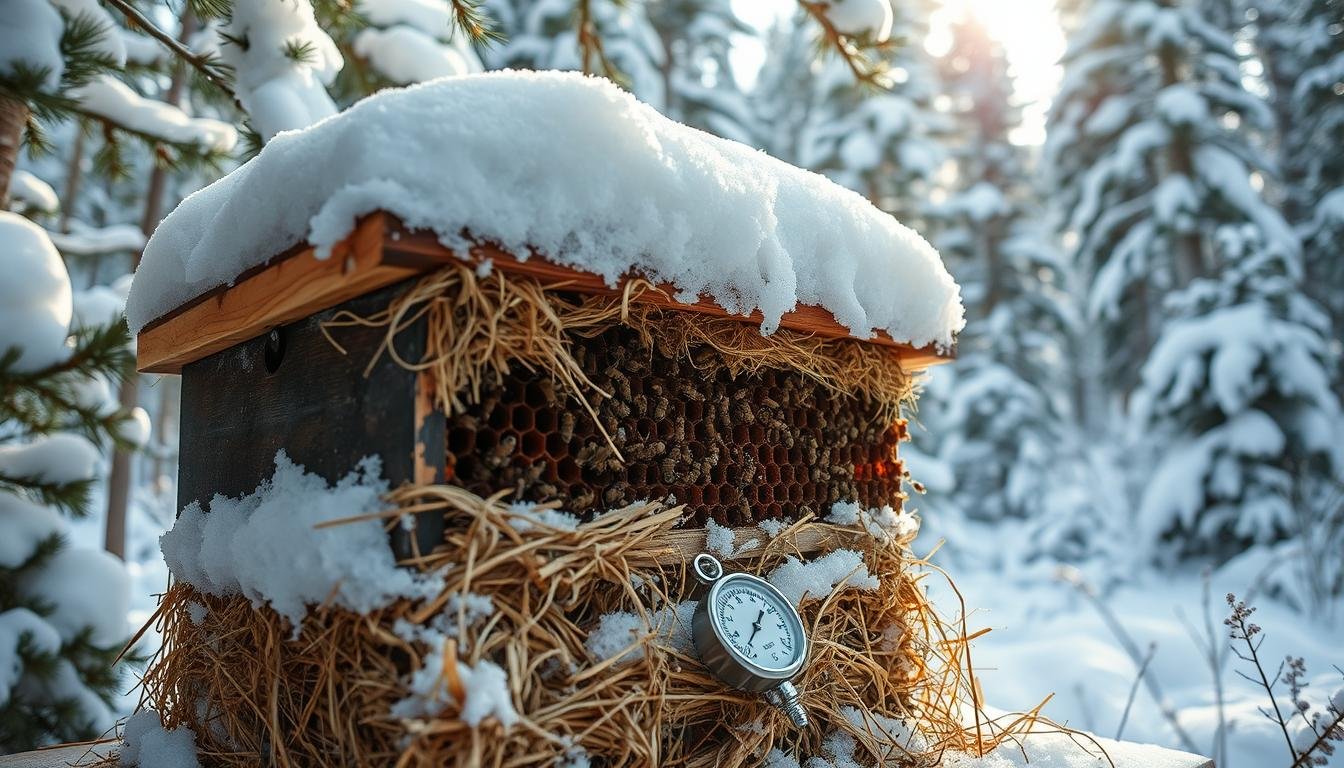
The dark bee’s long northern-European history shaped real, well-documented cold-climate adaptations, including efficient winter clustering behavior and a more conservative approach to brood rearing that reduces colony food demand during long, resource-scarce winters compared to races bred for aggressive year-round brood production. These traits made it a genuinely well-suited bee for the harsh, short-summer conditions of its native range long before modern selective breeding existed.
The Honest Temperament Question
Unlike the gentle reputations of Italian or Caucasian bees, dark bee genetics carry a well-documented reputation for nervousness and defensiveness on the comb, with routine inspections often taking noticeably longer than with calmer races due to increased agitation. This is a real, honestly-reported trait rather than an outdated stereotype, and it’s one of the practical reasons the race lost ground commercially even in regions where its cold-hardiness would otherwise have been a genuine advantage.
Why the Dark Bee Declined
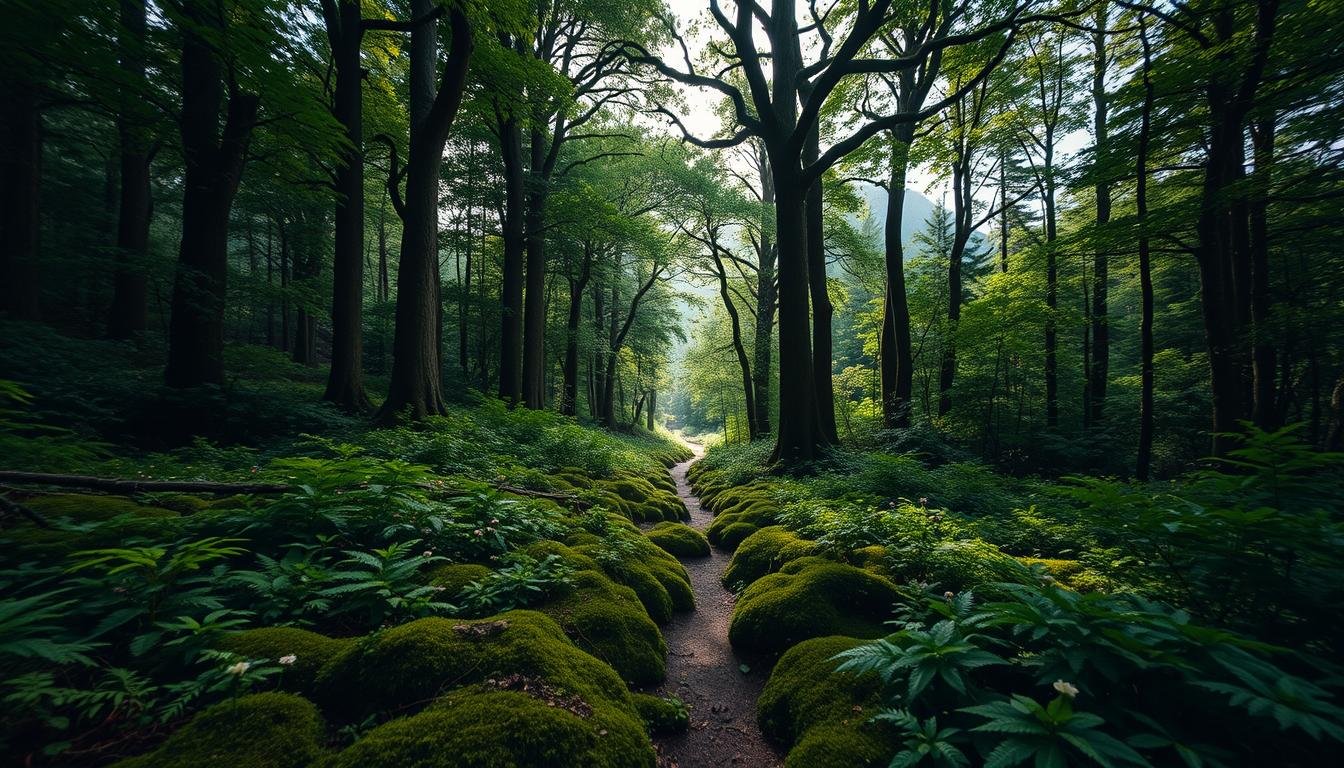
The dark bee’s natural range and population have shrunk dramatically since the late 1800s, driven by a combination of factors: widespread importation and requeening with other Apis mellifera subspecies, loss of the old-growth forests and large tree cavities the bee traditionally nested in, and extensive hybridization with imported races that diluted pure dark-bee genetics across much of its former range. Modern commercial beekeeping’s general preference for gentler, more productive imported races only accelerated a decline already well underway.
Modern Conservation Efforts
The UK’s Eden Project, a well-known environmental education charity, covers exactly this conservation picture in the video above – why Britain’s native dark honey bee population is under pressure and what active conservation looks like on the ground.
Concern over the dark bee’s disappearance led to the founding of SICAMM, the International Association for the Protection of the European Dark Bee, in 1994, coordinating conservation, research, and breeding efforts across the bee’s native range. Much of this conservation work centers on establishing protected breeding areas specifically designed to prevent further hybridization with imported races, since maintaining any remaining pure dark-bee population requires actively managing which drones have access to virgin queens in these zones. A researcher or hobbyist wanting to support dark-bee conservation from outside Europe is generally better positioned contributing to or following SICAMM’s published work than attempting to source or maintain claimed dark-bee stock through ordinary commercial channels, where genetic purity simply cannot be verified without dedicated testing. Some regional dark-bee associations also run educational apiaries open to visitors, offering a practical way for an interested traveler to actually see the race up close even without any realistic path to keeping it themselves back home. For beekeepers who do encounter one of these educational or conservation apiaries, the difference in handling experience compared to a typical gentle commercial colony is usually noticeable within the first few minutes of an inspection, offering a genuinely useful, firsthand sense of just how much modern breeding for calm temperament has changed what most beekeepers now consider a normal colony to work with. It is a useful reminder that gentleness is a bred trait, not a universal given, across honey bees generally. Modern breeders selecting for calm colonies over the past century and a half achieved something genuinely significant, and the dark bee’s continued existence offers a living point of comparison for just how much that selection changed the day-to-day experience of keeping bees, right down to how long a routine box inspection actually takes.
Is This Bee Realistic for a Modern Beekeeper?
For most beekeepers in the United States, keeping genuinely purebred dark bee genetics isn’t a realistic, readily available option the way ordering an Italian package or a Saskatraz queen is, since the race survives mainly in dedicated European conservation populations rather than through commercial American breeder networks. Beekeepers specifically interested in cold-hardy heritage genetics are generally better served researching modern cold-climate-selected lines actually available through commercial breeders, while appreciating the dark bee’s history as the genetic ancestor much of that cold-hardiness breeding ultimately traces back to.
Physical Appearance
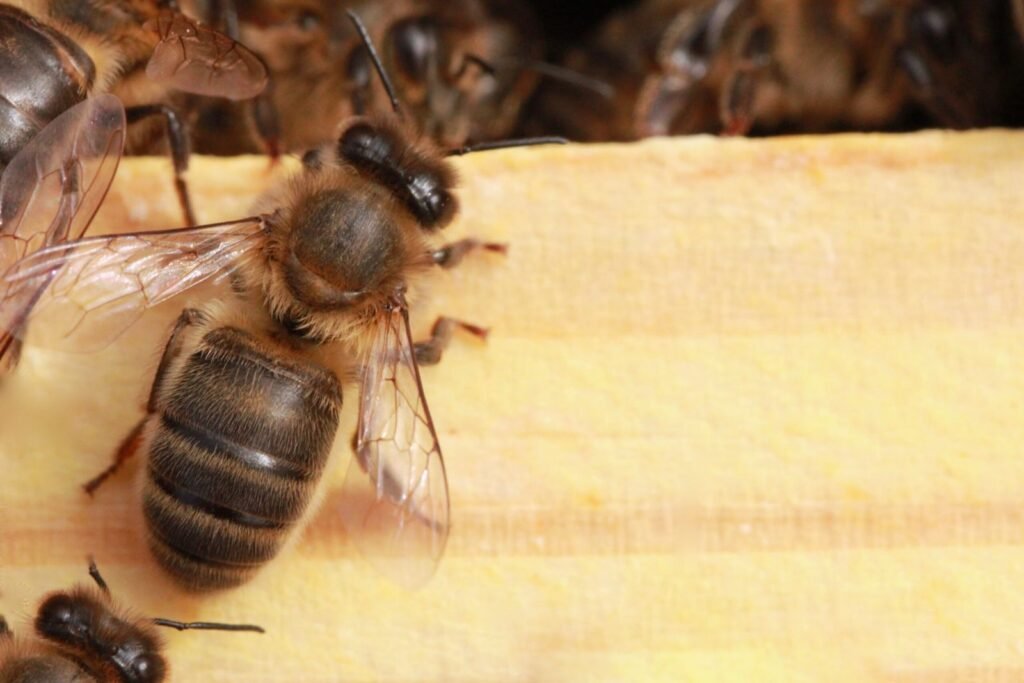
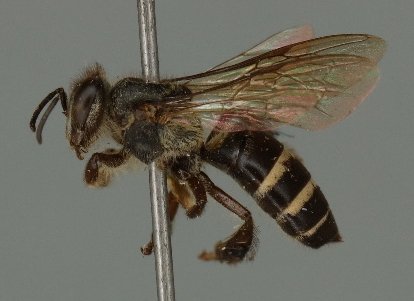
Dark bees are uniformly dark brown to near-black in color, without the visible banding that marks Italian bees or the lighter grey tones of Caucasian bees, and they’re typically slightly stockier and more heavily haired than the more streamlined Italian race. This dense body hair is itself a cold-climate adaptation, helping retain body heat during foraging flights in the cooler temperatures of their native northern-European range.
How the Dark Bee Compares to Modern Common Races
Against the Italian bee that eventually displaced it in America, the dark bee offers superior cold-climate conservatism and lower winter food consumption but a real, documented temperament disadvantage and slower spring buildup. Against the Caucasian bee, another dark-colored, calmer race, the comparison favors Caucasian bees for most modern beekeepers, since they combine similar dark coloring with a genuinely gentler temperament and are, while still a specialty stock, considerably easier to actually source than authentic dark bee genetics.
| Trait | German Dark Bee | Italian | Caucasian |
|---|---|---|---|
| Color | Uniformly dark brown to near-black | Golden-yellow banding | Dark, lead-grey hair |
| Temperament | Documented nervousness/defensiveness | Gentle | Very gentle |
| Brood rearing | Conservative, scales back in dearth | Aggressive, early and fast | Strong, mid-summer peak |
| Winter food consumption | Low | Higher | Moderate |
| US commercial availability | Essentially unavailable (conservation-only) | Highest, nationwide | Limited, specialty breeders |
| Varroa resistance | None inherent (pre-dates varroa spread) | None inherent | None inherent |
How Protected Breeding Zones Work
Conservation breeding areas for the dark bee typically work by establishing a geographically isolated zone, often on an island or in a remote valley, where beekeepers agree to keep only verified pure dark-bee colonies, preventing drones of other races from being present to mate with virgin queens raised in the zone. Maintaining this isolation requires ongoing cooperation among all beekeepers in the protected area, since even a single outside colony introducing foreign drones can compromise genetic purity across the whole zone over time.
Regional Dark Bee Populations Across Europe
Surviving pure dark-bee populations exist in scattered locations across the breed’s historic range, including notable protected populations in parts of Scandinavia, the British Isles, and specific conservation zones elsewhere in Europe, each representing a genetically distinct regional lineage rather than one single uniform population. This regional diversity is itself considered valuable by conservationists, since different regional dark-bee lineages may carry somewhat different local adaptations worth preserving independently. The range extends further east than many beekeepers realize, too: a 2025 review in the journal Insects documents a surviving Prikamskaya population in Russia’s Middle Ural region, itself split into genetically distinct northern and southern types identified through mitochondrial DNA and nuclear microsatellite analysis – a reminder that dark-bee conservation is an ongoing, active research area well beyond the more commonly cited western-European populations.
What Genetic Research Has Revealed
Modern genetic studies have confirmed that meaningful pure dark-bee populations do still exist in specific, well-documented locations, giving conservation efforts a genuine scientific foundation rather than relying purely on visual identification, which can be unreliable since hybrid bees can sometimes still show predominantly dark coloring despite mixed ancestry. This genetic verification work has also helped researchers map out exactly how fragmented and regionally distinct the surviving dark-bee gene pool has become after more than a century of decline. The same 2025 Ural population review notes that maintaining genetic integrity going forward requires targeted breeding strategies, controlled mating stations, and expanded protected natural areas – essentially the same isolation-based toolkit described above for western European conservation zones, applied to a different regional population.
Conservative Brood Rearing Explained
Conservative brood rearing means a colony scales back egg-laying more sharply than other races during nectar dearths or as winter approaches, reducing the number of mouths to feed when incoming resources are limited rather than continuing to expand the brood nest aggressively regardless of conditions. This trait directly reduces winter starvation risk in a genuinely resource-scarce climate, though it also means dark-bee colonies build up more slowly once spring forage does arrive, a real trade-off against races bred for rapid, resource-intensive spring buildup.
The Dark Bee’s Legacy in Modern Cold-Hardy Breeding
While pure dark-bee genetics remain largely inaccessible to American beekeepers, cold-climate breeding programs elsewhere have at times drawn on dark-bee ancestry when developing region-specific stock suited to harsh winters, treating the race as a valuable genetic resource for specific traits even where full-race preservation isn’t the primary goal. This gives the dark bee a quiet, ongoing influence on cold-climate beekeeping well beyond the conservation populations it survives in directly.
How This Connects to the Langstroth Era
The dark bee’s American decline unfolded during roughly the same decades as Langstroth’s movable-frame hive was transforming beekeeping equipment nationwide, meaning American beekeepers were adopting a genuinely better hive design at almost exactly the same time they were also switching to a different, more commercially favored bee race. The two changes were largely independent of each other, but together they mark the period when American beekeeping shifted decisively away from its dark-bee, fixed-comb-hive origins toward the modern, Italian-bee-dominated, movable-frame practice still recognizable today.
Why the Dark Bee’s Story Still Matters
Even for beekeepers who will likely never keep genuine dark-bee genetics themselves, understanding the race’s history offers real perspective on how much of what feels like a fixed, natural baseline in modern beekeeping – gentle Italian-derived stock, movable-frame hives, familiar management routines – is actually the result of specific historical replacement decisions made over the past century and a half rather than any inherent superiority of one bee race over another in every context.
How the Dark Bee Handles Modern Threats Like Varroa
Because Apis mellifera mellifera evolved long before varroa mites spread into European and American bee populations, it carries no special inherent resistance to the parasite beyond whatever general traits any long-surviving wild-type population might retain, meaning conservation-managed dark-bee colonies still require the same standard mite monitoring and treatment protocols as any other race. This stands in contrast to specifically modern-bred lines like Russian or Saskatraz genetics, which were selected in more recent decades explicitly for measurable varroa-resistance traits the dark bee’s older, pre-varroa evolutionary history simply never had reason to develop.
Common Mistakes
Assuming any generically “dark-colored” bee purchased today is genetically the same as historic Apis mellifera mellifera stock overlooks just how much hybridization has diluted dark-bee genetics outside dedicated conservation populations. Underestimating the real, well-documented defensive temperament associated with dark-bee genetics, based only on romanticizing the breed’s history, sets up a mismatch for anyone who does manage to source authentic stock. Searching for commercially available “German dark bee” packages in the US without recognizing how genuinely rare true purebred stock is outside conservation programs will likely lead to disappointment or an inaccurately labeled hybrid.
Ireland has a bill to restrict imports of non-native bees; see Ireland's proposed ban on importing non-native bees.
Sources
Origin, historical range, and conservation details reflect published entomological literature on Apis mellifera mellifera, including SICAMM’s documented conservation mission and research on the subspecies’ historical range decline. For further verification, see the USDA Agricultural Research Service’s Honey Bee Breeding, Genetics and Physiology Research Unit.
FAQ
Is the German dark bee the same as the bee first kept in colonial America?
Yes. The dark European bee was the honey bee colonial settlers originally brought to North America, predating the widespread introduction of Italian bees in 1859 by roughly two centuries.
Are dark bees more aggressive than other races?
Dark bee genetics do carry a well-documented reputation for nervousness and defensiveness on the comb compared to gentler races like Italian or Caucasian bees, a real trait rather than an outdated stereotype.
Can I buy purebred German dark bees in the United States?
Realistically, no – purebred stock survives mainly through dedicated European conservation breeding programs rather than commercial American queen breeders, making genuinely pure dark-bee genetics very difficult to source domestically.
Why did the dark bee decline so significantly?
A combination of widespread requeening with imported races, loss of old-growth tree-cavity nesting habitat, and extensive hybridization diluted pure dark-bee populations across most of its historic range starting in the late 1800s.