Last Updated September 14, 2026
While most managed honeybee colonies in North America depend on regular varroa mite treatment to survive, a population of wild, completely unmanaged colonies living in Cornell University’s Arnot Forest research area has genuinely persisted for decades without any human intervention or assistance at all. Studied extensively by biologist Thomas Seeley, these “Arnot Forest bees” have become one of the most frequently cited, genuinely credible real-world examples in ongoing discussions of natural varroa resistance, standing apart from bred resistant lines like Purdue Ankle Biters already covered on this site.
Key Takeaways
- A population of wild, completely unmanaged honeybee colonies in Cornell’s Arnot Forest has survived Varroa destructor for decades with zero chemical or mechanical treatment.
- Cornell biologist Thomas Seeley has documented this population in peer-reviewed research since 2007, tying survival to smaller nest cavities, more frequent swarming, and wider colony spacing rather than a single simple cause.
- Whether this reflects heritable bee resistance, favorable ecological conditions, or both together remains an open, actively studied question, not a fully resolved one.
- This is meaningfully different from deliberately bred resistant lines like Purdue Ankle Biters or Minnesota Hygienic bees, which select for measurable traits within managed breeding programs.
- Important caveat: the specific wild conditions behind this survival aren’t simply replicated by going treatment-free in a standard, densely-kept managed apiary.
Table of Contents
- What Are Arnot Forest Survivor Bees?
- Thomas Seeley’s Long-Running Research
- Surviving Varroa Without Any Treatment
- Smaller Nest Cavities and More Frequent Swarming
- Wide Colony Spacing as a Disease-Control Strategy
- The “Darwinian Beekeeping” Concept
- Is the Resistance Genetic, Behavioral, or Both?
- An Important Honest Caveat
- Not the Only Documented Wild Survivor Population
- How This Differs From Bred Resistant Lines
- Arnot Forest Bees vs. Bred Resistant Stock
- Common Misconceptions
- Frequently Asked Questions
What Are Arnot Forest Survivor Bees?
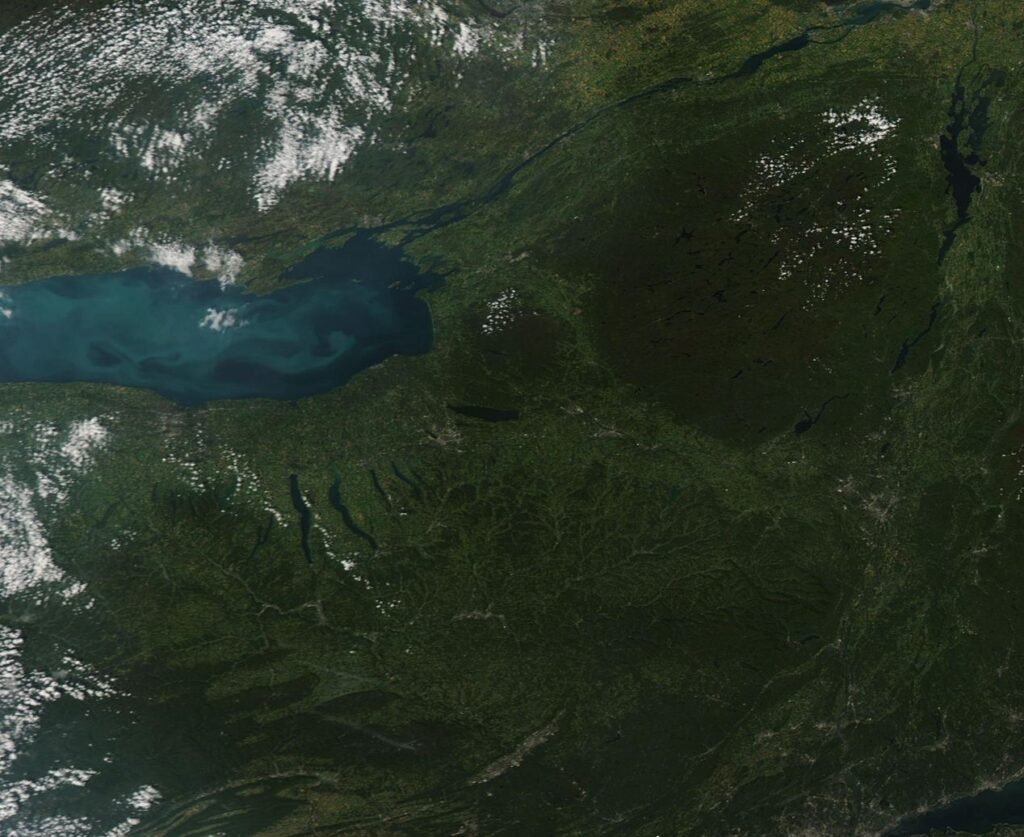
The Arnot Forest is a research forest owned by Cornell University near Ithaca, New York. Within it lives a population of wild honeybee colonies that have never been managed by beekeepers, never received varroa mite treatment, and have persisted through the decades since varroa first arrived in North America in the late 1980s — a period during which the great majority of unmanaged, untreated colonies elsewhere collapsed.
Thomas Seeley’s Long-Running Research
Cornell biologist Thomas Seeley has studied the Arnot Forest bee population extensively over an extended period, documenting colony survival, nest-site characteristics, and behavior in genuine long-term field research rather than a short-term study. Seeley is also widely known for broader honeybee behavior research, including work on swarm intelligence and nest-site selection, giving his Arnot Forest findings added credibility within the wider beekeeping and apiculture research community.
Surviving Varroa Without Any Treatment
The single most notable fact about the Arnot Forest bees is straightforward to state but genuinely remarkable in context: these colonies have survived varroa mite infestation for decades with zero chemical or mechanical treatment, at a time when varroa devastated feral and managed colonies across nearly all of North America. This real, documented survival, rather than a theoretical or laboratory claim, is what has made the Arnot Forest population such a frequently cited case study in discussions of natural resistance.
Smaller Nest Cavities and More Frequent Swarming
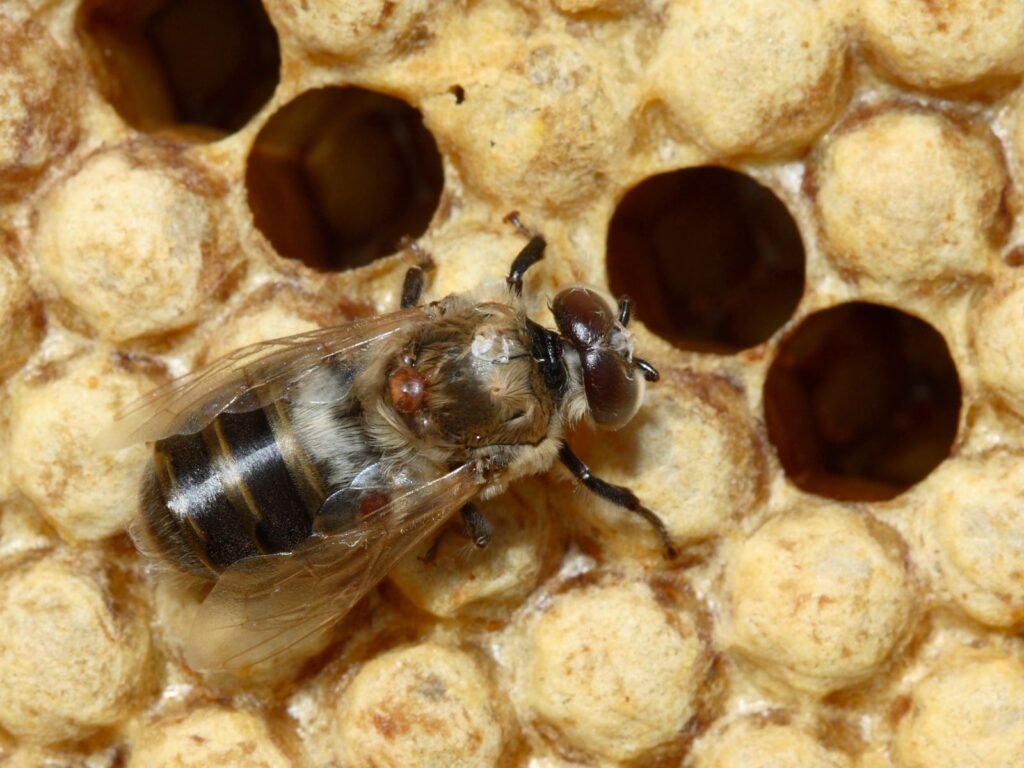
Seeley’s research points to several interacting factors behind this survival rather than a single simple explanation. One documented factor is nest cavity size: wild colonies in the Arnot Forest tend to occupy smaller cavities than typical managed hive equipment provides, which is associated with smaller colony population sizes and more frequent swarming. Because swarming interrupts the colony’s brood-rearing cycle, and varroa mites reproduce inside capped brood cells, more frequent swarming may naturally disrupt mite reproduction more often than the less frequent swarming typical of larger, more heavily managed colonies.
Wide Colony Spacing as a Disease-Control Strategy
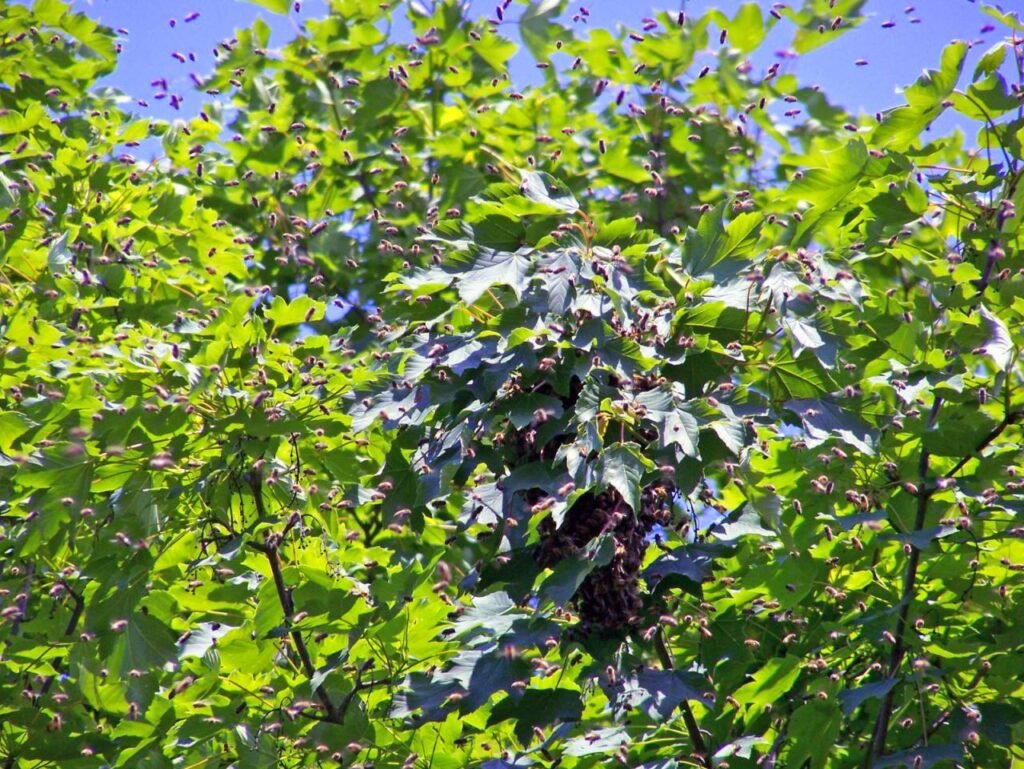
Another documented factor is spacing: wild colonies in the Arnot Forest are naturally distributed considerably farther apart from one another than colonies in a typical managed apiary, where many hives are often clustered closely together. This wider spacing likely reduces mite transmission between colonies via drifting bees and robbing behavior, both recognized as real mechanisms by which varroa spreads between colonies in denser apiary settings.
The “Darwinian Beekeeping” Concept
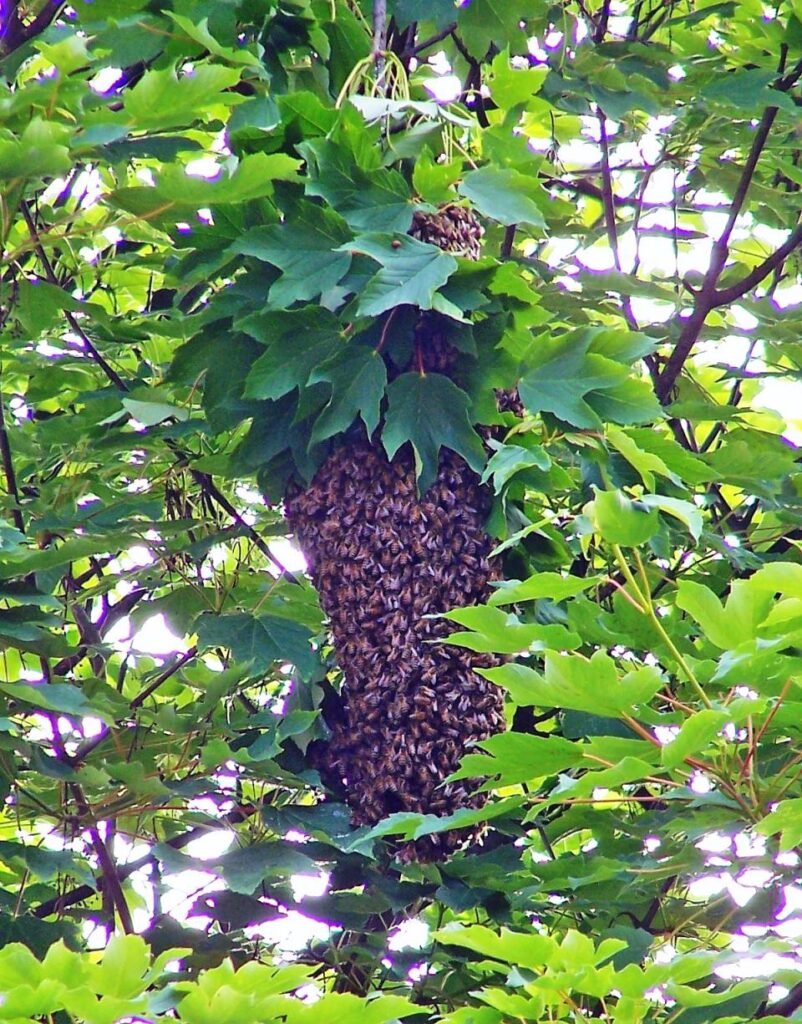
Seeley has used findings from the Arnot Forest population, along with related research, to advocate for a broader concept sometimes referred to as “Darwinian beekeeping” — managing bees in ways that more closely mimic the natural conditions under which wild colonies like these have shown genuine resistance, rather than managing purely for maximum honey production or colony size. This is a real, actively discussed philosophy within parts of the beekeeping community rather than a purely academic abstraction, influencing how some treatment-free and natural beekeepers approach hive spacing, cavity size, and swarm management.
Is the Resistance Genetic, Behavioral, or Both?
A genuinely important nuance in interpreting the Arnot Forest findings is that the observed survival likely reflects a combination of factors rather than a single clean explanation. Colony-management-style factors like nest cavity size and spacing interact with the population’s underlying genetics over many generations of natural selection, meaning surviving colonies may carry genuine heritable resistance traits in addition to simply benefiting from a more favorable ecological setting. Seeley’s research treats this as an open, actively studied question rather than a fully resolved one, and this article follows that same honest framing rather than overstating certainty in either direction.
An Important Honest Caveat
It’s worth stating clearly and honestly: the specific conditions that appear to support survival in the Arnot Forest — small natural cavities, wide colony spacing, unmanaged swarming — are not simply replicated by adopting a treatment-free approach in a typical managed apiary, where colonies are often kept in standard-sized equipment at much higher density for practical and economic reasons. Seeley himself has acknowledged this tension, and this article isn’t suggesting untreated colonies in a conventional apiary setting will reliably show the same survival outcomes documented in this specific wild forest population.
Not the Only Documented Wild Survivor Population
It’s worth being clear that the Arnot Forest population, while especially well documented thanks to Seeley’s sustained research attention, isn’t presented in the literature as the only wild honeybee population showing varroa survival without treatment; other feral and unmanaged colony populations have drawn similar research interest elsewhere. See varroa resistance: spotting the signs in your hive for what these traits look like in a managed colony. What makes Arnot Forest particularly notable and frequently cited is less that it’s unique and more that it has been studied so thoroughly and continuously over such a long period, providing an unusually well-documented dataset compared to more anecdotal reports of feral colony survival elsewhere.
How This Differs From Bred Resistant Lines
The Arnot Forest bees represent survival through natural selection acting on a wild, unmanaged population over time, which is a meaningfully different process from deliberately bred resistant lines like Purdue Ankle Biters or Minnesota Hygienic bees, both already covered on this site, where breeders selected specifically for measurable resistance traits within a managed breeding program. Both approaches offer genuine evidence that varroa resistance is achievable in honeybees, but through distinctly different mechanisms and selection pressures.
Arnot Forest Bees vs. Bred Resistant Stock
| Feature | Arnot Forest Bees | Purdue Ankle Biters | Minnesota Hygienic |
|---|---|---|---|
| Origin | Wild natural selection | Deliberate breeding program | Deliberate breeding program |
| Setting | Unmanaged forest colonies | Managed apiaries | Managed apiaries |
| Key mechanism | Small cavities, spacing, swarming | Mite-biting behavior | Hygienic brood removal |
| Commercially available | No | Yes | Yes |
Common Misconceptions
The most common misconception is assuming Arnot Forest research proves that any beekeeper can simply stop treating for varroa and expect similar survival, when the documented survival is tied to a specific combination of wild conditions rather than treatment cessation alone. A second common misconception is treating “Arnot Forest bees” as a purchasable genetic line the way Purdue Ankle Biters or Minnesota Hygienic bees are, when this population is a wild research subject rather than a commercially available or formally distributed stock.
Frequently Asked Questions
Can beekeepers buy Arnot Forest bees for their own hives?
No. This is not a commercially distributed genetic line the way some bred mite-resistant stocks are. The Arnot Forest bees are a wild, unmanaged population studied in place by researchers rather than propagated and sold, so there is no supplier to order them from.
Does Arnot Forest research mean varroa treatment is unnecessary for managed hives?
No, this conclusion isn’t supported by the research; the specific conditions behind Arnot Forest survival aren’t simply replicated in typical managed apiary settings, and most beekeeping guidance continues to recommend appropriate varroa monitoring and treatment for managed colonies.
Who is Thomas Seeley and why does his research carry weight in this area?
He is a Cornell University biologist widely recognized for extensive, credible honeybee behavior research conducted over a long career, including well-documented work well beyond just the Arnot Forest population specifically.
Is “Darwinian beekeeping” the same thing as treatment-free beekeeping?
Not exactly; Darwinian beekeeping as Seeley has described it is a broader concept about managing bees in ways closer to natural wild conditions, of which avoiding chemical treatment is one piece rather than the entire concept on its own.
Could a beekeeper realistically try to replicate Arnot Forest conditions in their own apiary?
Some individual elements, such as using smaller hive volumes or spacing colonies farther apart, are at least theoretically adoptable by a beekeeper interested in Darwinian beekeeping principles, though doing so involves real tradeoffs in honey yield and practical apiary management that most commercial and many hobbyist beekeepers aren’t willing or able to accept.
Does the Arnot Forest population still produce a honey surplus the way managed colonies do?
As unmanaged wild colonies, they aren’t harvested for honey at all, and their smaller colony size driven by more frequent swarming means they likely produce less total surplus honey than a large, actively managed colony optimized for production — a genuine tradeoff tied to the same traits associated with their varroa survival.
What species of honeybee is the Arnot Forest population?
Like the vast majority of honeybees found in North America, the Arnot Forest population consists of Western honey bees (Apis mellifera), the same species kept in the great majority of managed apiaries across the continent.
Is there a specific publication a reader could look up to learn more about this research?
Seeley’s original paper, “Honey Bees of the Arnot Forest: A Population of Feral Colonies Persisting with Varroa destructor in the Northeastern United States” (Apidologie 38: 19–29, 2007), is the primary source, with a 2015 genetic-structure follow-up study adding further detail.
Primary sources: Seeley, T.D. (2007). “Honey bees of the Arnot Forest: a population of feral colonies persisting with Varroa destructor in the northeastern United States,” Apidologie 38(1), 19–29; and a 2015 follow-up study investigating the population’s genetic structure, also in Apidologie.
Image credits: Photo: T.Voekler, CC BY-SA 3.0, via Wikimedia Commons; Photo: S.D. Ramsey et al. (USDA), CC BY 4.0, via Wikimedia Commons.