Reviewed by Thomas B. · Last Updated September 23, 2026 · How we review
An insulated nuc box, usually polystyrene or foam, holds heat several times better than a standard wooden or corrugated-plastic nuc. That matters most when the colony is small and the weather is cold: spring buildup, fall queen rearing and overwintering nucs. A standard wooden nuc is tougher, cheaper per year of service, easier to repair and perfectly adequate in summer. For short moves, a disposable cardboard or coroplast nuc is fine. If you keep bees somewhere with long, hard winters, as we do in eastern North Dakota, insulation is the upgrade that pays off. Elsewhere, it’s optional.
The reason is simple physics. A nuc has little bee mass to generate heat and a lot of wall area to lose it through. That ratio is what the comparison really comes down to.
Key Takeaways
- Small colonies gain the most from insulation, because they produce the least heat relative to their box’s surface area.
- Research on full-size colonies shows insulation can cut winter food use and losses. One Illinois study found 4.8% mortality in covered hives vs. 27.3% in uncovered ones.
- Poly nucs are lighter and warmer, but they dent, degrade in sunlight, attract mice in storage and can’t be scorched to disinfect them.
- Wooden nucs last for decades, are easy to repair and can be flamed after disease. Wrapping one closes much of the thermal gap.
- Choose by job: poly for overwintering, early-spring and mating nucs; wood for general use and resale colonies; cardboard or coroplast for one-way transport.
Table of Contents
Side-by-Side Comparison
“Standard nuc box” can mean two things: a wooden 5-frame Langstroth nuc, or a disposable cardboard or corrugated-plastic transport nuc. The table covers both, compared with a polystyrene (poly) nuc.
| Factor | Insulated (poly/foam) nuc | Wooden nuc | Cardboard / coroplast nuc |
|---|---|---|---|
| Heat retention | High; thick low-conductivity walls | Low to moderate; about 3/4-inch pine | Very low |
| Weight (empty) | Lightest | Heaviest | Light |
| Lifespan | Several to many years if kept out of sun and away from mice | Decades with paint and repair | One season or one trip |
| Disinfection after disease | Bleach soak only; cannot be flamed | Scorch with a blowtorch or bleach | Discard |
| Repairs | Limited; dents and gnaw damage are permanent | Easy: glue, screws, paint | None |
| Frame compatibility | Check it: some European poly nucs use different frame sizes | Standard Langstroth deep or medium | Usually Langstroth deep |
| Best uses | Overwintering nucs, early spring, mating/queen-rearing | General splits, selling nucs, summer use | Delivering or buying nucs |
Why Insulation Matters More for a Nuc
Honey bees heat their nest by shivering their flight muscles. That heat comes from honey. How much honey they burn depends on how fast the enclosure leaks heat compared with how much bee mass there is to generate it.
Engineer Derek Mitchell measured exactly this in a 2016 study in the International Journal of Biometeorology. He found that heat is lost roughly four to seven times faster through common hives than through a typical tree cavity in winter. He expressed the result as a colony-mass-to-conductance ratio, and his analysis suggests that better-insulated enclosures improve the survival of smaller colonies in particular.
A 5-frame nuc is the extreme case of a small colony. It might hold three frames of bees in a box whose outside surface is well over half that of a full 10-frame deep. Improve the walls’ insulation, and a small cluster’s heating job gets much easier. For a strong full-size colony, the same upgrade makes less difference.
So the useful question isn’t “is poly warmer?” It is. The useful question is how much honey your cluster has to burn to stay alive until the first pollen comes in, and how little bee mass it has to do that with.
What the Research Shows
There’s no large controlled trial of insulated vs. wooden nucs specifically. The evidence comes from full-size hives and from field projects, and it’s mixed enough that we’d be wary of anyone who says insulation always wins.
- Insulated covers reduced food use and losses. St. Clair, Beach and Dolezal (2022, PLOS One) wrapped 22 colonies in central Illinois with corrugated plastic and topped them with 1.5-inch foam board, leaving 21 unwrapped. Covered colonies lost weight at about half the rate of the controls, ate less supplemental sugar, and had 4.8% mortality vs. 27.3%. Interestingly, overall hive temperatures didn’t differ much. The colonies spent less honey to reach the same result.
- A Midwest nuc project reported a big jump in winter survival. In a USDA SARE farmer grant project in central Ohio, beekeeper Joseph Latshaw overwintered polystyrene nucs with 91.67% survival (33 of 36) in 2009 to 2010. He compared that with roughly 25% in wooden boxes in earlier years. That isn’t a side-by-side trial, since the years and conditions differed. He also found the Canadian-designed poly nucs needed extra ventilation in Ohio summers to prevent overheating.
- Material comparisons are less clear-cut. A 2019 study by Yaşar Erdoğan in the Italian Journal of Animal Science compared ten each of wooden, polystyrene and composite insulated hives in Turkey. The composite insulated hives were the most productive. The study also listed polystyrene’s practical drawbacks: easily damaged, poor ventilation, mouse damage in storage and sun degradation.
Our reading: insulation reliably reduces how hard a small colony has to work to stay warm, and that helps most where winters are long. It doesn’t make a weak queen good or protect a nuc with high mites. Colony strength and varroa control still decide most outcomes.
When an Insulated Nuc Is Worth It
- Overwintering nucs in cold climates. In the Red River Valley, January averages sit in the single digits Fahrenheit, and we routinely see stretches well below zero. A nuc with three to five frames of bees has little margin. Poly helps. So does the double nuc method, which puts two small colonies side by side to share heat.
- Early spring splits and packages. An April nuc in North Dakota spends many nights near freezing while trying to keep open brood warm. Insulation lets the colony cover more brood with the same bees.
- Mating and queen-rearing nucs. Small mating units such as Apideas are almost always poly, because a cup of bees can’t hold temperature in a thin box.
- Carrying a lot of nucs. Poly’s light weight adds up when you’re moving 20 nucs at dusk.
For a detailed look at brands, frame fit and costs, see our poly nuc box buying guide.
When a Standard Nuc Is the Better Buy
- Summer use. From June through August, a nuc doesn’t need help staying warm, and wood’s durability matters more.
- Selling nucs. Most buyers expect standard wooden or disposable nucs, and a poly box that leaves with a customer rarely comes back. See the best nuc boxes for transporting bees.
- Disease recovery. Wooden nucs can be scorched after disease. Poly can only be scraped and bleached, and a poly nuc exposed to American foulbrood is usually a disposal case.
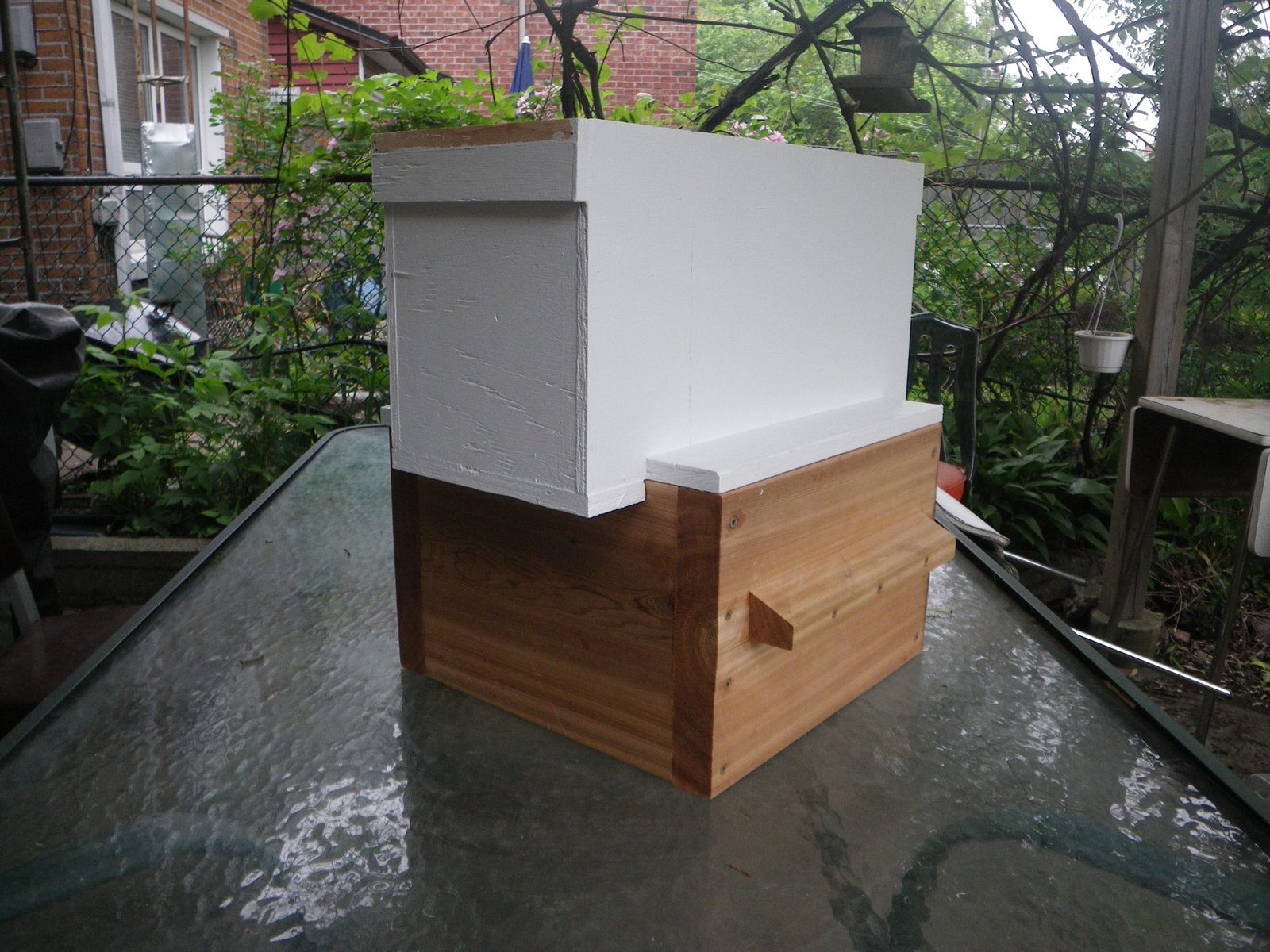
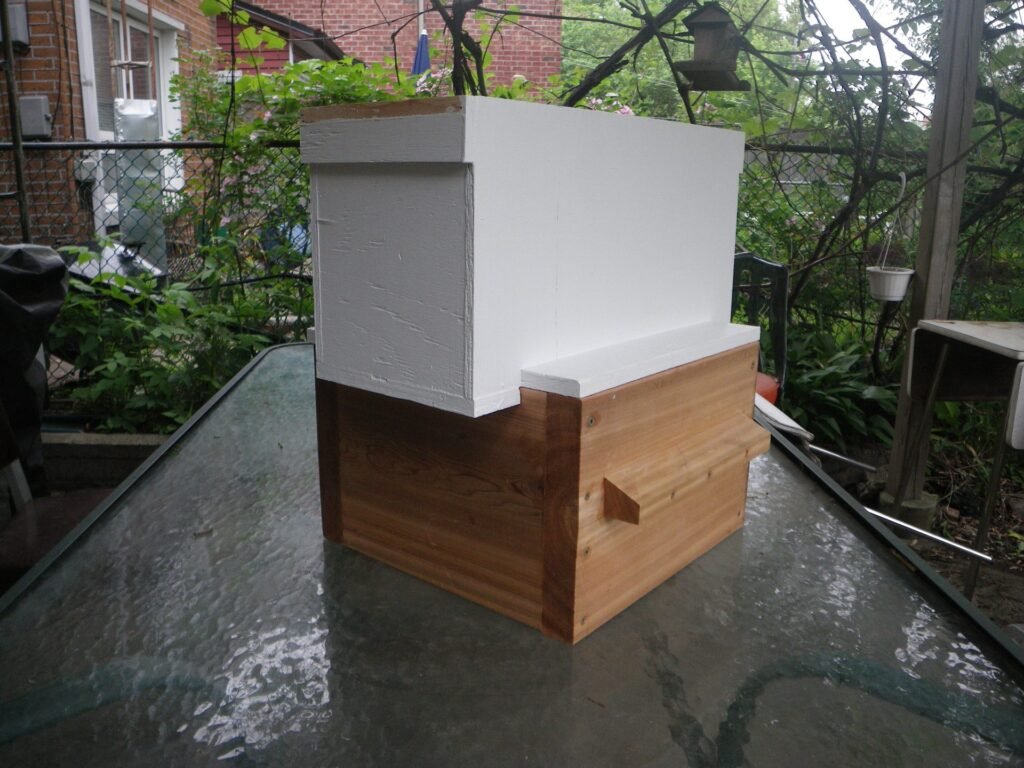
- Tight budgets and DIY. A wooden nuc can be built from scrap lumber, and wrapped with foam board in fall it gains much of poly’s thermal benefit. Our comparison of insulated wraps vs. foam board wraps covers the options.
A practical middle path many Northern Plains beekeepers use: wooden nucs all season, with a foam board wrap and an insulated top added in September. Most heat escapes upward, so insulating the top matters as much as the walls.
Managing Moisture and Wear in Poly Nucs
Insulated boxes keep their inner walls warmer, which reduces condensation on the walls. But the moist air bees produce still has to leave the box. A few habits keep a poly nuc healthy:
- Provide a small upper vent or keep the entrance clear in winter, and check for wet combs or mold at the first spring inspection.
- Paint the outside with a water-based exterior paint. UV light breaks down unprotected polystyrene over time.
- Store off the floor in a mouse-proof space. Mice chew into poly quickly.
- Use a proper entrance reducer. A small nuc can’t defend a wide entrance from robbers. See entrance reducers for nuc boxes.
- Move the colony up on time. An insulated nuc builds fast in spring. Watch for crowding and move it into a full box before it swarms. See moving a nuc into a full hive box.
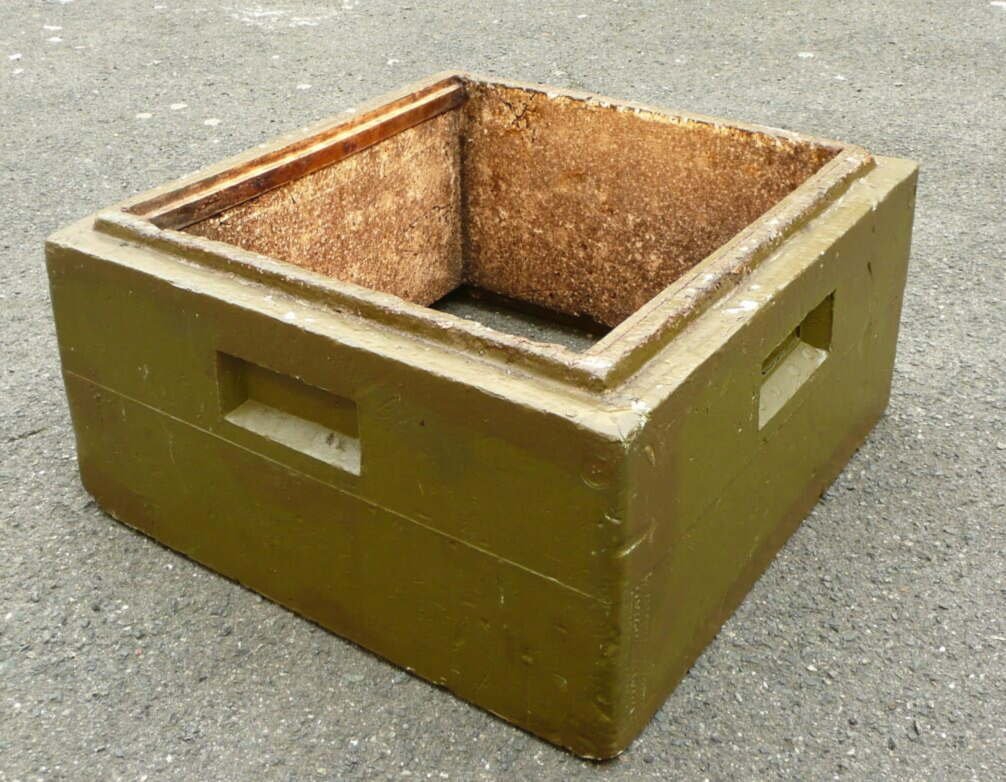
For full-size hive bodies, see insulated vs wooden hives for cold climates.
Frequently Asked Questions
Can a nuc survive winter in a wooden box?
Yes, if it’s strong, well fed and wrapped. In very cold regions, wooden nucs often overwinter better stacked on top of a strong colony, or in a double nuc setup, than standing alone. An unwrapped single wooden nuc is the riskiest option.
Are poly nuc boxes worth the extra cost?
For overwintering, early spring and mating nucs in cold climates, usually yes. For summer splits or nucs you sell, a wooden or disposable box is the better value.
Do insulated nuc boxes cause condensation problems?
Not usually. Warmer inner walls reduce condensation on the walls. Moisture still needs to leave, so keep an entrance clear and consider a small upper vent in winter.
Do poly nucs take standard Langstroth frames?
Many do, but not all. Some European poly nucs are built for different frame sizes. Check the listed frame type before buying so you can move frames into your full-size boxes.
Can I disinfect a polystyrene nuc after disease?
Scrape it and soak it in 0.5% sodium hypochlorite. Never flame polystyrene. After American foulbrood, most beekeepers dispose of poly equipment rather than risk it.
Is an insulated nuc box better in hot climates?
It can help buffer heat too, because insulation slows heat gain as well as loss. Provide shade and ventilation, though. In hot, humid climates, wood’s durability usually matters more than insulation.
The Bottom Line
The smaller the colony and the colder the season, the more an insulated nuc box earns its price. In a hard-winter region like ours, poly or a well-wrapped wooden nuc is the difference between a colony that has to work to stay warm and one that has to fight to survive. For summer splits, sales and anything that might need scorching after disease, a standard wooden nuc remains the practical choice.