Knowing how to test for varroa only helps if you’re testing at the right times and reading the results correctly. This covers when to sample, how often, and what a given count actually means for your colony.
How Often to Test
Monthly checks from March through October give a clear picture of how an infestation is trending across the active season. A single mated female mite entering the season can produce a rapidly growing population by mid-summer if left unchecked, so infrequent testing tends to catch problems only after they’ve already become serious.
Step up frequency at two points in the year:
- Late summer — this is when the “winter bees” that need to survive to spring are being reared, and even a moderate mite count now can compromise their fat bodies and shorten their lifespan. Check every two weeks through this window rather than monthly.
- After any split, requeening, or combining of colonies — mite populations don’t distribute evenly, and any operation that moves bees between hives can concentrate mites unpredictably. Recheck within 7–14 days.
Do Small Apiaries Need to Test as Often?
Yes, arguably more consistently. In a large operation, sampling a representative subset of colonies can reasonably estimate yard-wide pressure. With only one or two hives, there’s no “representative sample” to lean on — each hive has to be checked directly, because mites don’t move evenly between a small number of colonies the way they average out across a big yard.
Does Time of Day or Weather Matter?
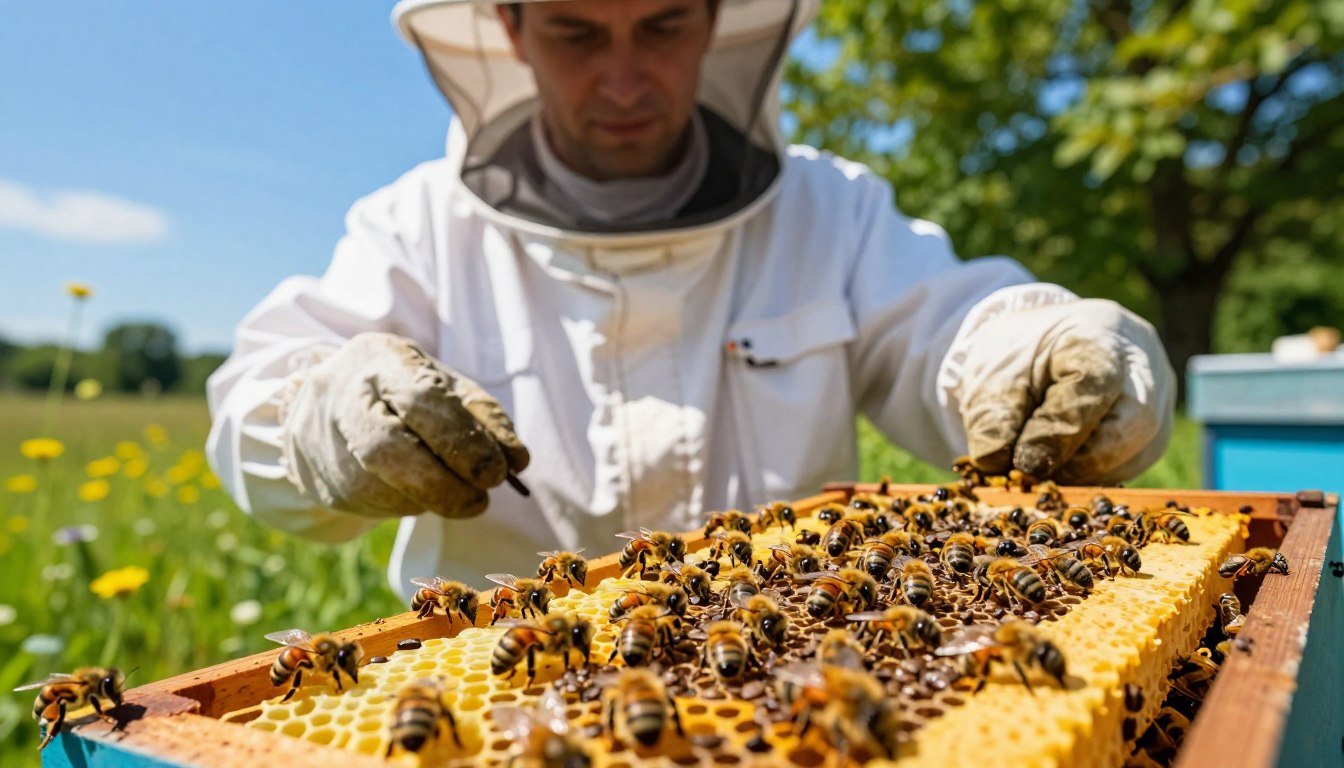
Sample during active foraging hours (mid-morning to mid-afternoon) when forager bees are out and the frame you pull is more likely to hold the nurse bees that carry the highest mite loads. Testing very early or late, when more foragers are still in the hive, can dilute your sample with bees less representative of brood-area infestation.
Rain and cool weather don’t change the mites themselves, but they change how bees cluster and which bees are accessible on a given frame — on a cold or wet day, bees pull inward toward the brood nest, which can actually make it easier to get a nurse-bee-heavy sample. What rain does complicate is fieldwork itself: a wet colony is harder to work carefully, and delaying a scheduled check by a day or two for weather is reasonable as long as it doesn’t turn into skipping the check.
Phoretic vs. Reproductive Mites
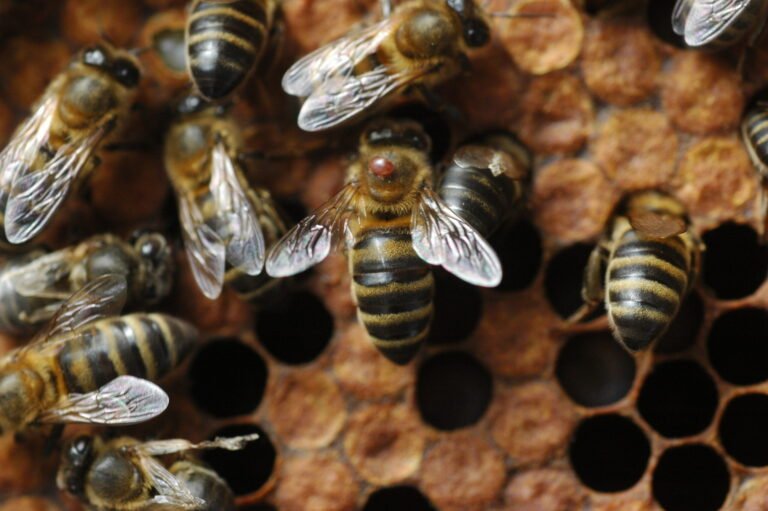
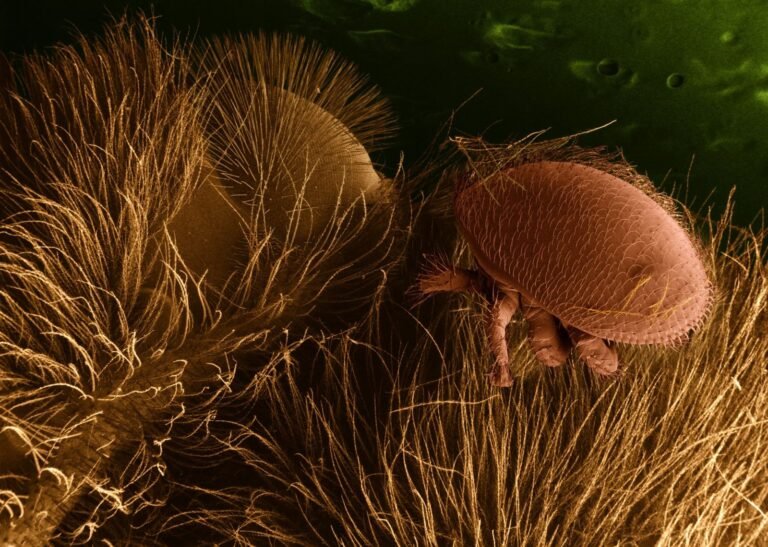
Varroa mites spend part of their life cycle riding on adult bees (the phoretic phase, typically 3–14 days) and part reproducing inside capped brood cells. Alcohol wash and sugar roll samples only catch phoretic mites — they can’t see what’s reproducing under the cappings. In spring, when brood rearing is at its peak, the majority of a colony’s mites can be in that reproductive phase inside capped brood (Penn State Extension) and invisible to a standard wash. This is why a “low” wash count in spring doesn’t necessarily mean low overall mite pressure, and why testing again a few weeks later, as more of that brood-phase population emerges, matters.
Comparing Counts Across Hives or Apiaries
To compare mite pressure between colonies or yards fairly, hold the method constant: same sample size (300 bees), same frame selection criteria (open brood, nurse bees), and ideally similar time of day. A count of 6 mites per 300-bee sample in one hive and 3 in another is a meaningful difference; the same two numbers taken with different sample sizes or methods aren’t really comparable at all.
Reading the Numbers
| Count per 300-bee sample | Approx. infestation | General interpretation |
|---|---|---|
| 0–2 | <1% | Low — continue routine monitoring |
| 3–5 | ~1–1.7% | Watch closely; consider season and threshold |
| 6+ | ~2%+ | Commonly treated as an action threshold, especially heading into late summer |
| 9+ | ~3%+ | High risk; treat promptly regardless of season |
These are general reference points, not fixed rules — the seasonal thresholds in the complete Varroa management guide adjust these numbers by time of year. If a count comes back high, see varroa treatment options compared for what to do next, or if it’s after a split or requeening specifically, see varroa management for splits, nucs, and requeened colonies.
FAQ
How often should I test for varroa mites during the season?
Monthly from March through October is a reasonable baseline, stepping up to every two weeks in late summer when winter bees are being reared.
Why did my mite count come back low in spring but the colony still crashed in fall?
Most likely because spring counts miss the large share of mites reproducing inside capped brood — often the majority of the population at that time of year. A low spring wash doesn’t rule out a serious problem building underneath.
Does rain affect mite testing accuracy?
Not directly — the mites themselves aren’t affected by weather. Rain mainly makes fieldwork harder and can shift which bees are accessible on a frame, so it’s fine to delay a check briefly for bad weather, but don’t skip it.
University of Nevada, Reno Extension’s Varroa Mite Integrated Pest Management for Small-Scale Beekeepers lays out the economic threshold counts that make sense of the numbers this kind of testing produces.