Reviewed by Thomas B. · Last Updated October 6, 2026 · How we review
The varroa mite control methods that work are a routine, not a single product: sample about 300 bees with an alcohol wash every month of the active season, treat when the count reaches 1% in winter and spring or 2% in summer and fall, rotate between active ingredients, and test again after every treatment. Which method fits on a given day depends on three things: whether the colony has capped brood, what the thermometer will do this week, and whether honey supers are on the hive.
Educational information only, not legal or veterinary advice. In the United States a pesticide label is the law, so follow the label on the product you use and check with your state pesticide regulatory agency, because state rules can differ. We checked every product named here against its current label in the EPA’s label database and the EPA’s list of products registered for varroa mites on October 5, 2026.
Key Takeaways
- The Honey Bee Health Coalition’s ninth-edition guide (June 2026) sets the “treat promptly” line at 1% in the dormant and spring buildup phases and 2% at the summer peak and in fall. Older 2 to 3% rules of thumb are too high.
- Formic acid is the only treatment whose label and guide entries describe killing mites under brood cappings. Oxalic acid and hop acids work on mites riding adult bees, so they shine when there is little or no brood.
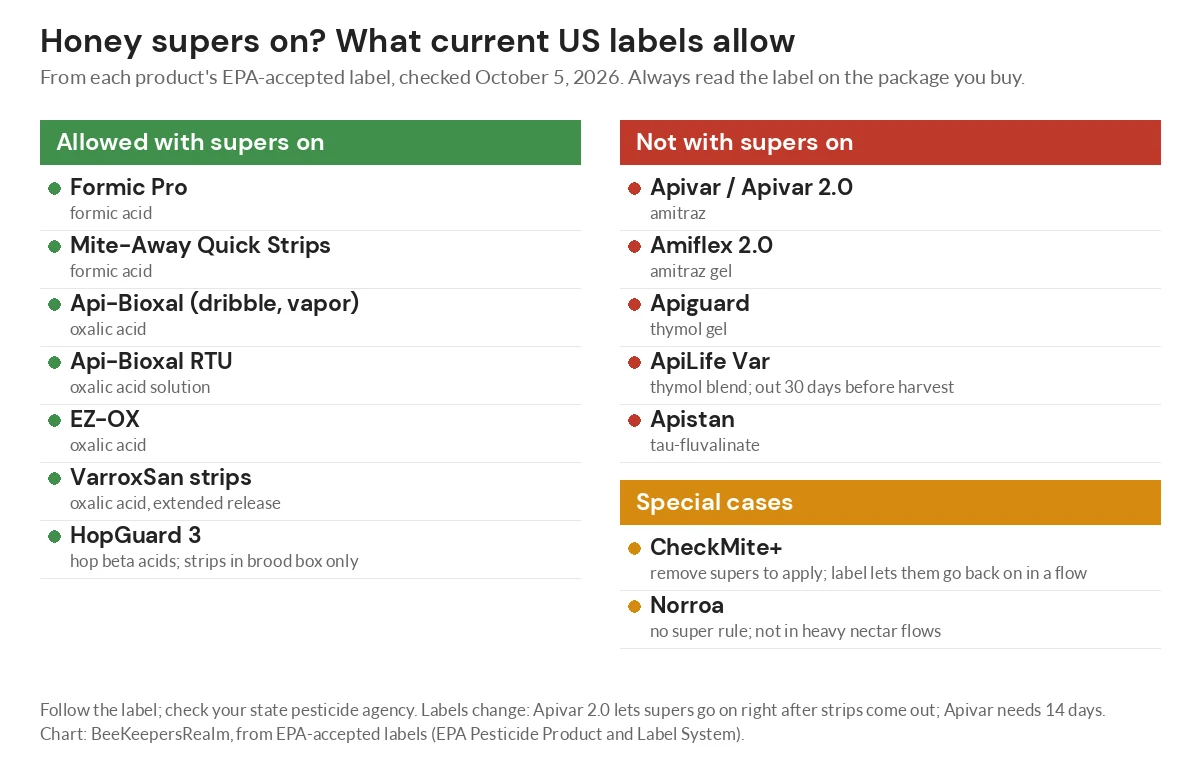
- With honey supers on, current US labels allow formic acid (Formic Pro, Mite-Away Quick Strips), oxalic acid (Api-Bioxal, Api-Bioxal RTU, EZ-OX, VarroxSan) and HopGuard 3. Apivar, Amiflex 2.0, Apiguard, ApiLife Var and Apistan are not for use with supers on.
- New since 2025: Norroa, an RNA-based product that stops mites from reproducing; Apivar 2.0, which lets supers go back on as soon as strips come out; Amiflex 2.0; and a ready-to-use oxalic acid solution.
- Drone brood removal, brood breaks and resistant bees slow mite growth, but the coalition does not rate any of them as a stand-alone control.
Table of Contents
- Why Varroa Control Can’t Wait
- Step 1: Measure Mites Before You Pick a Method
- The Main Groups of Varroa Control Methods
- Non-Chemical Methods and Their Limits
- Registered Varroa Treatments Compared
- Can You Treat Varroa With Honey Supers On?
- Matching Methods to the Season
- Rotation, Resistance and the Follow-Up Count
- Frequently Asked Questions
- Where to Go Next
Why Varroa Control Can’t Wait
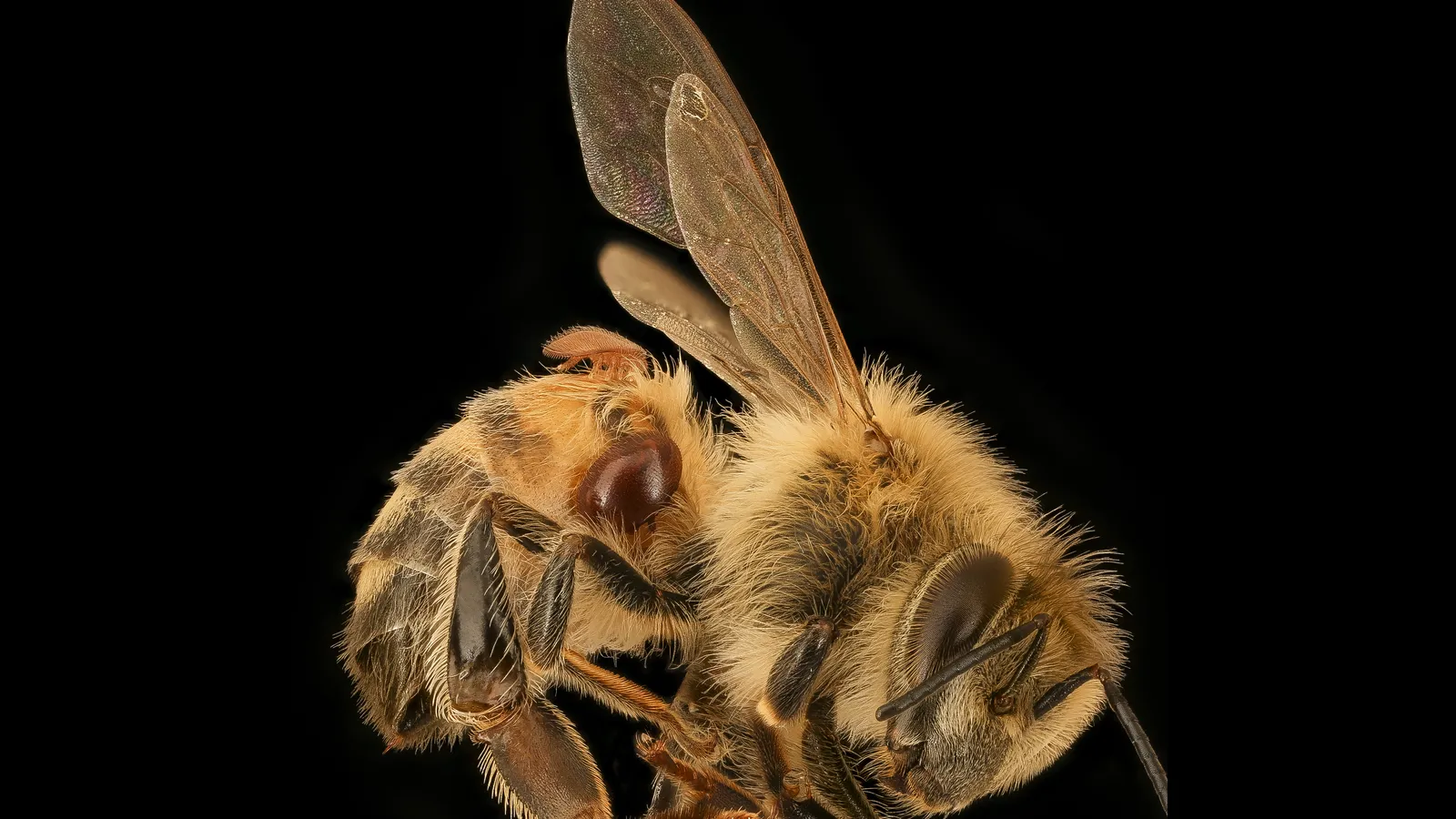
Varroa destructor is an external parasite that feeds on developing and adult honey bees, weakens them and spreads viruses, deformed wing virus above all. The Honey Bee Health Coalition (HBHC), a coalition of beekeeping, farming, university, government and industry groups, says colonies with high mite levels may die within months if left untreated, and that uncontrolled mite populations can double monthly. Growth is faster in colonies raising lots of drone brood, or when mites arrive from neighboring colonies.
Mites move between colonies on drifting bees, through robbing, with swarms and on frames that beekeepers move from hive to hive. They do not live more than a few days without a host, so stored empty equipment does not carry live mites. Varroa reached the US in 1987 (see how varroa mites invaded America), and today every colony in the continental US is at risk.
“Doing nothing to control varroa levels is not a practical option for most beekeepers.”
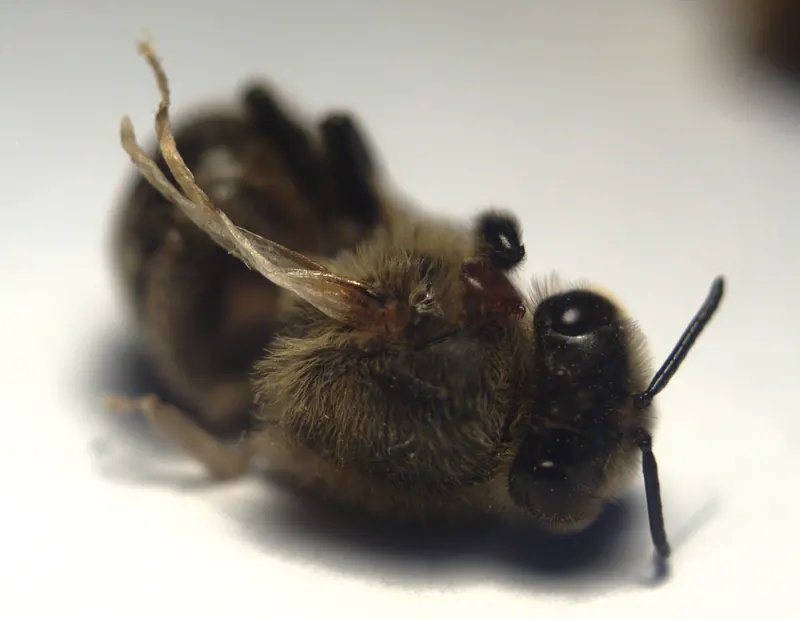
Damage often shows up late. Bees with crumpled wings, spotty brood and a dwindling cluster usually mean the mite load passed the danger line weeks earlier. Our guides to deformed wing virus signs in adult bees and parasitic mite syndrome vs foulbrood cover the symptoms.
Step 1: Measure Mites Before You Pick a Method
Every control decision starts with a number. Without one you cannot tell whether a colony needs treatment, or whether the last treatment worked.
In this nine-minute video, the Honey Bee Health Coalition walks through the equipment, how to collect a bee sample from the brood nest, the powdered sugar shake, the alcohol or soap wash, and how to turn the mite count into a percentage. The video dates from 2016, so use the 2026 thresholds below rather than any older figures.
How to take and read a sample
The HBHC method: shake bees from one to three brood-nest combs (check first that the queen is not on them), scoop about half a cup, which is roughly 300 bees, and wash them in alcohol, low-sudsing soap solution or windshield washer fluid. The alcohol or soap wash is more reliable than the powdered sugar shake. To get the infestation rate, divide mites by bees and multiply by 100: 12 mites in 300 bees is 4%, or 4 mites per 100 bees.
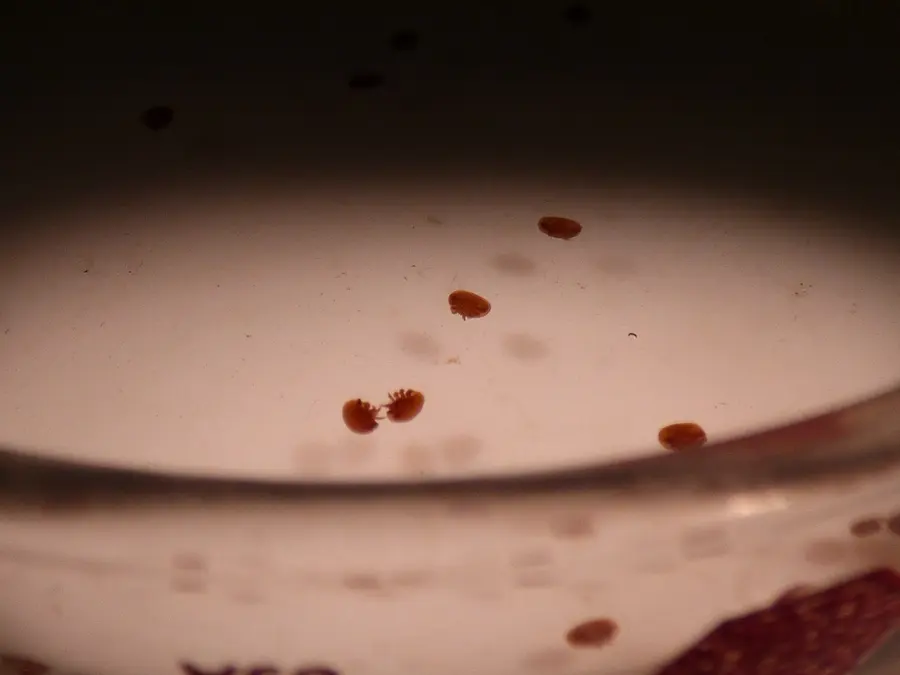
Sticky boards, uncapping drone brood and looking for mites on bees are all less reliable. The guide notes that if you can see mites on adult bees, the population is usually already well over threshold. For a side-by-side of the methods, see alcohol wash, sugar roll and sticky board compared.
How many colonies to test: with fewer than 10 colonies, sample every one. In bigger apiaries, sample at least 8 randomly chosen colonies per yard, or 10% of colonies across several yards. If you cannot sample them all and any colony is over threshold, the guide says to treat the whole yard.
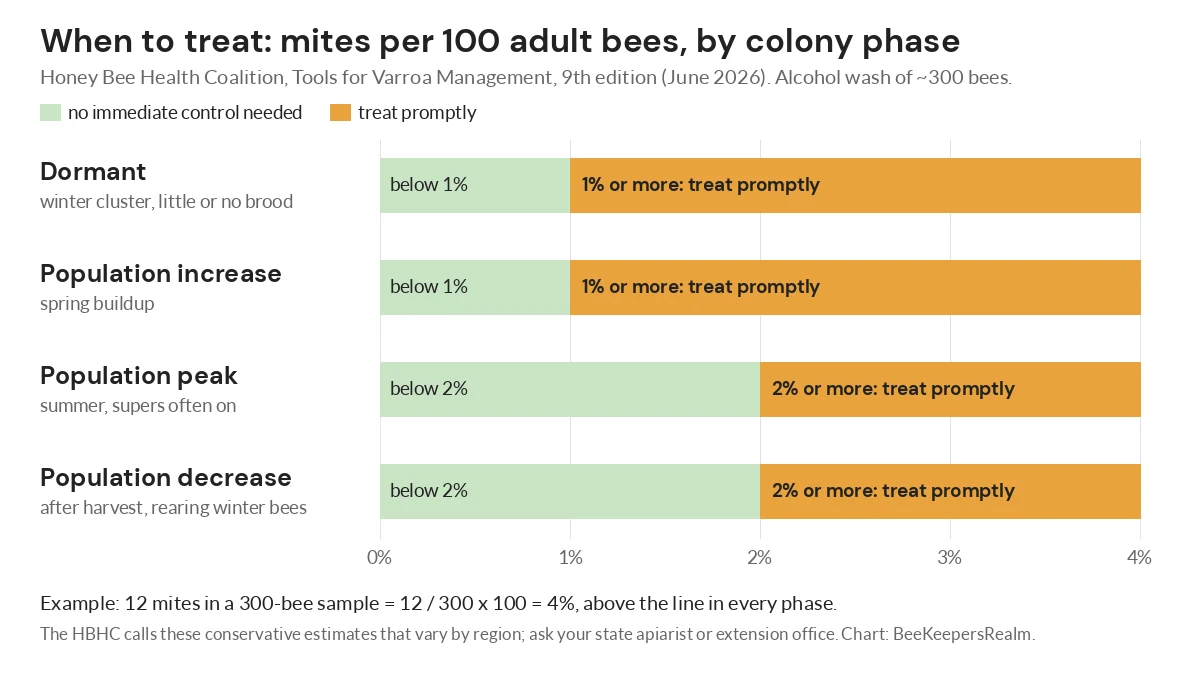
Treatment thresholds by season
| Colony phase (HBHC) | What the colony is doing | No immediate control needed | Treat promptly |
|---|---|---|---|
| Dormant | Clustered, little or no brood | Under 1% | 1% or more |
| Population increase | Spring buildup | Under 1% | 1% or more |
| Population peak | Summer, often with supers on | Under 2% | 2% or more |
| Population decrease | After harvest, rearing winter bees | Under 2% | 2% or more |
The coalition calls these conservative estimates that vary by region and suggests asking your state apiarist or extension office. Test monthly from spring buildup onward, or at least four times between the summer peak and the fall decline. Our guide to varroa testing frequency and interpreting counts has a monthly schedule.
Why a low spring count can mislead
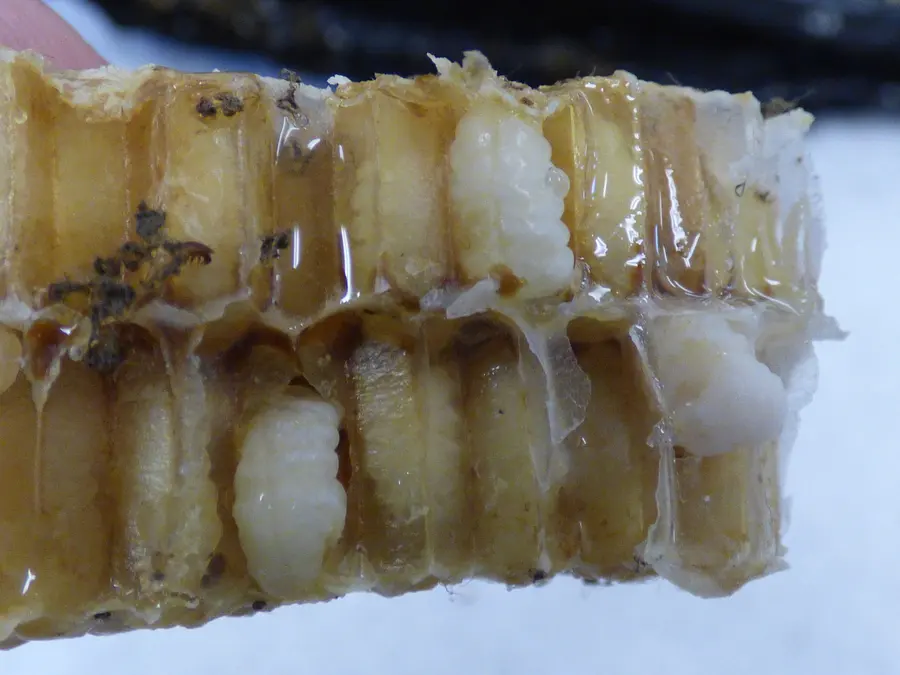
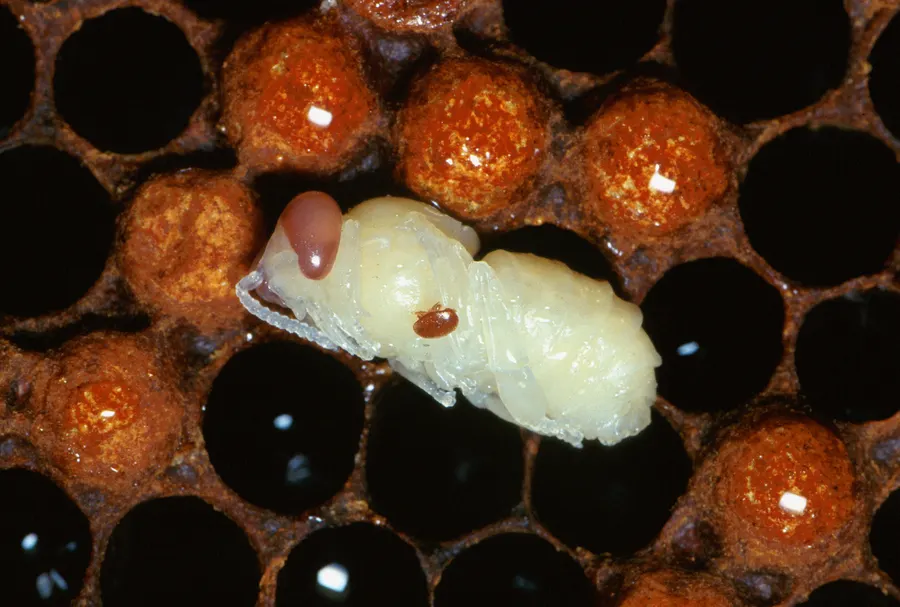
A wash only counts mites riding adult bees. When brood is present, many more are sealed in cells.
“When honey bee brood is present in the colony, the majority of varroa mites are in the capped brood reproducing where they can often escape chemical treatments.”
The HBHC adds that samples taken during spring buildup are more likely to underestimate the risk. That is why the spring threshold is 1%, and why a single count is less useful than a series. See varroa mites in capped brood and the varroa mite life cycle for the timing behind it.
The Main Groups of Varroa Control Methods
Extension specialists describe varroa control as integrated pest management (IPM): combine or rotate several methods through the year, starting with the least disruptive and adding chemical treatments when counts call for them. Penn State’s team separates “soft” chemicals, the naturally derived organic acids, essential oils and hop beta acids, from “hard” synthetic miticides.
| Group | Examples | Reaches mites in capped brood? | Main limitation |
|---|---|---|---|
| Genetic and cultural | Resistant stock, biosecurity, less drifting | Not a kill method; slows growth | Not a stand-alone control |
| Mechanical | Drone brood removal, brood break, screened bottom board, robbing screens | Drone removal takes out mites sealed in drone cells | Labor; modest effect |
| Organic acids | Formic acid; oxalic acid | Formic yes; oxalic no | Temperature (formic); brood (oxalic) |
| Essential oils, hop acids | Thymol (Apiguard, ApiLife Var); hop beta acids (HopGuard 3) | Not described as reaching sealed mites | Temperature; supers (thymol) |
| Synthetic miticides | Amitraz (Apivar, Amiflex 2.0); tau-fluvalinate (Apistan); coumaphos (CheckMite+) | Long-acting strips kill mites as brood emerges | Resistance; wax residues; no supers |
| RNA interference | Vadescana (Norroa) | Stops reproduction; needs open brood | Slow; not a knockdown |
Non-Chemical Methods and Their Limits
Drone brood removal
Mites prefer drone brood. Penn State’s extension team reports that a mite produces only 1.3 to 1.4 offspring per attempt in a worker cell but 2.2 to 2.6 in a drone cell. Give strong colonies a drone frame, let the bees cap it, then remove and freeze it before the drones emerge. The HBHC rates this as worthwhile when repeated two or three times during spring buildup, but not as a stand-alone treatment, and notes that it reduces the drones available for mating. Forget a frame and you have bred extra mites. Our guide to drone brood harvesting for mite control covers frame timing.
Brood breaks
Stopping egg-laying for a short time interrupts mite reproduction: cage the queen for one to two weeks, make a split without a laying queen, or requeen. The colony then has little or no capped brood, which is the best window for an oxalic acid treatment. The HBHC warns that caging queens during the fall decline can hurt winter survival, so brood breaks belong in spring and summer. See how a brood break queen cage works and varroa management for splits and requeened colonies.
Varroa-resistant stock
The HBHC lists stocks with potential for lower mite growth: Varroa Sensitive Hygiene (VSH), Russian, Hilo, Purdue mite-biters, Minnesota Hygienic, Pol-line, Carniolan, Buckfast and some locally adapted stocks. It also warns that there is no standard or label for “varroa-resistant,” and that resistance varies from colony to colony. Russian bees come from the Primorsky region of Russia’s Far East, where western honey bees have lived alongside varroa for more than 150 years, according to USDA’s Agricultural Research Service.
Our explainers cover VSH bees, Russian honey bees, Pol-line bees, Purdue mite-biting bees and Minnesota Hygienic bees. Resistant stock reduces how often you treat. It does not remove the need to test. If you want to try managing without chemicals, read varroa management for treatment-free beekeepers first.
Bottom boards, robbing screens and drift
A screened bottom board lets fallen mites drop out of the hive, but the HBHC puts the effect at only about 5 to 10%. Robbing screens and good yard layout do not lower the mites already in a colony. They cut how many arrive from others, especially from collapsing neighbors in late summer. Spacing hives apart and giving them different colors or landmarks reduces drifting. See solid vs screened bottom boards, robbing screens for beehives and how drifting spreads mites.
Registered Varroa Treatments Compared
Only EPA-registered products may legally be used against varroa in US hives, and only as their labels direct. The EPA’s public list (last updated September 17, 2026) still shows the original Amiflex, which became inactive in February 2026, and does not list Apivar 2.0. So we pulled the current EPA-accepted label for each product and built this table from the labels and the HBHC guide.
| Product (EPA Reg. No.) | Active ingredient | Mites in capped brood | Temperature on label | Treatment length |
|---|---|---|---|---|
| Formic Pro (75710-3) | Formic acid, 42.25% | Yes | Daytime highs 50 to 85°F on application day | 2 strips for 14 days, or 1 strip for 10 days then a second for 10 |
| Mite-Away Quick Strips (75710-2) | Formic acid, 46.7% | Yes | Daytime highs 50 to 85°F on application day | 2 strips for 7 days, or 1 strip plus a second at day 14 |
| Api-Bioxal (73291-2), EZ-OX (101743-2) | Oxalic acid dihydrate | No; best broodless | None; opening hives below 40°F is risky | Dribble or vapor; repeat only as the label allows |
| Api-Bioxal RTU (73291-3) | Oxalic acid, ready-mixed | No | None | Up to 4 dribbles, 7 to 10 days apart, with brood |
| VarroxSan (94413-3) | Oxalic acid, 18.42% strips | Long-acting; catches emerging mites | None | 42 to 56 days |
| HopGuard 3 (61671-5) | Hop beta acids | Less effective with brood | Above 55°F and under 100°F | 14 days, never more than 30 |
| Apiguard (79671-1) | Thymol gel, 25% | Not described | Daily highs 60 to 105°F | Two doses two weeks apart |
| ApiLife Var (73291-1) | Thymol, eucalyptus oil, menthol | Best with little sealed brood | Not above 95°F; weaker below 54°F | 3 tablets over about 4 weeks |
| Apivar (87243-1), Apivar 2.0 (87243-5) | Amitraz strips | Long-acting | No restriction | 42 to 56 days; 2.0: 6 to 10 weeks |
| Amiflex 2.0 (87243-6) | Amitraz gel | Needs repeat doses with brood | Only while bees are foraging | 7 days per dose |
| Apistan (2724-406) | Tau-fluvalinate strips | Long-acting | Daytime highs of at least 50°F | 42 to 56 days |
| CheckMite+ (11556-138) | Coumaphos strips | Best when brood rearing is lowest | None noted | 42 to 45 days |
| Norroa (94614-4) | Vadescana (RNA) | Works through open brood | None | 1 or 2 pouches per brood box, until emptied |
Efficacy claims are reported by the makers and, as the HBHC notes, have not been independently verified. Two smaller registrations exist too: OrganiShield, a sucrose octanoate spray, and MBG2X5G, an L-glutamic acid strip registered in 2025 that its maker was still bringing to market when the guide went to press.
Organic acids: formic and oxalic
Formic acid vapor penetrates cappings, which makes it the go-to when a strong colony has a lot of brood and a high count. The trade-off is heat: Formic Pro’s label warns that hot weather in the first three days (it cites 92°F) can cause excessive bee, brood and queen loss. Its label also states that mites are not expected to develop resistance to formic acid. Compare the two strip products in Formic Pro vs Mite-Away Quick Strips.
Oxalic acid kills mites on adult bees and does not reach into sealed cells, so a single dribble or vapor treatment works best when the colony is broodless: late fall, early winter, or right after a brood break. With brood present, use repeat applications or the 42- to 56-day VarroxSan strips. The HBHC says eye protection is required for every oxalic acid method, and calls vaporizing extremely dangerous to the applicator unless label precautions are followed. Methods, doses and timing are in our oxalic acid treatment guide.
Thymol and hop acids
Thymol works as a vapor, so it depends on warmth. Apiguard should not go on when the daily high is under 60°F, it needs at least a quarter inch of space above the tray, and it can make bees beard at the entrance or slow the queen’s laying. HopGuard 3 is a contact treatment on cardboard strips hung in the brood box, with quick knockdown of mites on adult bees and little wax residue, according to the HBHC. Details are in our Apiguard application guide and HopGuard guide.
Amitraz and the older synthetics
Apivar strips release amitraz for six to eight weeks and kill mites as they emerge from brood. The HBHC lists evidence of mite resistance to amitraz, so test before and after use (see our Apivar application guide and USDA’s amitraz resistance research). Apistan and CheckMite+ are still registered, but the guide reports widespread mite resistance to both, plus residues in wax. Coumaphos, the active ingredient in CheckMite+, also harms queen and drone reproductive health, the guide says. If a treatment seems to fail, check the signs of miticide resistance before switching.
What’s new since 2025
EPA registered Norroa on September 25, 2025. Its active ingredient, vadescana, is a double-stranded RNA that bees carry into brood food, where it stops mites from reproducing. It needs open brood and modest mite levels to work, and the label says not to use it during heavy nectar flows. Apivar 2.0 (January 2025) gives a faster knockdown in its first three weeks, Amiflex 2.0 (October 2025) replaced the restricted-use Amiflex, and Api-Bioxal RTU (August 2025) removed the mixing step for dribbling. Our roundup of new varroa treatments follows these as they reach market.
What doesn’t count as control: the HBHC lists mineral oil, unregistered acids such as lactic or acetic acid, powdered sugar dusting, small-cell comb, heat or cold treatments and unregistered essential oils as unreliable, untested or illegal. Using any product off-label, including homemade strips, is a federal violation.
Can You Treat Varroa With Honey Supers On?
Yes, but only with products whose current label allows it: formic acid strips, labeled oxalic acid products and HopGuard 3. Amitraz, thymol and fluvalinate products must not be used while honey supers are on. The rules have loosened in recent years, so advice written even two or three years ago may be out of date.
| Product | Supers on? | What the current label says |
|---|---|---|
| Formic Pro, Mite-Away Quick Strips | Yes | Add a honey super at application if a honey flow is expected (labels accepted Dec. 1, 2023) |
| Api-Bioxal, EZ-OX, Api-Bioxal RTU | Yes | Oxalic acid can be used with honey supers on (labels accepted May to July 2026) |
| VarroxSan | Yes | Extended-release method permitted with honey supers on (label accepted Mar. 17, 2026) |
| HopGuard 3 | Yes | Strips go in the brood chamber only; harvest honey and wax only from supers, not treated brood boxes |
| Norroa | Avoid | No super rule on the label, but not for use in heavy nectar flows; the HBHC advises against applying with supers on |
| CheckMite+ | Remove to apply | Remove supers before applying; during a honey flow the label lets supers go back on while strips stay in the brood chamber |
| Apivar | No | Remove supers; wait 14 days after removing strips before supering |
| Apivar 2.0 | No | Remove supers; supers can go back on as soon as strips come out |
| Amiflex 2.0 | No | Not with supers on; not during a honey flow |
| Apiguard | No | Not during a honey flow; remove surplus supers first; supers can go on once the product is removed |
| ApiLife Var | No | Not with supers on; remove tablets at least 30 days before harvest |
| Apistan | No | Remove supers and keep them off until the treatment period ends |
“Oxalic acid can be used when honey supers are on the hive.”
Two cautions. VarroxSan’s March 2026 label amendment dropped an earlier line requiring a brood chamber between the strips and any honey to be extracted. The HBHC’s seasonal table still suggests that spacing, which costs nothing to follow. And “allowed with supers on” is a label permission, not a promise of flavor: thymol can taint honey, which is why its labels keep it off supers. Follow the label on the package you have, and check your state. The organic acids section above links to full oxalic and formic acid guides.
Matching Methods to the Season
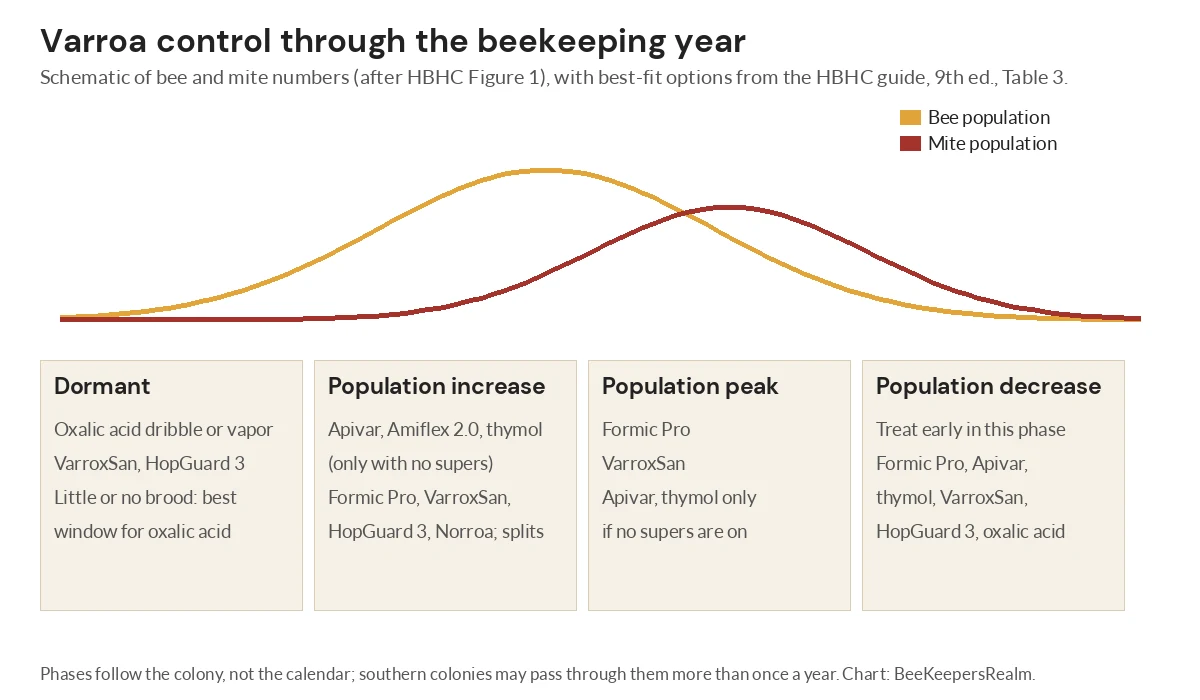
The HBHC organizes control around four colony phases rather than calendar months, because a colony in Georgia and one in Minnesota reach them at different times. Southern colonies may cycle through them more than once a year.
| Phase | Best-fit options (HBHC Table 3) | Watch out for |
|---|---|---|
| Dormant | Oxalic acid dribble or vapor, VarroxSan, HopGuard 3; thymol or formic if warm enough | Heavy hive manipulation in cold weather |
| Population increase | Apivar or Amiflex 2.0 (no supers), thymol (no supers), Formic Pro, VarroxSan, HopGuard 3, Norroa; splits, drone brood removal, brood break | Pre-supering withdrawal periods |
| Population peak | Formic Pro, VarroxSan; Apivar or thymol only if supers are off | Oxalic dribble or vapor, HopGuard 3 and older synthetics are not the best fit |
| Population decrease | Formic Pro, Apivar or Amiflex 2.0, thymol, VarroxSan, HopGuard 3, oxalic acid | Treating late: the guide says to act early in this phase |
The decrease phase, in late summer and early fall, is the one that decides winter. That is when colonies raise the long-lived winter bees, and mites on adult bees climb as brood rearing slows. A late treatment, the HBHC warns, may not protect a colony that has already taken the virus damage. Our seasonal varroa treatment calendar breaks this down month by month.
Rotation, Resistance and the Follow-Up Count
Mites breed fast enough to adapt to any active ingredient used over and over. The HBHC’s advice is to rotate active ingredients through the year rather than raise the dose or treat more often, which only speeds up resistance. A practical pattern is formic or oxalic acid in one window and a different class, such as amitraz or hop acids, in the next, with the next year’s plan based on what your counts showed.
Then check the result. Re-test after every treatment ends. The HBHC says a successful treatment generally brings an alcohol wash under 2%; if the count is still over threshold, apply another suitable method without delay. If a high count comes back, what to do after a high mite count covers the next steps.
The mistakes behind most “treatment failures” are routine ones:
- Treating by the calendar, not the count. It wastes product and gives mites extra exposure to the same chemistry.
- Skipping the follow-up wash. Without it you cannot tell a failed treatment from a re-infested colony.
- Ignoring the temperature window. Formic acid in a heat wave can kill brood and queens; thymol in cool weather barely vaporizes.
- Treating one hive in a yard. Apivar’s label says to treat all your colonies at the same time to avoid re-infestation, and Apistan’s says to treat every infested colony in the yard.
- Cutting strips or shortening treatments. It is off-label, and it leaves surviving mites exposed to a weak dose.
- Using expired or badly stored product. The HBHC lists both as common causes of apparent failure.
Write down every count and treatment. A few seasons of records show which yards and which queens run hot, and that tells you more than any single threshold. Our guide to what records every beekeeper should keep includes a mite log layout.
For where Varroa actually feed on an adult bee, see honeybee anatomy.
For the newest oxalic acid option, see oxalic acid extended release.
Frequently Asked Questions
What is the most effective treatment for varroa mites?
It depends on brood and season. With heavy brood, formic acid reaches mites in sealed cells. In a broodless colony, oxalic acid is the usual choice. Makers report efficacy of 83 to 97% for Formic Pro and 82 to 99% for broodless oxalic acid.
What is the natural enemy of the varroa mite?
Researchers have found predatory arthropods, fungi and other microbes attacking varroa, but none is registered or proven as a hive treatment. Virginia Tech’s extension team notes many have never been field tested. Hygienic and mite-biting bees are the practical “natural” control.
What kills varroa mites immediately?
Nothing kills every mite at once. Oxalic acid on a broodless colony gives the quickest knockdown of mites on bees. Formic acid acts within days and reaches mites under cappings; Apivar 2.0 and Amiflex 2.0 also give early knockdown.
Can you eat honey from a hive with varroa mites?
Yes. Varroa parasitizes bees, not people. What matters for honey is treatment timing, which is why labels such as Apivar’s ban use with supers on and ApiLife Var’s require removal 30 days before harvest.
Is it too late to treat for varroa in the fall?
Treat anyway, but expect less benefit. Colonies already damaged may still fail. Once brood rearing stops, a broodless oxalic acid treatment cuts the mite load the colony carries into spring.
What kills varroa mites naturally?
The naturally derived options are the registered biopesticides: formic acid, oxalic acid, thymol and hop beta acids. Powdered sugar dusting and unregistered oils are not reliable controls, the HBHC says.
How often should I test for varroa mites?
Monthly from spring buildup through fall, plus a wash after every treatment. The HBHC’s minimum is four tests between the summer peak and the fall decline.
Where to Go Next
If you do one thing this week, do an alcohol wash and compare it with the threshold table above. Then choose a product from the season and supers tables, and read its label before you open the package.