Reviewed by Thomas B. · Last Updated November 20, 2026 · How we review
Table of Contents
- What Apiguard Is
- A Gel, Not a Strip or Vapor Cloud
- Equipment Needed: Why You Need a Spacer
- Dosing: Full Tray vs. Half Dose
- Step-by-Step Application
- Treatment Duration: 4 to 6 Weeks Total
- Temperature: 60°F and Rising
- The Honey-Taint Problem
- Best Timing: After Harvest
- Bulk Tubs vs. Pre-Filled Trays
- Apiguard vs. Formic Acid vs. Apivar vs. OAV
- Organic Certification Considerations
- Signs the Treatment Is Working
- Colony Strength and Apiguard
- The Smell: What to Expect
- Rotating Apiguard Into a Broader IPM Plan
- Common Mistakes
- FAQ
What Apiguard Is
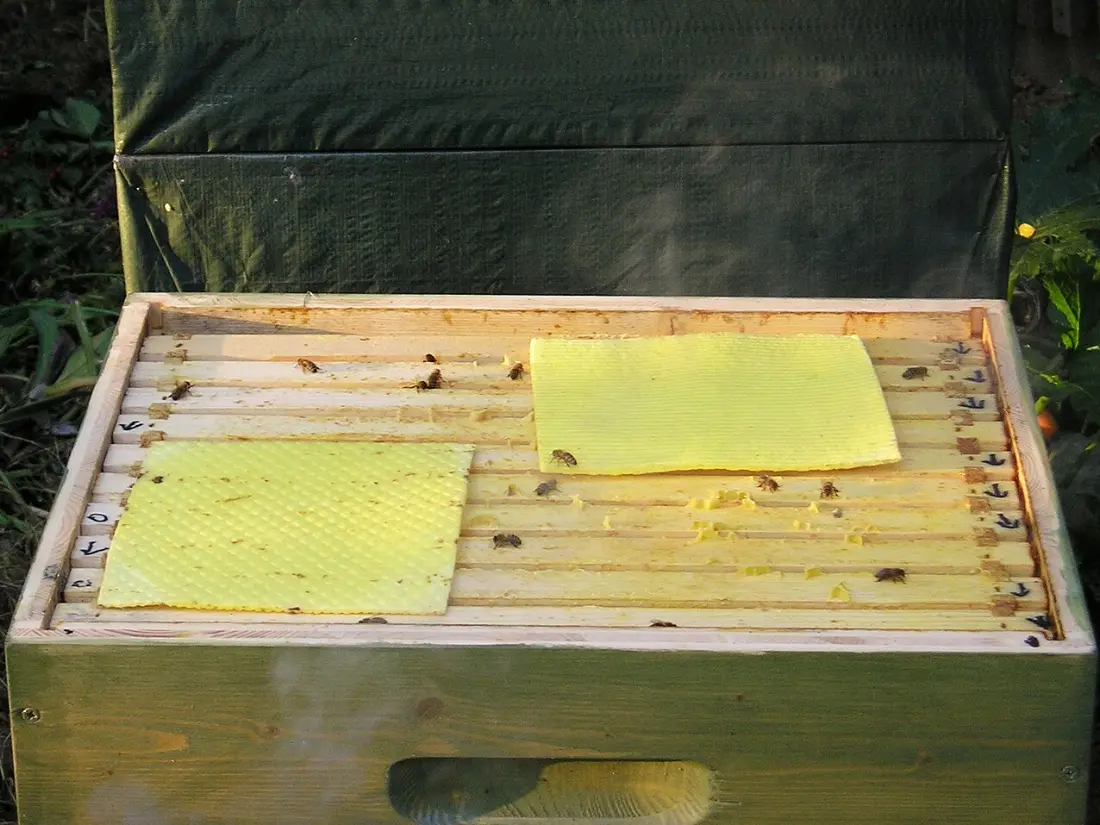
Apiguard is a varroa mite treatment built around thymol — a natural compound derived from thyme — suspended in a slow-release gel matrix, typically supplied as 25% thymol gel in pre-portioned trays. Rather than being absorbed by direct contact (like Apivar) or dispersing purely as vapor from a saturated pad (like formic acid strips), Apiguard’s gel slowly releases thymol vapor over an extended period as bees work the gel and gradually carry it off the tray (they remove it rather than eat it).
Key Takeaways
- Apiguard is a slow-release gel containing 25% thymol, set in a tray on top of the brood frames.
- A full treatment is one 50 g tray, then a second 50 g tray two weeks later, for 4 to 6 weeks in total under the US label.
- The US label says not to use Apiguard when the daily high is below 60°F or above 105°F.
- Above 77°F, a 25 g half dose can be used, repeated at 1 to 2 week intervals for up to four applications. Small colonies and nucs get a single 12.5 to 25 g dose.
- Honey supers must come off before treatment, because thymol can taint honey. The label says Apiguard works best in late summer after the honey harvest.
- Leave at least 1/4 inch of space between the tray and the cover board, using an eke or an empty super, so bees can reach the gel.
A Gel, Not a Strip or Vapor Cloud
This physical form is worth understanding because it changes practical handling in ways the other treatments covered on this site don’t share. The gel sits in an open tray placed directly on top of the brood frames, rather than being hung between frames (Apivar) or laid across the top bars as a saturated pad (formic acid). Bees actively interact with the gel over time — walking across it, and in some accounts gradually removing and relocating portions of it within the hive — which is part of the mechanism by which thymol vapor and residue spread through the colony.
Equipment Needed: Why You Need a Spacer
Because the tray sits directly on the brood frames and needs enough vertical clearance for bees to actually access and work the gel, an empty spacer box (called an “eke” in UK beekeeping terminology) or an empty super placed above the brood chamber is typically required — without this extra space, the inner cover would sit too close to the tray for bees to reach it properly. You’ll also want the hive’s entrances fully open during treatment, since adequate airflow is part of how thymol vapor circulates and reaches the colony effectively.
- Apiguard trays (pre-portioned) or a bulk tub with a dosing syringe/tray for larger operations
- An eke, spacer, or empty super to create clearance above the brood chamber
- Basic hive tools for the application and removal visits
- The label’s protective gear: chemical-resistant gloves, goggles or safety glasses, a long-sleeved shirt and long pants (the label carries a DANGER warning because the gel can cause irreversible eye damage)
Dosing: Full Tray vs. Half Dose
Standard dosing for a pre-filled tray is one full 50g tray placed gel-side-up in the center of the brood frames, followed two weeks later by a second tray, so two trays complete a full treatment for one hive. The US label allows a half dose only in hot weather: above 77°F, a 25g half tray (cut with scissors) or sachet can be used, one at a time, repeated at 1-2 week intervals for up to four applications where mites persist, removing any gel left from the previous dose first. Small and wintering colonies and nucs get a single dose of 12.5-25g left until it is gone. Don’t exceed 50g per application: the label warns that a larger dose can cause agitation, absconding or increased mortality.
Step-by-Step Application
- Confirm the daily high is at least 60°F and below 105°F, the label’s limits, since thymol’s vapor release depends on warmth (and gets too strong in extreme heat).
- Peel back the tray lid (for pre-filled trays), leaving one corner attached, and place the tray gel-side-up in the center of the brood frames.
- Add an eke or empty super above the brood box so there is at least ¼ inch of free space between the top of the tray and the cover board.
- Close up the hive, ensuring entrances remain fully open for airflow.
- Leave the first tray in place for about 2 weeks, checking that the bees are actively removing the gel during this period.
- Replace with a second tray after two weeks, and leave it until it is empty, usually another 2-4 weeks; the label sets a total treatment period of 4 to 6 weeks, and the trays must come out before honey supers go on.
Treatment Duration: 4 to 6 Weeks Total
Combining both tray applications, a full Apiguard treatment cycle runs 4 to 6 weeks under the US label — meaningfully longer than formic acid’s 7-20 days (MAQS 7 days; Formic Pro 14 days, or two 10-day single strips), though generally comparable to or somewhat shorter than Apivar’s 6-8 week window. This extended timeline reflects thymol’s own slow-release mechanism and the two-tray dosing structure most labels call for.
Temperature: 60°F and Rising
Apiguard needs consistently warm conditions to work well — the US label says not to use it when the daily high is below 60°F (or above 105°F), a higher floor than formic acid’s 50°F; Apivar’s label sets no minimum temperature. Below this threshold, thymol’s vapor release from the gel slows significantly, reducing the treatment’s practical effectiveness even if the gel itself remains physically in place. This makes Apiguard more of a late-summer/early-fall treatment in many temperate climates, once temperatures are reliably warm but before the season turns cold.
The Honey-Taint Problem
Thymol has a strong, distinctive minty-herbal aroma and flavor, and it’s genuinely capable of tainting the flavor of honey stored in the same hive during treatment if supers are still in place — this is a real practical reason Apiguard, like Apivar, isn’t approved for use during an active honey flow with supers on. Beyond the regulatory restriction, there’s a straightforward flavor-quality reason to keep this treatment strictly to a post-harvest window: honey that’s absorbed noticeable thymol character is a genuinely different, less marketable product than honey harvested before treatment began.
Best Timing: After Harvest
Apiguard is most commonly used after the main honey harvest (the label says efficacy is best in late summer after harvest, when brood is diminishing, though it can be used in spring against a severe infestation once days reach 60°F), once supers have been removed and only the brood boxes remain on the hive — this timing naturally satisfies both the regulatory restriction and the honey-flavor concern in one step, while also lining up with late-summer/early-fall temperatures that tend to be warm enough for effective thymol release in many regions.
Bulk Tubs vs. Pre-Filled Trays
For beekeepers treating only a hive or two, pre-portioned trays are the simplest option — no measuring, no separate dosing tray needed. Larger operations treating many colonies often find a bulk tub more economical, using a provided syringe or dosing tool to portion 50g doses onto separate dosing trays for each hive. The active ingredient and mechanism are identical either way; the choice is purely about convenience and cost at your specific scale. Neither format offers a treatment-quality advantage over the other.
Apiguard vs. Formic Acid vs. Apivar vs. OAV
| Apiguard | Formic Acid | Apivar | OA Vaporization | |
|---|---|---|---|---|
| Form | Slow-release gel | Saturated pad | Contact strip | Vapor (single session) |
| Honey flow safe? | No | Yes | No | Typically outside flow |
| Min. temperature | ~60°F | ~50°F | No label minimum | Less critical to the process |
| Duration | 4-6 weeks | 7-20 days, by product | 6-8 weeks | Single session, repeatable |
| Capped brood penetration | Limited | Yes | No (contact-based) | No |
Organic Certification Considerations
Because thymol is a naturally derived compound rather than a synthetic acaricide like amitraz, Apiguard is often categorized alongside formic and oxalic acid as an option more compatible with organic or “natural” beekeeping approaches, in contrast to Apivar’s synthetic classification. If organic certification or a natural-treatment-only philosophy matters for your operation, confirm the current specific certification standards you’re working under, since exact allowed-substances lists can vary by certifying body and region.
Signs the Treatment Is Working
Watch for steady, visible removal of the gel from the tray during each 2-week check — a tray that still looks nearly full well into its treatment window can indicate temperatures aren’t warm enough for the bees to be actively working it, or that colony strength is too low to be interacting with the treatment area as expected. As with the other treatments covered on this site, a mite count before treatment begins and again after the full 4-6 week cycle completes is the most reliable way to confirm real effectiveness, since gel consumption alone tells you bees are interacting with it but doesn’t directly measure mite mortality. Standard alcohol wash or sugar roll sampling techniques both work fine for this before-and-after comparison, whichever method you already use for routine monitoring.
Colony Strength and Apiguard
Apiguard performs best on colonies that are genuinely strong going into treatment, both because a robust population is more likely to actively work the gel at the rate the treatment schedule assumes, and because the extended 4-6 week duration is a real commitment of hive space and beekeeper attention that pays off better on a colony worth that investment. A weak or struggling colony heading into fall, the season most Apiguard treatment typically happens, may be better served addressing the underlying weakness first (feeding, requeening, combining with another colony) rather than adding an extended thymol treatment on top of an already precarious situation. A treatment isn’t a substitute for basic colony health, and applying one to a colony that’s struggling for unrelated reasons rarely produces the result you’re hoping for.
Common Mistakes
| Mistake | Why it matters |
|---|---|
| Applying without adequate clearance above the tray | Bees can’t properly access and work the gel without an eke or empty super creating that space |
| Treating with honey supers still on | Risks both a labeling violation and genuine thymol taint in honey intended for harvest |
| Applying below 60°F | Thymol vapor release slows significantly in cool conditions, reducing effectiveness even with the gel correctly placed |
| Not replacing the first tray with a second at the right interval | The full 4-6 week treatment relies on both tray applications completing in sequence, not just the first |
The Smell: What to Expect
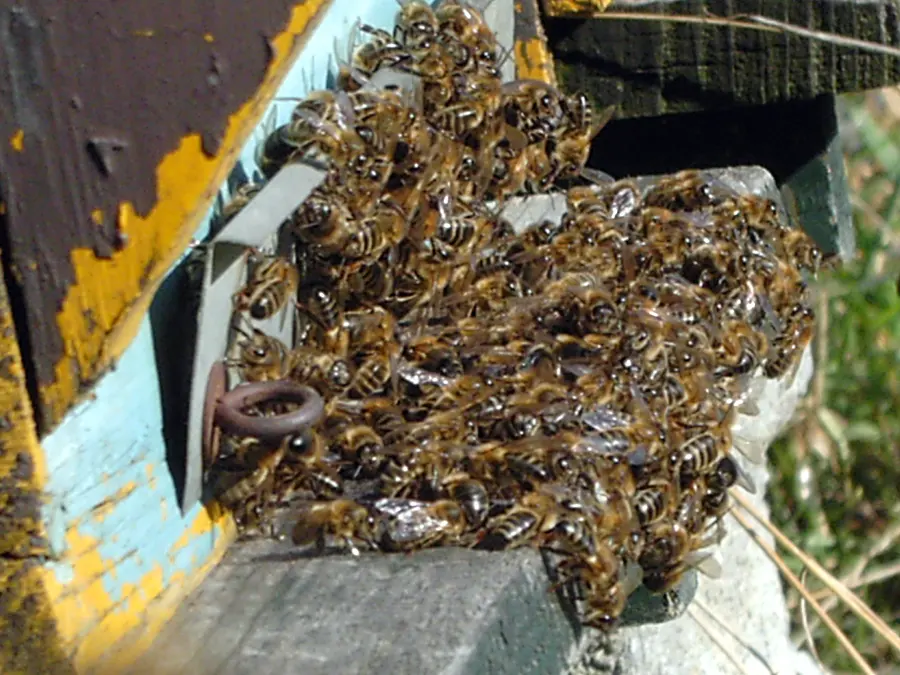
Thymol has a strong, distinctly minty-herbal smell that’s noticeable both around the hive during treatment and, briefly, on bees themselves — this is completely normal and expected, not a sign of a problem. Some beekeepers report their bees seeming mildly more active or agitated at the entrance during the first few days of a fresh application, generally settling down as the colony adjusts to the treatment’s presence. This initial reaction typically fades within the first week. Strong agitation, bees leaving the hive, or dead bees out front are different: the label links those to overdosing (more than 50g per application), and its advice is to remove the excess gel. If you’re treating multiple hives close together, be aware the smell can be noticeable across a fairly wide area of the apiary, which is worth mentioning to neighbors if your hives are anywhere near a shared property line. A brief heads-up before treatment starts is a small courtesy that can prevent an unnecessary complaint from someone unfamiliar with what a normal beekeeping treatment cycle looks and smells like.
Rotating Apiguard Into a Broader IPM Plan
Like the other treatments covered on this site, Apiguard works best as one component of a rotating, integrated approach rather than a sole year-round treatment — pairing a post-harvest Apiguard cycle with oxalic acid vaporization during a broodless winter window is a common seasonal pattern, since the two work at different points in the year and through different mechanisms. Consistent mite monitoring across the season, rather than treating purely on a fixed calendar, remains the foundation that makes any of these treatment choices actually effective rather than just routine. Keeping a simple written record of which treatment was used on which colony and when, across a full season, makes it much easier to spot patterns (a colony that never seems to fully recover from mite pressure regardless of treatment, for instance) that a single season’s memory alone tends to miss.
Sources
Dosing, application requirements, temperature limits and safety guidance follow the US Apiguard master label (EPA Reg. No. 79671-1, Vita (Europe) Ltd., September 17, 2024); formic acid durations follow the MAQS and Formic Pro labels. See the Honey Bee Health Coalition’s Tools for Varroa Management guide for additional authoritative detail.
FAQ
Why does Apiguard need an eke or spacer above the brood box?
The gel tray sits directly on the brood frames and needs vertical clearance for bees to physically access and work the gel — without an eke, empty super, or similar spacer, there isn’t enough room.
Can Apiguard taint honey flavor?
Yes, genuinely — thymol has a strong minty-herbal aroma that can transfer into honey stored in the same hive during treatment, which is why it’s used after harvest with supers removed, not during an active honey flow.
What temperature does Apiguard need to work?
The US label says not to use it when the daily high is below 60°F or above 105°F — a higher floor than formic acid’s 50°F, while Apivar’s label sets no minimum. Below this, thymol vapor release from the gel slows significantly.
How long does a full Apiguard treatment take?
Four to six weeks total under the US label, across two sequential tray applications — the first tray for 2 weeks, then a second tray for another 2-4 weeks until it is empty.