Reviewed by Thomas B. · Last Updated November 20, 2026 · How we review
Table of Contents
- What Apivar Is
- A Genuinely Different Mechanism: Contact, Not Vapor
- Dosing: Strips Per Brood Box
- Where to Place the Strips
- Treatment Duration: 6-8 Weeks
- Temperature Sensitivity (or Lack of It)
- The Strict Honey Super Rule
- Best Timing: Spring and Fall
- Apivar Original vs. Apivar 2.0
- Storage and Shelf Life
- Apivar vs. Formic Acid vs. Oxalic Acid Vaporization
- Resistance: A Real Long-Term Concern
- Signs the Treatment Is Working
- Colony Size and Strip Distribution
- Where Apivar Fits in an IPM Plan
- Safe Handling and Disposal
- Common Mistakes
- FAQ
What Apivar Is
Apivar is an EPA-registered varroa mite treatment consisting of plastic strips impregnated with amitraz, a synthetic acaricide, hung between frames in the brood chamber for an extended period. It’s often described as a commercial “workhorse” treatment specifically because of its long track record, relatively simple application, and extended treatment window that requires less precise timing than some vapor-based alternatives.
Key Takeaways
- Apivar amitraz strips are dosed at about 1 strip per 5 frames of bees, which usually means 2 strips per standard 10-frame brood box.
- The original Apivar stays in the hive for 42 days, with a 56-day maximum. Apivar 2.0 stays in for 42 days if no brood is present and 70 days if brood is present.
- Honey supers must come off before strips go in. Supers can go back on 14 days after removal for the original Apivar, and right away for Apivar 2.0.
- Both US labels allow no more than two Apivar treatments a year, one in spring and one in fall.
- The US labels set no temperature range, but the strips must hang inside the cluster, because bees pick up amitraz by walking across them.
- Amitraz resistance has been documented in some regions, so rotate Apivar with other treatment classes instead of using it every season.
A Genuinely Different Mechanism: Contact, Not Vapor
This is the detail that sets Apivar apart from oxalic acid vaporization and formic acid strips, both of which work through vapor spreading through the hive air. Apivar works through direct physical contact — bees walking across the strip pick up amitraz on their bodies, then spread it to other bees and onto mites through normal colony movement and contact. This contact-based mechanism is part of why Apivar’s effective radius depends on having enough strips distributed for bees to actually contact regularly, which is the basis for its specific dosing guidance. Understanding this mechanism is genuinely useful practical knowledge, not just trivia, since it explains why placement location within the hive matters more for Apivar than it does for a vapor-based treatment that fills the whole airspace regardless of exactly where the strip sits.
Dosing: Strips Per Brood Box
Standard dosing is roughly 1 strip per 5 frames of bees, which in practice usually works out to 2 strips per standard 10-frame brood box. For a colony spread across two brood boxes, this typically means 4 strips total, distributed to ensure bees throughout the colony have reasonable opportunity for contact. Follow your specific product’s current label for exact figures, since dosing guidance is tied to the registered label and shouldn’t be estimated loosely given amitraz’s status as a regulated acaricide.
Where to Place the Strips
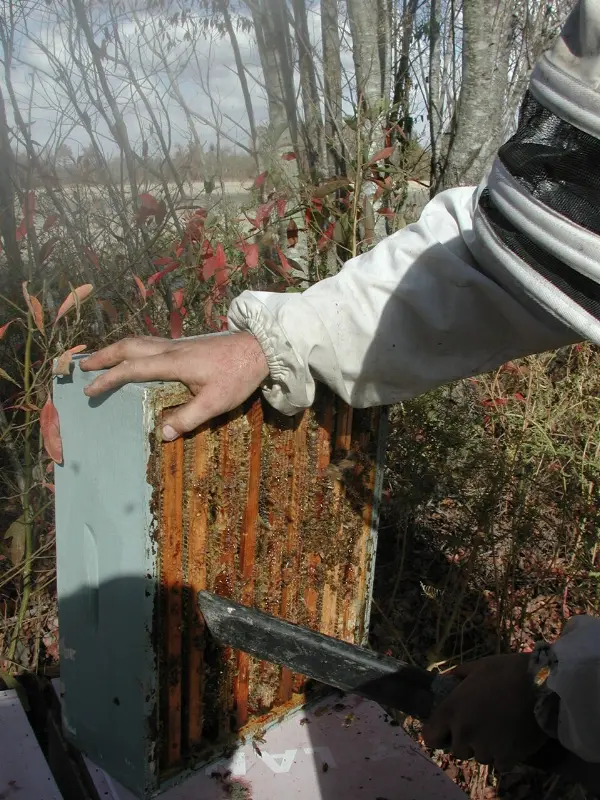
Strips should be hung in the area of peak bee activity and brood-rearing — between two comb frames inside the brood area or bee cluster, with at least two frames between strips, so bees can walk on both sides of each strip, as both U.S. Apivar labels direct. Placement that leaves the strips off to the side, away from where the colony’s population is actually concentrated, reduces the contact rate that the whole treatment mechanism depends on.
Treatment Duration: 6-8 Weeks
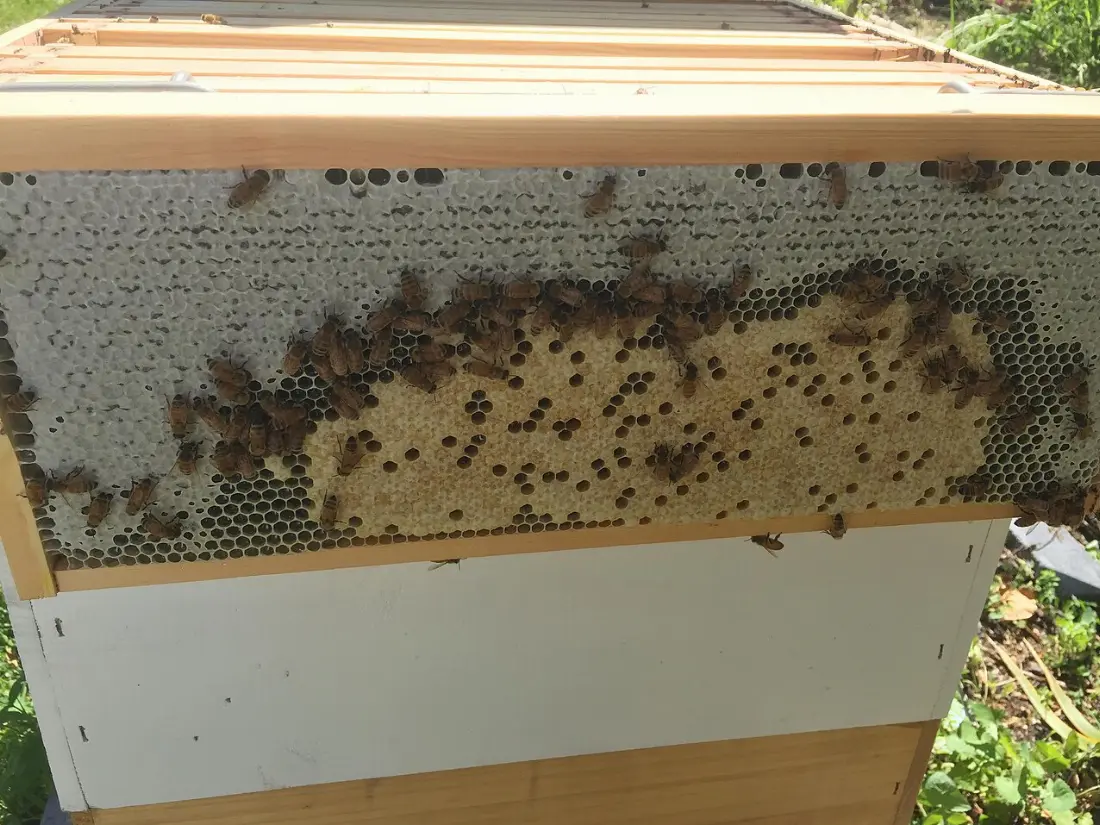
Apivar strips remain in the hive considerably longer than formic acid or oxalic acid treatments — 42 days, with a 56-day maximum, for the original Apivar (roughly 6-8 weeks), and 42 to 70 days for Apivar 2.0, whose label calls for 70 days when brood is present — reflecting its slower, contact-based mode of action compared to the faster vapor-based treatments. This longer window is generally treated as a practical advantage by many beekeepers: fewer precisely-timed visits are needed compared to a treatment requiring exact multi-day timing, though it does mean the hive carries an active treatment for a meaningfully longer stretch of the season.
Temperature Sensitivity (or Lack of It)
Unlike formic acid’s strict 50-85°F label window, the U.S. Apivar labels set no temperature range at all, and the Apivar 2.0 label lists “no temperature constraint” among its approved claims — there’s no equivalent upper-temperature risk of excessive vapor release causing bee harm. What matters instead is contact: amitraz moves from the strip to the bees as they walk across it, so the strips have to stay inside the cluster. The Apivar 2.0 label recommends checking them at mid-treatment, moving them back into the cluster if it has shifted, and scraping off propolis and wax. This makes Apivar considerably more forgiving on timing than formic acid.
The Strict Honey Super Rule
Unlike formic acid, which is labeled safe during an active honey flow, Apivar’s EPA-registered label explicitly prohibits use with honey supers intended for human consumption in place — supers need to be pulled before hanging strips. The withdrawal period after strip removal before supers can go back on varies by specific product version: Apivar 2.0 carries a zero-day withdrawal (supers can go back immediately after strip removal), while the original Apivar formulation requires a 14-day wait after strip removal before supers are reinstalled. This is a meaningful practical planning consideration if you’re timing treatment around your own honey harvest schedule.
Best Timing: Spring and Fall
A common seasonal pattern is one treatment cycle in spring, before bees begin actively collecting nectar for the season’s main flow, and a second cycle in fall, after honey has already been harvested — timing that naturally works around the honey-super restriction covered above. This pattern is also a label rule, not just a habit: both U.S. labels allow no more than two Apivar treatments a year, no more than once in spring and once in fall, and require all strips to come out before the honey flow starts (the original Apivar label says 2 weeks before).
Apivar Original vs. Apivar 2.0
Apivar 2.0 is a reformulated version of the original product, with the zero-day super-withdrawal period being one of its most practically significant improvements over the original formulation’s 14-day wait. The two also differ in strength and treatment length: Apivar 2.0 contains 3.00% amitraz instead of 3.33%, and its label allows removal after 42 days only when no brood is present, calling for 70 days when brood is present, while the original stays in for 42 days with a 56-day maximum. If you’re working from older beekeeping guidance or have older product stock, confirm which version you’re actually using before assuming a specific withdrawal period applies, since the difference directly affects how soon you can return supers after treatment.
Storage and Shelf Life
Store Apivar strips cool, dry, and away from direct sunlight, and follow the opening rule on your version’s label: the original Apivar label says to install strips immediately after opening the package, while the Apivar 2.0 label allows use within one month of opening and notes that amitraz is sensitive to oxidation. Check your specific product’s packaging for exact expiration dating rather than assuming indefinite shelf life once opened.
Apivar vs. Formic Acid vs. Oxalic Acid Vaporization
| Apivar | Formic Acid Strips | OA Vaporization | |
|---|---|---|---|
| Mechanism | Direct bee contact | Vapor, penetrates capped brood | Vapor, phoretic mites only |
| Duration | 42-56 days (Apivar 2.0: 42-70) | 7-20 days (MAQS 7; Formic Pro 14, or 10 + 10) | Single session (repeatable) |
| Honey supers | Must be removed | Safe during honey flow | Typically used outside flow |
| Temperature sensitivity | Low (no temperature range on the label) | Strict 50-85°F window | Less critical for the process itself |
| Resistance concern | Real, documented in some regions | Lower — organic acid mechanism | Lower — organic acid mechanism |
Resistance: A Real Long-Term Concern
Unlike the organic acids (formic and oxalic), amitraz resistance in varroa populations has been documented in some regions after repeated, exclusive use over multiple seasons, since it works through a specific biological mechanism rather than general chemical exposure. This is a real, practical reason many integrated pest management approaches recommend rotating Apivar with other treatment classes across seasons, rather than relying on it as the sole treatment method year after year — using the same product exclusively increases the odds of resistance developing in your local mite population over time.
Signs the Treatment Is Working
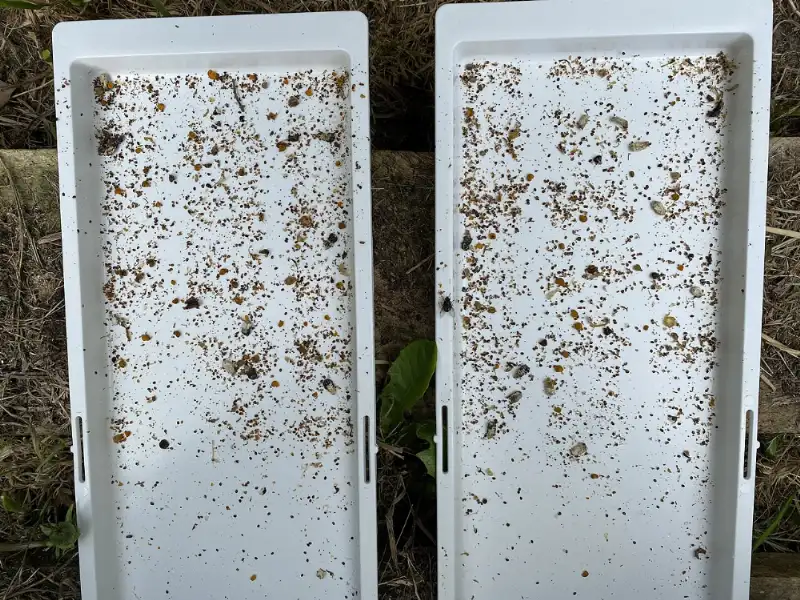
Because Apivar’s contact-based mechanism works more gradually than a vapor treatment, don’t expect a dramatic immediate mite drop the way you might see right after an oxalic acid vaporization session. Instead, track mite counts via a standard alcohol wash or sugar roll test both at the start of treatment and again partway through and at the end of the 6-8 week window, looking for a steady, sustained decline over that period rather than a single dramatic drop. A count that isn’t declining meaningfully by the midpoint of the treatment window is worth investigating — check that strips are still properly positioned in high-activity areas and that the colony’s overall population and behavior look otherwise normal. A colony that seems otherwise healthy but shows minimal mite decline partway through treatment may also simply need the full duration to complete before real judgment is fair, given how gradual this particular mechanism is compared to faster vapor treatments.
Colony Size and Strip Distribution
Because the contact mechanism depends on bees physically encountering the strips during normal movement, colony size and cluster distribution affect how well a standard dosing guideline actually performs in practice. A very large, actively expanding colony spread across multiple boxes may benefit from strips distributed across more of that space rather than concentrated only in the bottom box, ensuring bees throughout the full colony have reasonable contact opportunity rather than just the portion nearest the strips. This is especially worth considering for colonies that have grown significantly since your last treatment cycle and may now need more strips than a dosing plan set for their earlier, smaller size. Following label guidance on strip count relative to frame count remains the core rule, but thinking about actual bee distribution within a larger or unusually configured colony is a reasonable practical addition to that baseline.
Common Mistakes
| Mistake | Why it matters |
|---|---|
| Leaving honey supers on during treatment | Directly violates the EPA label, which prohibits amitraz use with supers intended for human consumption in place |
| Removing strips too early, before the 6-8 week window completes | Cuts short the extended contact-based treatment period the dosing and duration are calibrated around |
| Ignoring the version-specific super-withdrawal period | Original Apivar needs 14 days after removal before supers return — assuming the 2.0 zero-day rule applies to older stock is a labeling violation |
| Using Apivar as the only treatment, year after year, without rotation | Increases the risk of amitraz resistance developing in the local mite population over time |
Where Apivar Fits in an Integrated Pest Management Plan
Given both its resistance concern and its genuinely different mechanism from organic acid treatments, Apivar tends to work best as one rotating component of a broader varroa management approach rather than a standalone, year-round solution. A common pattern combines a spring or fall Apivar cycle with organic acid treatments (oxalic acid vaporization during broodless windows, formic acid when capped-brood penetration matters most) at other points in the season, giving mite populations less consistent exposure to any single mechanism and reducing the odds of resistance developing to any one treatment. Even beekeepers who’ve had good long-term results with Apivar alone are generally better served planning for eventual rotation rather than assuming their local mite population will never develop reduced sensitivity. Regular mite monitoring throughout the season, rather than treating on a fixed calendar without checking actual mite levels, remains the foundation any of these treatments should be layered onto.
Safe Handling and Disposal of Used Strips
Amitraz is a regulated acaricide, and used strips should be handled and disposed of according to the specific guidance on your product’s label. Wear chemical-resistant gloves when handling strips during both placement and removal and avoid skin contact; the original Apivar label also calls for coveralls over a short-sleeved shirt and short pants, plus socks and footwear, and the Apivar 2.0 label for a long-sleeved shirt, long pants, shoes and socks. Both U.S. labels give the same disposal instruction: wrap used strips in newspaper and place them in the trash, and never re-use strips. If your state or local rules are stricter, your local extension office or municipal hazardous-waste program can point you to the correct disposal channel for your area. Keeping strips, both new and used, away from children and pets during storage and handling is standard practice for any regulated pesticide product in a home apiary setting.
Sources
Dosing, placement, duration, honey-super, storage and disposal rules above are taken from the U.S. labels for Apivar (EPA Reg. No. 87243-1, label dated July 2021) and Apivar 2.0 (EPA Reg. No. 87243-5, label dated December 2025); the formic acid temperature window is from the U.S. Formic Pro and Mite Away Quick Strips labels. Always follow the label on the product you buy. For further verification, see the Honey Bee Health Coalition’s Tools for Varroa Management guide.
FAQ
How long do Apivar strips stay in the hive?
The original Apivar stays in for 42 days, with a 56-day maximum (6-8 weeks); Apivar 2.0 stays in for 42 days if no brood is present and 70 days if brood is present — considerably longer than formic acid strips or a single oxalic acid vaporization session, reflecting its slower, contact-based mechanism.
Can I leave honey supers on during Apivar treatment?
No — the EPA label prohibits this. Supers intended for human consumption must be removed before treatment, with a withdrawal period (0 days for Apivar 2.0, 14 days for the original formulation) before they can go back on.
How many Apivar strips do I need per hive?
Roughly 1 strip per 5 frames of bees, commonly working out to 2 strips per standard 10-frame brood box, or about 4 strips for a two-box colony. Always confirm against your product’s current label.
Does Apivar work in cold weather?
The U.S. labels set no temperature limits for Apivar, unlike formic acid’s 50-85°F window. It works through bee contact, so in cool weather make sure the strips hang inside the cluster, where bees can still walk across them, and remember that the labels allow only a spring and a fall treatment each year.