Reviewed by Thomas B. · Last Updated September 30, 2026 · How we review
Making a new split, starting a nuc, or requeening a colony all reshuffle a hive’s mite population in ways that catch beekeepers off guard — a “clean” parent colony can produce a split that hits treatment threshold before the parent does. Here’s what actually changes and when to act.
What all of these distinct scenarios genuinely share is a disruption to the normal, gradual mite-population dynamics that a standard seasonal calendar generally assumes without adjustment. A colony that hasn’t been split, combined, or requeened builds mite pressure relatively predictably across a season, but any of these interventions resets or redistributes that population in ways a routine monthly check might miss entirely if it isn’t specifically timed around the disruption itself.
Key Takeaways
- Test every split and nuc on its own within 7–14 days; a split carries brood-associated mites and a smaller colony reaches threshold with fewer of them.
- Introducing a mated queen does not create a true broodless period: capped brood from the old queen keeps emerging for up to 21 days (24 for drones) while the new queen starts laying.
- A real broodless window only comes when the colony raises its own queen, gets a queen cell or virgin, or you cage or isolate the queen on purpose.
- During a broodless window every mite is on the adult bees, so wash counts read higher and oxalic acid works best. When laying resumes, counts can drop without the mite load having changed.
- Studies disagree on brood breaks: combined with oxalic acid they controlled mites well in Georgia and across Europe, but a 24-day fall queen-caging trial in Florida weakened colonies. Timing and season matter.
Table of Contents
- Varroa and Splits
- Varroa in Nucs
- Varroa in Package Bees
- Combining Colonies Before Treatment
- Varroa and Honey Supers
- Varroa Levels After Requeening
- Post-Treatment Retesting
- Treatment Rotation
- Keeping Records
Varroa and Splits
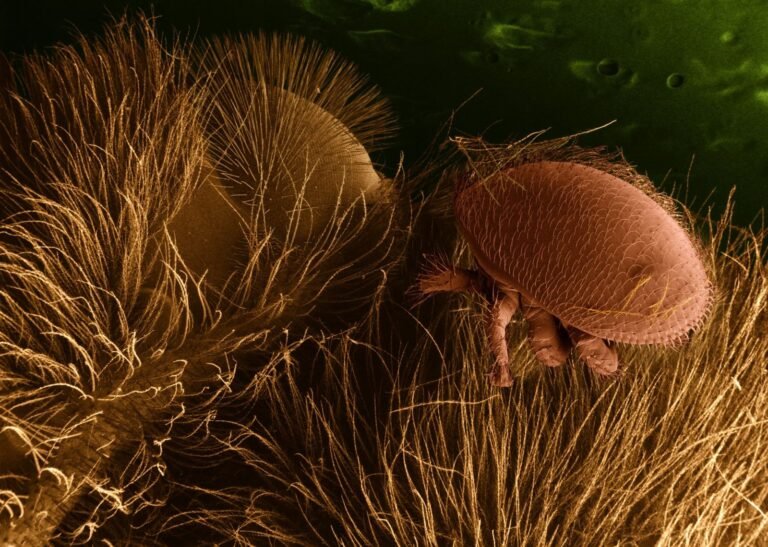
When you divide a colony, mites don’t split evenly by simple bee count — they distribute along with the brood and nurse bees specifically, and because mites concentrate in brood, a split built from brood frames can take a disproportionate share of the parent colony’s mites with it. That means a split made from a colony that tested well can still start life with a meaningful mite load, especially if brood-heavy frames were chosen for the split (which is common, since that’s exactly what makes a strong split).
Check the split within 7–14 days using a sugar shake or standard sample. If the parent colony was near or over threshold before the split, treat the split promptly rather than assuming its smaller size means lower risk — a small colony can hit threshold with a much lower absolute mite count than a large one.
Making multiple splits from a single strong parent colony complicates this picture further: mite distribution across several simultaneous splits isn’t perfectly even, so one split from a batch can end up carrying a meaningfully higher mite load than its siblings even though they all came from the same source colony on the same day. Testing each split independently, rather than assuming a single test on one split represents the whole batch, is the only way to catch this kind of uneven distribution.
Varroa in Nucs
Small colonies genuinely need earlier, more conservative intervention than full-size hives, for a fairly simple underlying reason: a nuc has far less overall bee mass and brood volume available to absorb mite-related losses before the whole small unit becomes seriously compromised. Standard treatment protocols generally still apply to nucs, but with careful attention to a few key adjustments — dosing that’s proportional to the smaller cluster size where the label allows adjustment, and closer monitoring given how quickly a small population can shift.
Sample size is worth thinking through more carefully for a nuc specifically, since the standard 300-bee alcohol wash sample represents a considerably larger share of a small 5-frame nuc’s total population than it does for a full-size colony with tens of thousands of bees. A precise tool like the Varroa EasyCheck can help keep the process quick and consistent when working with these smaller, more delicate samples where every bee genuinely counts toward the nuc’s buildup.
Varroa in Package Bees
Package bees present a genuinely different starting scenario than either a split or a nuc: a package is entirely broodless at installation, made up of a mass of shaken adult bees with no comb, no brood at all, and initially no queen actively laying since she typically arrives caged separately. This means any mites present in the package are, by definition, entirely in the phoretic phase on installation day — a rare, naturally occurring window that mirrors the broodless winter period in mite-vulnerability terms, except it arrives at the very start of the season rather than at the end of it. Some beekeepers take deliberate advantage of this narrow window by treating with oxalic acid at or very shortly after installation, before the colony has had time to raise any brood that would otherwise protect mites from the treatment’s reach; see our discussion of whether and when to medicate package bees for the tradeoffs involved in treating this early versus waiting to establish a genuine baseline count first before deciding whether treatment is even warranted.
The counterargument for waiting is straightforward: a package sourced from a reputable supplier with its own monitoring program may simply not need treatment at all, and treating reflexively regardless of actual mite presence wastes product and contributes to the same resistance-selection pressure discussed elsewhere in this guide. There’s no universally correct answer here — it genuinely depends on the source colony’s known mite history and how much risk a beekeeper is willing to accept without a baseline count in hand.
Combining Colonies Before Treatment
Combining a weak hive into a stronger one is a common fall move, particularly for colonies unlikely to survive winter on their own, but the decision should rest on mite counts from both colonies involved, not just their overall visible strength or population size. Combining two colonies that both carry unaddressed high mite counts simply creates one larger colony with a compounded mite problem, rather than solving anything — the combined bee mass doesn’t dilute the mite population the way it might intuitively seem to. Where practical, test and treat each colony individually before combining, or at minimum treat immediately after combining rather than assuming the stronger colony’s health will absorb the weaker one’s mite load.
The standard newspaper-combine method, where a sheet of ordinary newspaper slows the two colonies’ gradual introduction and reduces fighting between them, doesn’t change any of this underlying mite-management logic — it’s purely a behavioral technique for merging populations peacefully, not something that addresses mite load in any way. Treating before or immediately after the combine remains genuinely necessary regardless of which specific combining method is actually used in practice.
Varroa and Honey Supers
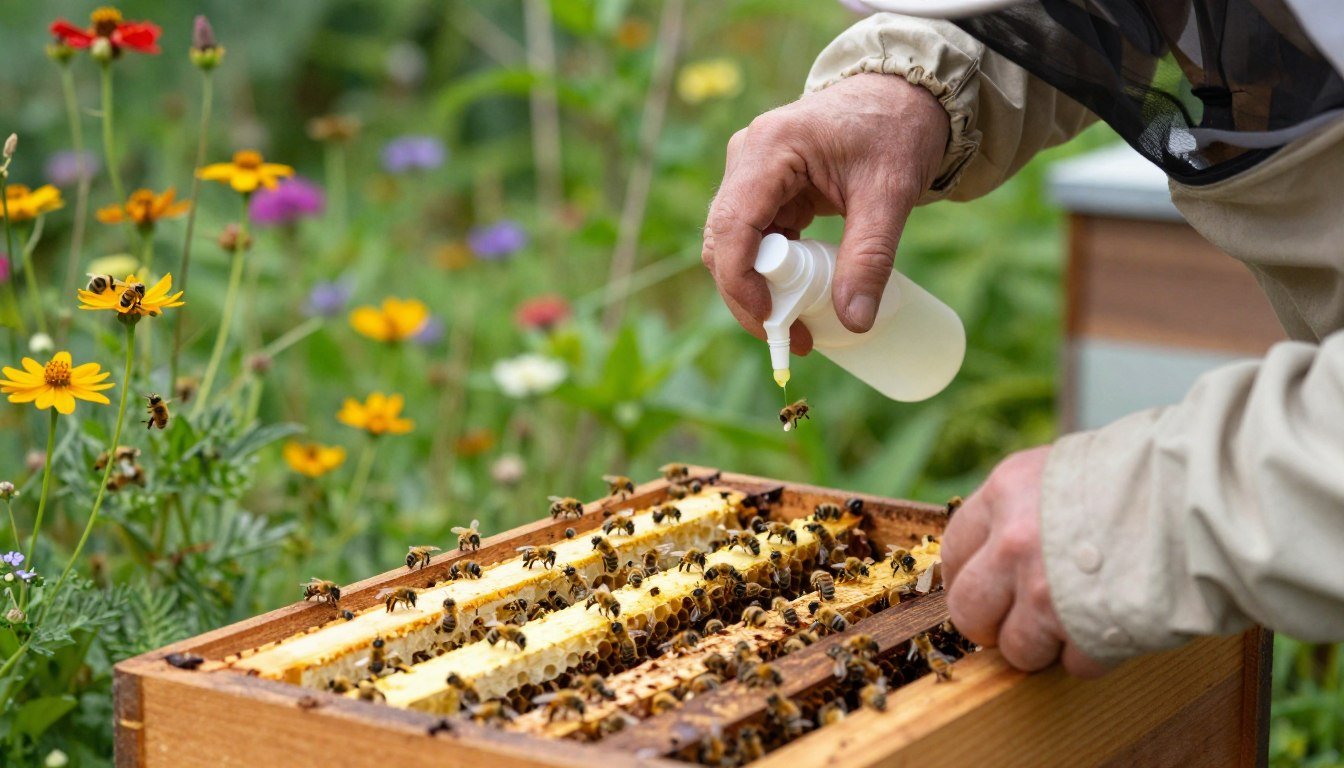
If a colony being split, combined, or requeened already has honey supers on at the time, the same product label restrictions that apply more generally (see varroa treatment options compared) still apply here. Time supers off, or choose a super-safe treatment option, rather than treating around the restriction. HopGuard is worth knowing about specifically for this scenario, since it remains one of the few treatments labeled safe to use with supers on if a split or newly requeened colony needs intervention during an active flow.
Varroa Levels After Requeening
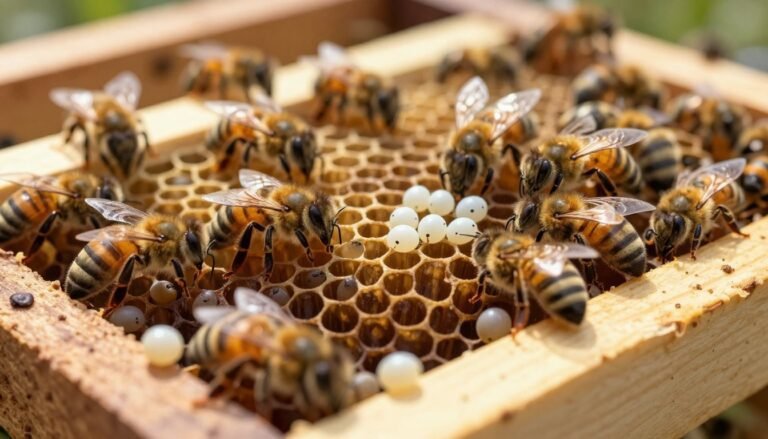
How mite levels behave after requeening depends almost entirely on how you requeen, because what matters is whether the colony actually goes broodless. Varroa reproduce only inside capped brood cells. Worker brood takes about 21 days from egg to emergence and drone brood about 24, so until the last capped cell from the old queen has emerged, some mites are still breeding out of reach of a wash or an oxalic acid treatment.
Introducing a mated queen in a cage is the most common route, and it does not create a true brood break. There is a short pause in new eggs while the colony accepts her, but the old queen’s capped brood keeps emerging for up to three weeks and the new queen usually starts laying within days of release, so the colony never runs out of brood. Treat counts from this route exactly as you would any other count.
Letting the colony raise its own queen, or giving it a queen cell or virgin queen, is different. Once the last capped brood emerges, the colony is genuinely broodless until the new queen mates and starts laying, which depends on weather and can take a while. That window is the one worth planning around.
| Requeening route | True broodless period? | What a mite wash shows | Best treatment timing |
|---|---|---|---|
| Mated queen introduced in a cage | No; old brood keeps emerging while the new queen starts laying | A normal count; compare with your usual threshold | Your usual monitoring and treatment plan |
| Queen cell, virgin queen, or colony raises its own | Yes, from the last brood emerging (about 21 days after the last worker eggs, 24 for drones) until the new queen lays | All mites are on adult bees, so the count reflects the whole load and reads higher than it would with brood present | Oxalic acid during the broodless window, before new brood is capped |
| Deliberate queen caging or isolation | Yes, by design | Same as above, at the end of the caging period | Oxalic acid at the end of the break; see the research below |
How to read mite counts after requeening
In a broodless colony every mite is riding on adult bees. That makes a wash taken in the window a more complete picture of the total load, and it also means the percentage will look higher than the same colony would show with brood present. When the new queen starts laying, mites move back into cells to breed, and the wash percentage can fall even though the number of mites in the hive has not changed. Don’t read that drop as success. Retest three to four weeks after the new queen starts laying, when the colony has capped brood again, and compare that count with your normal threshold.
Requeening itself does not reduce mite pressure long-term. A new queen only changes the colony’s mite trajectory if she carries more hygienic or mite-resistant genetics than the queen she replaced; otherwise mite reproduction resumes with her brood.
What the research says about brood breaks
The broodless window matters because oxalic acid only reaches mites on adult bees. As NC State Extension’s guide to oxalic acid for varroa control puts it, oxalic acid is not effective at killing mites under cappings and works best during a period of broodlessness. How well a brood break works in practice, though, varies with timing and method:
- Georgia, summer: University of Georgia researchers (Berry et al. 2023, Journal of Insect Science) isolated queens for 14 days and vaporized oxalic acid on day 21. Mite mortality was about six times background, versus about three times for oxalic acid alone, and treated colonies stayed below a 2% threshold (median 1.8%) while untreated controls rose to 5%. No colonies died.
- Europe, summer: A trial on 370 colonies in 10 European countries (Büchler et al. 2020, Journal of Apicultural Research) found queen caging plus oxalic acid removed 48% to 90% of mites depending on how the acid was applied; trickling a 4.2% solution (89.6%) and vaporizing 2 g (88.3%) performed best.
- Florida, fall: A University of Florida trial (Jack, van Santen and Ellis 2020, Journal of Economic Entomology) caged queens for 24 days in the fall and concluded that oxalic acid and/or brood interruption did not provide sufficient varroa control, that fall queen caging can hurt colony strength and survival, and that amitraz-treated colonies did better.
The practical reading: a broodless window after requeening is a genuine opportunity to treat with oxalic acid, especially in summer, but don’t rely on the break alone, and be cautious about deliberately stretching a break late in the season when the colony needs to raise winter bees. For the mechanics of a planned break, see our guide to the brood break queen cage, and for choosing a route and timing, see the best time to requeen a hive.
Post-Treatment Retesting
Confirming a treatment actually worked matters just as much as applying it correctly in the first place, and it’s a step that’s genuinely easy to skip once a treatment is physically done and out of mind. Retest 7–14 days after treatment ends using the same method and sample size as your pre-treatment count, so the two numbers are actually comparable. A meaningful drop confirms the treatment worked; a count that’s still high or has barely moved means either the treatment underperformed — worth checking temperature compliance and full duration against the specific product label — or reinfestation from drift or robbing is bringing mites back in from neighboring colonies faster than the treatment managed to clear them out.
Distinguishing between these two failure modes matters for what to do next: an underperformed treatment usually calls for a different active ingredient or a corrected application on retreatment, while ongoing reinfestation calls for addressing the source colony nearby or tightening entrance reducers to limit robbing pressure, since simply repeating the same treatment won’t fix a reinfestation problem no matter how well it’s applied.
For oxalic acid treatments specifically, mite drop observed on a sticky board in the days immediately following application gives an early read on effectiveness, though a full wash or roll a week or two out remains the more reliable confirmation. Our full guide to oxalic acid vaporization covers this early sticky-board read alongside the complete application process in more depth.
Treatment Rotation
Using the same active ingredient repeatedly, treatment cycle after treatment cycle without variation, accelerates the local mite population’s ability to develop meaningful resistance to it over successive generations. Rotating between at least two or three genuinely different treatment types with different modes of action across a season — for example, formic acid in late spring, thymol mid-summer, oxalic acid in the broodless winter window — keeps any single resistance mechanism from being repeatedly selected for. This matters especially for operations managing many colonies over years, where resistant mite lineages can establish and spread between hives. Full application guides for the treatments most commonly rotated into a program like this are available for Apiguard thymol gel, Apivar amitraz strips, and Formic Pro and MAQS.
Keeping Records
A simple, consistently maintained log — date, hive number, sample method, count, and any treatment applied — makes the genuine difference between reacting to gut feeling in the moment and actually tracking, with real data, whether your ongoing management approach is working the way you assume it is. At minimum, record enough to answer: when did I last test this hive, what did I find, what did I do about it, and did a retest confirm it worked. For operations managing more than a handful of colonies, a digital platform like the one covered in our guide to HiveTracks makes tracking this across splits, nucs, and parent colonies considerably more manageable than paper logs, especially once a single parent colony has spawned several splits that each need their own independent tracking history.
For how to make the split itself, including timing against your nectar flow, see splitting hives: when and how.
Sources
- Honey Bee Health Coalition, Tools for Varroa Management.
- Tarpy and Keller, Oxalic Acid for the Control of Varroa Mites, NC State Extension.
- Berry, Braman, Delaplane and Bartlett (2023), “Inducing a summer brood break increases the efficacy of oxalic acid vaporization for Varroa destructor control,” Journal of Insect Science.
- Büchler et al. (2020), “Summer brood interruption as integrated management strategy for effective Varroa control in Europe,” Journal of Apicultural Research 59(5): 764–773.
- Jack, van Santen and Ellis (2020), “Evaluating the efficacy of oxalic acid vaporization and brood interruption in controlling the honey bee pest Varroa destructor,” Journal of Economic Entomology 113(2).
FAQ
Should I treat a new split for varroa even if the parent colony tested low?
Check it independently within 7–14 days rather than assuming. Mites concentrate in brood, so a split made from brood frames can carry a meaningful share of the parent colony’s mites, and its smaller population means it can hit threshold at a lower absolute mite count.
Does requeening reduce varroa levels?
Not by itself. Introducing a mated queen leaves capped brood in the hive throughout, so there is no real brood break. Letting the colony raise its own queen does create a broodless window, which is an ideal time to treat with oxalic acid, but mites resume breeding once she lays. A new queen only lowers mite pressure long-term if she carries more hygienic or mite-resistant genetics.
Why did my mite count drop after the new queen started laying?
Often because mites moved from the adult bees into the new brood to reproduce, not because there are fewer of them. A wash only samples mites on adult bees. Retest three to four weeks after she starts laying and compare with your normal threshold before deciding the problem is solved.
How soon should I retest after treatment?
7 to 14 days after the treatment period ends, using the same sampling method and sample size as your pre-treatment count so the two numbers are directly comparable.
Should package bees be treated for varroa right at installation?
Some beekeepers do, taking advantage of the naturally broodless window at installation, but it’s not universal practice. Establishing a baseline count and treating only if needed is a reasonable alternative to treating every package as a default.
Can one split from a batch have a different mite load than its siblings?
Yes. Mite distribution across simultaneous splits from one parent colony isn’t perfectly even, so testing each split independently rather than extrapolating from a single sample is the only reliable way to catch an outlier.
For a related deep dive, check out our article on brood break queen cage: understanding its purpose and use.