Last Updated September 14, 2026
Varroa management isn’t a single event — it’s a year-round rhythm of monitoring and acting at the right points in the colony’s cycle. Here’s how that rhythm typically breaks down across a full beekeeping season, stage by stage.
The specific treatments named at each stage below matter less than the underlying logic driving the timing: brood volume determines which treatments can even reach the mites hiding under cappings, temperature determines which products are safe and effective to apply without harming the colony, and the presence of honey supers determines which options are legally and practically available at that point in the season. Once that logic clicks, adapting the calendar to an unusual year, a late or early spring, or an atypical colony becomes far more intuitive than trying to memorize a fixed month-by-month checklist that assumes every season looks the same.
Key Takeaways
- Varroa treatment timing follows the colony’s actual brood cycle and honey-super status, not a fixed calendar date — the same underlying logic adapts to an early or late season.
- Late summer is the single highest-stakes window, because it’s when the “winter bee” generation is reared, and mite damage to their fat body reserves during this period is a leading cause of colonies that look fine in fall but fail to survive winter.
- Winter’s broodless cluster is the single most efficient window for oxalic acid, since nearly the entire mite population is exposed on adult bees with nowhere left to hide.
- A deliberate brood break interrupts mite reproduction directly at its source, but costs the colony 2-3 weeks of new worker production — a real tradeoff worth weighing, not a routine step for every colony.
- Regional timing shifts by six to eight weeks between the earliest and latest climates this calendar covers — anchor treatment decisions to actual brood volume and forage signals, not a generic national month.
Table of Contents
- Early Spring
- Late Spring
- Summer / Nectar Flow
- Late Summer — the Critical Window
- Fall
- Winter — the Broodless Window
- Brood Breaks as a Seasonal Tool
- Adjusting This Calendar for Your Climate
- The Full-Season Pattern
- Frequently Asked Questions
Early Spring
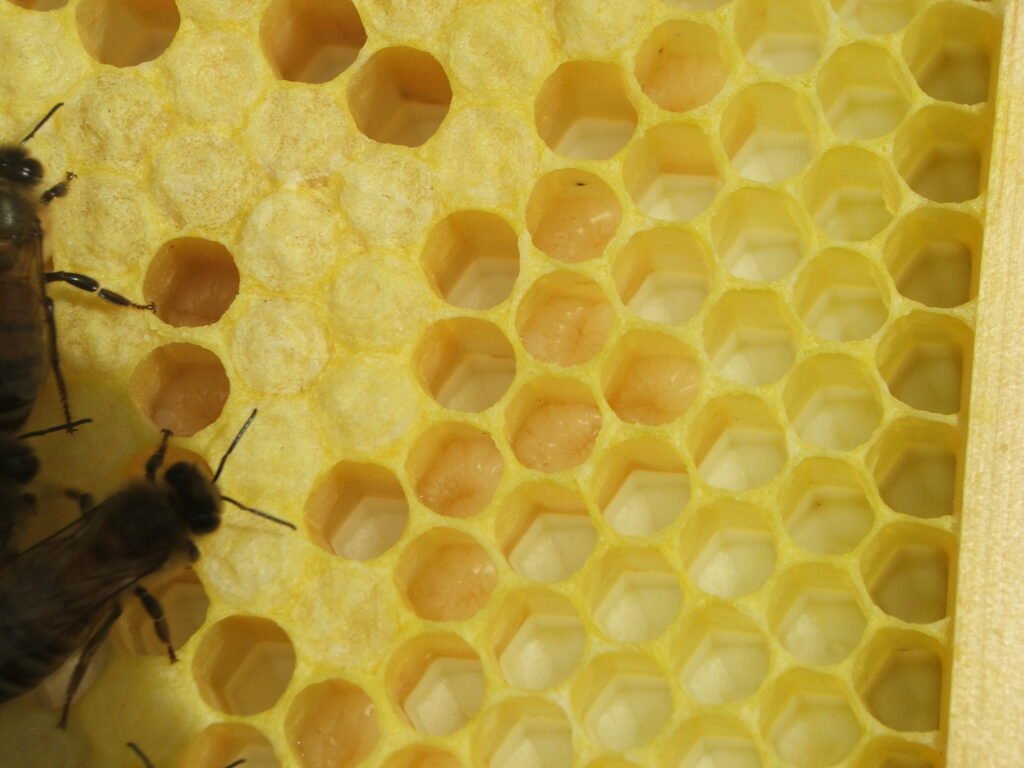
Colonies are building brood rapidly during this period, and this is often the last genuinely easy window before rising brood volume makes formic acid or thymol — both of which can reach mites hiding under sealed cappings — the more practical treatment options going forward through the rest of the season. If the colony went into winter with a genuine broodless period and that window is still open, an early oxalic acid treatment before brood rearing ramps up can knock back phoretic mites cheaply and with minimal colony disturbance. Take a genuine baseline alcohol wash as soon as the colony is strong enough to sample without setting it back. Our full walkthrough of oxalic acid vaporization covers the equipment and technique for this early, broodless-window application in detail.
Late Spring
Brood volume is at or near its seasonal peak during this stretch, which also means mite reproduction is likewise at its peak, since a larger volume of capped brood cells gives mites considerably more opportunity to reproduce fully protected from direct treatment. Monthly monitoring should continue, and this is a common window for making splits — which itself resets some mite dynamics (see varroa management for splits, nucs, and requeened colonies). If a count crosses threshold, formic acid remains usable through this period as temperatures allow — see our Formic Pro and MAQS application guide for label-specific timing and temperature windows.
Summer / Nectar Flow
Treating during an active nectar flow is genuinely complicated by honey supers — several treatments restrict or prohibit use with supers on, since residues or tainted flavor become a real risk to the honey crop meant for human consumption. Where possible, time necessary treatments before supers go on or after they come off. If a count demands action mid-flow, check the current label for any product being considered before applying it — label restrictions on supers-on use change periodically as products and formulations are updated, so treating an older printed label as permanently current is itself a mistake worth avoiding; some products are approved for use with supers, most are not. Brood breaks and drone brood removal are useful mechanical options during this window precisely because they don’t carry that restriction — see our guide to drone brood harvesting for mite control for the specifics. For beekeepers who do need a chemical option with supers on, HopGuard is labeled as safe during an active nectar flow (strips go in the brood chamber only), and current US labels also allow formic acid (Formic Pro, Mite-Away Quick Strips) and oxalic acid with supers on; see which varroa treatments are allowed with honey supers on.
Late Summer — the Critical Window
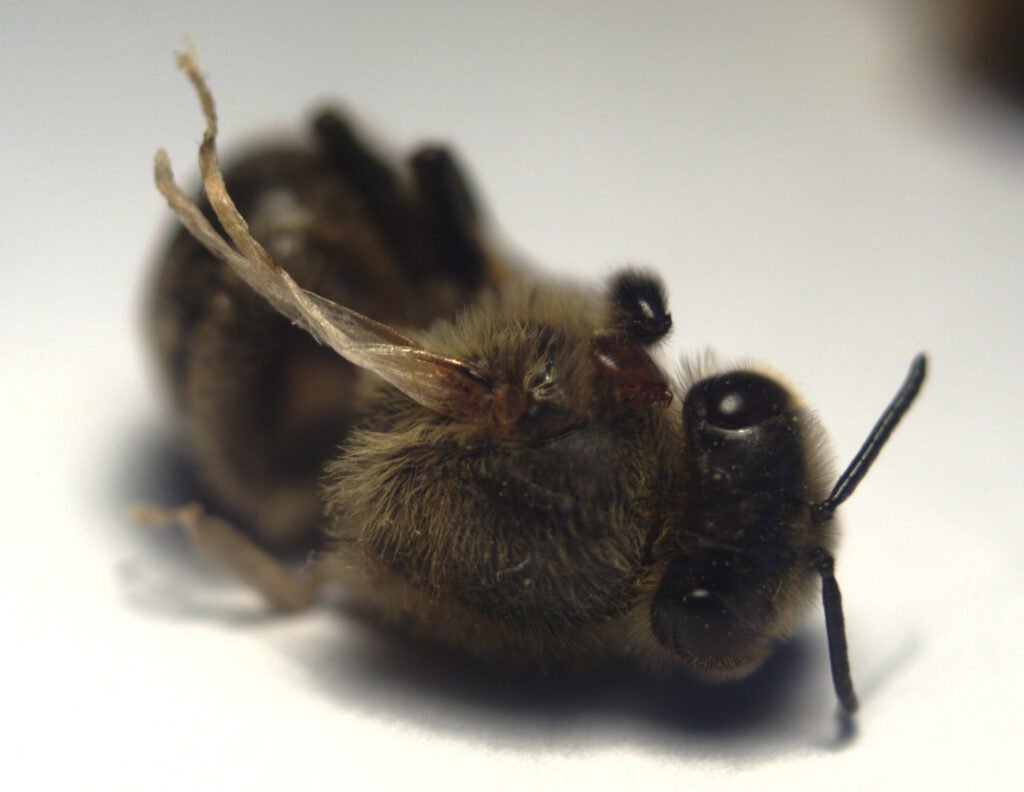
This is, without much realistic competition, the single most consequential and least forgiving period in the whole varroa-management season. The bees reared during this specific window are the “winter bees” that need to survive all the way through to spring, and mite-driven damage to their fat bodies during this critical rearing period shortens their individual lifespan considerably, which can quietly doom an otherwise strong-looking colony over the following winter even without any other visible sign of trouble. That fat-body damage isn’t a minor detail: a landmark 2019 University of Maryland/USDA ARS study led by Samuel Ramsey, published in PNAS, overturned decades of assumption by showing Varroa feeds primarily on a bee’s fat body tissue (roughly analogous to a mammalian liver) rather than its “blood” (hemolymph) as long believed — explaining directly why mite damage during this specific window has such an outsized effect on a winter bee’s ability to survive months without foraging. The full study is available via its PNAS DOI record. Step monitoring up to every two weeks through this period, and treat promptly once a count crosses threshold rather than waiting for a scheduled check — the cost of treating slightly early is far lower than the cost of losing the winter bee generation entirely to accumulated mite damage. Both formic acid and thymol remain usable if temperatures allow; oxalic acid works best once brood volume starts to taper toward the end of this window. Beekeepers managing more than a handful of colonies often find this is the period where skipping even one scheduled check has the highest real cost, since a colony that crosses threshold unnoticed here can still look outwardly healthy well into fall while quietly heading toward a winter collapse.
Fall
Once late-summer treatment is complete, confirm treatment success with a proper post-treatment count — see timing and interpreting a post-treatment count for how long to wait before that follow-up sample actually means something — and consider combining weak colonies if a hive is genuinely unlikely to build enough strength to overwinter successfully on its own, since a marginal colony carried into winter alone often just delays a loss that combining earlier could have prevented. Reduce entrances to limit robbing from neighboring colonies, since robbing is a known and well-documented route for mites to spread between otherwise separately managed hives.
Fall is also the point where the season’s cumulative monitoring data becomes genuinely useful for planning next year, not just reacting to this one: a colony or yard that ran consistently higher counts all season, even while staying under threshold at each individual check, is worth flagging for closer attention or requeening with more mite-tolerant stock the following spring, rather than waiting for it to actually cross threshold before treating it as a genuine concern worth acting on.
This kind of season-over-season pattern-spotting is exactly the sort of thing a single season’s data can’t reveal on its own — it typically takes at least two or three full seasons of consistent records to start reliably distinguishing a genuinely mite-susceptible colony line from one that simply had one unusually rough year, which is part of why keeping records well beyond the current season’s immediate treatment decisions pays off meaningfully over time.
Winter — the Broodless Window
Once the colony forms a winter cluster with little to no brood present, virtually all the remaining mite population shifts into the phoretic phase, exposed directly on adult bees rather than sheltered inside capped brood cells — making this the single most efficient window of the entire year for an oxalic acid treatment, a window that simply doesn’t exist during most of the rest of the season. A well-timed winter oxalic acid application, done during a genuine broodless spell and above the minimum temperature for briefly handling the colony, can knock the population down significantly heading into spring, often more effectively per-application than any other single treatment in the whole calendar precisely because there’s nowhere left for mites to hide from it during that specific window. Watch hive debris carefully rather than doing a full inspection; a rough sense of mite drop can be read from what has fallen onto a bottom board, without ever needing to open the winter cluster itself.
Timing the winter oxalic acid application correctly matters considerably more than most beekeepers initially expect: applying it too early, while the colony still has meaningful brood present, misses the specific efficacy advantage the broodless window provides, while waiting too long into deep winter risks handling the cluster during genuinely cold weather that stresses the colony more than the treatment benefit actually justifies. A single well-timed application during a genuine broodless stretch, confirmed by a quick debris check beforehand, generally outperforms multiple poorly-timed attempts.
Brood Breaks as a Seasonal Tool
A deliberate brood break — caging the queen for a set period, or the natural break that follows making a split — interrupts mite reproduction directly at its source, because a female mite can only successfully reproduce inside an occupied, sealed brood cell, not while riding on an adult bee. Timed well (commonly late spring or summer, when a colony can afford a temporary pause in brood-rearing without meaningfully hurting its seasonal buildup), a brood break can meaningfully reduce mite load without any chemical input at all, and it pairs naturally with an oxalic acid treatment during the artificial broodless window it creates, since that’s exactly when oxalic acid is most effective. Understanding exactly how mites behave differently once brood is sealed versus during a genuine broodless stretch helps explain why this pairing works so well — see our explainer on varroa mites in capped brood for the underlying biology.
A brood break also has a real cost worth weighing honestly against its mite-management benefit: a colony without a laying queen for two to three weeks builds no new worker population during that stretch, which can meaningfully set back honey production or fall buildup if timed carelessly. The tradeoff generally makes the most sense for a colony already running a genuinely elevated mite count where a chemical treatment alone isn’t fully solving the problem, rather than as a routine preventive step applied to every colony regardless of actual need.
Adjusting This Calendar for Your Climate
This overall calendar reflects a fairly typical temperate-climate season, but the actual calendar dates it maps to shift quite considerably by region — a beekeeper in the Deep South or coastal California may see “early spring” conditions arrive fully months before a beekeeper in the northern Midwest or a cold mountain climate does, and “late summer” critical-window timing shifts correspondingly, sometimes by a full six to eight weeks between the earliest and latest regions covered by this same general framework. Rather than anchoring rigidly to specific calendar months, it’s more reliable to anchor treatment timing to actual colony and seasonal signals instead: brood volume trends observed during routine inspections, the local forage and bloom calendar, and the typical first-frost date for your specific area all matter more than what a generic national calendar says a given week “should” look like. See our regional climate profiles for beekeepers for a closer look at how these season boundaries shift across different U.S. and international climate zones.
Beekeepers managing colonies across more than one climate zone — migratory operations, or anyone with apiaries in genuinely different microclimates within the same broader region — often end up running effectively two or three parallel calendars rather than a single one, since a fixed schedule applied uniformly across meaningfully different sites tends to be too early for some yards and too late for others no matter how carefully it’s set.
The Full-Season Pattern
| Period | Monitoring | Typical action |
|---|---|---|
| Early spring | Baseline wash | Oxalic acid if still broodless; otherwise monitor |
| Late spring | Monthly | Formic acid if threshold exceeded; consider splits |
| Summer / nectar flow | Monthly | Brood breaks, drone removal; check labels before treating with supers on |
| Late summer | Every two weeks | Treat promptly at threshold — protecting winter bees is the priority |
| Fall | Post-treatment check | Confirm success; combine weak colonies if needed |
| Winter | Debris observation | Oxalic acid during broodless cluster |
For a longer-acting treatment while brood is present, see oxalic acid extended release.
FAQ
What is the most important time of year for varroa control?
Late summer, because that’s when the winter bee generation is being reared. Mite damage during this window shortens winter bee lifespan and is a leading cause of colonies that look fine in fall but don’t survive winter.
Why is winter a good time to treat with oxalic acid?
Because the colony is broodless or nearly so during winter clustering, virtually all remaining mites are exposed on adult bees rather than protected inside capped brood — exactly the population oxalic acid is most effective against.
Can I treat for varroa while honey supers are on?
Some treatments are labeled for use with supers on, most are not — always check the current product label before treating, since applying a super-restricted treatment risks tainting the honey crop.
How often should I actually test for mites during the season?
Monthly is a reasonable baseline through spring and early summer; step that up to every two weeks during the late-summer critical window, since that’s the period where an unnoticed threshold crossing carries the highest real cost heading into winter.
What mite count actually means I need to treat?
A commonly cited actionable threshold from an alcohol wash is around 2-3 mites per 100 bees during active season, tightening to a lower threshold heading into the critical late-summer window — but treat the exact number as a starting guideline rather than a universal rule, since local mite pressure, colony strength, and time of year all shift what “too high” really means.
This calendar follows the same seasonal logic laid out in the Honey Bee Health Coalition’s Tools for Varroa Management guide, the industry-standard reference for varroa treatment timing.