Reviewed by Michael R. · Last Updated October 5, 2026 · How we review
Split a honey bee colony in spring once it has about eight or more frames of brood, drones are flying, and your main nectar flow is still four to eight weeks away. Give each half brood, food and nurse bees, plus a laying queen, a mated queen to introduce, or eggs and young larvae to raise one.
A split is a controlled swarm: it relieves the crowding that drives swarm preparations, adds a colony and breaks the brood cycle. Done badly, it leaves two weak ones. This guide draws on extension guidance from Utah State, Penn State, the University of Florida and the University of Minnesota Bee Lab.
Key Takeaways
- Split for strength, not by date: about eight frames of brood (Minnesota Bee Lab, UF/IFAS). Never split a weak colony.
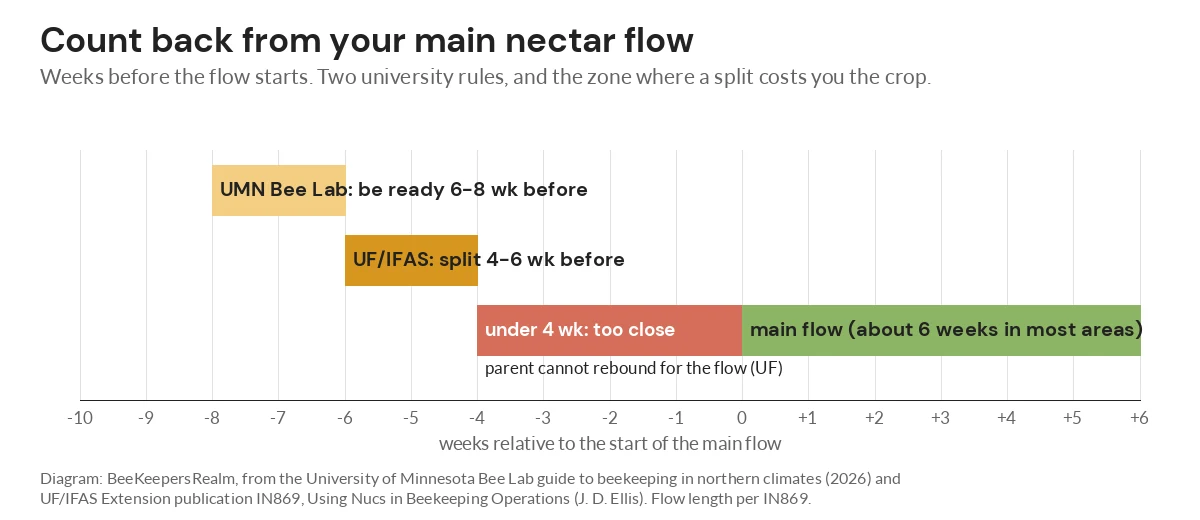
- Count back from your main flow: UF says split four to six weeks before it, Minnesota says be ready six to eight weeks before. Closer than four weeks costs you the crop.
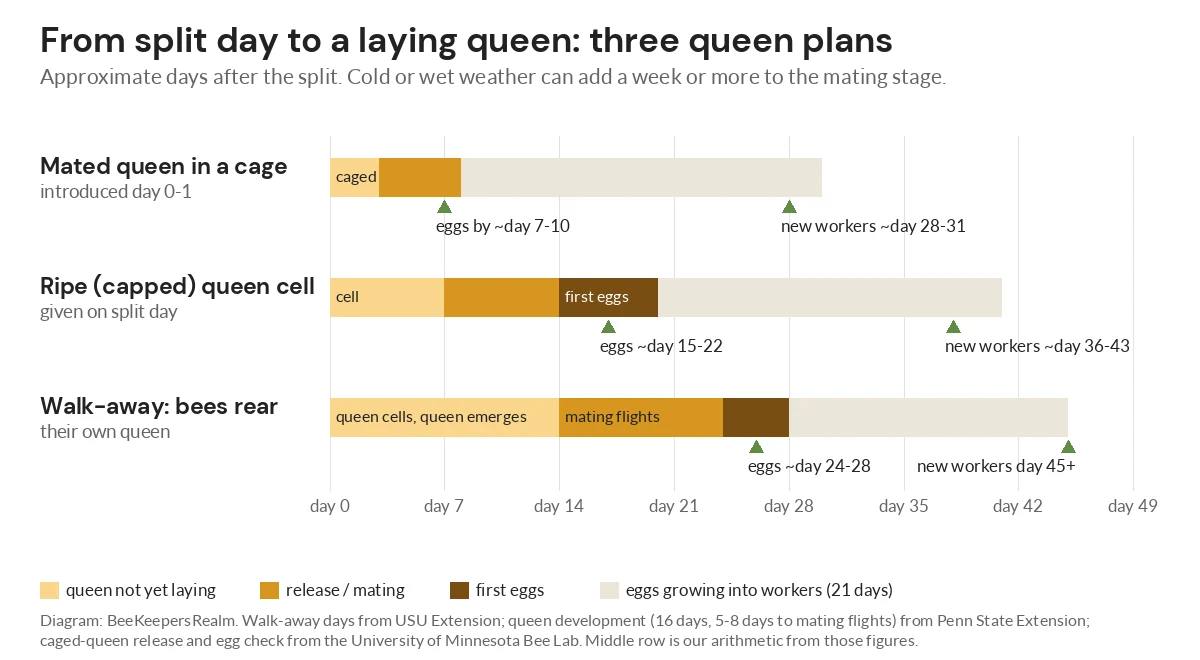
- Pick the queen plan first. A mated queen can have eggs in the comb in 7 to 10 days; a walk-away split takes 24 to 28 days to first eggs and about 45 days to new workers.
- Any half that must raise a queen needs eggs or larvae under three days old.
- Leave a queen-rearing split alone while the queen emerges and mates.
- A queenless split pauses brood rearing, giving a short window to treat for varroa. It is not mite control on its own.
Table of Contents
- When to Split a Beehive
- Choose Your Queen Plan First
- How to Split a Hive: Three Methods
- Same Yard or a New Yard?
- After the Split: Day-by-Day Checks
- What a Split Costs You, and Common Mistakes
- Frequently Asked Questions
- The Bottom Line
When to Split a Beehive
Timing depends on colony strength and on how far away your main nectar flow is, not on the month.
Signs a colony is ready
- Brood. The University of Minnesota Bee Lab’s guide to beekeeping in northern climates says a colony is strong enough to divide at 8 or more frames of brood. UF/IFAS Extension puts a typical parent colony at about eight.
- Crowding. In Penn State Extension’s split video, the rule is a colony at least two hive bodies tall that seems crowded.
- Drones. Flying drones mean a new queen will have mates. Drones need roughly 10 to 12 days after emerging to mature, so plenty of capped drone brood is an early go signal.
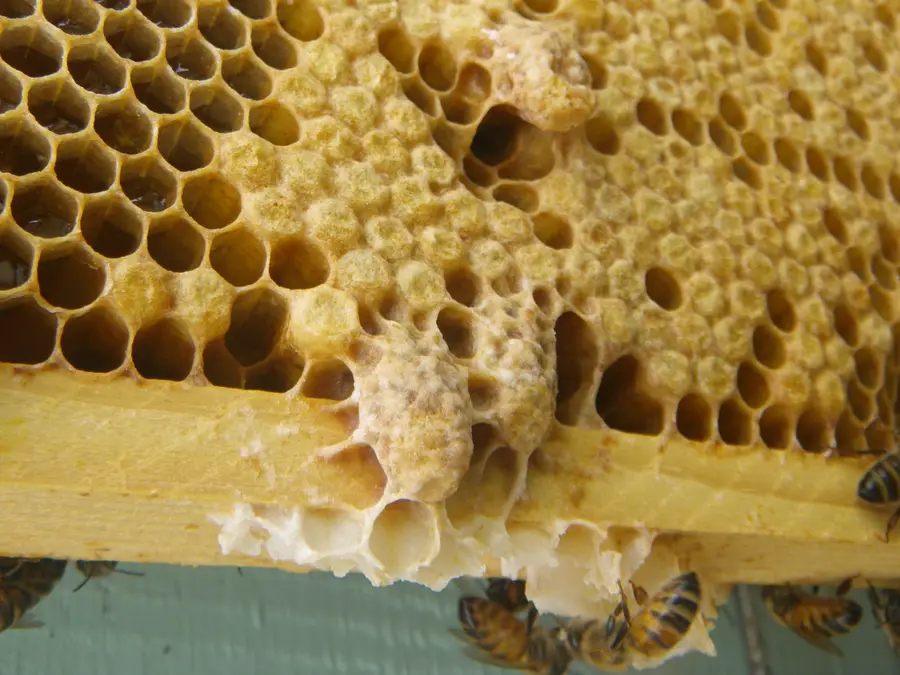
- Charged queen cells. A queen cup is empty and short. A charged cell holds an egg or larva in royal jelly; in a crowded spring colony it usually means swarm preparations have begun. See signs your hive is preparing to swarm and how to tell swarm cells from supersedure cells.
Utah State’s guidance is blunt about the opposite case:
“Weak hives, with small populations or hives that have struggled to produce adequate honey supplies, should never be split.”
A first-year colony rarely reaches eight frames of brood in time; see whether you can split a first-year nuc.
In this 15-minute Penn State Extension video, the presenter explains swarming, then splits a colony. She moves the queen on her frame into a new box, shares honey and pollen evenly, and swaps the hives’ positions so returning foragers boost the queenright half. Her timing cues for temperate regions: drone brood, blooming dandelions, and late April or May.
Count back from your main nectar flow
The two programs that put a number on timing measure it from the start of the main flow:
“It is important to note that splitting a full-size colony too close to the main nectar flow can be counterproductive.”
Ellis recommends splitting four to six weeks before the main flow so the parent colony can rebound. Minnesota’s Bee Lab says to “be ready to divide about 6 to 8 weeks before the main nectar flow.” Where spring build-up is slow, use the longer lead. Not sure when your flow starts? See nectar flows by U.S. climate zone.
How the four programs time splits in their own regions:
| Source | Region | Strength to split | When they split |
|---|---|---|---|
| University of Minnesota Bee Lab (guidebook, 2026) | Upper Midwest | 8 or more frames of brood | 6 to 8 weeks before the main flow; usually around fruit-tree and dandelion bloom |
| UF/IFAS Extension, IN869 | Florida and the Southeast | About 8 frames of brood | 4 to 6 weeks before the main flow; spring or summer, difficult in fall and winter |
| Penn State Extension (video) | Temperate Northeast | Two, preferably three, hive bodies tall and crowded | Late April or May; as early as March after a mild winter |
| Utah State University Extension | Intermountain West | Large population after overwintering | Typically late March through April, before heavy flows, once nights stay warm |
One regional rule overrides timing: where Africanized bees are present, Ellis advises buying a mated queen of European stock instead of letting a split raise its own. That covers parts of the southern and southwestern U.S.; see how to identify Africanized bees.
When it is too late
Fall and winter splits are hard, Ellis notes, because there are no drones for a new queen to mate with. Summer splits can work, but count forward first: UF puts it at five to six weeks until a new queen’s first workers emerge, USU at day 45 or later, and the colony shrinks meanwhile. Our rule of thumb from those figures: if your last flow ends within about seven weeks of the split, use a mated queen, feed, or wait until spring.
Choose Your Queen Plan First
One half always loses its laying queen. How you replace her decides how long that half goes without new eggs.
| Queen plan | First eggs (days after the split) | First new workers emerge | Best for |
|---|---|---|---|
| Mated queen in a cage | About 7 to 10 | About day 28 to 31 | Speed, chosen genetics, Africanized areas |
| Ripe (capped) queen cell | About 15 to 22 | About day 36 to 43 | Using cells from a colony that is already swarming |
| Walk-away: bees raise their own | About 24 to 28 (USU) | Day 45 or later (USU) | Low cost; a longer brood break for mite control |
The middle row is our arithmetic. Penn State Extension’s introduction to queen development says a queen cell is capped about nine days after the egg is laid and the queen emerges at about 16 days. She then spends “five to eight days in the hive prior to taking her mating flight(s)” and starts laying a few days after mating. Bees can rear a queen from any female larva under three days old, so a walk-away half needs eggs or very young larvae. More: how soon a new queen starts laying.
How to Split a Hive: Three Methods
Have it all ready first: bottom board, box, covers, entrance reducer, frames (drawn comb if you have it), a feeder with 1:1 sugar syrup and, if buying, the queen. Work on a warm afternoon while foragers are out.
1. Walk-away split (no queen to find)
- Divide the brood so each box has eggs, young larvae and capped brood, with honey and pollen frames on the outside.
- Check that the queenless side has fresh eggs, or it cannot raise a queen.
- Set the boxes on separate bottom boards, fill gaps with frames, reduce entrances and feed.
- Check in four or five days. The box with queen cells and no fresh eggs is the queenless half.
2. Nuc split that moves the old queen
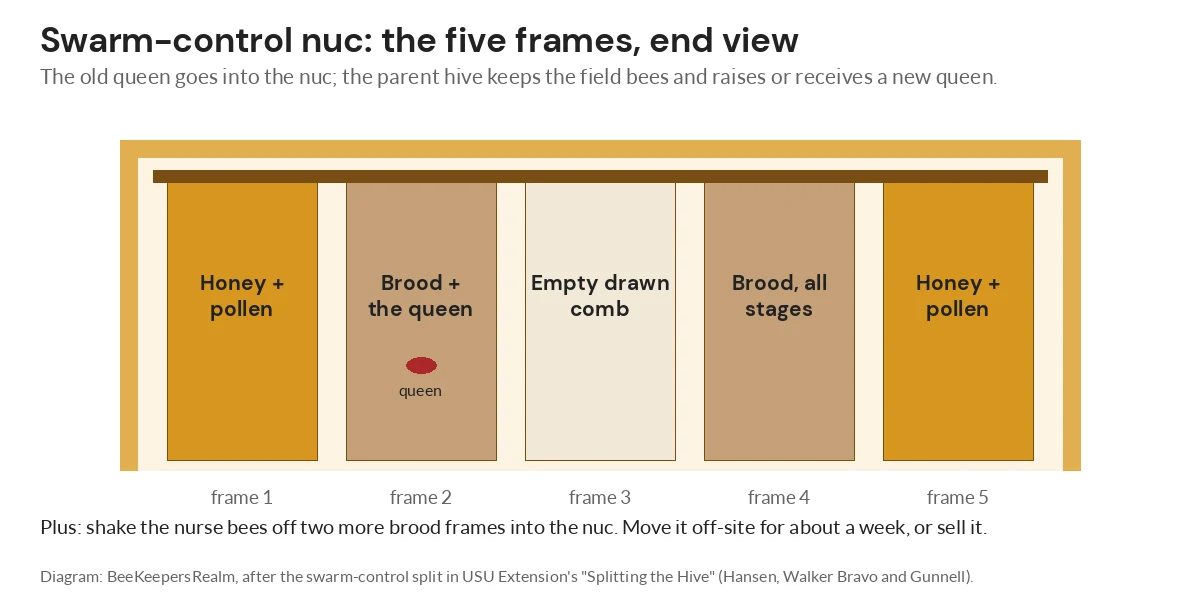
This is USU’s swarm-control split and the method in the Penn State video. It suits a colony that has started swarm cells, because the old queen leaves with the nuc.
- Find the queen and move her on her frame, without handling her, into a five-frame nuc. Her frame should hold eggs and brood of every stage.
- Add one more brood frame and two honey-and-pollen frames on the outside, with drawn comb in the center for her to lay in.
- Shake the nurse bees from two more brood frames into the nuc.
- The parent keeps the foragers, the brood and its queen cells and raises a new queen, or you introduce a mated one. Never leave queen cells with the laying queen; Penn State warns this can trigger a swarm.
3. The four-day egg check (Minnesota method)
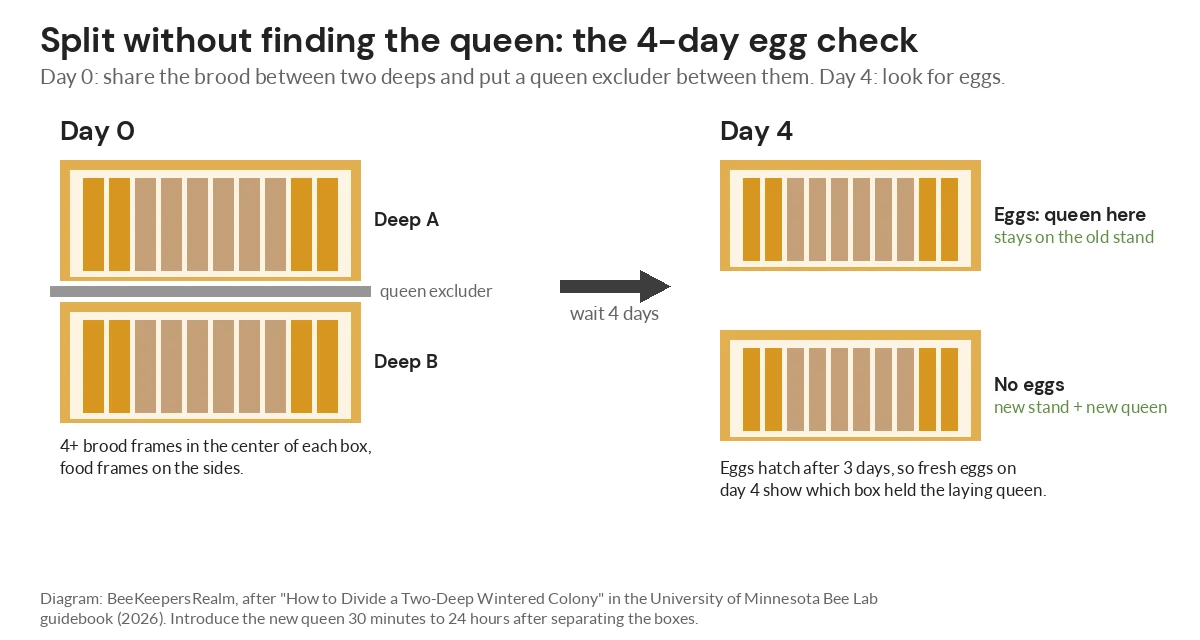
Can’t find the queen in a big two-deep colony? Let the eggs find her. Minnesota’s Bee Lab puts four or more brood frames in the center of each deep, food frames on the sides, and a queen excluder between the boxes. Eggs hatch after three days, so four days later the box with fresh eggs holds the queen. It stays on the old stand as the parent; the box without eggs moves to a new stand and gets a mated queen 30 minutes to 24 hours later.
Same Yard or a New Yard?
Older bees fly back to the spot they know, so plan for drift:
- Same yard. Minnesota says placing the new colony near the parent is fine; expect its foragers to return to the parent, and feed it. Penn State uses the effect on purpose by putting the queenright box on the old stand.
- Move it. USU suggests taking the new hive off-site for about a week. If you cannot, block its entrance loosely with grass, keeping it ventilated. UF says its smaller nucs, queenless or given a caged queen, must go to another apiary; a deliberately strong nuc can stay.
Small splits also draw robbers, so keep entrances reduced. See how to reduce drifting in a nuc yard.
After the Split: Day-by-Day Checks
| Day | What to do | Source |
|---|---|---|
| 0 | Feed both halves 1:1 syrup unless nectar is coming in. Give the queenright half room to keep laying. | UMN, UF, Penn State |
| 0 to 3 | Mated queen: Minnesota introduces her 30 minutes to 24 hours after the split; Penn State waits three days and removes every queen cell first. No queen cells may remain. | UMN, Penn State |
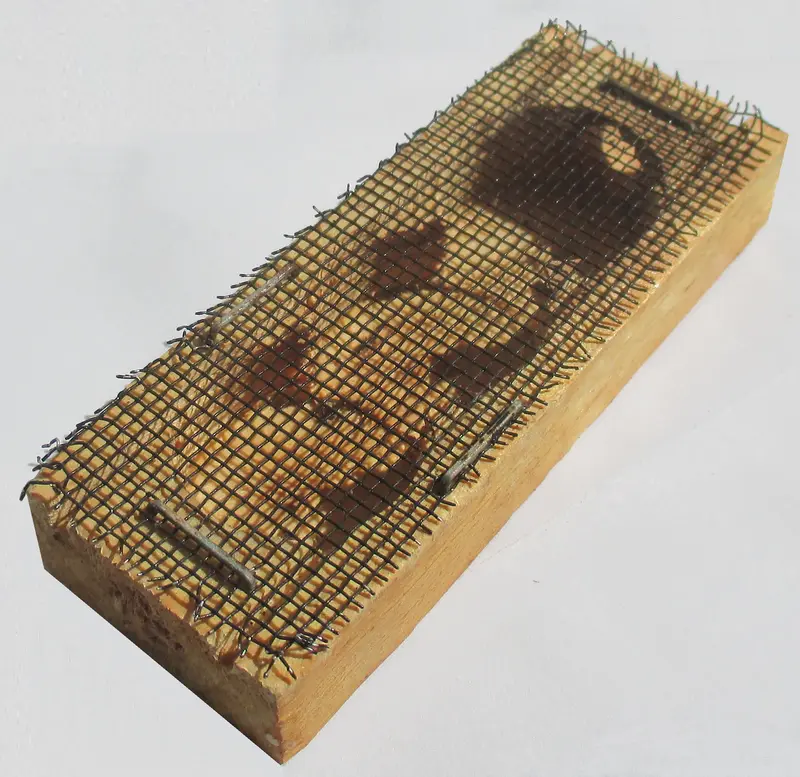
| 3 | Candy-plug cage: bees usually eat through in 2 to 3 days. Confirm she is out. | UMN |
| About 7 | Walk-away half: thin to the 2 or 3 largest queen cells. Caged queen: look for eggs at 7 to 10 days. | UF, UMN |
| About 10 to 21 | Leave the queen-rearing half alone while the queen emerges and mates. Keep inspecting the queenright half every 7 to 10 days. | Penn State, UMN |
| About 21 to 35 | Look for eggs (Penn State checks at three weeks; USU expects eggs by day 24 to 28). None, and no queen? Give a frame of eggs from another colony or introduce a queen. | Penn State, USU |
| About 24 to 31 | Walk-away half has no capped brood: the best window to treat for mites. | Our arithmetic; HBHC |
See how to introduce a new queen and the virgin queen mating flight timeline.
Use the brood break against varroa
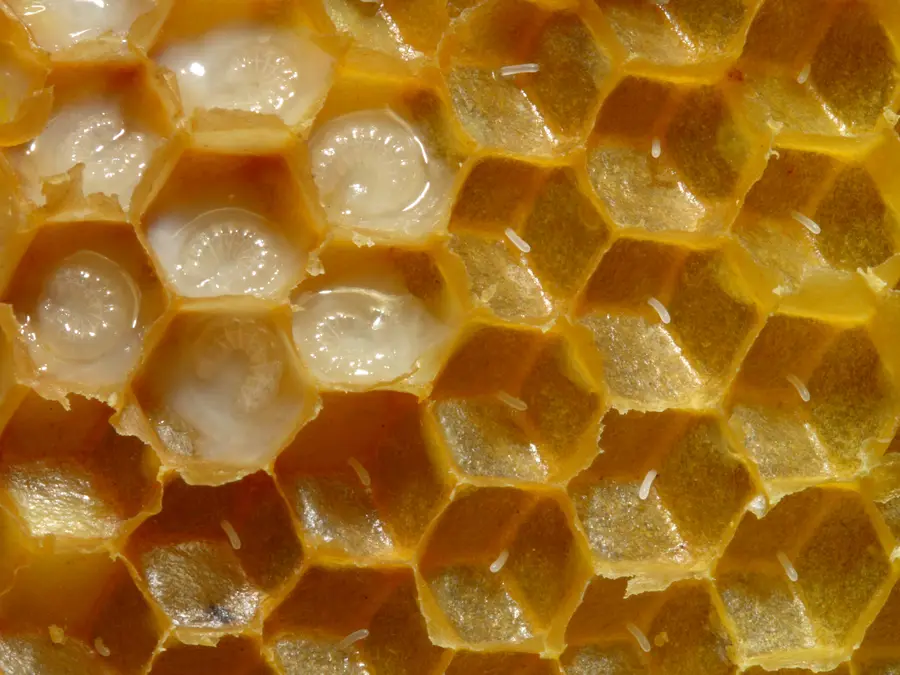
Worker brood takes 21 days and drone brood 24, so the last old brood in a walk-away half is gone by about day 24, and the new queen’s first brood is not capped until eight or nine days after she starts laying. The Honey Bee Health Coalition’s Tools for Varroa Management (9th edition, 2026) notes that many treatments work better with little or no capped brood, but calls a brood break “not a stand-alone management strategy.” Test both halves; see varroa management for splits and nucs.
What a Split Costs You, and Common Mistakes
USU names lower honey production in the year of the split as the main drawback; most colonies recover the next year. The coalition guide adds that a brood break may cut honey in short-season climates. If honey comes first, a cut-down split or the Demaree method keeps the workforce together; for a season-long plan, see how to prevent swarming.
Mistakes that most often lose a split:
- Splitting a colony that is not yet at about eight frames of brood.
- Splitting within four weeks of the flow, or so late that new workers arrive after forage ends.
- Introducing a mated queen while queen cells remain.
- Opening the queen-rearing half in the mating weeks and declaring it queenless too early.
For the full reproduction clock, from queen cell to the new queen's first workers, see bee reproduction.
Frequently Asked Questions
How do I know when to split my hive?
At about eight frames of brood, with two deeps crowded, drones flying, and the main flow four to eight weeks off. Charged queen cells mean you are already late.
How late is too late to split a hive?
A queen-rearing split needs about 45 days to produce new workers. If local forage ends sooner than that plus a couple of weeks, use a mated queen or wait. Avoid fall and winter, when few or no drones are flying.
Can you split a hive without finding the queen?
Yes: make a walk-away split with eggs in both halves, or use the four-day egg check above.
How many frames of brood does a split need?
USU’s walk-away gives the new box two brood frames and two of honey and pollen; UF’s minimum is a frame of eggs and a frame of capped brood plus extra bees. Include eggs if the split must raise a queen.
Can you keep a split in the same bee yard?
Yes. Put the queenright half on the old stand, or feed the new one and expect it to lose foragers. Small queenless splits do better moved for a week.
How long does a walk-away split take to have a laying queen?
About 24 to 28 days to first eggs on USU’s timeline, longer in poor mating weather.
Does splitting stop a hive from swarming?
It greatly reduces the urge, but UF notes it cannot remove it entirely, so keep checking both halves for queen cells.
The Bottom Line
Count brood frames, count back from your flow, and pick a queen plan that leaves both halves time to build up. If the colony is not ready, give it room and wait: one strong colony beats two weak ones.