Reviewed by Thomas B. · Last Updated September 24, 2026 · How we review
Yes, you can split a first-year nuc, but only if it has grown into a genuinely strong colony early enough in the season. Most first-year nucs are better left whole. A split works when the colony fills at least eight frames with bees, is building swarm cells or is clearly crowded, and still has enough season left for both halves to build up before winter. In eastern North Dakota and western Minnesota, the average frost-free season at Fargo is only 133 days, so the window for a first-year split closes early. Plan on late June for a walk-away split and mid-July for a split with a purchased mated queen. After that, a first-year nuc should be left to put everything into winter preparation.
This article is about the decision for a colony in its first season. For general split methods in established hives, see splitting hives: when and how.
Key Takeaways
- Most first-year nucs should not be split. The goal of year one is a colony that survives its first winter.
- Split only when the colony covers eight or more frames, has brood in all stages and shows real crowding or swarm preparation.
- A walk-away split produces no new workers for roughly six to seven weeks, so its deadline comes earlier than for a split with a mated queen.
- In the Red River Valley, aim for late June (walk-away) or mid-July (mated queen) at the latest.
- A small “frame-and-queen” nuc is a lower-risk alternative to a full split.
Table of Contents
- Why Most First-Year Nucs Shouldn’t Be Split
- The Go/No-Go Checklist
- How Late Is Too Late?
- Lower-Risk Ways to Make Increase
- Frequently Asked Questions
Why Most First-Year Nucs Shouldn’t Be Split
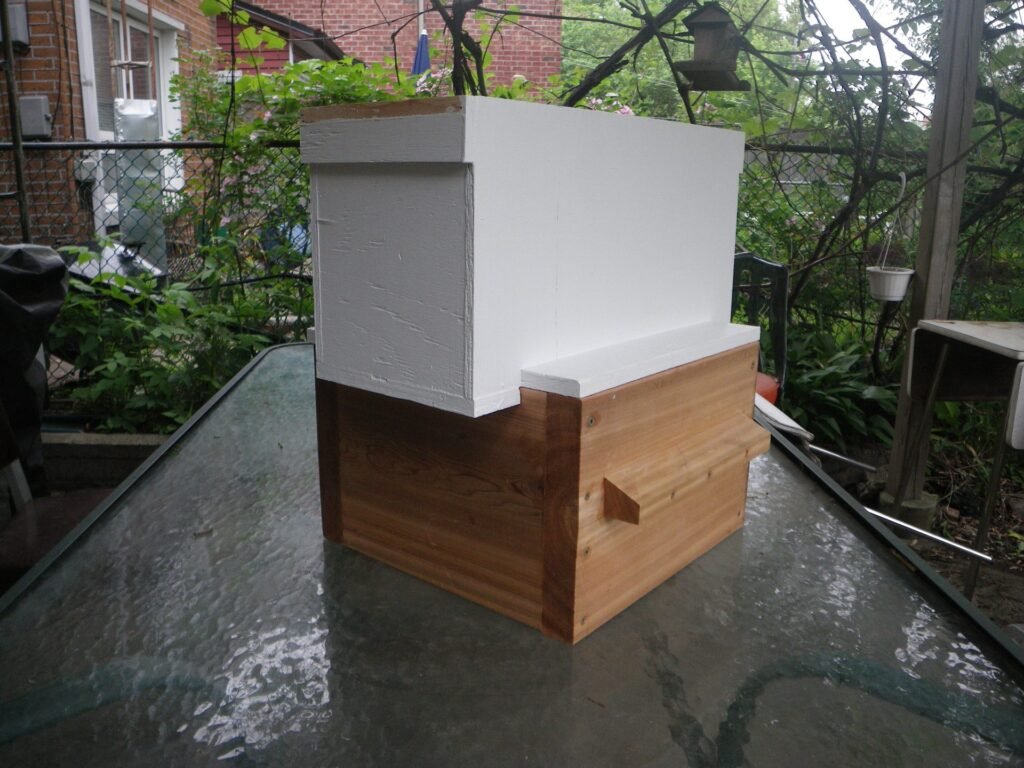
A standard nuc starts with five frames: a laying queen, a few frames of brood and some stores. In its first season it has to draw out a full brood nest from foundation, build up its population and store enough honey for winter. Splitting divides that workforce at exactly the point when it is most needed.
Extension guidance is blunt about weak colonies:
“Weak hives, with small populations or hives that have struggled to produce adequate honey supplies, should never be split.”
Autumn strength matters for survival. In the German bee monitoring project, which tracked more than 1,200 colonies over four years, colony weakness in autumn was one of the factors significantly linked to winter losses (Genersch et al., 2010, Apidologie). A first-year split that leaves two half-strength colonies going into October can end up losing both.
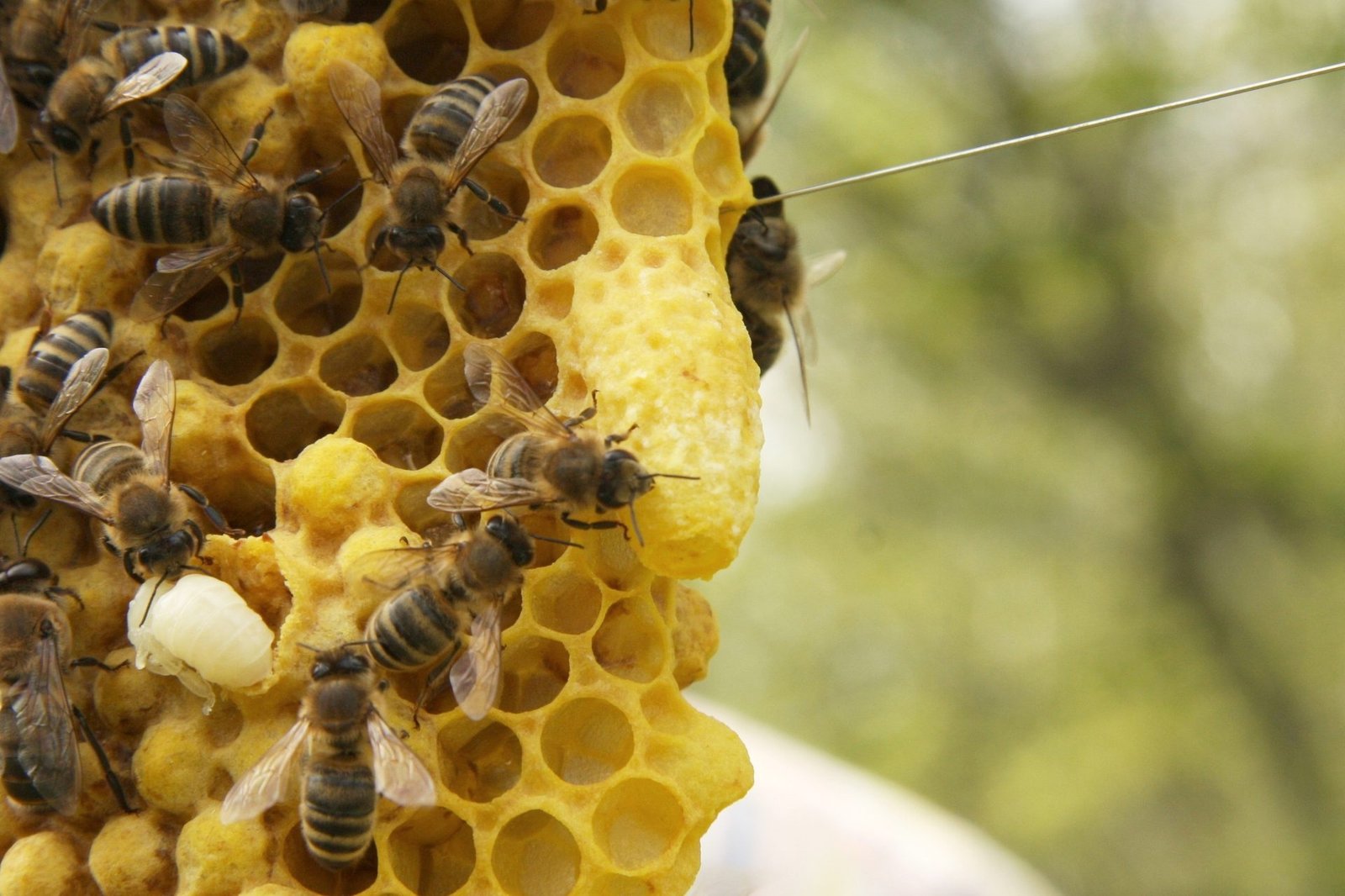
A strong first-year nuc does sometimes need splitting, though. A colony that fills two deeps by early summer can start building swarm cells, and a first-year nuc can swarm. In that case a planned split beats losing half the bees to a swarm.
The Go/No-Go Checklist
Use this checklist during an inspection on a warm afternoon when most foragers are out, so the frame counts are conservative. If any “no-go” condition applies, don’t split.
| Check | Go | No-go |
|---|---|---|
| Bees | 8 or more frames well covered with bees | Fewer than 6 frames covered |
| Brood | 5 or more frames of brood, with eggs, larvae and capped brood present | Spotty brood, or no eggs |
| Space | Second box drawn and occupied, or bees crowding the frames | Still drawing comb in the first box |
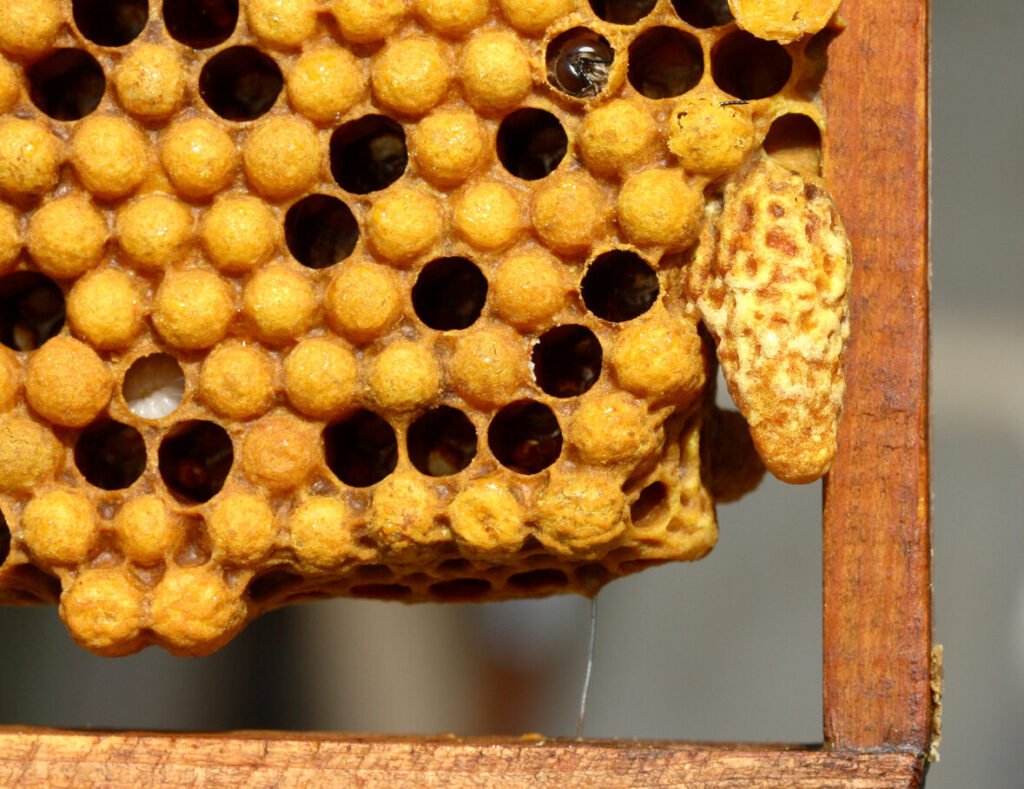
| Swarm signs | Queen cups with eggs, or capped swarm cells on the lower edges of frames | No crowding, no swarm preparation |
| Stores | At least 2 frames of honey and pollen that can be shared | Colony is living hand to mouth |
| Health | Mite count below your treatment threshold | High mite load or signs of brood disease |
| Date | Before late June (walk-away) or mid-July (mated queen) on the northern plains | Later than that |
If the colony isn’t crowded yet but you want room for growth, add space instead of splitting. See when to add a second box to a nuc and how to expand a five-frame nuc safely. Signs of crowding are covered in signs your hive is overcrowded.
How Late Is Too Late?
The question is how many weeks the new colony goes without new workers, and how many weeks the season has left. Utah State’s timeline for a walk-away split puts mating at day 19 to 21 and the first eggs at day 24 to 28. A worker then takes 21 days to emerge. So the queenless half of a walk-away split sees no new bees for about six to seven weeks, while its existing adults keep dying off.
| Split type | First eggs | First new workers | Suggested latest date (Red River Valley) |
|---|---|---|---|
| Walk-away (bees raise their own queen) | Around day 24–28 | Around day 45–49 | Late June |
| Split with a ripe queen cell | Around 2–3 weeks | Around 5–6 weeks | Early July |
| Split with a purchased mated queen | About 1 week after release | About 4 weeks | Mid-July |
These dates work backward from the Fargo climate summary, which gives an average growing season of May 14 to September 24, with frost arriving earlier in some years. They are planning guidelines, not guarantees. A dry August or a missed mating flight pushes everything back. Mating also depends on weather and drones, so check our mating-flight timeline before relying on a queen cell late in the season.
Lower-Risk Ways to Make Increase
Option 1: The frame-and-queen nuc
Instead of dividing the colony in half, take one frame of capped brood, one frame of honey and pollen, and the nurse bees on both. Put them in a nuc box with a purchased mated queen. The parent colony loses only a small share of its bees and gets space to relieve crowding. The small nuc grows at its own pace and can be combined back in autumn if it stays weak. Our guide to introducing a queen with a push-in cage covers the introduction. Acceptance works differently in a nuc than in a full colony, as explained in queen introduction in nucs vs full colonies.
Option 2: Wait and split next spring
If the colony overwinters well, a spring split from a strong second-year colony is the standard, lower-risk route. It also gives you a full season to judge the queen. Penn State Extension describes splitting as a way to manage swarming once a colony starts rearing queens (Honey Bee Management Throughout the Seasons). Most colonies reach that stage in their second spring.
Option 3: Keep the nuc whole and catch a swarm
Keeping a bait hive in May and June lets you add a colony without weakening the one you have.
If you do split: care afterward
- Feed both halves light syrup until they are drawing comb and bringing in nectar steadily.
- Reduce the entrance on the smaller colony to help it defend against robbing.
- Check for eggs on schedule. If a walk-away half has no eggs by about day 30, test it with a frame of eggs from the parent.
- Monitor mites in both colonies. A split creates a brood break in the queenless half, which can be a good time to treat.
- If either half is still small by late August, combine the two small colonies rather than wintering two weak ones.
Frequently Asked Questions
How soon after installing a nuc can you split it?
Wait until it fills at least eight frames with bees, has five or more frames of brood and shows crowding or swarm preparation. For a nuc installed in May on the northern plains, that usually means late June at the earliest, and in many years it never gets there before the cutoff.
Will splitting a first-year nuc stop it from swarming?
Often, yes. A split removes bees and brood and relieves congestion. But a split made after capped swarm cells appear may still swarm if you leave several cells behind. Leave the queenright half without queen cells.
Is it better to split a first-year nuc or add a box?
If the colony is growing but not crowded, add a box. Splitting only makes sense when a colony is already strong and short on space, or is preparing to swarm.
Can you get honey and a split from a first-year nuc?
Rarely. Most first-year nucs don’t produce a surplus even without a split. Our guide on when first-year colonies should get a honey super explains why winter stores come first.
What if my split is still weak in late summer?
Combine it with the parent or another colony by the end of August. A single strong colony has a better chance of surviving winter than two weak ones.
The Bottom Line
A first-year nuc can be split, but only when it is strong, crowded and early enough in the season. On the northern plains, most years the right answer is to add space, keep the colony whole and split from a strong colony the following spring. If you do split, a small frame-and-queen nuc with a mated queen carries the least risk.