Last Updated September 16, 2026
New beekeepers often worry about whether a five-frame nuc will leave its home during that critical first year. Rusty Burlew of Honey Bee Suite notes that a five-frame nuc is generally unlikely to swarm early on, yet that outcome remains possible when certain warning signals appear.
When placing a nuc into a larger eight-frame box, watch the brood pattern, frame usage, and queen behavior. Inspect eggs and young larvae every few days to confirm steady, healthy growth across the colony.
Look for capped cells along the bottom edges or multiple queen cells clustered on adjacent frames during your inspections. Those signs often call for quick, decisive action to protect overall hive health.
For real-world reports from beekeepers who’ve dealt with this, see this active forum thread or consult this site’s detailed guide to spotting swarm signals at Beekeepers Realm. Staying vigilant through the season keeps bees productive and colony growth on track.
Key Takeaways
- Five-frame nucs rarely swarm early, though clear warning signs can still predict an eventual departure.
- Regular frame checks reveal eggs, developing brood, and any emerging queen cells early.
- Installing into an eight-frame box adds space; monitor the queen closely during this transition.
- Multiple queen cells found together at frame edges raise real concern for imminent swarming.
- Use active forums and trusted, well-established guides for real-world examples and proven tactics.
Table of Contents
- Understanding the Risk: Can a Nuc Swarm in Its First Season?
- Identifying Potential Swarm Indicators During Inspections
- Interpreting Queen Cells
- Monitoring Brood Patterns
- Best Practices for Managing Your New Colony
- The Importance of Supplemental Feeding
- Frequently Asked Questions
Understanding the Risk: Can a Nuc Swarm in Its First Season?
Many new keepers wonder whether a young colony might depart before it has fully settled into its new home. Early swarming is rare in most cases, but not impossible when the population grows unusually fast or available space feels limited.
This video from Lorob Bees walks through spotting and managing swarm pressure in a young nuc — exactly the inspection habits covered in the sections below.
Key factors include queen health, overall colony strength, local forage availability, and timing through the season. Decisions to leave often form gradually, days or even weeks before bees actually exit the hive for good.
Rusty Burlew has documented that rain does not reliably stop this behavior — she’s recorded instances of colonies swarming during a rainy stretch and settling once the weather cleared, showing that weather alone is not a reliable deterrent.
- Record every inspection to spot buildup of queen cells and increasingly crowded frames.
- Watch flight activity around the entrance for unusual clustering behavior.
- If a swarm appears on your property unexpectedly, remember that capturing one from tall, high branches is genuinely difficult without prior experience.
| Risk Factor Category | What to Watch Closely | Typical Expected Timeframe |
|---|---|---|
| Queen condition | Egg laying rate, presence of supersedure cells, overall queen vigor | Roughly days to weeks |
| Colony crowding level | Filled frames, noticeable congestion at the entrance | Several weeks |
| Environmental factors | Forage abundance nearby, seasonal weather patterns | Seasonal, varies by year |
| Human response speed | Timely inspections, proactive space management | Immediate to a few days |
Practical resources help when managing early colony growth. Read this site’s tips on expansion and common beginner errors at apiary expansion and beginner mistakes in beekeeping. For a broader overview of swarm behavior in general, see everything you need to know about it.
Identifying Potential Swarm Indicators During Inspections
A careful, methodical inspection of each frame reveals subtle signs that can predict future colony moves. Inspect every comb edge and the underside of each frame during your weekly checks. Small observations gathered this way over time help you decide on the right next steps.
Interpreting Queen Cells
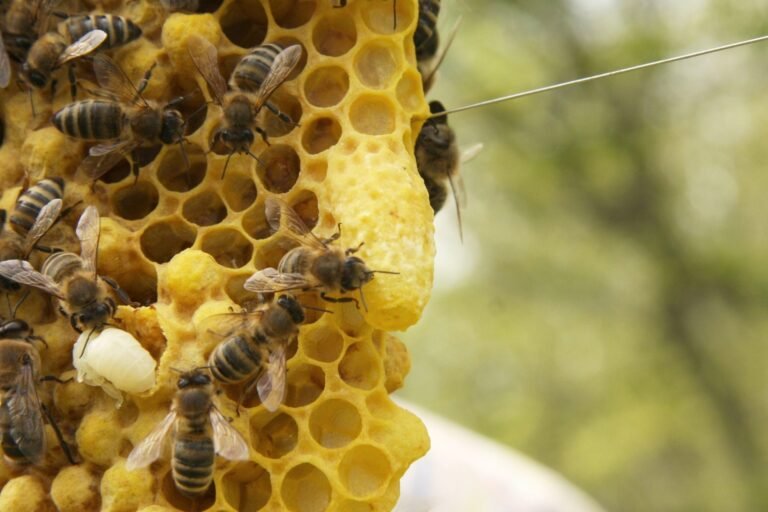
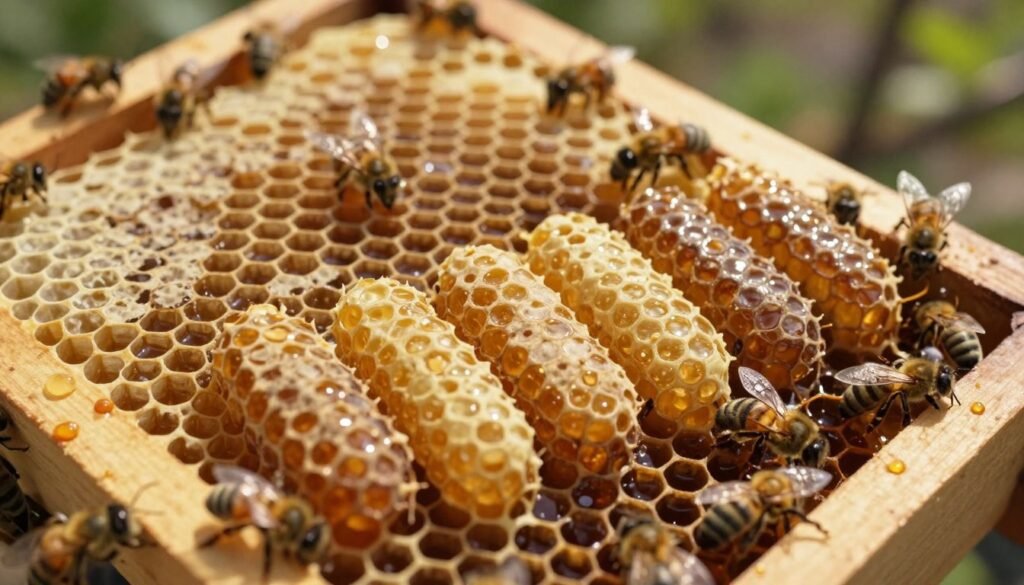
Queen cells require careful context before you take any action on them. Multiple capped cells found together on adjacent frames likely indicate preparation for departure or a planned queen replacement.
Note: it takes about 16 days for a new queen to fully hatch from a cell once started. Finding uncapped cells during your weekly inspection means time still remains for you to respond appropriately.
- Do not remove every cell immediately without thought; some are emergency cells built following an unexpected queen loss.
- Document each unusual case in your notes, especially right after a split or a colony move.
Monitoring Brood Patterns
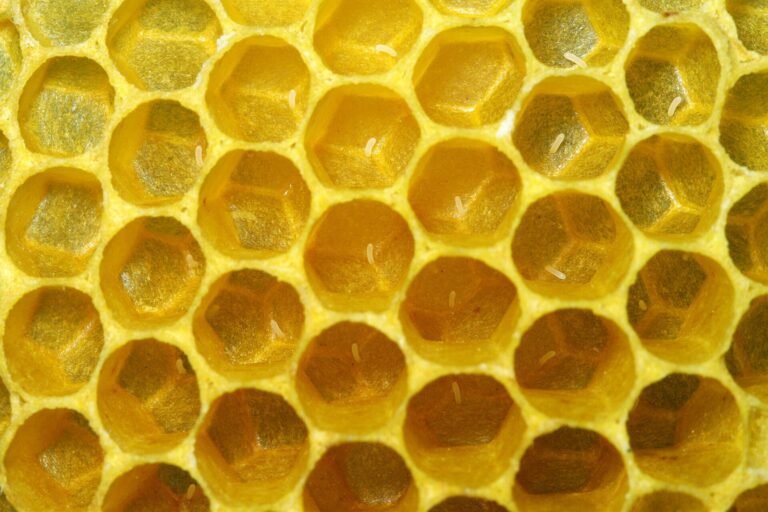
Check the brood layout for overall consistency at every inspection. Eggs and small larvae show clearly that the queen is active and healthy even if you do not happen to see her directly.
Healthy patterns are generally solid, compact, and consistent across the whole frame. Patchy or spotty brood, by contrast, may suggest underlying laying issues or colony stress.
For more detailed inspection guidance and avoidance tactics, read this thorough recognizing and avoiding swarms guide, or learn practical ways to support colony growth at boost colony population naturally.
Best Practices for Managing Your New Colony
Support during the first crucial weeks gives the queen room to lay and gives workers the energy they need to draw comb. Early feeding paired with regular checks are both vital to steady, healthy growth.
The Importance of Supplemental Feeding
Supplemental feeding supplies the carbohydrates new bees need to build comb and feed brood effectively. A standard 3 lb package holds roughly 10,000 individual bees, and all of those workers need real energy to establish the new hive.
It takes roughly 21 days for a single egg to become a full adult bee. Within about 42 days, most of the original package workers will have died off naturally. Timely syrup feeding during those early weeks keeps the colony strong through the transition.
- During inspections, check that bees are actively drawing comb on each frame and that the box still has room for the queen to lay.
- Remove the queen cage carefully and slowly when installing a new colony, since this helps considerably with overall acceptance.
- If nectar begins to steadily fill brood cells that should hold eggs instead, watch closely; this may signal an upcoming swarm. Read this swarm season survival guide for more seasonal tips.
| Colony Need | Recommended Action | Suggested Timing |
|---|---|---|
| Carbohydrate needs | Feed a 1:1 syrup mixture for comb drawing | Roughly the first 2–6 weeks |
| Queen laying space | Ensure plenty of open cells and room on frames | At every inspection |
| Worker turnover rate | Monitor overall population, add feed as needed | Ranging from daily to weekly |
| Replacement stock needs | Consider buying replacement packages or nucs | Before any major foraging gaps — see this guide on buying packaged bees and nucs |
Conclusion
Consistent checks and timely action are the backbone of successful hive stewardship. Watch the brood, note queen behavior at each visit, and keep organized records so small trends become clear over time.
Monitor for queen cells proactively at every inspection and provide additional space or resources before congestion rises too far. Use practical methods such as the nucleus method whenever needed to protect your stock and preserve long-term productivity.
Every hive you manage is unique. For further advice on timing and initial setup, see this detailed guide on the best time to start beekeeping.
Frequently Asked Questions
Can a newly established nuc swarm during its first year?
Yes, it can happen. A newly established nucleus colony can issue a full reproductive swarm during its initial year if conditions prompt that behavior. Factors such as congestion, abundant forage, a failing queen, or multiple strong frames of active brood all increase the chance. Regular inspections help detect early warning signs well ahead of time, so beekeepers can act before it happens.
What signs during an inspection suggest a swarm may be imminent?
Look for queen cells on the bottom edges of frames, clusters of bees acting restless right at the entrance, and noticeably reduced space available for laying. Heavy nectar flows combined with limited box space and abrupt changes in temperament also signal preparation for swarming.
How should queen cells be interpreted when found in a young colony?
Queen cells usually mean the worker bees are rearing a new queen for the colony. If cells are numerous or already sealed, the colony very likely plans to split soon. Decide whether to remove the cells, perform a controlled split, or replace the queen based on colony strength, the season, and your own management goals.
What does the brood pattern tell me about swarm risk?
A solid, compact brood pattern with plenty of open brood usually reduces swarm pressure, because it shows the queen is laying well and consistently. Patchy or spotty brood can indicate underlying queen issues or active disease, which sometimes triggers supersedure or swarm attempts as a result.
How often should inspections occur to reduce swarm probability?
Inspect every 7 to 10 days during the active growing months of the season. Frequent checks let you spot queen cells early, assess available space, and manage frames proactively before problems grow. Avoid excessive disturbance during each visit, but do maintain a steady routine.
What management steps lower the chance of a split in a new hive?
Provide adequate space by adding brood or honey boxes whenever needed, maintain a productive laying queen, and remove or manage queen cells promptly as they appear. Performing a controlled split or careful re-queening at the right time can redirect reproductive impulses into planned expansions instead.
When is re-queening advisable to curb reproductive behavior?
Re-queening is useful if the current queen shows poor laying performance, unusually aggressive behavior, or if repeated queen cell production keeps occurring despite regular intervention. Introducing a young, vigorous new queen often calms the colony and restores a healthy brood pattern, lowering the chance of uncontrolled splits later on.