Reviewed by Daniel M. · Last Updated September 24, 2026 · How we review
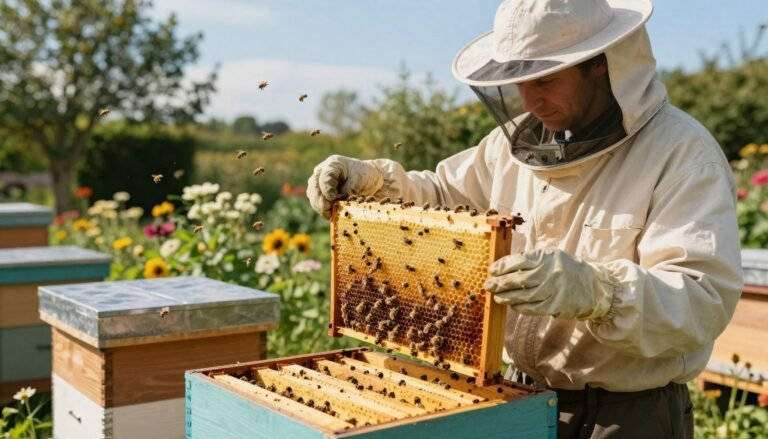
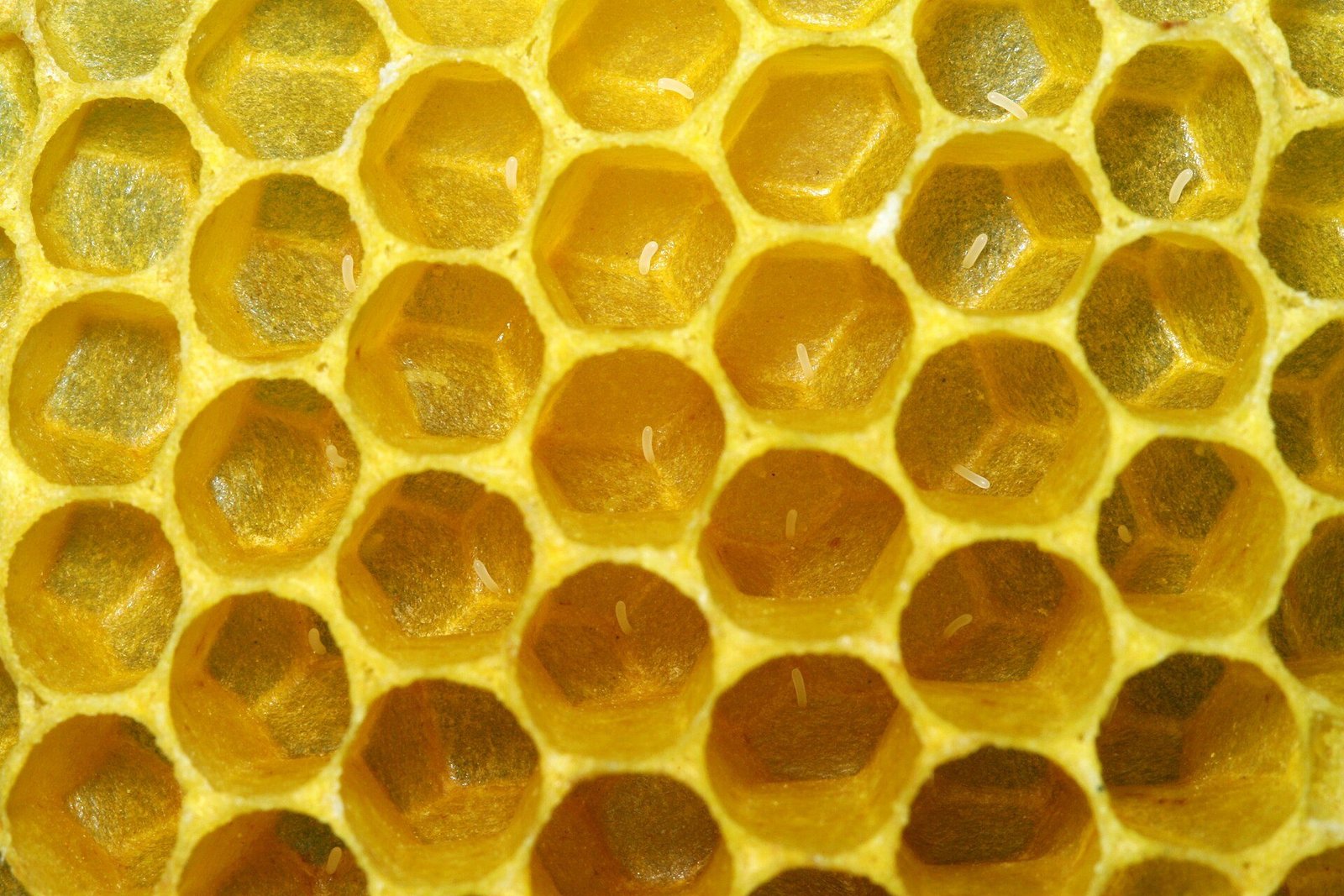
To check for eggs after installing a package of bees, open the hive about 7 to 10 days after installation, on a calm, warm afternoon. Lift one of the center frames of newly drawn comb near where the queen cage hung, hold it at an angle with the sun coming over your shoulder, and look straight into the bottoms of the cells. Honey bee eggs are tiny white rods standing on end, one per cell. If you find eggs or young larvae, the queen is out, mated and laying, and you can close the hive. If you find none by about day 14, it is time to act.
This guide covers the timing, the technique and, most importantly, what to do with whatever you find. For the installation itself, see our step-by-step guide to installing package bees.
Key Takeaways
- Check that the queen is out of her cage around day 5, then look for eggs around days 7 to 10.
- Look only at the newest comb in the center of the cluster. That is where a new package queen starts laying.
- Sunlight over your shoulder and a tilted frame make eggs visible; a phone photo you can zoom into is a good backup.
- Young larvae prove the queen was laying a few days ago, even if you cannot see an egg.
- Several eggs in one cell in the first two weeks usually means a new queen short of comb, not laying workers.
- No eggs, no larvae and no queen by day 14 needs a response within days, because a package is already losing bees every day.
Table of Contents
- When to Look: The First 21 Days
- Where the First Eggs Will Be
- How to Actually See an Egg
- What You Find and What It Means
- If There Are No Eggs by Day 14
- Cold Springs and Slow Starts
- Frequently Asked Questions
When to Look: The First 21 Days
A package queen arrives in a cage plugged with candy. The workers eat through the candy and release her, usually within a few days, and she starts laying once there is drawn comb to lay in. NC State Extension’s package guide gives a simple two-visit schedule:
Inspect the colony 5 days after installing the package to ensure that the queen is alive and has been released. Inspect the colony again after another 5 days to verify that the queen has begun laying eggs.
Penn State Extension’s installing packaged bees guide adds that if the queen is still caged after three to five days, you should release her by hand. The table shows what you should expect to see as the first brood cycle unfolds. The days are approximate; cool weather and slow comb building push everything later.
| Days after installation | What should be happening | What you can check |
|---|---|---|
| 2 to 5 | Candy eaten, queen released | Queen cage empty; release her by hand if not |
| 5 to 10 | Queen laying in the first drawn cells | Eggs standing in cell bottoms |
| 8 to 13 | First eggs hatched into larvae | Small white C-shaped larvae in milky food |
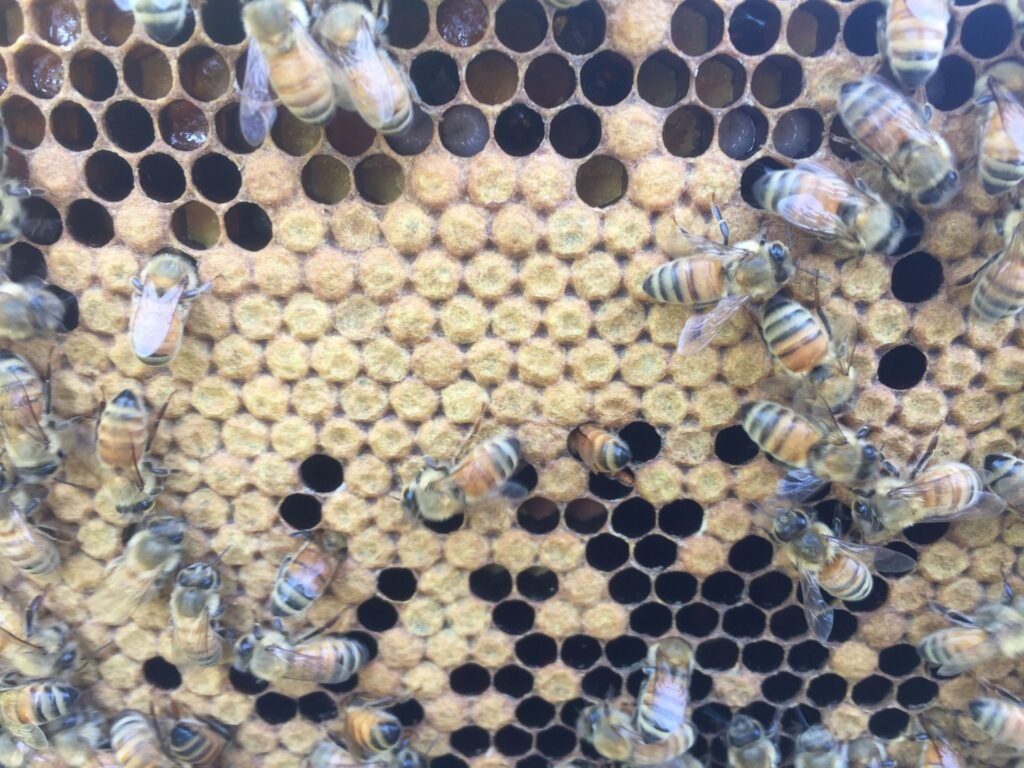
| 13 to 18 | First worker cells capped | Flat, tan cappings in a patch at the center |
| 24 to 30 | First new workers emerge | Fuzzy young bees, chewed-open cappings |
These dates follow from the worker bee’s development: about 3 days as an egg, about 6 days as an open larva, and 21 days in total from egg to adult. If you want the queen-side timeline in more detail, see how soon a new queen should start laying.
Where the First Eggs Will Be
A package starts with no comb, so the queen can only lay where the bees have already built cells. That makes the search much smaller than beginners expect.
- Start next to where the queen cage hung. The cluster forms around the queen, and the first comb goes up there.
- Pick the frames with the newest, whitest comb in the middle of the cluster. Outer frames with little or no comb will not have eggs yet.
- Look for a patch, not scattered cells. A new queen typically lays a small oval of cells in the center of the new comb, then works outward as the comb grows.
- Leave the queen hunt for later. You do not need to see her. Eggs tell you she was in the hive and laying within the last three days.
Handle frames slowly and set them back without rolling bees (see installing bees without crushing the queen). New comb on foundationless frames is fragile, so hold those frames vertically.
How to Actually See an Egg
Almost every new beekeeper struggles with this at first. Entomologist James Tew describes the target this way:
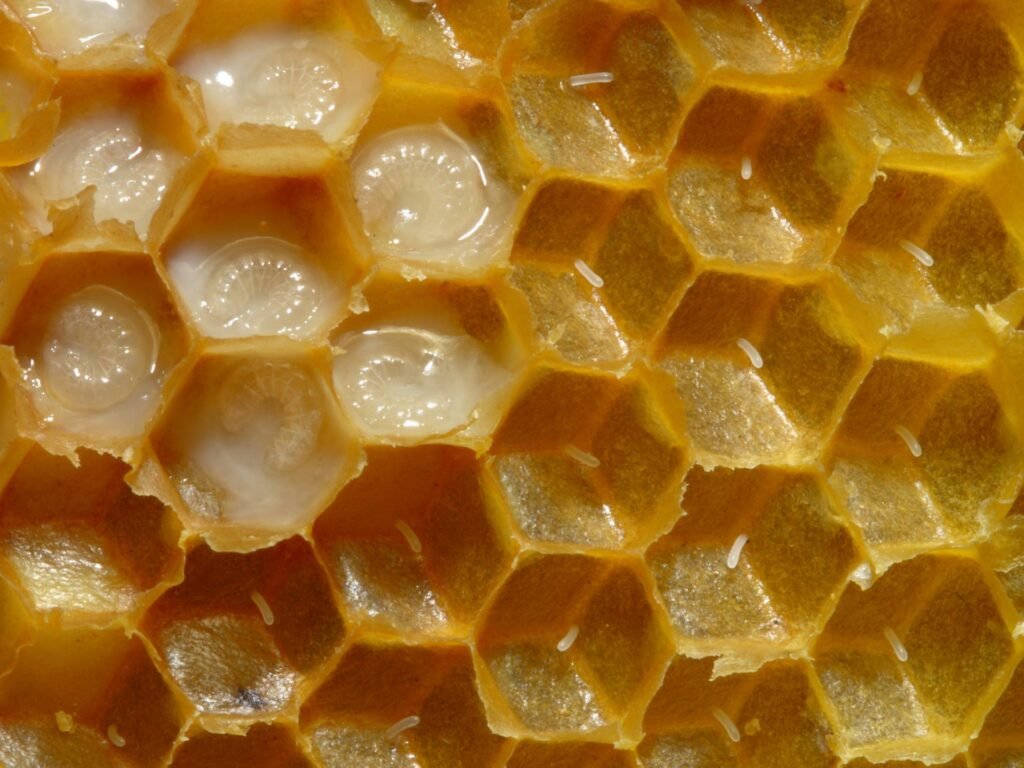
Even the best of eyes can have problems seeing a tiny white egg (looking like a miniature grain of rice) standing on end in a cell of snow-white comb.
In the same article, Tew suggests holding the comb at a 30 to 40 degree angle with sunlight coming over one of your shoulders, then pivoting the frame on its top bar while you scan the cell bottoms. A few other things help:
- Stand with your back to the sun so light falls straight into the cells, not across them.
- Look for the orientation. A day-old egg stands upright, a second-day egg leans, and by day three it lies flat before hatching. Upright eggs are the easiest to spot.
- Use your phone. Blake Shook of The Bee Supply suggests photographing the frame from about six inches away in good light and zooming in afterwards (Spotting Eggs and Larvae).
- Bring reading glasses or a small magnifier if close focus is hard for you.
- Keep it brief. Tew also passes on a warning that bright sunlight can quickly harm tiny larvae, so check a frame, then put it back.
If you cannot find an egg but see tiny larvae curled in a pool of milky food, you have your answer anyway.
What You Find and What It Means
| What you see | What it most likely means | Next step |
|---|---|---|
| Single eggs centered in cell bottoms, in a patch | Mated queen laying normally | Close up; check the brood pattern in 7 to 10 days |
| Larvae but no eggs | Queen was laying about 4 to 9 days ago; eggs missed or a short pause | Recheck in 3 to 4 days |
| Queen seen, cage empty, no eggs yet | Too little comb, or a cold spell slowing things down | Keep feeding, recheck in 5 to 7 days |
| Queen still in the cage | Candy plug not eaten | Release her by hand onto the comb |
| Two or more eggs per cell, centered | New queen short of drawn comb | Keep feeding so the bees draw comb; recheck in a week |
| Several eggs per cell stuck to the cell walls | Laying workers (rare this early) | See our laying-worker guide |
| No eggs, no larvae, no queen at day 14 | Queen lost, injured or never released | Act now (next section) |
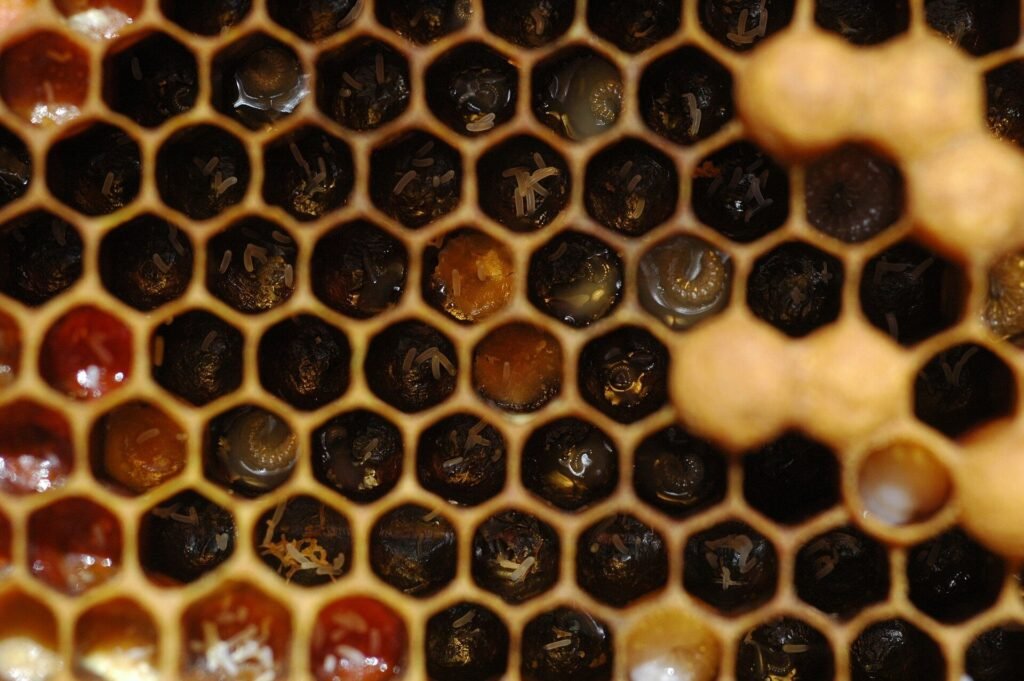
Multiple eggs in the first two weeks usually mean a new queen with more eggs than cells. Tew notes that laying workers generally develop 23 to 30 days after a colony becomes hopelessly queenless, so they are unlikely this early. Laying workers leave eggs on the cell walls rather than centered on the bottom; if that is what you see, our guide to signs of laying workers explains the diagnosis.
Once capped brood appears, compare it with our guide to what a healthy brood pattern looks like.
If There Are No Eggs by Day 14
Do not wait another two weeks to be sure. A package loses bees every day until its first brood emerges, and a colony without a laying queen at day 14 will not have new workers until well after day 35 even if you requeen immediately.
- Check the cage and the bottom board. A dead queen in the cage or on the floor answers the question.
- Look for queen cells. Queen cells built on young larvae or eggs mean the bees know they are queenless, and they also prove a queen laid at some point.
- Add a test frame if you have another colony. A frame with eggs and young larvae from a healthy hive gives the package brood to raise. If the bees start queen cells on it within a few days, they are queenless.
- Contact your package supplier. Many suppliers replace queens that fail early; check their policy.
- Requeen promptly. See queen introduction with a push-in cage and when to requeen a weak package colony. If the package is down to a small cluster, combining it with another queenright colony is often better.
Cold Springs and Slow Starts
In eastern North Dakota and western Minnesota, packages often go in during late April and May, when a week of cold wind can follow a warm installation day. A package cluster can only keep a small area of brood warm, and comb building slows in the cold, so the queen lays less. A late first egg in a cold week is not a reason to requeen on its own.
Inspect on a calm, sunny afternoon instead of breaking the cluster on a cold, windy day, and keep syrup available so the bees can keep drawing comb. Our guide to installing package bees in cold spring weather covers how to protect the cluster.
Frequently Asked Questions
How long after installing a package should I see eggs?
Usually 7 to 10 days after installation. The queen needs a few days to be released and a little drawn comb to lay in. In cold weather it can take a few days longer.
Do I need to find the queen after installing a package?
No. Eggs or young larvae are better evidence than a sighting, because they show she is mated, laying and was in the hive within the last few days.
Why can’t I see eggs even though the queen is there?
Eggs are smaller than a grain of rice and hard to see without direct light. Turn your back to the sun, tilt the frame, and look at the newest comb in the middle of the cluster. A zoomed phone photo often shows eggs your eyes miss.
Is more than one egg per cell a problem in a new package?
Early on, usually not. A new queen with too little drawn comb sometimes lays two eggs in a cell. If the eggs are stuck to the cell walls and there is no queen, suspect laying workers.
What if there are larvae but no eggs?
The queen was laying within the past week, so she was present recently. Recheck in three or four days. If you then find eggs, all is well; if not, look for the queen or queen cells.
How often should I open a new package in the first month?
About once a week is enough: queen release around day 5, eggs around days 7 to 10, and capped brood by about day 17. Keep each visit short to limit stress and robbing risk.
Bottom Line
Look for eggs 7 to 10 days after installation, on the newest comb in the center of the cluster, with the sun behind you. Eggs or young larvae mean the package is on track. No brood and no queen by about day 14 means you should requeen or combine within days, not weeks. Keep visits short, too, since a small new colony is vulnerable; our guide on protecting new colonies from robbing explains why.