Reviewed by Michael R. · How we review
Spring is the critical window in the beekeeping calendar for growing a healthy apiary. A balanced approach helps each hive reach full strength before the main nectar flow and honey season. Skilled beekeepers move frames and nurse bees carefully so weak boxes gain population while donors remain stable.
A strong colony often covers eight or more frames; a weak one may span three to five. The goal is to avoid wide variances that cause swarming or low productivity. Assess the nest and queen before transfers and plan moves in measured steps over days or weeks.
When done correctly, this method gives a timely boost to foragers and workers. It also creates uniform hives that can thrive through spring and into winter. For practical tips on increasing population naturally, see boosting colony population.
Key Takeaways
- Spring equalization secures growth during the main nectar flow.
- Move brood frames and nurse bees to strengthen weak boxes.
- Check donor queen and nest health before any transfer.
- Balanced hives reduce swarming and improve honey yield.
- Plan transfers over days or weeks for steady population gain.
Table of Contents
- Understanding the Importance of Colony Equalization
- Why Bee Colonies Develop Unequally
- When to Assess and Equalize Your Hives
- Selecting Donor Colonies and Transferring Brood Safely
- Advanced Techniques for Balancing Populations
- Managing Risks During the Equalization Process
- Balancing Equalization with Swarm Prevention
- Conclusion: Maximizing Apiary Productivity
- FAQ
Understanding the Importance of Colony Equalization
Master Beekeeper Charlotte Anderson stresses that preventing large gaps in colony size is essential for a thriving apiary.
Redistributing bees and food keeps every hive functional and reduces the chance that one box will fall behind. This practice protects the collective workforce and keeps inspectors from chasing problems later in the season.
Equalization is not micromanagement. It focuses on creating uniform, productive units rather than fussing over every frame.
- Balanced colony numbers lower the risk of collapse and simplify daily management.
- Proper resource moves help each hive gather honey during the summer nectar flow.
- Consistent strength across the apiary makes forecasts and harvests more reliable.
“The aim is steady, predictable growth across the yard, not perfect parity in every box,”
For practical steps and field-tested methods, read this equalizing bee colonies post.
Why Bee Colonies Develop Unequally
Genetics and queen vigor often set the pace for how a hive grows each spring. A high-performing queen lays more eggs and keeps a tighter, more uniform brood pattern. Queen quality and inherited traits influence longevity, laying rate, and worker behavior.
Genetic Factors
Heritage matters. Genetic differences shape brood rearing and hygiene. Some lines resist pests better and sustain denser frames. Mississippi State University Extension notes strong colonies maintain brood nest temperatures more efficiently, letting the queen lay at peak capacity.
Environmental Influences
Position in the yard affects growth. Hives at row ends often gain due to forager drift. Early nectar availability and box layout also affect expansion. Pest pressure, past disease, and winter losses create lasting gaps that compound as weak boxes struggle with both temperature and foraging.
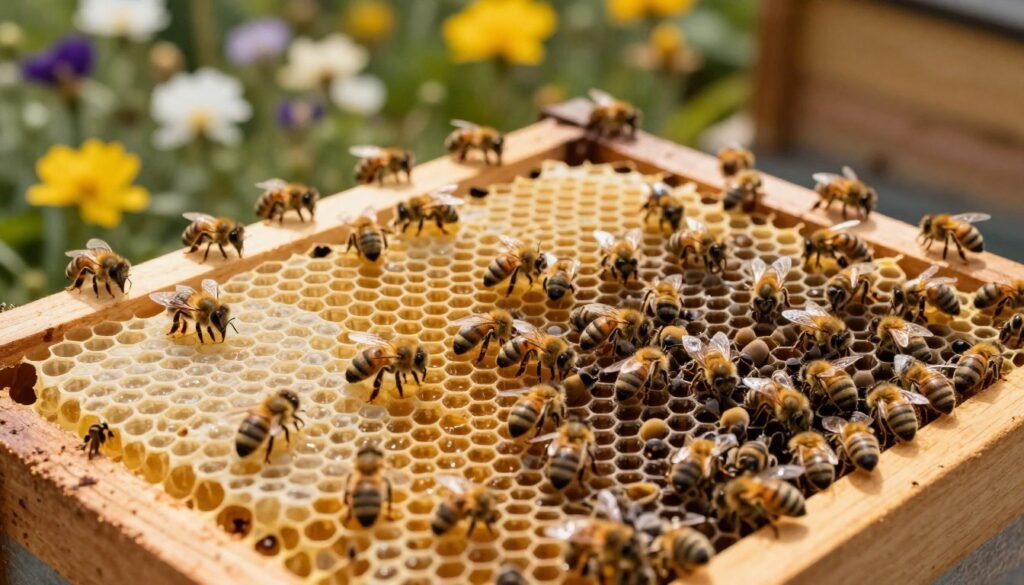
| Factor | Effect on Colony | Practical Note |
|---|---|---|
| Queen performance | Higher egg rate, denser brood | Evaluate queen and consider replacement if poor |
| Yard placement | Forager drift can favor edge hives | Rotate positions or rearrange boxes |
| Pests & winter losses | Reduced population, weak frames | Monitor Varroa; follow extension guidance like Purdue Extension guide |
When imbalance appears, early assessment prevents gaps from widening. For signs a hive is about to swarm or shift strength, see this practical guide: swarm indicators.
When to Assess and Equalize Your Hives
Schedule hive reviews three to six weeks before the major nectar flow in your area. Early spring inspections give nurse bees and newly emerged workers time to boost population ahead of the season.
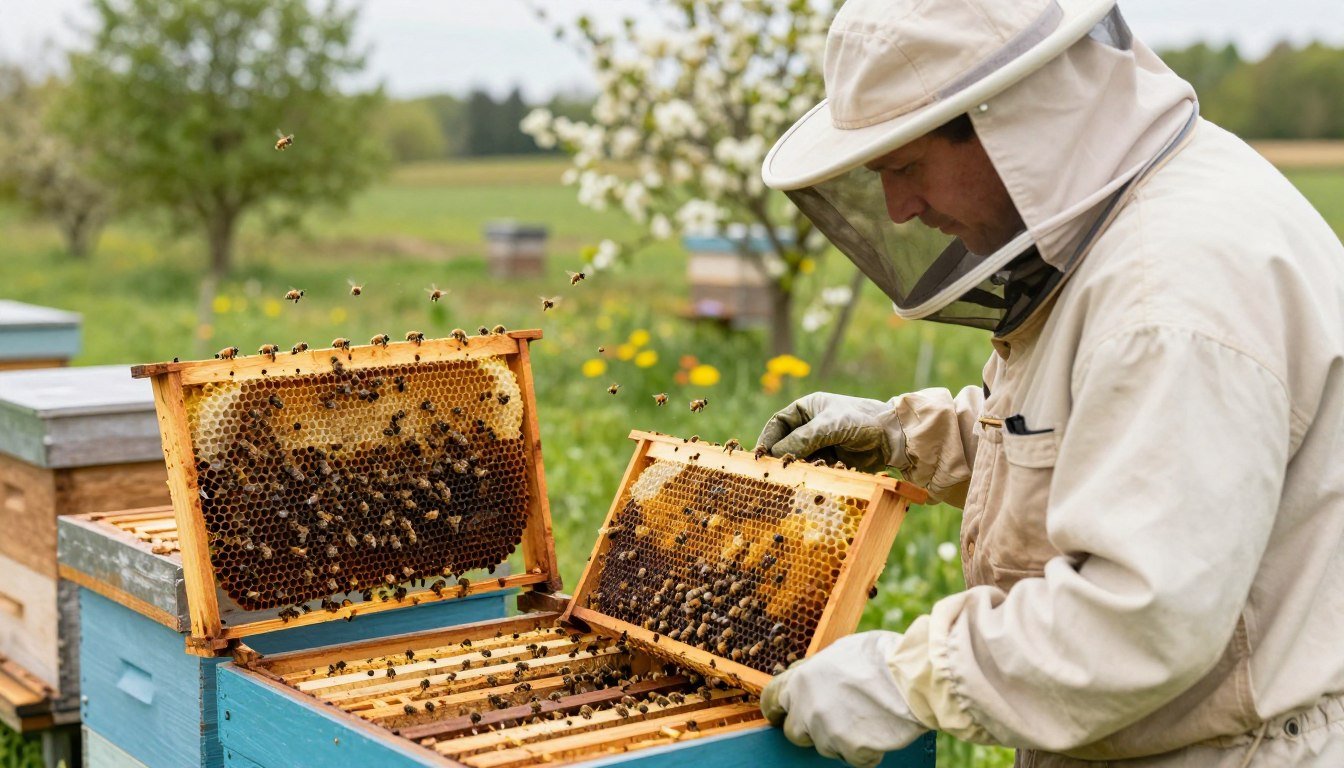
During checks, evaluate each colony for population, brood pattern, and food stores. Count occupied frames: a strong box often covers eight or more frames; a weak colony may hold three to five.
Examine the queen carefully. Queens older than one year can raise swarming risk, per Mississippi State guidance. Do not move resources from a box with disease or a failing queen.
| Check | What it shows | Action |
|---|---|---|
| Frames occupied | Population and forager potential | Plan transfers from strong boxes |
| Brood pattern | Queen health and future workforce | Replace queen if patchy |
| Honey & pollen | Colony support for nurse bees | Feed or postpone transfers |
For regional timing and calendar planning consult a seasonal beekeeping calendar. Practical field notes on adding space and equalizing your yard are available at adding space and equalizing your beeyard.
Selecting Donor Colonies and Transferring Brood Safely
Selecting donor colonies starts with simple checks. Choose a vigorous colony with solid brood pattern and good stores. Take no more than one or two frames from a single hive when possible.
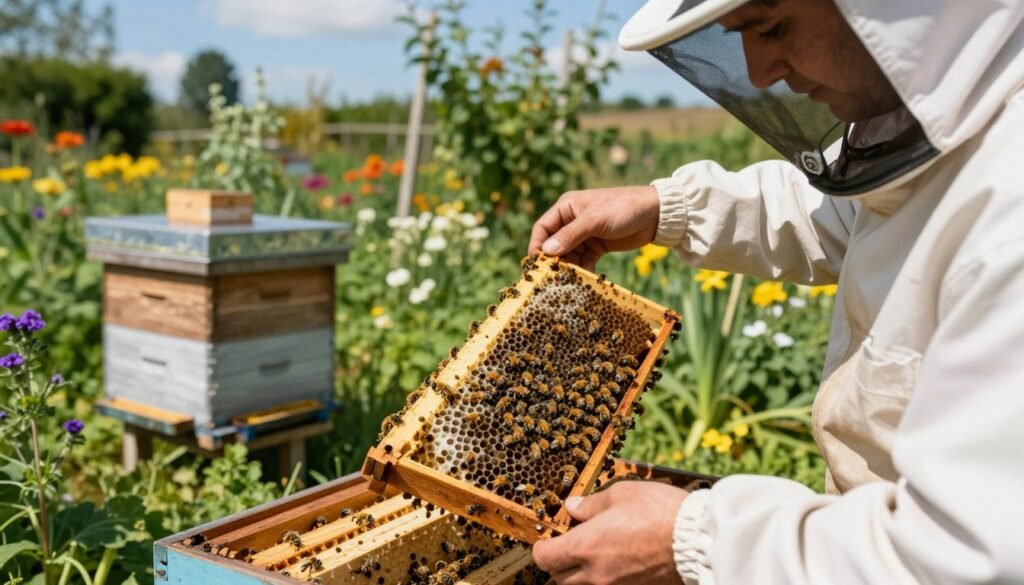
Selecting donor hives
Prefer donors that show strong worker numbers and no signs of disease. If a weak colony needs more than two frames, split the load across multiple donors. Replace pulled frames with drawn comb or foundation.
Transferring sealed brood
Move sealed frames in cool morning hours. Insert each frame in the center of the receiving brood nest so emerging workers get warmth and care.
Verifying queen safety
Always check the frame for the queen before lifting. Use a queen excluder at the hive entrance during the transfer to catch any queen accidentally dislodged.
| Step | Benefit | Practical tip |
|---|---|---|
| Pick donor frames | Immediate population boost | Take capped frames only; avoid brood with disease |
| Place in center | Better brood survival | Fit frame next to nurse clusters |
| Monitor for days | Confirm queen safety and acceptance | Recheck queen and population after 3–5 days |
Note: Lightly misting frames with sugar water eases integration and reduces drifting. Monitor the apiary and adjust space so the new queen has room for laying.
Advanced Techniques for Balancing Populations
Repositioning hives is an advanced, low-impact approach that uses bee behavior rather than heavy manipulation.
Swapping hive positions
Repositioning two stands can route returning foragers into a weaker box and give that colony an immediate boost. This method avoids moving frames and reduces the risk of disturbing the queen.
Three Rivers Beekeepers recommends this as a simple way to relieve congestion in a strong hive while strengthening a weaker one. Ensure brood frame and frame distribution stay balanced so each box keeps heat and care around the brood.
- Works best when the strength gap is moderate and weather favors flight.
- Monitor each colony closely after the swap for acceptance and queen safety.
- Use the move when a small box has a good queen but needs more foragers.
“Swapping positions leverages site fidelity to shift workforce without heavy handling.”
For field notes on spacing and yard layout, see adding space and equalizing your beeyard.
Managing Risks During the Equalization Process
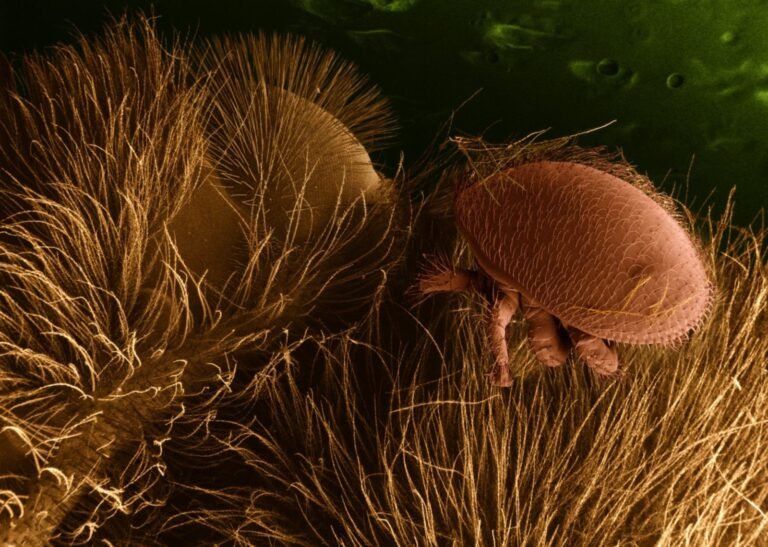
Protecting hive health requires careful checks before, during, and after any population move. Any time brood frames or bees travel from one box to another there is risk of spreading Varroa, small hive beetles, or pathogens.
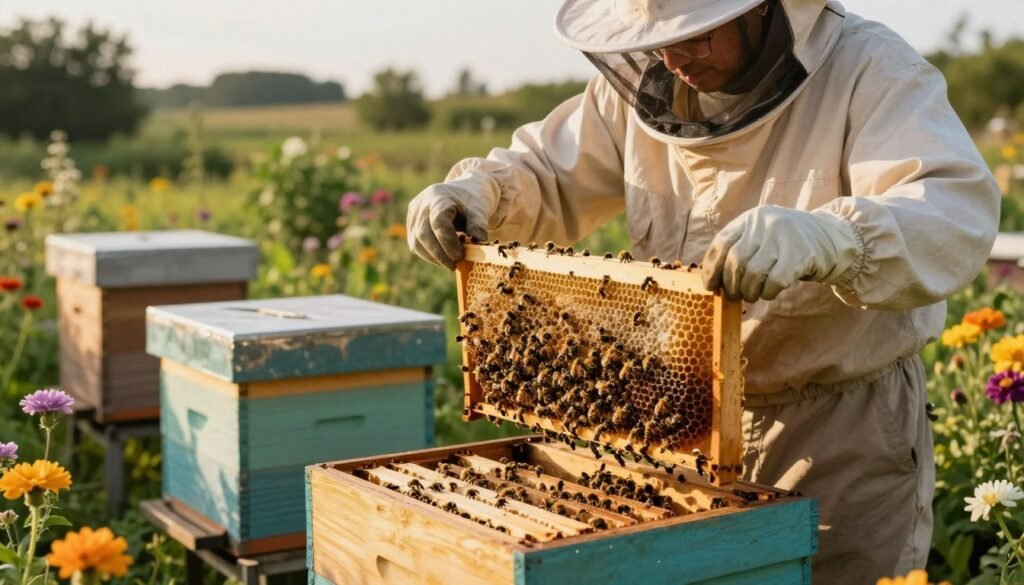
Inspect every frame before transfer. Never take frames from a colony with visible disease. Lightly misting can ease acceptance, but never use frames that show mite or brood disease signs.
Work in stages and monitor both donor and recipient colony for several days. Watch for queen loss, supersedure cells, or unusual worker behavior. If a hive loses a laying queen, introduce a new queen promptly to prevent collapse.
- Limit frames removed from any single donor to avoid setting a strong colony back.
- Ensure the weak colony has enough nurse bees and space to warm incoming brood frames.
- Observe nests after the move and adjust management as needed.
| Risk | Sign | Immediate action |
|---|---|---|
| Varroa spread | Spotty brood, mites present | Hold transfers; treat and recheck |
| Queen loss | Building supersedure cells | Mark and replace with a new queen |
| Pheromone disruption | Aggressive clustering | Return frames, give time and space |
For field guidance on staged moves and seasonal planning, consult this spring management guide. For safe splitting and donor selection, see a practical post on split a hive safely.
Balancing Equalization with Swarm Prevention
Giving a hive room to stretch is a practical way to cut swarming risk and keep the season productive.
Bee Culture lists equalization as a spring tool that pairs naturally with swarm control. Removing capped brood frames from an overfull colony relieves crowding. Replacing those frames with foundation offers the workers a task during the summer nectar flow.
This dual-purpose move strengthens weaker boxes while calming the strongest ones. Each moved frame is a chance to manage nest density and prevent congestion that prompts swarming.
- Relieve pressure: take capped brood from an overcrowded colony and give space.
- Replace comb: add fresh foundation so bees draw comb during high nectar flow.
- Monitor queens: watch laying patterns and check acceptance after transfers.
| Action | Benefit | Timing |
|---|---|---|
| Remove capped frame | Reduces swarming impulse | Early spring |
| Add foundation | Encourages comb draw | Before main nectar flow |
| Observe for days | Confirm acceptance | 3–5 days |
“Balanced population helps the apiary focus on honey production rather than preparing to swarm.”
For field-tested steps on prevention, see prevent swarming best practices.
Conclusion: Maximizing Apiary Productivity
Small, timely moves of frames and nurse bees deliver outsized gains in population and honey yield.
Assess the queen, count occupied frames, and give each colony enough space. This management method preserves strength and sets hives up for the spring nectar flow.
Donor selection matters. Choose healthy boxes and limit what you remove. Watch for disease and queen loss, and act quickly if problems appear.
Consistent colony strength simplifies work and boosts season output. For a practical check that covers nucs, stores, and queen presence, see this nuc inspection post.
FAQ
What is colony equalization and why does it matter?
Colony equalization is the practice of redistributing frames, brood, and adult workers to balance hive strength across an apiary. It helps prevent weak nests from starving, reduces swarming pressure in overpopulated hives, and maximizes honey production during nectar flow. Good management preserves nurse bees’ capacity to rear brood and supports overall colony health.
When should I inspect hives for population imbalances?
Inspect during early spring and again in mid-summer, especially before and during the main nectar flow. Check every 7–14 days when building up a colony or after adding a new queen. Frequent checks let you spot dwindling frames, low worker numbers, or insufficient nurse bees before problems escalate.
What causes colonies to develop at different rates?
Genetics and environmental influences both play roles. Queen quality, brood pheromones, and genetic vigor determine reproductive rates. Weather, forage availability, disease pressure, and hive placement affect development. Combining these factors produces the variation beekeepers see in box populations and frame counts.
How do I choose suitable donor colonies for transferring brood?
Select strong, disease-free colonies with excess sealed brood and ample nurse bees. Prefer colonies with similar timing in their brood cycle to minimize brood care disruption. Avoid donors with queen issues or signs of brood disease, and use frames from the brood nest center where larval care is most active.
What is the safest method for moving sealed brood between hives?
Move sealed brood frames during cool parts of the day and place them centrally in the recipient hive near nurse bees. Keep frames vertical, minimize exposure, and handle quickly. Leave some open brood so nurse bees will tend the incoming sealed cells. Mark frames and track timing to prevent mismatched emergence and ensure adequate worker support.
How can I protect the queen during equalization work?
Always locate and mark the queen before moving frames. Avoid transferring frames containing the queen unless performing a planned queen swap. Use temporary queen excluders, brood chambers, or a nuc box for controlled moves. Verify the queen’s presence after handling and monitor egg-laying activity for a few weeks.
What advanced tricks help balance populations across hives?
Swapping hive positions can redistribute returning foragers and rebalance field populations. Use the newspaper method or frame exchanges to acclimate workers. Combine frame transfers with partial splits, and time moves to align with nectar flow so weakened colonies receive immediate forage support.
What risks should I manage when performing equalization?
Risks include queen loss, increased robbing, stress-induced brood neglect, and disease spread. Reduce risk by working calmly, limiting open-hive time, using screened entrances during transfers, and quarantining frames from suspect colonies. Keep records of moves and inspect recipient hives closely for abnormal brood patterns.
How does equalization interact with swarm prevention strategies?
Proper balancing can reduce swarming by easing congestion in strong hives and increasing resources in weak ones. However, moving brood can temporarily raise cell-building activity. Combine equalization with space management—add supers or brood boxes—and monitor queen cell production to keep swarm impulses low.
Can equalization speed recovery of a weak colony before winter?
Yes. Timely transfers of sealed brood and nurse bees can boost worker numbers and improve winter stores if done with enough lead time. Carry out moves in late summer or early fall so newly emerged winter bees mature before cold weather. Ensure recipient hives have adequate honey and ventilation for overwintering success.