Reviewed by Thomas B. · Last Updated September 23, 2026 · How we review
Probiotic supplements for honeybee colonies are sold to “rebalance” the bee gut, but the best independent field evidence so far does not support the mainstream products: two separate field trials published in 2023 and 2024 found that the bacteria in popular commercial blends never took hold in bees’ guts and produced no measurable change in gut health or disease markers. Probiotics built from bee-adapted strains look more promising in research trials, but those are not what most beekeepers can buy today.
This guide explains what a healthy bee gut actually contains, what is in the powders on supply-store shelves, what the controlled studies found, and what you can do instead (or alongside) if you want to protect your colonies’ gut microbiome, particularly after antibiotic treatment.
Key Takeaways
- A worker bee’s gut is dominated by a small set of bee-specific bacteria, including Snodgrassella, Gilliamella, Lactobacillus, Bombilactobacillus and Bifidobacterium.
- Most commercial bee probiotics contain microbes originally isolated from mammals, dairy or soil, not the species that naturally live in honey bees.
- A 76-colony USDA-led field trial (Anderson et al., 2024) found no difference in gut microbiome or disease markers from commercial probiotics, including after antibiotic treatment.
- A North Carolina field study (Damico et al., 2023) never detected the organisms from a leading probiotic powder in any sampled bee gut, even during treatment.
- Bee-adapted and research-grade strains have shown real benefits in some lab and field trials, so the idea is sound; the current off-the-shelf execution is the weak point.
- Avoiding unnecessary antibiotics, providing diverse pollen and limiting pesticide exposure protect the gut microbiome more reliably than any supplement currently sold.
Table of Contents
- What a Healthy Honey Bee Gut Contains
- What Is Actually in Commercial Bee Probiotics
- What the Field Trials Found
- Probiotics After Antibiotic Treatment
- Where the Research Is More Promising
- If You Still Want to Try One: A Fair Test
- What Reliably Supports the Bee Gut
- Frequently Asked Questions
What a Healthy Honey Bee Gut Contains
Unlike the human gut, which hosts hundreds of bacterial species, the adult worker honey bee carries a remarkably small and consistent community. Researchers describe it as roughly ten genera falling into five core groups, the most familiar being Snodgrassella alvi, Gilliamella, the bee-specific Lactobacillus and Bombilactobacillus species, and Bifidobacterium. These bacteria are found in honey bees around the world and have evolved alongside bees over millions of years.
Newly emerged workers are close to bacteria-free. They pick up this community in their first days of adult life through contact with nestmates, food exchange and the comb itself. Once established, the community helps break down pollen components the bee cannot digest on its own, supports immune signalling and occupies space that opportunistic pathogens might otherwise use. For a fuller tour of these microbes and their roles, see our guide to the honeybee microbiome.
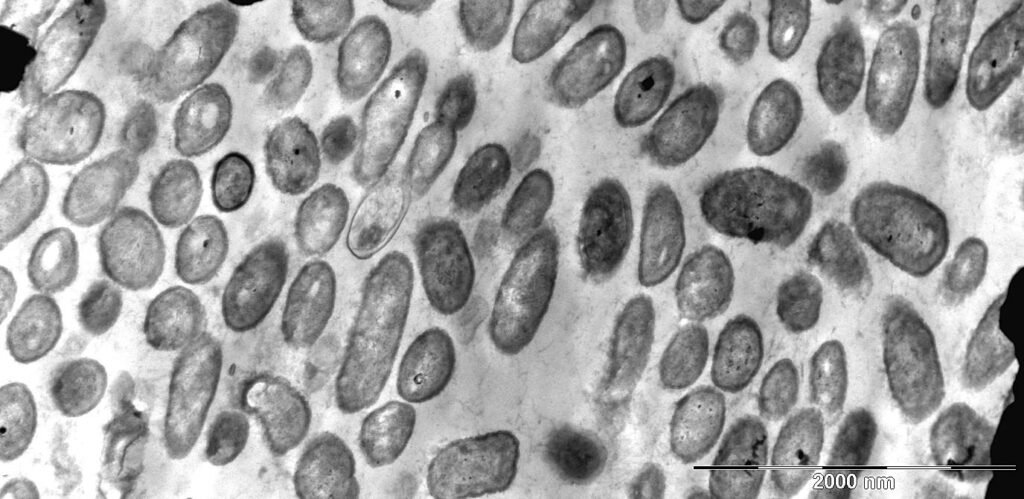
The key practical point is that “beneficial bacteria” for bees is not a generic category. The bacteria that matter are highly specialised to the bee gut, and a strain that is helpful in a cow, a chicken or a person has no guarantee of surviving, let alone settling, in a honey bee.
What Is Actually in Commercial Bee Probiotics
The best-known product in the United States, SuperDFM-HoneyBee, lists these organisms on its label: dried fermentation products of Lactobacillus acidophilus, Enterococcus faecium, Bifidobacterium bifidum and Lactobacillus plantarum, plus the yeast Saccharomyces cerevisiae and the soil bacteria Bacillus subtilis and Bacillus licheniformis. The maker’s hobby formula guarantees a minimum of 1 billion CFU per gram of lactic acid bacteria and 100 million CFU per gram of yeast, and directs beekeepers to sprinkle it over the top of the brood frames once a month.
The genus names can be misleading. “Lactobacillus” and “Bifidobacterium” appear both on the label and in the list of native bee gut bacteria, but the species differ. The researchers behind the 2023 North Carolina field study put it bluntly: the probiotic products they reviewed were made exclusively of microbes isolated from mammals or the environment that have never been identified in the honey bee gut.
| Organism group | Typical source in commercial blends | Native to the honey bee gut? |
|---|---|---|
| Lactobacillus acidophilus, L. plantarum | Dairy, human and plant fermentations | No (bee gut lactobacilli are different, bee-specific species) |
| Bifidobacterium bifidum | Human and mammal gut | No (bees carry their own Bifidobacterium species) |
| Enterococcus faecium | Livestock feed additive | No |
| Bacillus subtilis, B. licheniformis | Soil; common spore-forming feed additives | No |
| Saccharomyces cerevisiae | Baker’s and brewer’s yeast | No |
| Snodgrassella, Gilliamella, bee-specific Lactobacillus/Bombilactobacillus | Not in current mainstream products | Yes (core members) |
In the United States these products are sold as feed supplements rather than approved drugs, so manufacturers do not have to show regulators that they colonise bees or improve colony outcomes before sale. That is why independent trials matter so much here.
What the Field Trials Found
Lab studies on isolated bees can show a strain inhibiting a pathogen in a dish, but a colony of 30,000 to 60,000 bees is a far harder test. The table below summarises the most relevant controlled studies, including both negative and positive results.
| Study | Setting | What was tested | Main result |
|---|---|---|---|
| Anderson et al., 2024, Scientific Reports (USDA-ARS with Randy Oliver) | 76 colonies, two California apiaries, July 2020 to January 2021 | Two commercial multi-strain probiotics, given prophylactically and after oxytetracycline or tylosin | No difference in gut microbiome or disease markers; no antibiotic “rescue” |
| Damico et al., 2023, Probiotics and Antimicrobial Proteins (UNC Greensboro) | 9 hives, North Carolina | SuperDFM-HoneyBee per label after oxytetracycline | Product organisms never detected in worker guts; microbiota no closer to untreated controls |
| Klassen et al., 2021, Veterinary Sciences (University of Guelph) | 48 then 100 colonies, Ontario | Prebiotics and Protexin (Enterococcus faecium) in patties or syrup | Reduced Nosema ceranae in some treatments; honey-yield gains in year one not repeated in year two |
| Daisley et al., 2020, ISME Journal (Western University) | 10 hives, Ontario, plus lab larvae | Three Lactobacillus strains in a pollen “BioPatty” | Lower Paenibacillus larvae (American foulbrood) loads in treated hives |
| Daisley et al., 2023, ISME Journal (Guelph, Western, UC Davis) | 33 colonies, California, 24 weeks | Same three-strain mix by patty or spray | Sustained drops in several opportunistic pathogens and more capped brood than controls |
The pattern is consistent: products built from generic livestock and human probiotic strains have not shown colonisation or colony-level benefit when independent researchers looked for it, while purpose-selected strains tested by research groups have produced some genuinely encouraging results. You can read the full USDA-led trial in Scientific Reports.
We found no difference in the gut microbiome or disease markers by probiotic application or antibiotic recovery associated with probiotic treatment.”
Probiotics After Antibiotic Treatment
The most common reason beekeepers reach for a probiotic is to “repopulate” the gut after using oxytetracycline (Terramycin) or tylosin (Tylan) for foulbrood. The concern is real: antibiotics do disrupt the bee gut. A 2017 University of Texas at Austin study (Raymann, Shaffer and Moran, PLOS Biology) found that tetracycline exposure perturbed the gut community and raised worker mortality. A follow-up from the same lab (Powell et al., 2021, Microbiology Spectrum) showed that field-realistic tylosin treatment reduced the abundance of core bacteria such as Snodgrassella alvi and Bifidobacterium, and that bees from treated hives died faster when later challenged with a bacterial pathogen.
The same Powell study offers the most useful clue for beekeepers: a probiotic made from native honey bee gut bacteria improved survival in bees from both treated and untreated hives. The problem is the gap between that and what is sold. When Damico and colleagues applied a leading commercial product after oxytetracycline, the treated hives’ microbiota looked no different from hives that got antibiotics alone.
In practice, the most effective way to protect the gut is to avoid antibiotics you do not need. Since January 2017, oxytetracycline, tylosin and lincomycin for bees in the United States have required a veterinary prescription or Veterinary Feed Directive, which has largely ended routine prophylactic dosing. If you are treating a confirmed case, see our detailed guides to Terramycin for foulbrood and Tylan for American foulbrood, and confirm which disease you are dealing with first using our comparison of American vs. European foulbrood.
Where the Research Is More Promising
None of this means the probiotic concept is dead. It means the ingredients need to be chosen for bees. Three lines of research stand out:
- Bee-adapted strain mixes. The three-strain mix used by Daisley’s group includes Apilactobacillus kunkeei, a bacterium naturally associated with hives, nectar and the bee crop, alongside two well-characterised lactobacilli. Delivered in a pollen patty or as a spray, it lowered opportunistic pathogen loads in colony trials.
- Native gut communities. Lab work from Nancy Moran’s group at UT Austin shows that defined communities of native bee gut bacteria colonise reliably, whereas commercial probiotic bacteria do not establish.
- Engineered symbionts. Researchers have modified Snodgrassella alvi, a core bee gut bacterium, to produce RNA that targets deformed wing virus and varroa mites. This is experimental and not available to beekeepers.
“There are surprisingly few validation studies associated with these products. Some products work, some do not.”
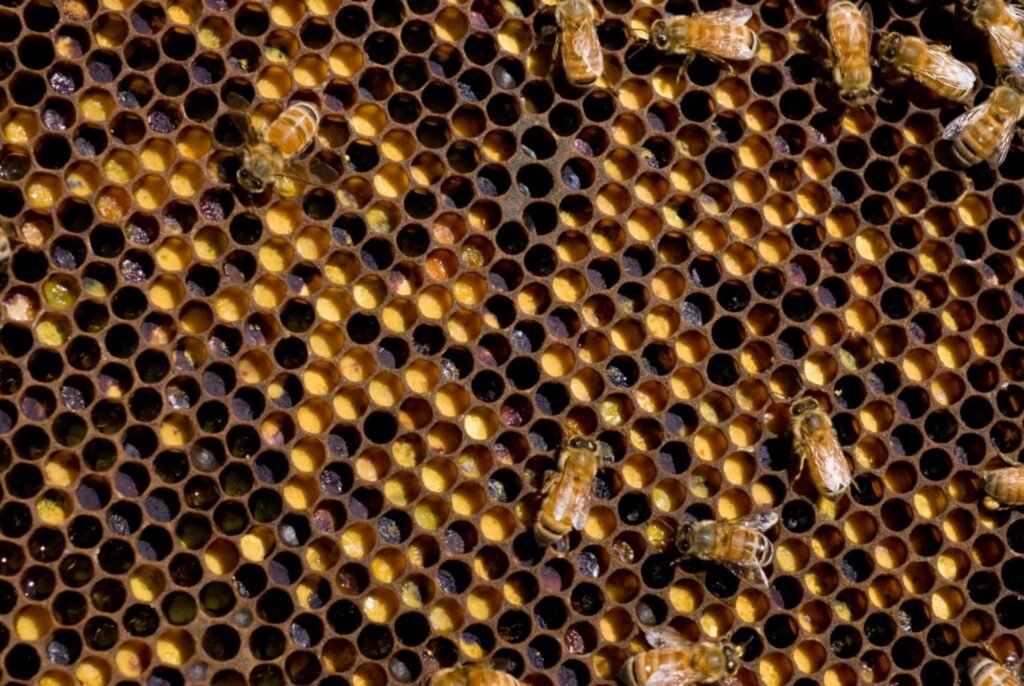
Bee bread itself is also part of this story. The fermented pollen stored in comb carries its own microbial community, and some researchers see it as a model for future supplements. Our article on how bee bread fermentation works covers that process.
If You Still Want to Try One: A Fair Test
Commercial probiotics are unlikely to harm a colony when used as labelled, so some beekeepers will still want to try them. If you do, treat it as an experiment rather than an act of faith, because a strong spring buildup after a probiotic dose proves nothing on its own.
- Pick comparable colonies. Choose at least six colonies of similar strength in the same yard, ideally headed by queens of the same age and source.
- Treat half, leave half. Apply the product exactly per label to three colonies and leave three as controls. Keep all other management, including feeding and varroa treatment, identical.
- Measure before and after. Record frames of bees, frames of capped brood and a varroa alcohol-wash count at the start and every three to four weeks.
- Keep it off the honey. Apply outside the main flow and never with honey supers on, so nothing ends up in the crop you sell.
- Judge by the numbers. If the treated group does not beat the controls by more than the normal colony-to-colony variation, the product is not paying for itself in your operation.
| What to record | How | Why it matters |
|---|---|---|
| Frames covered with bees | Count on a cool morning before foragers leave | Overall colony growth |
| Frames of capped brood | Estimate in whole or half frames | Queen output and brood survival |
| Varroa per 100 bees | Alcohol wash of about 300 bees | Rules out mites as the real difference |
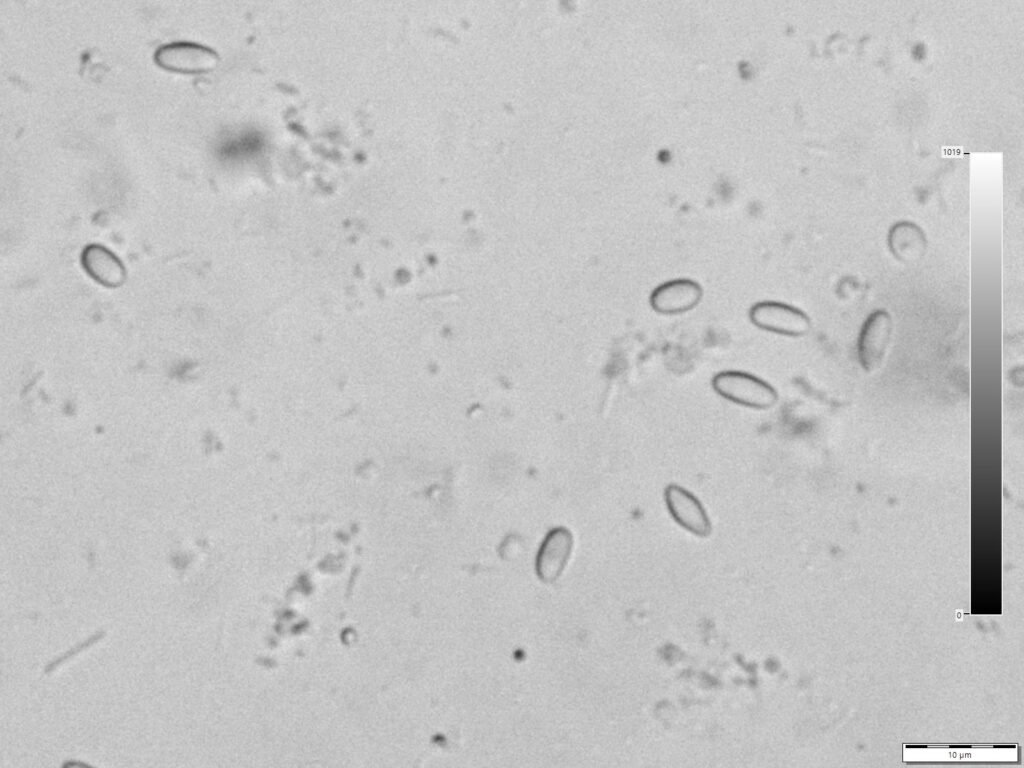
| Nosema spore count (optional) | Microscope count of 10 forager abdomens | Tracks the gut pathogen most often cited |
| Honey yield or winter survival | Weigh supers; note spring status | The outcome that actually matters |
For the Nosema step, our guide on testing for Nosema spores at home walks through the microscope method. Here in eastern North Dakota and the Red River Valley, the natural window for a trial is spring buildup, roughly mid-April to early June, when colonies expand quickly on willow, maple and dandelion and differences in brood area show up fast.
What Reliably Supports the Bee Gut
If your goal is a resilient gut microbiome, these steps are backed by stronger evidence than any supplement currently sold:
- Diverse natural pollen. Bees fed varied pollen and bee bread support healthier gut communities than bees relying on a single source or on sugar alone. Where forage is short, a quality substitute helps; see our comparison of pollen substitute patties.
- Antibiotics only for diagnosed disease. Every unnecessary course disrupts the core bacteria and can leave colonies more vulnerable to opportunistic infection.
- Lower pesticide exposure. Some agricultural chemicals, including glyphosate in lab studies, alter bee gut bacteria. Read more in our review of how pesticides disrupt bee gut bacteria.
- Less transport stress. Colonies moved for pollination face heat, confinement and poor forage in quick succession. Our guide to reducing migratory stress covers the basics.
- Keep comb and nestmates intact. Young bees acquire their microbes from older bees and the comb, so a strong population of healthy adults is the colony’s own probiotic.
Frequently Asked Questions
Do probiotics for honey bees actually work?
The commercial products tested so far have not shown benefits in independent field trials. A 76-colony USDA-led study and a separate North Carolina study both found no measurable effect on the gut microbiome, and the product organisms did not establish in bee guts. Research strains chosen for bees have shown benefits in some trials, but they are not the same as most retail products.
Can probiotics replace antibiotics for American foulbrood?
No. American foulbrood is a notifiable, highly contagious disease in many states and provinces, and no probiotic is approved to treat it. Research strains have lowered Paenibacillus larvae loads in trials, but a confirmed case still needs inspection, veterinary guidance and, often, destruction of infected equipment.
Should I give my bees a probiotic after Terramycin or Tylan?
You can, but the only field study of this exact scenario found that a leading commercial probiotic did not help the gut recover any faster than antibiotics alone. Allowing time, keeping a strong adult population and providing good pollen are the more dependable recovery aids.
Are bee probiotics harmful to the colony or the honey?
Used according to the label, commercial probiotics have not been shown to harm colonies. To keep the harvest clean, apply them only when honey supers are off and outside the main nectar flow.
What bacteria naturally live in a honey bee’s gut?
The core adult worker gut community includes Snodgrassella alvi, Gilliamella, bee-specific Lactobacillus and Bombilactobacillus species, and Bifidobacterium, with a few other specialists such as Frischella and Bartonella. Young bees acquire them from nestmates and comb within days of emerging.
Is bee bread a natural probiotic?
Bee bread is fermented pollen that carries lactic acid bacteria and yeasts, and it is an important food for nurse bees. Its microbes are part of the hive’s wider microbial environment, which is one reason diverse natural pollen is valuable, though bee bread is not a direct substitute for the specialised gut bacteria.
The Bottom Line
Probiotics for honeybee colonies are a promising idea that current retail products have not yet delivered. If you want to support your bees’ gut health today, put your effort into diverse forage, careful antibiotic use and lower chemical exposure, and if you do try a commercial probiotic, run it as a side-by-side test in your own apiary so the results speak for themselves.