Reviewed by Thomas B. · Last Updated September 24, 2026 · How we review
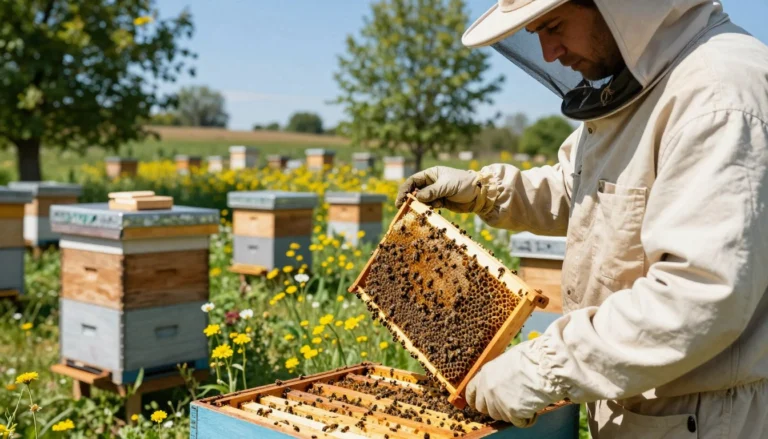
Moving bees costs them something, but most of that cost is controllable. The largest study on the question found that worker bees in migratory colonies lived about one day less than bees in stationary colonies, and that a lack of food raised their oxidative stress even more than the trucking did. A second study, which followed a truckload of hives from North Dakota to California, found that small colonies were the ones that lost control of their brood-nest temperature on the road and failed afterwards. So the practical answer is: send only strong colonies, move them at night with good ventilation, protect them from both heat and cold in transit, land them on forage or feed them, and give them time to recover before the next move.
This guide turns that research into a routine for anyone trucking colonies, from a short haul to a nearby orchard to the long run from the Red River Valley to the almonds, including the paperwork that keeps a load from sitting at an inspection station.
Key Takeaways
- Strength is the best protection. On a monitored North Dakota to California haul, smaller colonies had the biggest temperature swings and were the most likely to fail.
- Food matters more than miles. NC State researchers found food scarcity raised oxidative stress more than migration did.
- Cold is a transit risk too. On an October haul, 6 of 10 monitored hives fell below 32°C (about 90°F) for over an hour; none overheated.
- Move at night, netted and ventilated. Bees are home, air is cooler, and the net contains flyers at stops.
- Paperwork is stress control. A load that clears inspection quickly spends less time parked.
Table of Contents
- What Moving Does to a Colony
- The North Dakota to California Study
- Step 1: Choose Which Colonies Travel
- Step 2: Prepare Each Hive for the Road
- Step 3: Load, Net and Drive
- Step 4: Clear Inspections Without Long Waits
- Step 5: Land on Forage and Allow Recovery
- A Northern Plains Migratory Calendar
- Frequently Asked Questions
What Moving Does to a Colony
A colony on a truck is sealed in, shaken and exposed to air temperatures that change by the hour, and on arrival its foragers must learn a new landscape. In 2016, a North Carolina State University team led by Michael Simone-Finstrom and Hongmei Li-Byarlay published “Migratory management and environmental conditions affect lifespan and oxidative stress in honey bees” in Scientific Reports. In their experimental comparison, migratory colonies were moved every 21 days, one brood cycle, 35 to 60 miles on each of five trips. Workers from stationary colonies lived an average of 22.19 days, against 21.34 days in the migratory group.
“One day may seem trivial, but when a normal forager bee lifespan is only around 20 days, one day is significant.”
The study also measured oxidative damage, a marker of cellular wear. Migration raised it, but food mattered more: late in the season the stationary colonies ran short of forage and their bees showed more damage than the moved bees, which had been taken to fresh crops. The authors concluded that some detrimental effects of migration may be alleviated by a greater abundance of forage. Rearing conditions also affected how much damage a bee carried as an adult, so a move during brood rearing reaches workers not yet born. Where the colony lands can matter as much as the trip.
The North Dakota to California Study
The research most relevant to Northern Plains beekeepers came out of the USDA Agricultural Research Service lab in Fargo and North Dakota State University. Dacotah Melicher and colleagues published “Long-Distance Transportation Causes Temperature Stress in the Honey Bee” in Environmental Entomology in 2019. They followed a real commercial load: 408 hives on pallets, loaded on a flatbed trailer and covered by a net, which left Towner, North Dakota, on 10 October 2012 and arrived in Sheep Ranch, California, on 14 October.
Ten of the hives carried temperature sensors. Outside air on the trip ranged from about −1.7°C to 38.3°C. A healthy brood nest is held near 32–35°C. Six of the ten monitored hives fell below 32°C for more than an hour. Four of those regained control and two did not. The highest temperature recorded inside any hive was 36.6°C, and the authors found no evidence of overheating on that autumn trip.
| Finding | What was measured | What it means for your move |
|---|---|---|
| Loss of temperature control | 6 of 10 hives below 32°C for over 1 hour | On an autumn run, chilling is as real a risk as heat |
| Recovery | 4 of those 6 recovered, 2 did not | Weak colonies may not get back to normal after arrival |
| Colony size | Smaller colonies had more temperature variation | Set a minimum strength for colonies that travel |
| Position on the trailer | Hives facing the centre aisle differed in average temperature | Exposed spots near the tractor gap and the rear may be rougher |
| Gene expression | Stress and immune markers rose after the trip, then fell after about 2 weeks | Plan for a recovery period before heavy demands |
“Colony size affects thermal stability. Smaller colonies have significantly more internal temperature variation and are more likely to lose thermoregulation.”
The authors suggested using this to set a minimum population threshold below which transporting colonies is not economically viable, and noted that turbulent airflow in exposed positions may explain some temperature swings. Ten hives on one truck is a small sample, but it is the best direct measurement of what the westward haul does inside a hive.
Step 1: Choose Which Colonies Travel
The study points one way: decide which colonies stay home before the truck arrives. A colony that is small, queenless, heavily infested with mites or short of stores starts the trip already struggling, and the move makes each problem worse.
- Grade strength before loading. Count frames of bees on every colony, or a fair sample, and record it. Our guide on documenting hive strength explains how to record the count so it also serves your pollination contract.
- Set a cut-off and stick to it. Colonies below it can be combined, kept home to build, or sold as nucs rather than trucked. For almond contracts, the strength growers expect is covered in our article on almond hive strength.
- Check mites weeks ahead. Treatment needs time to work, and mite and virus pressure is one of the confounding factors the Fargo authors listed as a possible cause of colonies failing to thermoregulate or recover.
- Confirm a laying queen. A colony that goes queenless on the road has nothing to rebuild with when it arrives.
- Top up food. Colonies should leave with enough stores that they do not need forage in the first days after landing. Feeding protein in the weeks before a move supports the brood that will become the next generation of foragers.
Hive configuration matters too. Single-brood and double-deep units carry and buffer differently. The trade-offs are compared in our piece on double-deep vs single-brood hives for pollination.
Step 2: Prepare Each Hive for the Road
The aim is a hive that cannot come apart, cannot let bees out, and can still breathe. A confined colony that becomes agitated generates heat, and the Fargo authors note that poorly ventilated colonies often die from overheating.
- Strap every hive as one unit. Boxes, bottom board and lid should be tied with ratchet straps or hive staples so nothing shifts when the load flexes.
- Secure the frames. Frames that slide crush bees and the queen. Run frames in the direction of travel where possible, and fill gaps so they cannot move sideways.
- Ventilate. Close entrances with screen, not solid blocks. For small loads without a net, a travel screen or screened inner cover in place of a solid cover lets heat escape. Migratory-style lids and pallets are designed around this kind of handling; see our comparison of the migratory lid vs telescoping cover.
- Clean the outside. Soil, weeds and ant nests on pallets and hive bottoms are what border inspectors look for. Keep pallets off bare ground in the days before a move where you can.
For a printable pre-departure list, work through our migratory pollination checklist alongside this guide.
Step 3: Load, Net and Drive
The University of Georgia Bee Program’s guide to managing bees for pollination notes that hives are almost always moved at night, when bees are not flying and temperatures are cooler, and that larger beekeepers net the whole truckload to contain flying bees. In a 2022 FreightWaves report on bee trucking, an Idaho carrier described loads of around 400 to 450 hives, travelling mostly at night and hosing hives with water in hot weather, and explained that a stopped truck loses the airflow that keeps a warm load in check.
| Stressor in transit | What it does | How to reduce it |
|---|---|---|
| Heat, especially when parked | Agitated, confined bees overheat and comb can soften | Travel at night, keep moving, shade and water the load if you must stop |
| Cold on autumn runs | Brood nest falls below 32°C; weak colonies may not recover | Ship strong colonies only; avoid holding loads in exposed yards in a cold snap |
| Turbulent airflow | Exposed hives see bigger temperature swings | Tight, even load; net secured so it does not flap |
| Vibration and jolts | Crushed bees, damaged comb, disturbed cluster | Strapped hives, braced frames, steady driving |
| Delays at inspection | More hours sealed in, more time parked | Clean pallets, correct paperwork, arrive in lab hours |
Handling heat
Leave late enough that the load cools overnight, plan stops for the coolest hours, and never park a loaded truck in the sun. If it must stand in warm weather, wetting the load through the net is what haulers do. Under the CDFA water usage policy, California border stations may provide water for bees when a vehicle is held for follow-up action, but not while it is simply waiting for inspection.
Handling cold
An October departure from the northern plains can mean freezing nights on the first leg. Strong colonies hold their brood nest temperature and weak ones do not, which is the best argument for grading before loading rather than hoping a weak colony builds in California.
Load limits are covered in our guide to truck weight planning for migrating hives. To see the border process, Project Apis m. published “Border Inspection and Transporting Honeybee Colonies to California for Almond Pollination” on its YouTube channel, a video CDFA links from its border-station pages.
Step 4: Clear Inspections Without Long Waits
A load held at an inspection station is a load that is sealed and parked. Getting the paperwork right is part of looking after the bees.
| Jurisdiction | What applies to migratory beekeepers | Source |
|---|---|---|
| North Dakota | Annual beekeeper licence for anyone with 1 or more colonies, registered yard locations, and signs in each yard. If bees leave the state for part of the year, the licence must be renewed before hives come back. | ND Department of Agriculture |
| North Dakota to California | A California Pre-Inspection Program for beekeepers taking hives directly from North Dakota, so the load is certified before it leaves the state. | ND Department of Agriculture |
| California border | A brief inspection at the border station and a more detailed one at destination, mainly for red imported fire ants and excess soil or debris. Contaminated loads must be cleaned, usually by pressure washing. | CDFA |
| Ant-free certification | A voluntary program where officials in the origin state pre-inspect loads for ants, allowing faster clearance at the border. | CDFA |
| Minnesota | The state offers inspections for beekeepers who need a certificate to move bees to other states, for $50 plus mileage. | MN Department of Agriculture |
Two details save hours. CDFA says specimens are identified quickly during lab business hours, 8 a.m. to 5 p.m. Monday to Friday, and that arriving outside those hours may cause delays if pests are found. And the driver is responsible for making the load ready for inspection, which often means lifting the net. Rules change, so check each agency’s page before every season rather than relying on last year’s routine.
Step 5: Land on Forage and Allow Recovery
The NC State study’s central finding was that food shortage did more damage than migration. The Fargo team saw stress-related gene activity rise after the trip and ease after a recovery period. Both point to the same routine at the destination.
- Unload at night or early morning and open entrances once the hives are placed and the bees have settled.
- Set hives in the sun and out of low, damp spots, where they warm earlier in the day and start foraging sooner.
- Check forage honestly. If the crop is not yet in bloom or the holding yard is bare, feed carbohydrate and protein rather than waiting.
- Do not stack moves. The Fargo authors warned that effects may accumulate if bees are not given adequate forage and recovery time between moves.
- Re-check after a couple of weeks. Look for queen status, brood and mite levels once colonies have settled, and record strength again.
Holding yards between legs are where many colonies lose ground. Our guide to bee yard staging sites for migratory crews covers what a good holding yard needs.
A Northern Plains Migratory Calendar
For a beekeeper based in eastern North Dakota or western Minnesota, the migratory year follows the honey flow and then the almonds. The state Department of Agriculture describes North Dakota as the No. 1 honey-producing state, with 38.3 million pounds in 2023, and the Towner-to-Sheep Ranch load in the Fargo study shows the route west that follows the flow.
| Period | Colony stress to manage | Actions |
|---|---|---|
| Late summer | Mite peak after the honey flow | Monitor and treat; ND inspectors typically run mite checks in August and September |
| Early autumn | Building winter bees before the trip | Feed protein and syrup, grade strength, combine or hold back weak colonies |
| Autumn haul west | Cold nights on the first leg, heat further south | Night travel, netting, pre-inspection, arrive in lab hours |
| California holding yards | Poor forage before bloom | Supplemental feeding, mite checks, re-grade before orchard placement |
| Spring return | Another long haul after almond bloom | Renew the ND licence before hives re-enter, re-register yards, allow recovery on arrival |
For the longer history of how this route developed, see our article on the history of migratory beekeeping in America.
Frequently Asked Questions
Does moving hives shorten a honey bee’s life?
Yes, modestly. In the NC State study, workers from moved colonies lived 21.34 days on average against 22.19 days for stationary colonies, a real difference when a forager lives around 20 days.
Is it better to move bees in the heat or the cold?
Neither is safe for weak colonies. Heat is the danger when a loaded truck is parked, but on the October North Dakota to California haul the problem was chilling, and no hive overheated.
Why are bee trucks covered with nets?
The net contains bees that leave the hives during loading, stops and unloading while keeping the load ventilated. California inspectors often need it lifted to examine the pallets.
How long should colonies rest after a long move?
There is no fixed figure. In the Fargo study, stress-related gene activity was high on arrival and had eased about two weeks later, so allow at least that long before another move or a demanding job.
Do I need a permit to take bees from North Dakota to California?
You need a current North Dakota licence and registered yards while bees are in the state, and California inspects loads at the border and at destination. North Dakota offers a California pre-inspection, and CDFA runs a voluntary ant-free certification. Check both agencies each season.
What is the most useful way to reduce transit losses?
Ship only strong colonies. In the Fargo study, colony size was most closely tied to temperature stability in transit and survival afterwards.
The Bottom Line
Migratory stress is real but manageable. Grade colonies and leave the weak ones home. Move at night with the load strapped, ventilated and netted. Plan for cold as well as heat, clear the paperwork before you reach the border, and land the bees where they can eat. Then give them time to recover before you ask more of them.