Table of Contents
- What Terramycin Is and What It Treats
- A Brief History: Decades as the Only Approved Option
- Prescription Requirements Today
- Application Formats: Dust, Grease Patty, and Syrup
- Terramycin for European Foulbrood
- The Documented Resistance Problem
- Terramycin vs. Tylan: Which One Applies to You
- Withdrawal Periods and Honey Safety
- What It Doesn’t Fix
- Confirming the Right Diagnosis First
- Reporting and Regulatory Context
- Working With Your Prescribing Veterinarian
- General Dosing Principles
- Managing the Colony After Treatment
- Reducing Future Reliance on Antibiotics
- Considerations for Larger and Migratory Operations
- Storage and Disposal
- Checking Regional Resistance Before You Treat
- Common Mistakes
What Terramycin Is and What It Treats
Terramycin (oxytetracycline) is a tetracycline-class antibiotic labeled for suppressing clinical American foulbrood (AFB) and, in some formulations and label uses, European foulbrood (EFB) in honey bee colonies. Like all antibiotic treatment for foulbrood, it suppresses active bacterial infection rather than curing the underlying disease — it does not kill the resistant spore form of Paenibacillus larvae that causes AFB, which can remain viable in comb and equipment for decades regardless of antibiotic treatment.
A Brief History: Decades as the Only Approved Option
For much of the 20th century, Terramycin was essentially the only antibiotic labeled for AFB control in U.S. beekeeping, used widely and, in earlier decades, with looser regulatory oversight than exists today — beekeepers could once buy it over the counter and apply it preventively, without a confirmed diagnosis, as a routine precaution. This historical pattern of widespread, often preventive use over many years is now understood to be the primary driver behind the oxytetracycline-resistant AFB strains that have since been documented in parts of the country, a cautionary case study in why current prescription and stewardship rules exist.
Prescription Requirements Today

As with Tylan, Terramycin now requires a veterinary prescription or Veterinary Feed Directive under FDA rules that took effect in 2017 — the over-the-counter era described above is over, and treating without a valid prescription is both illegal and, given the resistance history, a genuinely bad practice regardless of legality. Establish a relationship with a veterinarian experienced in apiculture before you need one, since this specialty area isn’t universally available from general veterinary practices.
Application Formats: Dust, Grease Patty, and Syrup
Terramycin has historically been available in more application formats than some newer options, including a powder dust mixed with confectioner’s sugar for top-bar dusting, an “extender patty” combining the antibiotic with vegetable shortening and sugar left in the hive over an extended period, and a syrup drench. Extender patties in particular were a widely used historical format specifically because they delivered antibiotic exposure over weeks rather than a single application — though current veterinary guidance and label instructions should always take precedence over legacy formulation habits, since some historical extender-patty practices are part of what drove resistance development in the first place.
Terramycin for European Foulbrood
Unlike AFB, European foulbrood is generally considered a stress-related disease that a strong colony can often overcome on its own once the underlying stressor (poor nutrition, overcrowding, queen problems) is addressed, and antibiotics are typically reserved for more severe EFB cases rather than used as an automatic first response — a genuinely different treatment philosophy than AFB, where antibiotic suppression alongside strict hygiene is more routinely part of the management conversation. Our guide on whether you can save a hive with European foulbrood covers this distinction and the non-antibiotic management options in more depth.
The Documented Resistance Problem
Oxytetracycline-resistant AFB strains are a real, documented issue in parts of the United States, arising from decades of the kind of widespread, sometimes preventive use described above. This is the central practical reason Tylan exists as an FDA-approved alternative, and why current guidance strongly discourages routine or preventive antibiotic use — using Terramycin only for confirmed, active disease, at the correct dose and duration under veterinary guidance, is now understood as essential stewardship, not just a legal formality.
Terramycin vs. Tylan: Which One Applies to You
| Factor | Terramycin (Oxytetracycline) | Tylan (Tylosin) |
|---|---|---|
| Drug class | Tetracycline | Macrolide |
| Historical role | Original, longtime standard option | Newer alternative for resistant cases |
| Resistance status | Documented resistant strains exist regionally | Less widespread documented resistance so far |
| Approved uses | AFB, and EFB in some formulations/labels | AFB specifically |
Your prescribing veterinarian, ideally informed by any known regional resistance data, is the right authority on which to use for your specific situation — see our companion guide to Tylan for American foulbrood for the full picture on the alternative option.
Withdrawal Periods and Honey Safety
As with any antibiotic used around a honey-producing colony, follow the product label’s specified withdrawal period between the final treatment and adding honey supers or harvesting, and never treat with supers on. Antibiotic residue in honey intended for sale is a genuine food-safety and regulatory concern, and withdrawal periods exist specifically to prevent it — confirm the current specific period with your veterinarian and the product label, since guidance can be updated.
What It Doesn’t Fix
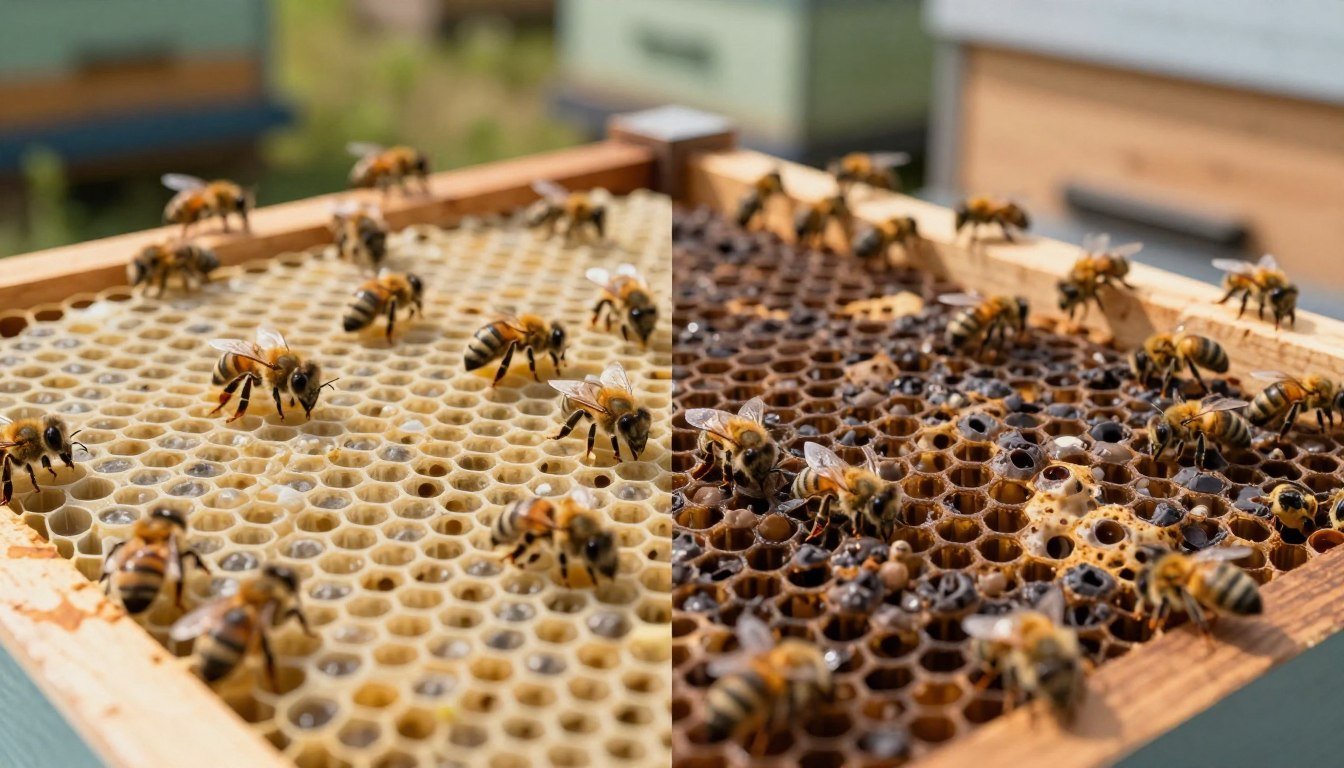
Terramycin suppresses active infection but does nothing to decontaminate wax, frames, or equipment already harboring AFB spores — a colony can look clinically clear after a treatment course while the underlying equipment remains a genuine future risk. Combining antibiotic treatment with a realistic plan for eventual comb replacement, and following the same quarantine and disease-spread-prevention practices covered in our broader disease prevention guide, addresses what the antibiotic alone can’t.
Confirming the Right Diagnosis First
Before treating with any antibiotic, confirm you’re actually dealing with a bacterial brood disease rather than a viral, fungal, or environmental issue that superficially resembles one — chalkbrood, sacbrood, and chilled brood can all produce brood-frame abnormalities that an inexperienced eye might mistake for foulbrood, and antibiotics do nothing for any of them. The classic AFB field indicators (a sunken, greasy cappings pattern, a foul odor, and a positive rope test) are a reasonable starting point, but a lab submission to your state’s bee diagnostic lab remains the most reliable confirmation, especially the first time you suspect a case in a given apiary.
Reporting and Regulatory Context
American foulbrood is a reportable disease in most U.S. states regardless of whether you plan to treat with Terramycin or pursue the traditional burn response, and reporting requirements exist independently of your chosen treatment path. Contact your state apiarist’s office for current reporting procedures and any regional guidance on resistance patterns before starting treatment, since this information directly affects whether Terramycin or Tylan is the more appropriate choice in your area.
Working With Your Prescribing Veterinarian
A veterinarian unfamiliar with apiculture may not know the current label dosing, application format, or withdrawal periods specific to honey bee use off the top of their head, so come prepared with the product’s current label information and be ready to discuss your specific colony situation, disease history, and regional resistance concerns rather than expecting the vet to independently research bee-specific antibiotic protocols. Many state beekeeping associations maintain lists of veterinarians experienced with apiary prescribing specifically for this reason — worth checking before your first outbreak rather than during one.
General Dosing Principles
Follow the exact dose, frequency, and duration specified on the current product label and by your prescribing veterinarian rather than any general guideline found online, since formulations, concentrations, and label instructions can change and vary by product. Under-dosing or stopping treatment early — a common temptation once symptoms visibly improve — is a recognized contributor to selecting for resistant bacteria, since surviving bacteria exposed to a sub-lethal dose are more likely to be resistant strains that then reproduce unchecked. Complete the full prescribed course even if the colony looks clinically improved partway through.
Managing the Colony After Treatment
Once a treatment course is complete, monitor the colony over the following weeks for any return of clinical symptoms rather than assuming the issue is fully resolved, since suppression can be temporary if underlying equipment contamination or colony stress isn’t also addressed. Many beekeepers plan for eventual replacement of the treated colony’s oldest brood comb as a longer-term risk-reduction step, gradually reducing spore load in the woodware even without full equipment destruction — a reasonable middle-ground approach for lower-severity cases, though always check what your specific state’s regulations require for your situation.
Reducing Future Reliance on Antibiotics
The clearest lesson from Terramycin’s own resistance history is that reducing routine antibiotic dependence — through good apiary hygiene, avoiding feeding bees honey of unknown origin, regular comb rotation, and requeening with hygienic-behavior genetics where practical — is a better long-term strategy than treating antibiotics as a routine input. This doesn’t mean avoiding treatment when a confirmed active infection genuinely calls for it, but it does mean treating antibiotic use as a targeted response to real disease, not a preventive habit, precisely because the preventive-use pattern is what created today’s resistance problem in the first place.
Considerations for Larger and Migratory Operations
Operations managing colonies across multiple apiary sites carry a compounded resistance-stewardship responsibility, since inappropriate antibiotic use at scale has a larger population-level impact on regional resistance patterns than a single hobbyist’s mistake would. Coordinate with your veterinarian on a documented treatment protocol across your operation rather than ad-hoc, per-yard decisions, and keep clear records of what was treated, when, and with what withdrawal period observed — both for your own management clarity and because state inspection programs may ask for these records during a disease investigation.
Storage and Disposal
Store the prescribed product exactly as directed by your veterinarian and the label — typically cool, dry, and away from direct light — in its original labeled container, both for safe handling and so your treatment records stay auditable if a state inspector asks. Dispose of unused product according to your veterinarian’s guidance rather than ordinary household disposal, since antibiotic waste carries its own environmental handling considerations distinct from general trash.
Checking Regional Resistance Before You Treat
Because documented resistance is regional rather than uniform across the entire country, ask your prescribing veterinarian or state apiarist’s office whether oxytetracycline-resistant AFB has been documented in your area before defaulting to Terramycin out of habit or historical familiarity. In regions with known resistance, starting with Tylan instead, or having your veterinarian arrange sensitivity testing on a confirmed sample, can save the time and colony risk of a treatment course that’s unlikely to work.
Common Mistakes
Using Terramycin preventively, without a confirmed active infection, is the single most damaging historical mistake in this drug’s use pattern and the direct cause of today’s documented resistance problem — don’t repeat it. Assuming a symptom-free colony post-treatment means the underlying spore contamination is gone is a second common and costly misunderstanding. Skipping a proper diagnosis (via the rope test or lab confirmation) before treating risks using the wrong tool entirely, since EFB and AFB call for meaningfully different management approaches.
Sources
Regulatory history, resistance documentation, and mechanism information reflect FDA Veterinary Feed Directive rules for medically important antimicrobials (effective 2017) and current USDA/university extension guidance on American and European foulbrood management in U.S. apiculture. For current, authoritative detail, see USDA APHIS’s National Honey Bee Surveys program.
FAQ
Why did Terramycin stop working as well as it used to?
Decades of widespread, often preventive use before current prescription rules led to documented oxytetracycline-resistant AFB strains in parts of the U.S. — a direct consequence of the historical over-the-counter era’s looser oversight.
Can Terramycin treat European foulbrood?
Some formulations and labels cover EFB, though EFB is generally treated as a stress-related disease a strong colony can often overcome without antibiotics — treatment philosophy differs meaningfully from AFB management.
Do I need a prescription for Terramycin?
Yes — since 2017, FDA rules require a veterinary prescription or Veterinary Feed Directive for all antibiotics used in honey bees, regardless of the historical over-the-counter availability that once existed.
Should I choose Terramycin or Tylan?
It depends on regional resistance patterns and your veterinarian’s guidance — Terramycin is the historical standard, while Tylan exists as an alternative specifically for situations where oxytetracycline resistance is documented or suspected.
What application format does Terramycin come in?
Historically available as a powder dust mixed with confectioner’s sugar, an extender patty combining the antibiotic with vegetable shortening and sugar, or a syrup drench — follow your veterinarian’s current guidance and the specific product label rather than legacy formulation habits.