Reviewed by Thomas B. · Last Updated September 23, 2026 · How we review
The most effective way to prevent disease spreading between apiaries is to stop moving the things that carry it: brood comb, boxes, used equipment, honey and weak colonies. Beekeepers move far more disease between yards than bees do on their own. After that, the biggest wins are preventing robbing of collapsing or dead colonies, quarantining any bees or equipment of unknown health, and cleaning the few tools that genuinely have to travel.
This guide is about the yard-to-yard problem specifically: what carries American foulbrood spores, Varroa mites and other pathogens from one apiary to another, how much each pathway matters according to field research, and a practical routine for beekeepers who run two or more yards. It draws on our own multi-yard operations in the Red River Valley and on published studies from Canada, Sweden and the U.S.
Key Takeaways
- A 2022 study of Saskatchewan beekeepers found that buying used equipment was linked to roughly 8.6 times higher odds of a high American foulbrood risk category, and moving honey-producing colonies between apiaries to about 4.3 times higher odds.
- Robbing is the main natural route between yards. Mite-laden colonies collapsing in autumn pushed mites into colonies 300 meters away as readily as into colonies 1 meter away, and American foulbrood spread from robbed-out dead colonies mainly within about 1 km.
- Keep comb and boxes with the yard they came from. Mark them so you can tell.
- Quarantine swarms, purchased nucs and any used equipment in a separate yard for about two brood cycles before they join your main apiaries.
- Clean what travels: hive tools, gloves and smoker bellows. Visit your healthiest yards first and any suspect yard last.
Table of Contents
- How Disease Actually Moves Between Apiaries
- What the Research Says About Each Pathway
- Rule 1: Keep Comb and Boxes in Their Home Yard
- Rule 2: Quarantine Anything of Unknown Health
- Rule 3: Don’t Let Collapsing Colonies Be Robbed
- Rule 4: Clean What Has to Travel
- Visit Order, Records and Honey Handling
- Notes for North Dakota and Minnesota Beekeepers
- Biosecurity Guides in This Series
- Frequently Asked Questions
How Disease Actually Moves Between Apiaries
Pathogens reach a new apiary in two ways: carried by the beekeeper, or carried by bees. Beekeeper-mediated routes move the most material the farthest, which is why they come first in any biosecurity plan.
| Pathway | What it typically carries | Relative risk | Main control |
|---|---|---|---|
| Moving brood comb or frames between yards | American and European foulbrood, chalkbrood, mites in capped brood, viruses | High | Keep comb in its home yard |
| Buying used boxes, frames or comb | American foulbrood spores, which persist for decades | High | Quarantine, inspect, scorch or replace |
| Moving whole colonies between yards | Everything the colony carries, plus a new robbing target | High | Move only colonies inspected clean |
| Feeding honey or returning wet supers across yards | American foulbrood spores | High | Never feed honey from another yard or unknown source |
| Robbing of weak, collapsing or dead colonies | Varroa mites, foulbrood spores | High near the source | Remove dead-outs, monitor mites, reduce entrances |
| Swarms and purchased bees | Mites, foulbrood, viruses, small hive beetle | Moderate | Quarantine yard |
| Drifting workers and drones | Varroa mites, viruses | Moderate, mostly within a yard | Hive layout and spacing |
| Hive tools, gloves, smoker bellows | Foulbrood bacteria and spores in wax and propolis | Low to moderate | Soak tools, change gloves |
| Boots, clothing, vehicle | Small amounts of spores or beetle larvae | Low | Routine washing; extra care after known disease |
The pattern is clear: the high-risk routes all involve comb, honey or live colonies. A beekeeper who never moves those between yards has already closed off most of the risk. Colony-to-colony spread within one yard is a related but separate problem, covered in our guides to how drifting spreads mites and disease and preventing cross-contamination between hives on inspection days.
What the Research Says About Each Pathway
Several field studies put numbers on these pathways, and they point in the same direction.
- Used equipment and colony movement. Zabrodski and colleagues tested pooled extracted honey from 116 Saskatchewan beekeepers across 2019 and 2020 for Paenibacillus larvae, the American foulbrood bacterium, and found spores in 51% of 1,476 samples. In their 2022 Scientific Reports analysis, buying used equipment raised the odds of a higher spore-risk category about 8.6-fold. Moving honey-producing colonies between apiaries raised them about 4.3-fold. Saskatchewan’s prairie beekeeping is close to our own in eastern North Dakota, which makes this one of the most relevant datasets for this region.
- Robbing and American foulbrood. A Swedish study by Lindström, Korpela and Fries (Apidologie, 2008) found that between-apiary transmission from robbed-out foulbrood colonies occurred within about 1 km and was significantly lower at 2 km or more.
- Robbing and Varroa. Peck and Seeley placed mite-free colonies 1 m, 50 m and 300 m from collapsing, mite-heavy colonies. Mite levels in the receiving colonies rose regardless of distance once robbing began. Robbing, not drifting, drove most of the transfer, which led the authors to call collapsing colonies “robber lures” rather than “mite bombs”.
- Drift and layout. At the University of Georgia, Dynes and colleagues found that 25% of marked bees drifted in a tight, uniform row of hives spaced 1 m apart, against 7.5% in a spread-out, visually varied layout. None of the mite-inoculated colonies in the dense layout survived two winters, while half in the spread-out layout did (PLoS ONE, 2019).
The UK government’s National Bee Unit sums up why routine precautions matter even when every colony looks healthy:
“Even healthy colonies may harbour small numbers of disease-causing organisms without any outward signs, so good hygiene should be practised at all times, even where disease appears to be absent.”
National Bee Unit (APHA), Apiary Hygiene and Quarantine fact sheet, September 2026
Rule 1: Keep Comb and Boxes in Their Home Yard
If you only adopt one habit, make it this one. The NBU calls it “apiary quarantine”: supers, brood boxes and frames stay with the apiary they came from. The stricter version keeps each set of equipment with a single colony.
- Mark everything. A paint dot or letter on each box end and a marker stripe on frame top bars (one color per yard) makes mixing obvious at a glance.
- Extract by yard. Keep each yard’s supers together through extraction and return wet supers to the same yard, ideally the same colony.
- Don’t balance colonies across yards. Boosting a weak colony with brood from another yard is exactly the frame movement that spreads early, unnoticed foulbrood. Balance within a yard, and only between colonies you have recently inspected.
- Retire old brood comb on a schedule. Old comb accumulates pathogens. Replacing a few dark frames per brood box each year limits what any colony can carry.
When whole colonies must move, for example to a pollination site or a better summer location, inspect them first and move only colonies without signs of disease. Our guide to moving bees between apiaries without spreading disease covers the pre-move inspection step by step.
Rule 2: Quarantine Anything of Unknown Health
A quarantine yard is simply a separate site, ideally well away from your main yards, where new or uncertain bees and equipment sit until they have shown they are clean. Use it for:
- Caught swarms from unknown sources. The NBU recommends hiving them on foundation in clean boxes and letting them go through two brood cycles (around six weeks) before checking the brood and moving them.
- Purchased nucs and packages, especially from a new supplier.
- Used equipment, which should be inspected cell by cell for foulbrood scale. Wooden boxes should be scraped and scorched, and old comb from unknown hives should be melted rather than reused. Our used equipment quarantine checklist walks through this.
Our guide to setting up a quarantine yard covers site choice and layout. If a colony in an established yard starts to look suspect, isolate it before you do anything else.
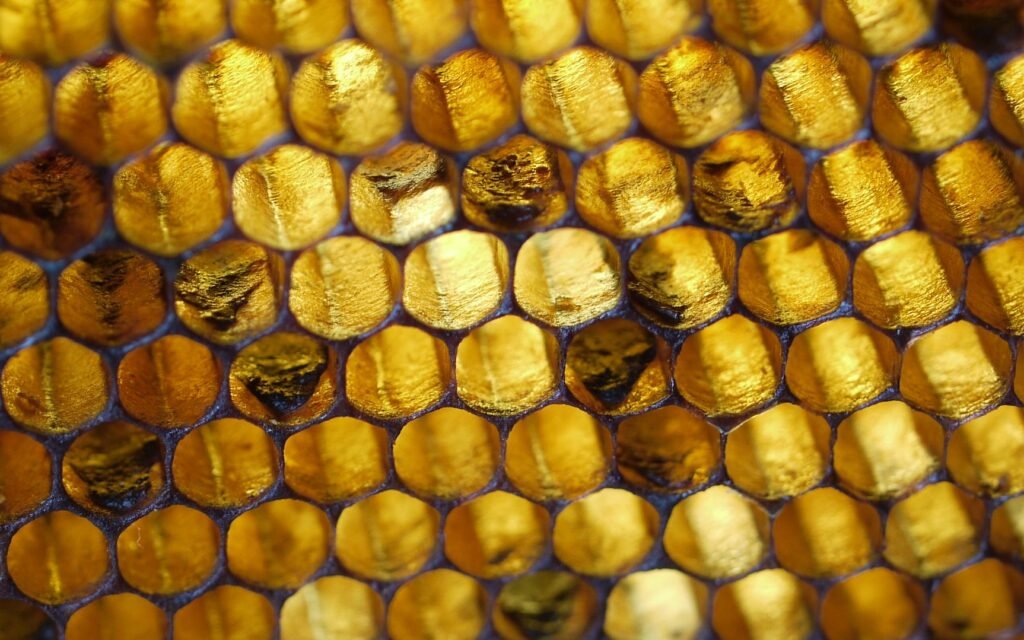
Rule 3: Don’t Let Collapsing Colonies Be Robbed
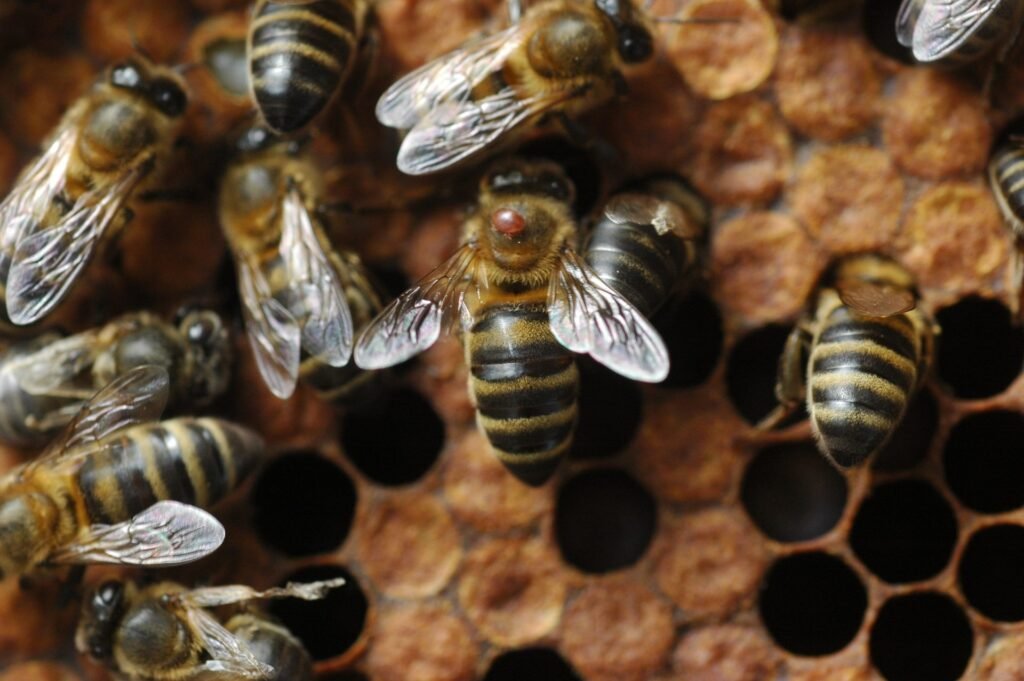
A colony dying from mites or foulbrood becomes a free honey supply for every strong colony within flight range, including your other yards and your neighbors’ hives. Peck and Seeley’s 300-meter result is the reason distance alone won’t protect you.
- Monitor mites in late summer. Colonies with high mite loads collapse in autumn, right when robbing pressure peaks. An alcohol wash in August and September lets you treat or combine colonies before they collapse.
- Close and remove dead-outs promptly. Seal the entrance the day you find a dead colony and take the equipment away. Leave it closed until you have checked the comb for foulbrood scale.
- Reduce entrances after the flow and on small colonies, and never leave wet supers, cappings or spilled syrup open in a yard.
More on this in our guide to preventing robbing between yards.
Rule 4: Clean What Has to Travel
Some things have to go from yard to yard: you, your hive tool, your smoker and your gloves. These are lower-risk routes, but they cost almost nothing to control.
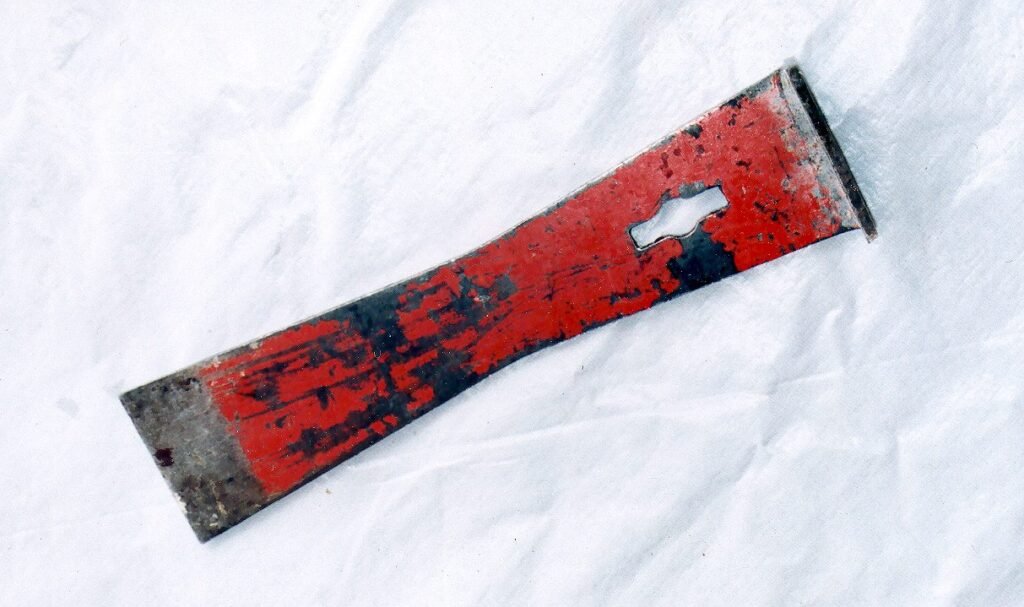
- Hive tools. NBU inspectors keep a bucket of washing-soda solution with added bleach. Their recipe is 1 kg of soda crystals in 4.5 liters of water plus 150 ml of 4.5% bleach, for a final concentration of about 0.125% sodium hypochlorite. The NBU says a soak of at least 20 minutes kills the bacteria that cause European foulbrood. Carrying two or three tools lets you rotate. Flame is an alternative; see bleach vs. flame sterilization.
- Gloves. Leather gloves are hard to clean. Disposable nitrile gloves, changed between yards, are the simplest option.
- Smoker. The barrel gets hot enough to kill pathogens. Scrub the bellows with soda solution between yard visits.
- Suits, boots and vehicle. Launder suits regularly, especially after honey spills. Extra boot and vehicle cleaning matters mainly after a confirmed disease case.
Visit Order, Records and Honey Handling
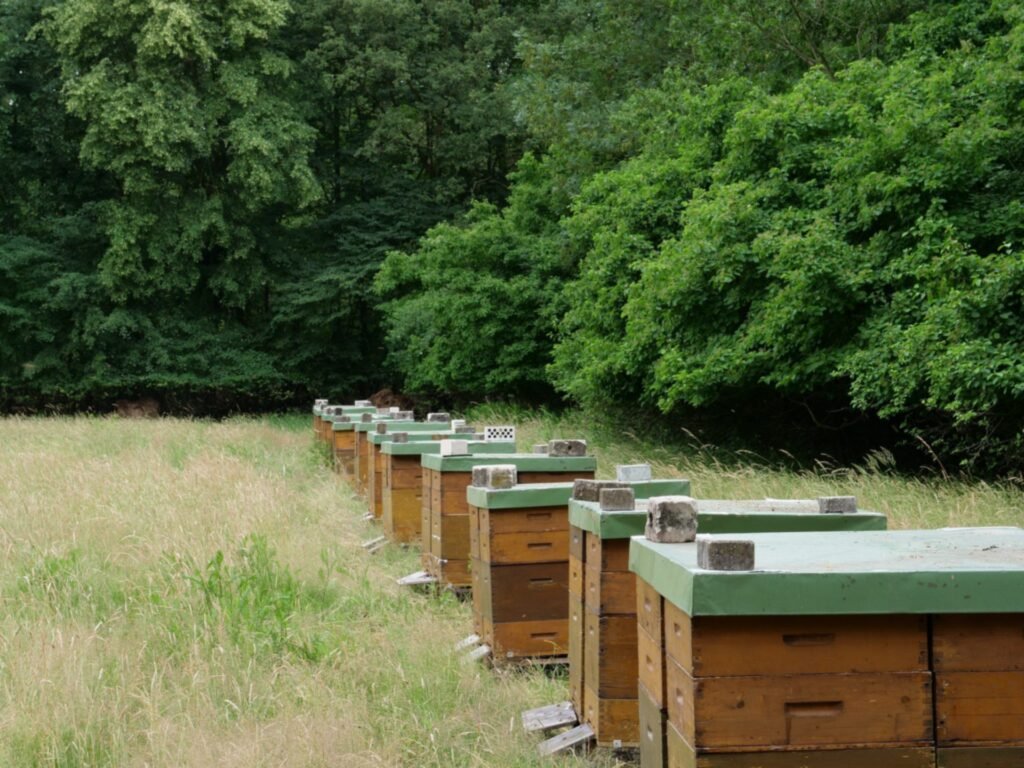
The order you visit yards in is free biosecurity. Work from your healthiest, most valuable yards (queen-rearing and nuc yards) toward production yards, and visit any yard with a suspect or quarantined colony last in the day.
| Visit order | Yard type | Why |
|---|---|---|
| First | Queen-rearing and nuc yards | Young colonies and queens are the most valuable and easiest to infect |
| Middle | Established production yards | Routine, known health status |
| Last | Quarantine yard or yards with a suspect colony | Nothing carried out of them reaches a clean yard the same day |
Keep a simple movement record: which equipment, colonies and queens moved from where to where, and when. If American foulbrood turns up, that record tells you which other yards to check. Our disease log for multi-yard apiaries gives a template, and our biosecurity plan for small beekeepers shows how to turn these rules into a short written plan covering visitors, dead-outs and what to do if disease turns up.
Honey is a special case. American foulbrood spores survive in honey, so never feed honey from another yard, another beekeeper or a store to your bees, and don’t leave extracting equipment or drums where bees can rob them. If you extract honey from a colony later found to have foulbrood, see our guide to sanitizing extractors after sick colonies.
Notes for North Dakota and Minnesota Beekeepers
North Dakota requires every beekeeper to be licensed, even with a single colony, to register each hive location, and to post a sign with contact details in each yard. That registry matters for biosecurity. It is how state apiary staff find neighboring yards when disease is confirmed, and the NDDA offers free inspections on request plus late-summer mite checks.
The region also has a particular risk profile. Many commercial operations bring colonies into the state for the summer honey flow, so hobby yards in the Red River Valley often sit within a few kilometers of large commercial yards. A collapsing colony on either side of a fence line is a robbing target for both. Prairie wintering practices matter too. In the Saskatchewan data, each 10% increase in the share of hives wintered indoors was associated with higher odds of a higher foulbrood-risk category. Anyone wintering colonies together indoors should be especially strict about equipment separation in spring.
If you suspect American foulbrood, close the colony, don’t move any equipment from it, and contact your state apiary program. Our foulbrood comparison and rope test guide cover field recognition. For the other brood diseases, mites and pests worth ruling out before any colony moves, see our overview of common hive diseases and pests.
Biosecurity Guides in This Series
This page covers how disease moves between yards. These guides go deeper on specific parts of the job:
- Moving bees between apiaries without spreading disease: the pre-move health check, transport and settling in at the new yard.
- Apiary biosecurity plan for small beekeepers: turning these rules into a written plan, plus the most common biosecurity mistakes.
- Preventing cross-contamination between hives: hive-to-hive hygiene inside a single yard.
- Keeping your beehive healthy: recognizing the common diseases and pests in the first place.
- Setting up a quarantine yard and the used equipment quarantine checklist: holding new bees and equipment until they prove clean.
Frequently Asked Questions
How far apart should apiaries be to prevent disease spread?
Distance helps, but it is not a complete answer. Swedish research found American foulbrood spread from robbed-out colonies mainly within about 1 km, dropping significantly at 2 km or more. Varroa, however, moved to colonies 300 m away as readily as to neighbors 1 m away once robbing began. Controlling what you move, and preventing robbing, matters more than the exact spacing.
Can I move frames of brood between my apiaries to help a weak colony?
It is best avoided. Brood frames are the highest-risk item for spreading early, unnoticed foulbrood and mites. If you must boost a weak colony, use brood from a recently inspected colony in the same yard, or combine the weak colony instead.
How long should new bees be quarantined?
The UK National Bee Unit recommends about two brood cycles, roughly six weeks, for swarms of unknown origin before checking the brood and moving them to an established apiary. The same period is a sensible minimum for purchased nucs from a new source.
Do I need to disinfect my hive tool between every hive?
Between colonies inside one healthy yard, scraping the tool clean is common practice. Between yards, and always after handling a suspect colony, soak or flame the tool. Carrying several tools makes this easy.
Is buying used beekeeping equipment safe?
It carries real risk. In the Saskatchewan study, buying used equipment was the single strongest management predictor of higher American foulbrood risk. If you buy used equipment, quarantine it, inspect old comb for foulbrood scale, scorch wooden boxes, and melt down comb of unknown history instead of reusing it.
Can feeding honey spread disease between hives?
Yes. American foulbrood spores survive in honey, so feeding honey from another yard, another beekeeper or a store can introduce the disease. Feed sugar syrup or your own honey from the same colony or yard.
The Bottom Line
Most disease that crosses between apiaries rides on comb, honey, used equipment or moved colonies, and most of the rest comes from robbing a collapsing colony. Keep equipment in its home yard, quarantine anything of unknown health, deal with weak and dead colonies before they are robbed, and clean the few tools that travel. Those four habits do more than any treatment you can buy.