Reviewed by Thomas B. · Last Updated September 27, 2026 · How we review
To move bees between apiaries without spreading disease, move only colonies that pass a brood and mite check in the days before the move, send the colony with its own boxes and nothing else, register the new site before the hives arrive, and place the colony at the edge of the new yard where it drifts least. Then check its brood again three to four weeks later, before it counts as part of that yard. The transport itself is the easy part. The disease risk comes from what you choose to move and how you settle it in.
This guide covers that disease side of a between-yard move, the one most “how to move a hive” articles skip. For the mechanics of distance, strapping and ventilation, see our guide to moving a beehive short distance vs long distance. For every other route disease takes between yards, see the main guide on preventing disease spread between apiaries.
Key Takeaways
- In a 2022 Saskatchewan study, beekeepers who sometimes or often moved colonies between apiaries had about 4.3 times higher odds of a higher American foulbrood spore-risk category.
- Run a go/no-go check a few days before the move: brood, mites, queen and stores. A colony that fails any of these stays put until it is fixed.
- Move the colony, not the yard. Spare supers, extracted combs and “extra” brood frames stay where they are.
- In North Dakota, a hive location must be registered with the Department of Agriculture before hives are placed there, and each yard must carry the assigned ID number and your name and phone number.
- At the new site, set the arrival at the edge of the yard with its entrance facing a different way from its neighbours. Do a full brood check after one brood cycle (about three weeks).
Table of Contents
Why a Between-Yard Move Is a Disease Risk
Bees drift and rob, but they rarely fly several miles to another yard on their own. When disease jumps between two apiaries that are far apart, a beekeeper usually carried it: in comb, in honey, in used boxes, or inside a colony that was moved.
Research backs this up. Zabrodski and colleagues tested pooled extracted honey from Saskatchewan beekeepers for spores of Paenibacillus larvae, the bacterium that causes American foulbrood (AFB). In their 2022 paper in Scientific Reports, moving colonies between apiaries “sometimes or often” was linked to about 4.3 times higher odds of a higher spore-risk category (95% confidence interval 1.7 to 11.1). Buying used equipment was linked to about 8.6 times higher odds. Prairie Saskatchewan is close to eastern North Dakota in climate and in how bees are kept, which makes this one of the more relevant datasets for Red River Valley beekeepers.
A move carries three risks: the pathogens the colony already has (early AFB, European foulbrood, viruses, a rising mite load), anything that travels with it, and a new weak point. A freshly moved colony is stressed for a few days, and if it is weak it becomes a robbing target at the new yard.
The UK National Bee Unit (NBU) states the comb risk plainly:
“Exchanging comb between apiary sites holds a high risk of spreading disease from one area to another.”
Step 1: The Go/No-Go Health Check
Inspect the colony three to seven days before the move. That gives you time to treat or fix a problem without rushing, and it is close enough to moving day that the result still means something. On moving day, take a quick look at one or two brood frames before you close up.
| Check | Go | No-go: what to do instead |
|---|---|---|
| Brood appearance | Pearly-white, C-shaped larvae; flat or slightly domed, even cappings | Sunken, greasy or perforated cappings, or discolored, melted or ropy larvae: do not move anything. Test and call your state apiary program. |
| Mite load | Alcohol wash or sugar roll below your treatment threshold (many US extension programs use 2 to 3 mites per 100 bees) | Above threshold: treat, then recheck before moving |
| Queen | Eggs and young larvae present | Queenless or drone-laying: requeen or combine in its home yard first |
| Strength | Bees covering most frames in the brood box | A very weak colony will be robbed at the new site: combine or build it up first |
| Stores | Honey and pollen for at least several days | Nearly empty: feed and wait |
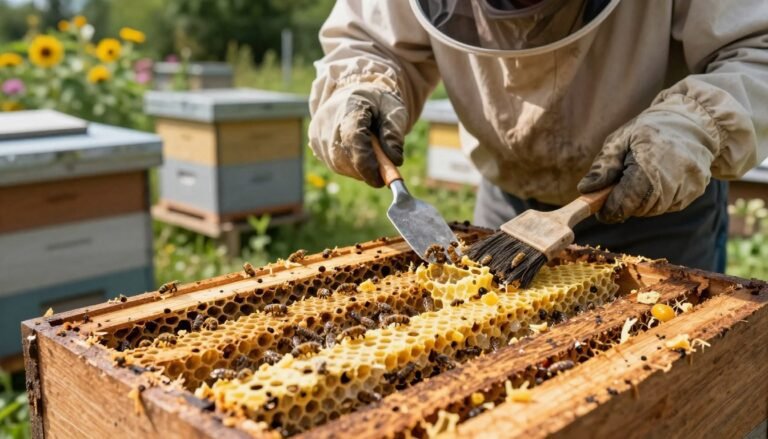
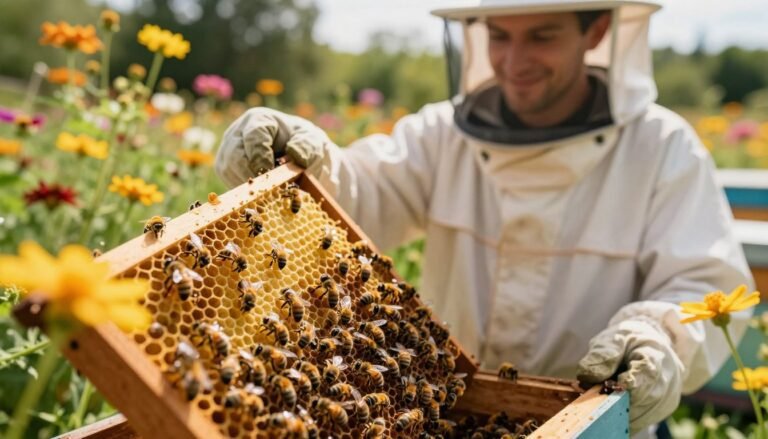
Shake the bees off at least two brood frames and look at every cell face in good light. Early AFB and EFB are hard to see on a frame covered in bees. Our brood disease field signs guide shows what to look for, the rope test checks a suspect larva, and our AFB vs. EFB comparison helps tell the two apart.
For mites, use a standard half-cup sample from a brood frame (see our guide to testing for varroa mites). A mite-heavy colony that collapses at its new yard in September becomes what researchers call a “robber lure,” passing mites to strong colonies nearby.
If you find signs of AFB, stop. Do not move the colony, its boxes or its honey anywhere, and contact your state apiary program. In North Dakota, the Department of Agriculture’s Apiary Program inspects on request, and its inspections and certificates are free.
Step 2: Decide What Travels and What Stays
The rule is simple: the colony travels with the boxes and frames it lives in right now, and nothing else. Anything that has been sitting in the old yard stays in the old yard.
| Travels with the colony | Stays in the home yard |
|---|---|
| The brood boxes and frames the colony occupies | Spare supers and spare drawn comb |
| Supers already on and being worked, if the colony needs the space | Extracted “wet” supers from the old yard |
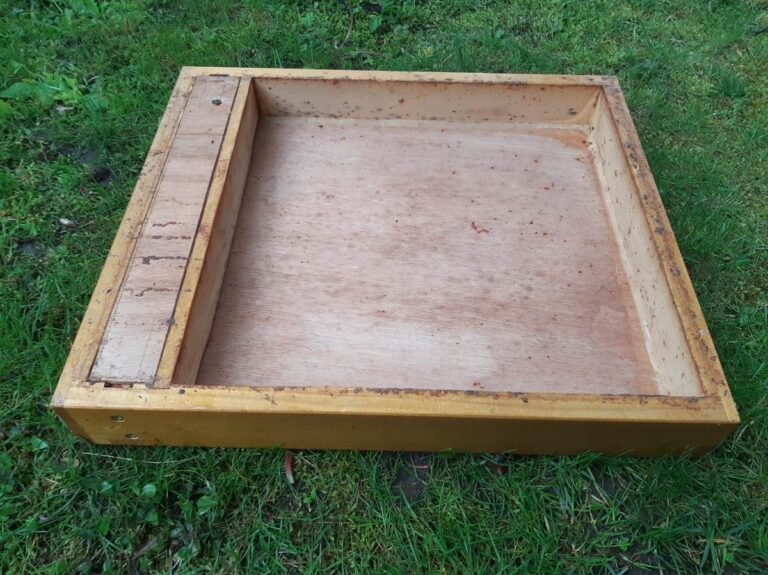
| Its own bottom board, inner cover and lid | Frames of brood or honey taken from other colonies to “top up” the mover |
| A clean feeder, if needed, filled with sugar syrup | Honey from other colonies or other yards for feeding |
| Cleaned and disinfected straps, hive tool and gloves | Anything from a colony you were unsure about |
Don’t boost a colony before a move with a frame of brood or honey from a neighbour. That moves two colonies’ pathogens instead of one. If it needs boosting, do it in its home yard at least one brood cycle before the move.
Mark every box and top bar that moves with a paint dot or yard letter, and record the move: colony, from, to, date and the pre-move check result. Our disease log template for multi-yard apiaries has fields you can copy.
Step 3: Register the New Site Before You Move
This is the step beekeepers moving between their own yards most often forget, and in North Dakota it is the law. Chapter 4.1-16 of the North Dakota Century Code sets three requirements that apply to a move:
- Register first. Section 4.1-16-08 says that before placing hives, a beekeeper must notify the agriculture commissioner of each apiary’s location (legal description or GPS coordinates) and the name of the person who owns or leases the land. The North Dakota Department of Agriculture’s information for beekeepers confirms that new locations can be added at any time during the season.
- Sign the yard. Section 4.1-16-09 requires the three-digit apiary ID assigned by the commissioner, in digits at least three inches high, plus your name and phone number, visible at the yard’s main entrance. Unidentified apiaries can be seized.
- Respect quarantine orders. Under section 4.1-16-15, if the commissioner imposes a quarantine to control disease or pests, the movement of colonies, hives and equipment covered by the order is subject to that order.
Registration is also biosecurity: the registry is how state apiary staff find neighbouring yards when AFB is confirmed. If you move across the river into Minnesota, check current rules with the Minnesota Department of Agriculture, which offers inspections for a fee. Our overview of state bee inspector programs and apiary registration covers other states.
Step 4: Keep the Trip Clean
The transport steps themselves (closing up at dusk or before dawn, strapping, ventilation, frames running in the direction of travel) are covered in our hive moving guide and our guide to reducing migratory stress. The disease-specific points are fewer, and cheap:
- Clean your kit before you load. Scrape and soak your hive tool, and use fresh disposable gloves. The NBU’s routine recipe is 1 kg of soda crystals in 4.5 liters of water plus 150 ml of 4.5% bleach, with tools soaking for at least 20 minutes. After any suspect colony, disinfect at the AFB level described in our guide to disinfecting hive tools after disease.
- Keep the load sealed. Close the entrance with a screen, not an open gap. An open entrance lets bees fly out at stops, and those bees can drift into any hives near where you park.
- Carry no loose comb. Burr comb scraped off during loading, dripping honey and propolis scraps go in a lidded bucket, not onto the truck bed. Honey on a truck bed parked near other hives starts robbing.
- Wash the truck bed or trailer if honey spilled, or if the colony later turns out to be diseased.
Step 5: Place the Colony to Limit Drift and Robbing
Where you set the colony down in the new yard matters for disease as much as how you got it there. Drifting bees carry mites and viruses between hives, and a strange colony dropped into the middle of a tight row gets the most drift in and out.
A 2019 University of Georgia study by Dynes and colleagues, published in PLoS ONE, measured this. In a dense, uniform layout with hives 1 m apart, 25.0% of tagged bees drifted. In a spread-out layout with hives 10 m apart and visual differences, only 7.5% drifted. The spread-out colonies also produced more honey and had lower winter losses.
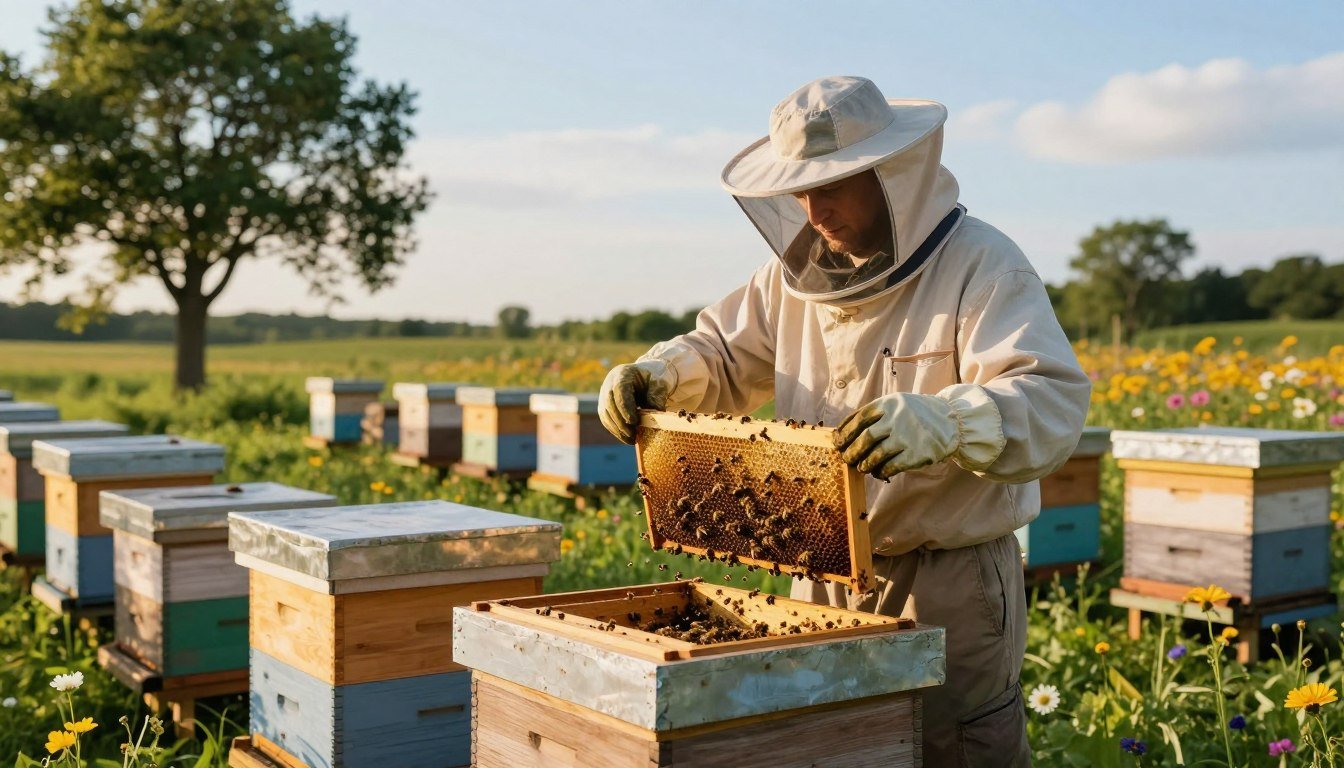
- Put the new arrival at the edge of the yard, not in the middle of an existing row. If its health is at all uncertain, or it comes from a yard that has had a disease problem, put it in a quarantine yard instead.
- Face its entrance a different way from its nearest neighbours. The NBU also recommends different hive colours or heights and avoiding straight lines.
- Reduce the entrance for the first week or two. A moved colony has lost foragers and its guards are disoriented. Our guide to protecting new colonies from robbing covers the setup.
- Don’t feed in the open. If the colony needs syrup, feed inside the hive and clean up every spill.
More detail on layout is in our guide to how drifting spreads mites and disease.
Step 6: The Post-Move Watch Period
The pre-move check can miss early disease, and moving stress can bring a problem to the surface. Worker brood takes about 21 days from egg to adult, so one full brood cycle after the move is the natural point for a proper look.
| When | What to check | Warning signs |
|---|---|---|
| Day 1 to 3 | Entrance only: traffic, orientation flights, dead bees in front | Heavy fighting at the entrance (robbing), piles of dead bees |
| Day 7 to 10 | Quick look: eggs present, stores, entrance still reduced | No eggs (queen lost in transit), stores dropping fast |
| Day 21 to 28 | Full brood check: shake frames, look at every cell face; mite wash | Scattered sunken cappings, discolored larvae, rising mite count |
| Next routine inspection | Compare with your pre-move notes | Anything new that wasn’t there before the move |
Only after the three-to-four-week check comes back clean should the colony join its new yard’s normal routine. Until then, keep its equipment separate and work it last. If something does turn up, your movement record tells you which yard to check as well as its new neighbours.
Frequently Asked Questions
How do I check a colony for disease before moving it to another apiary?
Three to seven days before the move, shake the bees off at least two brood frames and look at every cell for sunken, greasy or perforated cappings and discolored or melted larvae. Do an alcohol wash for mites and confirm eggs are present. Move only colonies that pass all of these checks.
Can I move a colony that has European foulbrood to another yard?
No. A colony with any brood disease should stay where it is while you deal with the disease, or go only to an isolated quarantine yard after you have talked to your state apiary program. Moving it puts every colony at the new yard at risk.
Do I need to register a new yard in North Dakota before moving bees there?
Yes. North Dakota Century Code section 4.1-16-08 requires you to notify the agriculture commissioner of each apiary location before placing hives there. New locations can be added at any time during the season, and each yard needs its ID number, your name and your phone number posted.
Can I take spare supers and frames with a colony when I move it?
Only the boxes the colony is living in and supers it is actively using should travel. Spare drawn comb, wet supers and frames from other colonies stay in their home yard. That keeps equipment tied to one yard, which the National Bee Unit calls apiary quarantine.
How long should a moved colony be kept separate at its new yard?
At least one full brood cycle, about three to four weeks. At that point, do a full brood check and a mite wash. If both are clean, the colony can join that yard’s normal routine.
Does moving bees cause disease?
Moving doesn’t create pathogens, but it spreads any the colony already carries, and transport stress can make an existing problem show up. In the Saskatchewan study, frequent colony movement between apiaries was linked to higher American foulbrood spore risk.
The Bottom Line
A clean move is mostly decided before the truck is loaded. Check brood and mites, send the colony with its own boxes only, register the new site, and set the colony at the edge of its new yard. Then give it one brood cycle and look again. That routine costs an extra hour or two per move. It is far less work than chasing a disease across two yards.