
Reviewed by Thomas B. · Last Updated September 23, 2026 · How we review
There is no registered chemical treatment for chalkbrood, and in most backyard hives the disease clears on its own once the colony is strong enough to keep its brood warm. Effective chalkbrood treatment is really management, scaled to how bad the infection is. For a light spring case, tighten the space and wait for warm weather. For persistent cases, improve ventilation and replace old comb. Requeening with hygienic stock is for colonies where chalkbrood keeps coming back.
This guide is built around that severity-based approach, because the most common mistake we see is overreacting to a few mummies in April or underreacting to a colony that has carried chalkbrood all summer. It is written from our experience in eastern North Dakota and the Red River Valley, where cold snaps during spring buildup make chalkbrood a regular visitor.
This page covers what to do once chalkbrood appears. For keeping it out of healthy colonies in the first place, including hive siting, ventilation, hygienic stock and comb rotation, see our companion guide on how to prevent chalkbrood.
Key Takeaways
- Chalkbrood is caused by the fungus Ascosphaera apis. Larvae swallow spores in their food, and the fungus kills them after capping, leaving hard, chalk-like “mummies.”
- Chilled brood is the classic trigger, so it peaks in cool, damp springs and in colonies with too few bees to cover their brood.
- No fungicide is registered for in-hive use in the U.S. University of Florida extension notes symptoms often clear up by themselves.
- Match the response to severity: a few mummies need patience, persistent cases need space and comb management, and repeat cases need a hygienic queen.
- Spores can stay infective for up to 15 years, so replacing heavily affected comb matters more than scrubbing it.
Table of Contents
First, Confirm It Is Chalkbrood
Chalkbrood is one of the easier brood diseases to identify, which is good news, because the far more serious foulbroods need a completely different response. Look for:
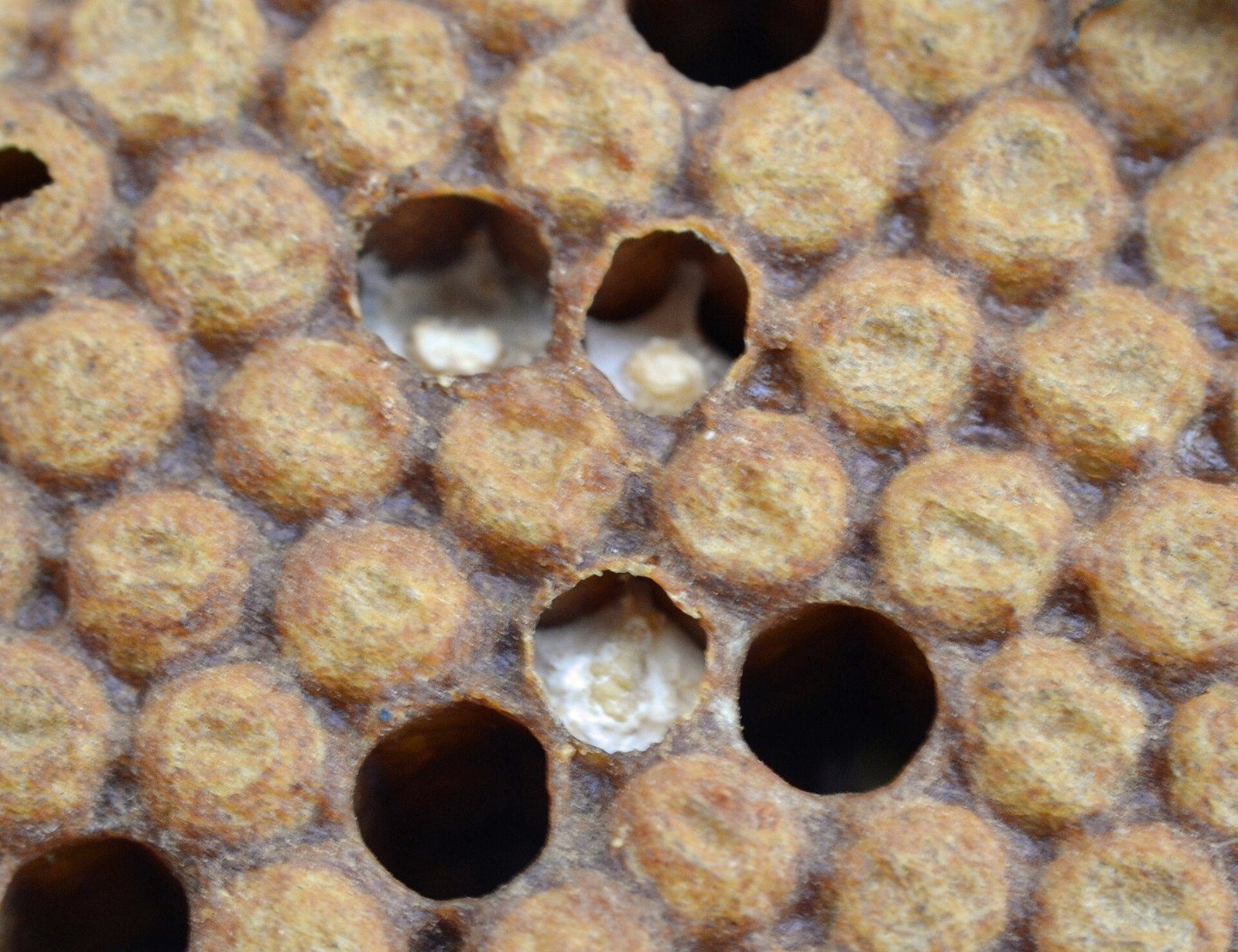
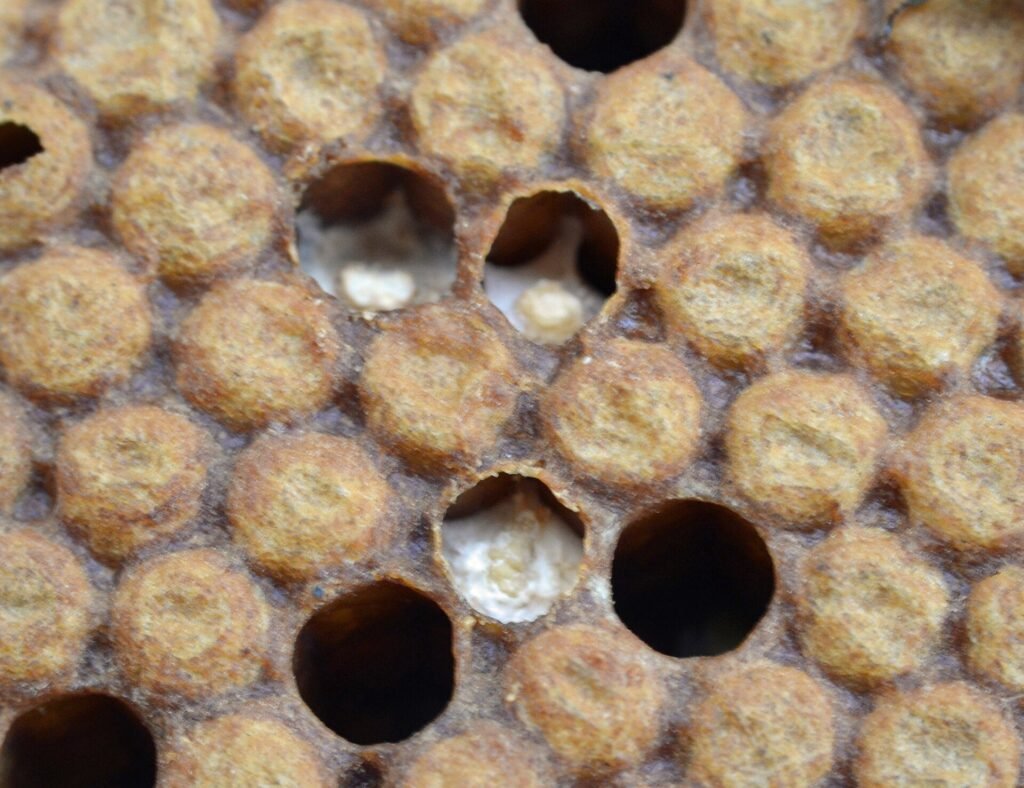
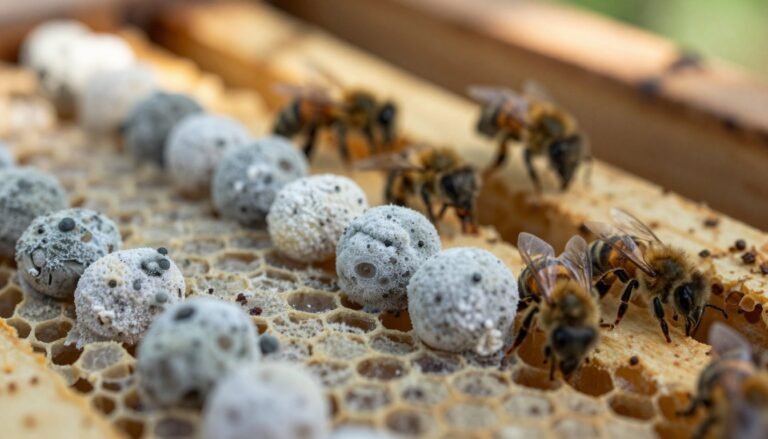
- Mummies. Dead larvae that have dried into firm, chalky pellets that fill the cell. They start white and fluffy with fungal growth and turn gray or black as the fungus forms spores.
- Mummies outside the hive. House bees drag them out, so you find them on the bottom board, the landing board and the ground in front of the entrance.
- A rattle. Dry mummies can rattle loosely in their cells when you tilt a frame.
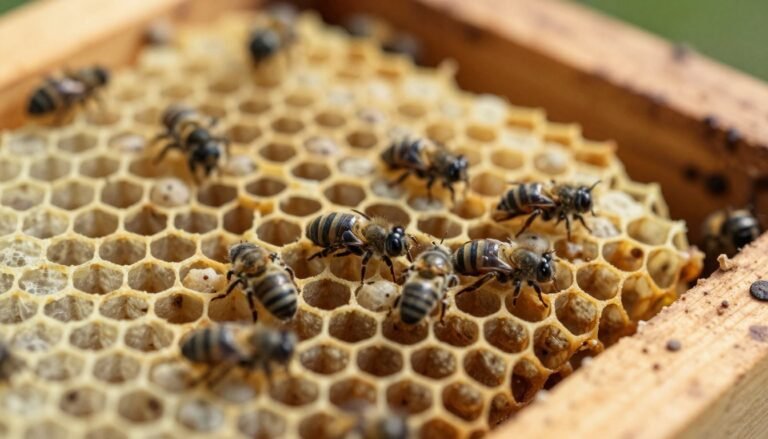
- Spotty brood where infected cells have been uncapped or cleaned out.
What you should not see is ropy, sticky, foul-smelling remains. That points toward American foulbrood. Melted, twisted larvae with a sour smell suggest European foulbrood. Our AFB vs. EFB comparison covers those, and sacbrood vs. chilled brood covers the other common lookalikes. If you are unsure, send a sample to a diagnostic lab. Chalkbrood is fungal and falls within what the free USDA service examines.
| Sign | Chalkbrood | American foulbrood | European foulbrood |
|---|---|---|---|
| Dead larva texture | Hard, dry, chalk-like | Soft, ropy, then a flat scale stuck to the cell | Melted, twisted, watery |
| Color | White, turning gray or black | Coffee brown to dark brown | Off-white to yellow-brown |
| Smell | Little or none | Often strong and foul | Often sour |
| Remains outside hive | Common, mummies at entrance | Rare | Rare |
| Usual response | Management, no drugs | Contact your state apiary inspector | Management, sometimes antibiotics by prescription |
Why Chalkbrood Appears
The fungus is widespread. A 2026 review in the Annals of the Entomological Society of America notes chalkbrood has spread to every continent where beekeeping is practiced. Many colonies carry spores without showing any disease. Whether they get sick depends on conditions inside the brood nest.
The main trigger is chilling. The COLOSS BEEBOOK standard methods for fungal brood disease (Jensen et al., 2013) notes that chilling brood below its optimal rearing temperature promotes infection. The effect is reliable enough that researchers deliberately chill brood to 25°C (77°F) to reveal how much latent infection a colony carries. Colonies normally hold the brood nest at about 34 to 35°C (93 to 95°F). Laboratory studies put the fungus’s optimum growth near 30°C (86°F). So brood at the cooler edge of the nest, where too few bees are covering it, is exactly where chalkbrood takes hold.
University of Florida extension adds high moisture, cool temperatures and colony stress to the list. In practice, the colonies we see chalkbrood in on the Northern Plains tend to share one of three situations:
- Spring overexpansion. Early pollen pushes the queen to lay a big brood nest, then a May cold snap shrinks the cluster and leaves the outer brood uncovered.
- Small or new colonies. Packages and small splits have few bees for the brood they are raising, especially if they were given too much space. Our guide to installing packages in cold spring weather covers how to reduce the risk.
- Damp hives. Condensation, a low wet site or poor airflow keep humidity high around the brood.
Treatment by Severity
This is the core of our approach. The labels below are our field categories, not official thresholds, but they help us match effort to the problem.
One rule applies at every level: do not make chalkbrood worse by inspecting. Pulling brood frames on a cold, windy day chills exactly the brood you are worried about. We keep chalkbrood checks short and save them for calm afternoons of about 60°F (16°C) or warmer. Note which frames have mummies each time, so you can tell whether it is spreading or clearing.
Light: a few mummies during a cool spell
You find mummies at the entrance or on the bottom board, a few in cells, and the brood pattern is otherwise solid. This is common in spring and usually resolves once the weather turns warm.
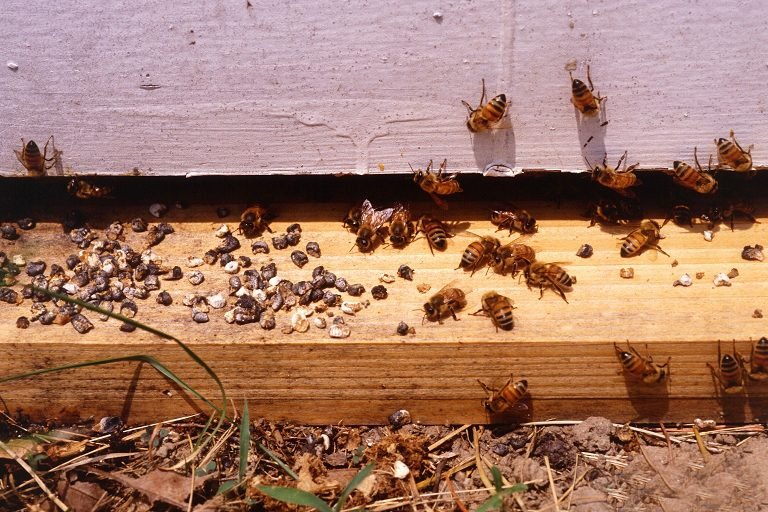
- Clear mummies from the bottom board and entrance.
- Make sure the bees can cover the brood. Remove empty boxes or unused frames so the colony is not heating space it does not need.
- Do not split or add brood from other colonies to this one until it recovers.
- Recheck in two to three weeks, after a stretch of warm weather.
Moderate: mummies on several frames that persist
Mummies show up across several frames, the edges of the brood nest are spotty, and it has not improved two or more weeks into warm weather.
- Tighten the space as above, and put in a follower board or reduce to one brood box if the bees are thin.
- Improve ventilation without chilling the brood. University of Florida suggests a small wood block under the edge of the outer cover. We prefer a small upper entrance, which gets moist air out without opening the whole top.
- Pull the worst frames. Remove the frames with the most mummies and replace them with drawn comb or foundation. Do not move those frames into another colony.
- Support nutrition with pollen patties or syrup if forage is thin. Extension services list better nutrition as a way to help colonies fight off infection.
- Check mites. A colony already stressed by Varroa is less able to clean out and recover.
Severe or recurring: chalkbrood all season, or year after year
Many frames are affected, the colony is losing strength, or the same colony has chalkbrood again next spring. At this point the queen’s genetics become the main lever.
- Requeen with hygienic stock. Both University of Florida and Australia’s Bee Aware program list requeening from resistant or hygienic stock as the standard response. See how to requeen a hive successfully.
- Replace the most affected combs with foundation over the season.
- If the colony is very weak, consider combining it with a moderate-strength colony rather than your best one, or starting over on clean comb with a new queen.
“There is no recommended chemical treatment for chalkbrood; often symptoms seem to clear up by themselves.”
Sanford, Ellis and Jack, University of Florida IFAS Extension, Chalkbrood Recommendations
Requeening With Hygienic Stock: What the Research Says
Hygienic bees detect dead or diseased brood under the cappings and remove it before the fungus can finish forming spores. The evidence that this helps is real, but it is more mixed than most sales pages admit. That matters when you are paying for a queen.
- For: Gilliam, Taber and Richardson (1983, Apidologie) showed that bees could be selected for resistance to chalkbrood. At the University of Minnesota, Spivak and Reuter (2001, Apidologie) found that all of their non-hygienic colonies had natural chalkbrood through both summers of the study. Hygienic colonies that developed symptoms recovered. That work produced the Minnesota Hygienic line, developed in St. Paul, within our own region.
- Against: Gerdts and colleagues (2018, PLOS ONE) found in eastern Australia that hygienic behavior, measured by the standard freeze-killed brood test, was not a significant predictor of chalkbrood infection.
- Recent: A 2025 PLOS ONE study by Dyrbye-Wright, Simone-Finstrom, Walsh and Spivak found Pol-line bees bred for Varroa-sensitive hygiene and commercial hygienic stock showed comparable chalkbrood resistance overall.
Our takeaway: a queen from a breeder who selects for hygienic behavior is still the best long-term fix for a colony with recurring chalkbrood. Just do not expect a guarantee. Ask the breeder how they test, since the freeze-kill assay is the usual measure, and keep up the space, comb and ventilation work either way.
Comb and Equipment
Australia’s Bee Aware program notes that chalkbrood spores can stay infective for up to 15 years. That is why old, heavily affected brood comb is the main reservoir in an apiary. Practical steps:
- Cull the frames with the most mummies first, and keep a regular comb rotation so no brood comb stays in service indefinitely.
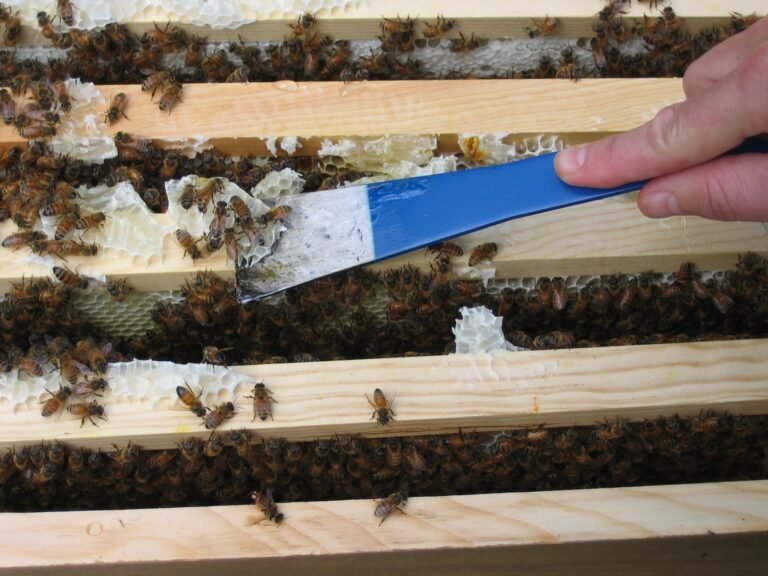
- Scrape mummies and debris off bottom boards and boxes. Woodenware can usually go back into service after a thorough cleaning. Our guide on reusing equipment after chalkbrood covers the details.
- Do not feed honey or pollen frames from an affected colony to other colonies. Spores travel in food stores.
For the longer-term side of site choice, ventilation and colony strength, see our companion guide on how to prevent chalkbrood.
What Not to Do
- Do not use antibiotics. Chalkbrood is a fungus. Oxytetracycline and tylosin target bacteria and do nothing here.
- Do not use unregistered fungicides or home remedies in the hive. Nothing is registered for this use in the U.S., and residues can end up in wax and honey.
- Do not rely on freezing comb to kill spores. Freezing is a wax moth control. We have not found evidence that it sterilizes chalkbrood spores.
- Do not overventilate a small colony in cold weather. Opening the hive up too much can chill the brood and make chalkbrood worse.
- Do not burn equipment. Chalkbrood does not require it. That response is for confirmed American foulbrood, under your inspector’s guidance.
Frequently Asked Questions
Will chalkbrood go away on its own?
Often, yes. Light spring cases usually clear once the weather warms and the colony grows enough to keep its brood warm. If mummies are still appearing two or more weeks into warm weather, move to the moderate steps above.
Is there a spray or medicine for chalkbrood?
No product is registered for in-hive chalkbrood treatment in the United States. Some products are sold elsewhere, but the extension consensus is that management, meaning space, ventilation, comb replacement and hygienic queens, is the treatment.
Is honey from a hive with chalkbrood safe to eat?
Chalkbrood is a disease of bee larvae, not a human health concern, so honey from an affected colony is safe for people. Do not feed that honey back to other colonies, though, because spores can travel in stored food.
Should I requeen at the first sign of chalkbrood?
Usually not. A few mummies in a cool spring are normal and often pass. Requeening makes the most sense when chalkbrood persists through warm weather or comes back the following year in the same colony.
Why does chalkbrood show up in spring?
Spring is when colonies expand their brood nest fastest while nights are still cold. Brood at the edge of the nest gets chilled, and chilled larvae are much more susceptible to Ascosphaera apis.
Can I reuse frames from a colony that had chalkbrood?
Woodenware can be cleaned and reused. Comb with many mummies is better replaced, since spores can stay infective for years. Lightly affected comb that the bees have cleaned out is usually fine to keep in the same colony.
Does chalkbrood kill colonies?
Rarely by itself. It weakens colonies by killing brood, which slows buildup and can cut the honey crop. Severe, recurring cases in weak colonies can contribute to failure, especially alongside Varroa or poor nutrition.
Conclusion
Treat chalkbrood as a sign that the brood nest is too cold, too damp or too big for the bees covering it. Start with space and patience, add ventilation and comb work if it persists, and requeen with hygienic stock if it keeps coming back.
.jpg)

_L.S._Olive_%26_Spiltoir_1324048.jpg)