Reviewed by Thomas B. · Last Updated September 23, 2026 · How we review
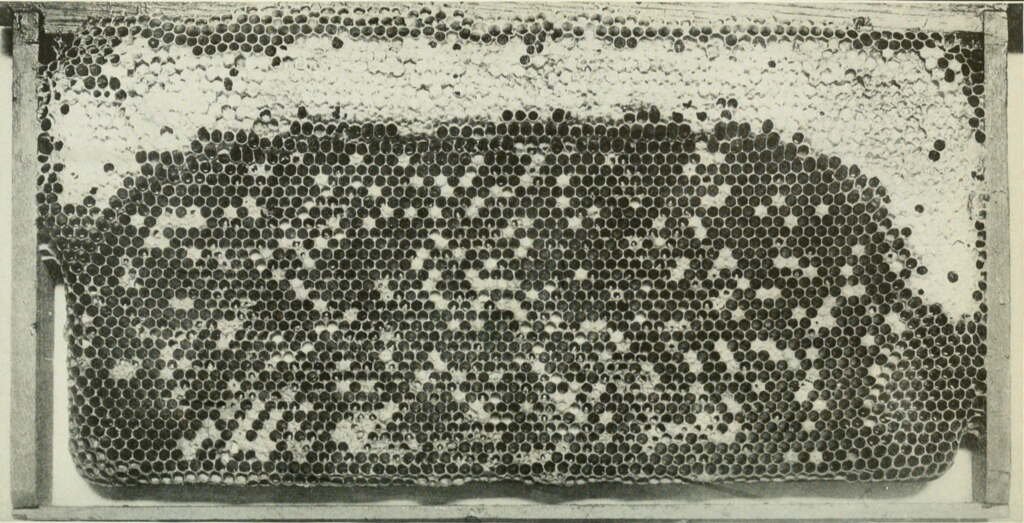
Sacbrood is a viral disease that kills larvae one at a time, scattered across the brood nest, just after their cells are capped. Chilled brood is not a disease at all: it is brood of every age killed together, usually on the outer edges of the nest, when too few bees are left to keep it warm during a cold snap. The quickest field test is where the dead brood sits. Scattered through the center points to sacbrood. A band along the edges after cold weather points to chilling.
The two often show up in the same spring weeks, in the same small or recovering colonies, and both leave a patchy brood pattern. This guide sets them side by side, gives you six checks you can do at the hive with a matchstick and your eyes, and explains what, if anything, to do about each.
Key Takeaways
- Sacbrood larvae die stretched out on their backs in capped cells, with a dark head raised toward the cell opening like a gondola. Lifted out, the larva comes free as an intact, fluid-filled sac.
- Chilled brood affects eggs, open larvae, and capped pupae at the same time, mostly at the edges of the brood area, and the dead brood is pasty or crumbly with no sac.
- Only chilled brood kills pupae. Sacbrood larvae die before they pupate.
- Neither has a strong foul smell. A sour or rotten odor, melted or twisted larvae, or roping points to foulbrood instead.
- Most sacbrood clears on its own in a strong colony. Chilled brood stops as soon as the colony has enough bees to cover its brood.
Table of Contents
- The Two Conditions Side by Side
- What Sacbrood Is
- What Chilled Brood Is
- Six Field Checks to Tell Them Apart
- When It Is Neither: Look-Alikes to Rule Out
- Why Both Show Up Together in a Northern Plains Spring
- What to Do About Each
- Frequently Asked Questions
The Two Conditions Side by Side
The descriptions below follow the USDA’s Diagnosis of Honey Bee Diseases handbook (Shimanuki and Knox, Agriculture Handbook 690), with our own field notes added.
| Feature | Sacbrood | Chilled brood |
|---|---|---|
| Cause | Sacbrood virus (SBV) | Temperature: brood left uncovered in cold weather |
| Contagious? | Yes, within and between colonies | No |
| Where on the frame | Scattered cells throughout the brood area | Mostly on the fringes of the brood nest; center healthy |
| Stages killed | Older larvae just after capping (prepupae) | Eggs, larvae, and pupae together |
| Position in cell | Stretched on its back, head raised toward the opening | No typical posture; larvae often slumped or collapsed |
| Color | Pearly white to gray or straw-yellow, then brown to black; head darkens first | Yellowish tinged with black on the segment margins, or brown to black |
| Consistency | Watery, granular fluid inside a tough skin | Crumbly, pasty, or watery; no sac |
| Cappings | Scattered, often nibbled open by the bees | May be punctured or uncapped along the edge; pupae sometimes pulled or decapitated |
| Odor | None to slightly sour | None beyond ordinary decay |
| Timing | Late spring and early summer buildup; may persist for weeks | Follows a specific cold snap or a sudden loss of bees |
| Usual outcome | Self-limiting in strong colonies | Stops once brood is covered; bees clean out the dead |
What Sacbrood Is
Sacbrood virus is one of the most widespread honey bee viruses in the world. The UK’s National Bee Unit ranks it among the three most common brood diseases its inspectors found over a ten-year period. It also notes that in most affected colonies only a few larvae show symptoms, and the disease rarely causes measurable harm.
The virus multiplies in the food glands of adult nurse bees, which show no symptoms themselves, and reaches larvae in the brood food. Larvae are susceptible for roughly their first eight days. The virus stops the larva from shedding its final larval skin before pupation. Fluid collects between the body and the unshed skin, and the larva dies soon after its cell is capped.
That mechanism explains every classic sign:
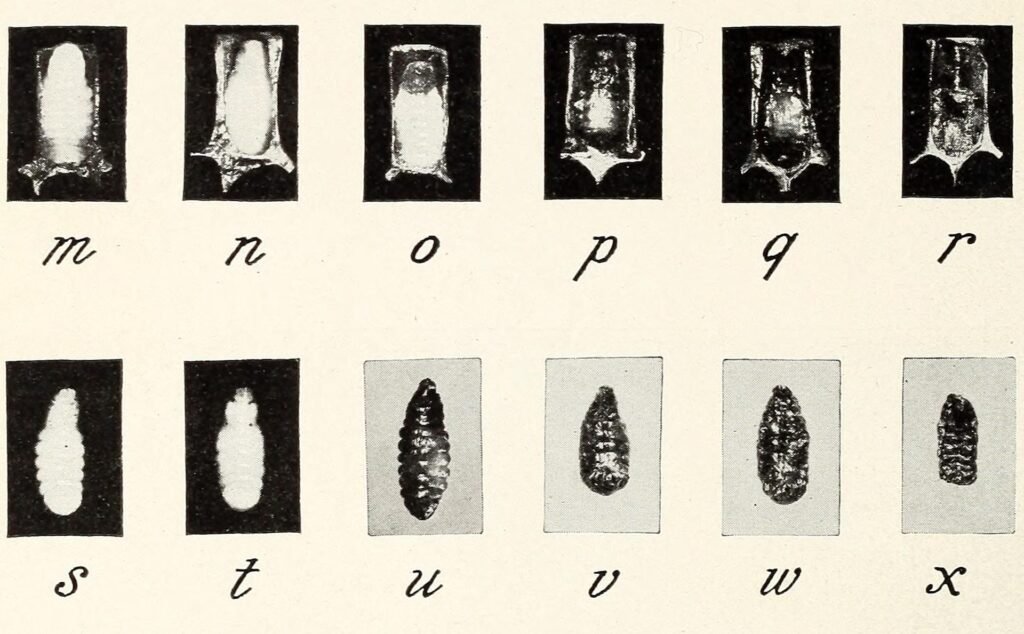
- The gondola shape. The larva dies stretched out on its back, as it would lie just before pupating, with the head end curled up toward the cell opening.
- The dark head. Color changes from pearly white to gray or straw-yellow and then to brown and black, and the head darkens before the rest of the body.
- The sac. The unshed skin becomes tough. Lifted out carefully, the larva comes away whole, like a small bag of watery, granular fluid.
- Nibbled cappings. Workers often uncap cells to remove sick larvae, so you find a mix of open and chewed cells scattered across otherwise normal capped brood.
- Brittle scales. Dried remains form a dark, boat-shaped scale with an upturned head that is easy to remove.
For close-up descriptions of each stage, see our guide to sacbrood virus symptoms in honey bees. A related virus strain has been far more destructive in the Asian honey bee; our article on South Korea’s sacbrood crisis explains that story, which does not reflect the usual picture in Western honey bee colonies.
What Chilled Brood Is
Honey bees keep the brood nest at roughly 93 to 95°F. Nurse bees cluster over the comb and generate heat with their flight muscles. When there are not enough bees to cover all the brood and the weather turns cold, the colony pulls into a tighter cluster. The brood on the outside of that cluster is abandoned and dies.
The USDA handbook describes the typical case: early spring, a brood nest expanding quickly, a shortage of adult bees, and a sudden cold spell. Chilling also follows any sudden drop in the worker population, such as a pesticide kill, a swarm, or a split that left one half short of bees. The dead larvae and pupae are often yellowish tinged with black along the segment edges, or brown to black, and pasty, crumbly, or watery. In bad cases workers puncture cappings and pull out or decapitate dead pupae.
The most useful single fact is that chilling kills whatever is in the cells at the moment the bees withdraw. That includes eggs, young and old larvae, and capped pupae, all in the same band of comb. For a full symptom walkthrough, see identifying chilled brood, and our comparison of chilled brood vs dead brood from other causes.
Six Field Checks to Tell Them Apart
You need good light, a matchstick or twig, and a few minutes per frame. Work through the checks in order; most cases are clear by the third.
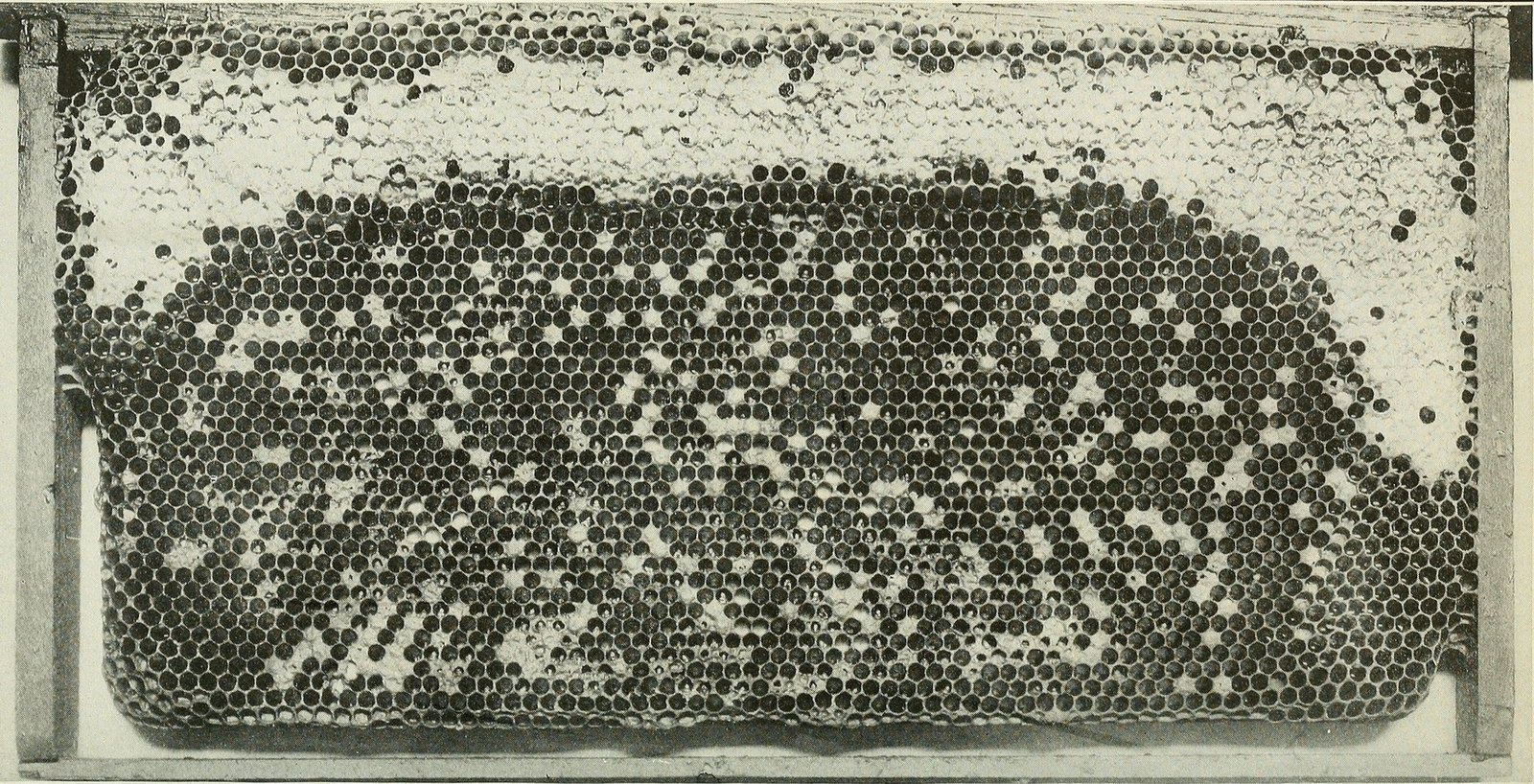
- Map where the dead brood is. Hold the frame up and note the pattern. Dead brood in a band around the outside of the brood area, with a healthy core, is the signature of chilling. Dead cells scattered through the middle, mixed with healthy capped brood, fits sacbrood.
- Check which stages are dead. Look at pupae along the edge. If capped pupae and open larvae in the same area are dead, it is chilling. Sacbrood does not kill pupae; its victims die as stretched, just-capped larvae.
- Read the posture and color. Uncap a few suspect cells. A larva lying flat along the bottom of the cell with a darkened, raised head is sacbrood. Chilled larvae have no consistent posture and often show dark rings at the segment lines.
- Do the lift test. Slide a matchstick under a suspect larva and lift gently. A sacbrood larva comes out in one piece as a fluid-filled bag. A chilled larva tears, smears, or crumbles. If the remains stretch into a rope when you pull the stick out slowly, stop and treat it as possible American foulbrood; our rope test guide explains what to look for.
- Smell the frame. Neither condition smells strongly. A sour, vinegary, or rotten smell points toward foulbrood.
- Check the calendar. Think back over the last one to two weeks. Chilled brood lines up with a cold night or a sudden loss of bees, and it does not recur once conditions improve. Sacbrood has no obvious trigger and can keep turning up in new cells over several inspections.
Our guide to brood disease photos and field signs puts these checks alongside the other common brood problems.
When It Is Neither: Look-Alikes to Rule Out
A patchy brood pattern with dead larvae has several possible causes, and two of them are serious and contagious. Rule these out before you settle on sacbrood or chilling.
| Condition | How it differs |
|---|---|
| European foulbrood | Kills mostly young, unsealed larvae that are still coiled; they look melted or twisted and turn yellowish to brown. Often a sour smell. See European foulbrood early signs. |
| American foulbrood | Kills older sealed larvae and pupae; sunken, greasy, perforated cappings; coffee-brown remains that rope out; scale sticks tightly to the cell wall. |
| Chalkbrood | Larvae become white to gray-black “mummies,” often dropped at the entrance. The fungus favors brood kept slightly too cool, so it often follows chilling. See chalkbrood mummies. |
| Starved brood | Follows a food shortage; dead larvae are not confined to the edges and cells are dry. |
| Parasitic mite syndrome | Heavy Varroa load with mixed dead larvae and pupae and deformed-wing adults. See parasitic mite syndrome vs foulbrood. |
When in doubt, get a diagnosis. In the United States the USDA Bee Research Laboratory runs a free bee disease diagnosis service that checks comb samples for foulbrood and other bacterial and fungal diseases. It does not test for viruses, so sacbrood is still confirmed by its field signs and by ruling out the others. North Dakota beekeepers can also request an inspection through the North Dakota Department of Agriculture apiary program.
Why Both Show Up Together in a Northern Plains Spring
In eastern North Dakota, the Red River Valley, and western Minnesota, the weeks from late April to early June give us the perfect setup for both problems. Packages are installed in late April, overwintered colonies expand fast on willow, maple, and dandelion, and walk-away splits go in during May. Then a clear night drops below freezing, or a cold, wet, windy spell holds for three or four days.
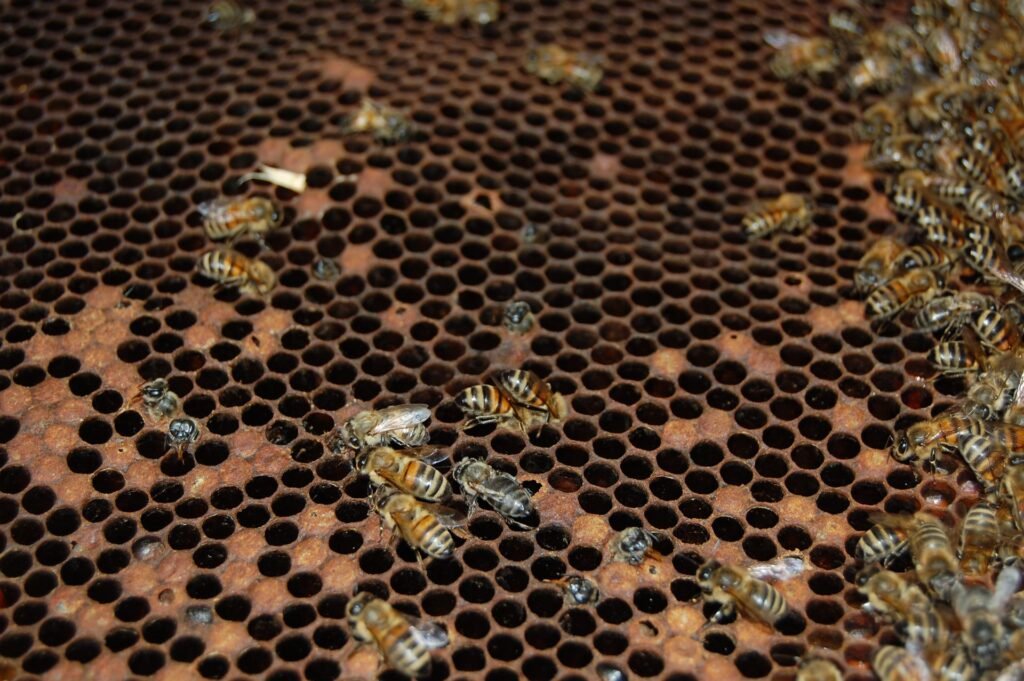
A colony that was covering six frames of brood on a warm afternoon may only be able to cover four that night. The outer two frames, or the outer ring on each frame, chill. A week later you open the hive, find a ring of dead brood, and wonder about disease. In our own yards, a ring like that found in May usually lines up with a cold night in the weather record, which is worth checking before you assume infection.
Sacbrood peaks in the same buildup period, when young larvae greatly outnumber nurse bees and any stress weakens the colony. So it is common to find both in one hive: a chilled fringe on the outer frames and a few sacbrood gondolas scattered through the center. Treat them as two separate observations and work through the six checks on each area of comb.
What to Do About Each
Chilled brood
- Match space to bees. Remove empty boxes, use a follower board, or move a small colony into a nuc so the bees can cover what they have.
- Do not split too early. In our region, wait until colonies are strong and the forecast is settled before dividing them.
- Keep cold-day inspections short. Brood out of the hive in chilly wind loses heat fast. Below about 55 to 60°F, keep frames out only briefly or wait for a better day.
- Feed if stores are low. Bees without enough food cannot generate heat; our guide to spotty brood patterns covers when a patchy frame needs action.
- Let the bees clean up. A healthy colony removes chilled brood within days. Only swap out a frame if it is badly soiled or moldy.
Sacbrood
- Usually do nothing but support the colony. A strong colony with good forage typically clears sacbrood as the nectar flow starts.
- If it persists, break the brood cycle. The National Bee Unit suggests caging the queen for 10 to 14 days or requeening with a younger queen, so no larvae of susceptible age are present for a while.
- Rotate out old, heavily soiled brood comb over time, and avoid moving frames from an affected colony into others.
- Choose hygienic stock. Colonies that detect and remove sick brood quickly keep viral loads down; see hygienic behavior in bee lines.
- Keep mite levels low. High Varroa loads raise overall virus pressure and weaken the nurse bees that colonies rely on.
No drug is labeled for sacbrood, and antibiotics do nothing against viruses.
Frequently Asked Questions
What does sacbrood look like?
Sacbrood larvae lie stretched on their backs in capped or partly uncapped cells, with the head raised toward the opening like a gondola. They turn from white to yellow-gray, then brown and black, head first, and lift out intact as a fluid-filled sac.
What does chilled brood look like?
Chilled brood is a band of dead eggs, larvae, and pupae, usually around the edges of the brood nest. Dead larvae are pasty or crumbly and often yellowish with dark rings along the segments. Pupae may turn dark and be pulled or decapitated by the bees.
Is sacbrood contagious to other hives?
Yes. The virus spreads within a colony through nurse bees feeding larvae and between colonies through robbing, drifting, and moving frames. Most colonies carry it without symptoms, so avoid swapping brood frames from an affected hive.
Can chilled brood kill a colony?
Rarely by itself. Losing a band of brood sets a colony back by one brood cycle, which matters most for small spring colonies. Repeated chilling in a colony that stays weak is a sign of a deeper problem such as queen failure, disease, or heavy mites.
Should I requeen for sacbrood?
Usually not at first. Sacbrood often clears on its own once the colony is strong and forage is good. If symptoms persist over several inspections, requeening or caging the queen for 10 to 14 days breaks the cycle of infection.
How do I know it is not foulbrood?
Foulbrood usually smells sour or rotten, and American foulbrood remains rope out when pulled with a stick. European foulbrood kills young, coiled, open larvae that look melted. When uncertain, send a comb sample for testing or call your state apiary inspector.
Conclusion
Look at where the dead brood sits and which stages died. A ring of mixed-age dead brood on the edges after cold weather is chilling, and more bees per frame is the cure. Scattered, gondola-shaped larvae that lift out as sacs are sacbrood, and a strong colony usually beats it without help. If the smell, posture, or ropiness does not fit either, get a proper diagnosis before you assume the milder answer.