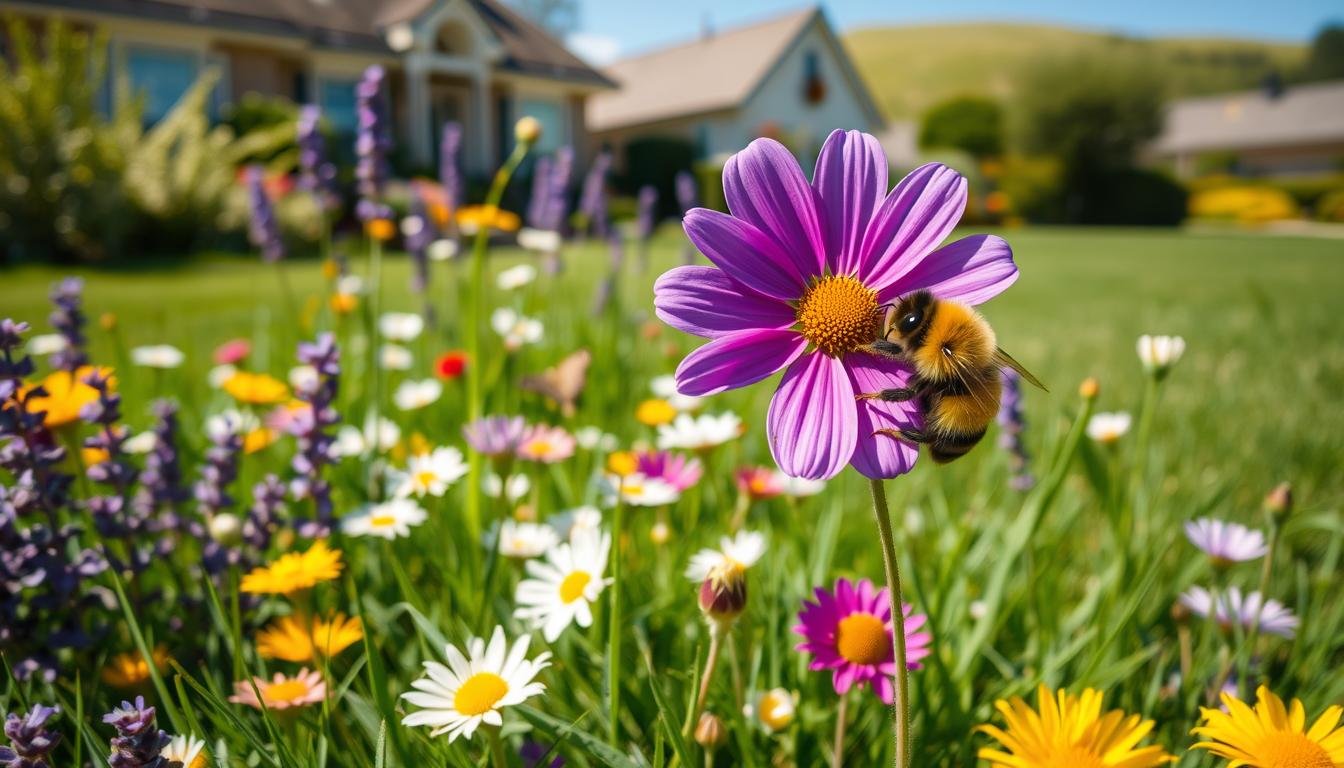
Your yard can become a living refuge that feeds bees, butterflies, and other pollinators while staying neat and attractive.
More than 70% of flowering plants need animal pollinators for fruit and seed. You can create a layered garden that supplies food, water, shelter, and nesting sites in any sized lawn.
Start small by converting one section each year. Group native plants in sunny swaths and leave bare soil patches for ground‑nesting bees. Add simple water features, like a shallow birdbath, to attract life fast.
Sustainable maintenance matters: minimize pesticides, compost regularly, and plan for season‑long flowers so pollinators find resources from spring through fall.
Track which species visit and refine plant choices over time. With phased effort and careful planting, your space will support pollinators at every life stage while enhancing local biodiversity.
Key Takeaways
- Convert in phases: one section per year to manage cost and effort.
- Provide four essentials: diverse plants, clean water, shelter, and nesting spots.
- Plant in groups and prioritize sunny locations for efficient foraging.
- Minimize pesticide use and favor compost and natural pest controls.
- Plan seasonal blooms and preserve seed heads for winter wildlife support.
- Record visitor species and water use to adapt the garden annually.
Why convert a lawn into a pollinator habitat now
Yards dominated by turf offer little food or shelter for bees, butterflies, hummingbirds, bats, and other pollinators. Habitat loss, intensive chemical care, and fragmented green areas cut available resources like food, water, shelter, and nesting spots. This harms pollinator health across neighborhoods.
Acting now fills seasonal gaps in blooms and nesting places. Even small gardens or pocket habitats help species by shortening travel distances and improving foraging continuity. Over time, replacing uniform turf with diverse plantings builds resilience and richer food webs.
Install water sources before summer peaks so bees, butterflies, and songbirds have reliable water when natural pools dry. Creating pesticide-free areas also lowers chemical risk and supports a broader range of species.
| Action | Immediate Benefit | Seasonal Impact |
|---|---|---|
| Replace turf with native plant swaths | More food and shelter for pollinators | Extended bloom sequence spring–fall |
| Provide shallow water stations | Supports bees, butterflies, and birds | Critical during heat and drought |
| Leave bare soil patches | Nesting sites for ground‑nesting bees | Improves local reproduction each season |
| Create small connected gardens | Enhances neighborhood foraging corridors | Helps species move and adapt across North America |
Learn recommended native plant lists and design tips from this native bee planting guide. Start small this season and refine over time—your yard can become a reliable resource for many species and improve overall neighborhood biodiversity.
36. how to turn a lawn into a pollinator habitat: plan your space and design the workflow
Plotting sun, wind, and nearby green spaces helps you place plants where they will actually be used. Start with a simple map of your yard and mark sunny areas, irrigation lines, and nearby trees. This baseline guides phased conversion and prevents repeated work.
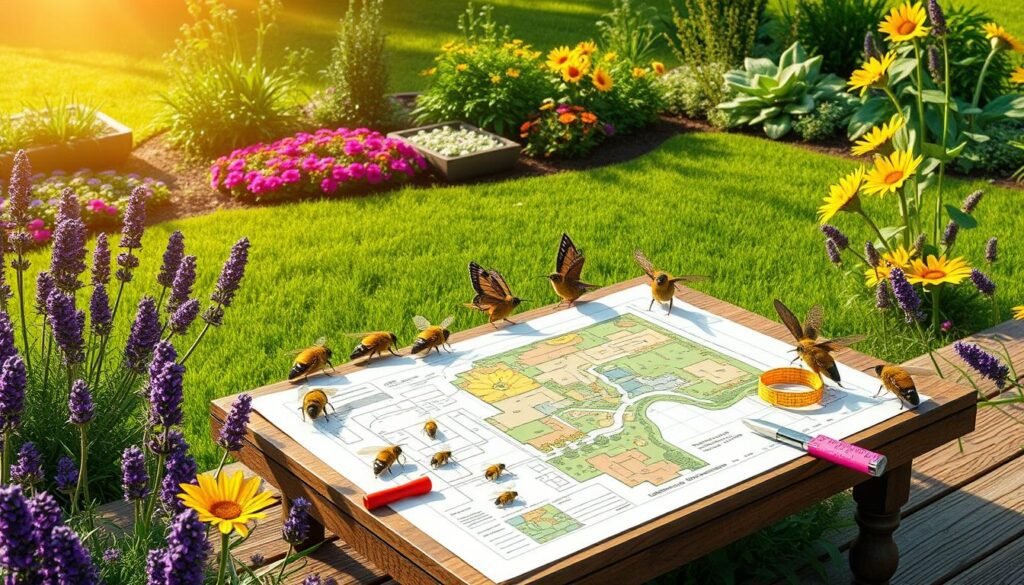
Map the area, set goals, and convert in phases
Define one area to convert this season and set clear benchmarks for the next phases. Phasing spreads cost and reduces disruption.
Sun, soil, and connectivity: choose sites pollinators actually use
Prioritize full sun for first plantings since most pollinators prefer warm, bright spots. Link beds to street trees or neighbor gardens so your space becomes part of a larger corridor.
Design in layers and group plants for efficient foraging
Anchor beds with trees and shrubs, add perennials and native grasses, then finish with groundcovers. Group flowering plants by form and species in swaths to help bees and other species find resources fast.
| Design Step | What to do | Benefit |
|---|---|---|
| Mapping | Note sun, wind, irrigation, and nearby habitats | Reduces rework and boosts habitat use |
| Phased install | Convert one area per year; install woody plants first | Spreads cost and builds structure early |
| Layered planting | Trees → shrubs → perennials → grasses → groundcover | Provides continuous blooms and shelter |
Make sure to plan paths and maintenance access so you won’t disturb nesting areas. For plant choices and species lists, consult local guides and a practical list of plants for honeybees and recent research on green corridors.
Remove turf and prepare soil for healthy plants
Clearing existing grass carefully sets the stage for strong plant growth and lasting soil health. Start by mapping utilities and marking irrigation lines before any digging or heavy work.
https://www.youtube.com/watch?v=rPYMln0u2yY
Choose the right removal method for your site:
- Solarization with clear plastic for hot-season kills.
- Sheet mulching (cardboard + compost) for a low-disturbance transition.
- Digging out turf on small areas for immediate planting.
- Cautious, limited herbicide use only when other options fail.
After removal, blend high-quality compost into the topsoil to boost organic matter and microbial life. Apply 2–3 inches of mulch to retain water, regulate temperature, and cut weed pressure during the first year.
“Healthy soil holds water, feeds roots, and supports beneficial insects.”
Leave small patches of bare ground as nesting sites for native bees. Grade beds lightly for good drainage, water thoroughly after prep to check infiltration, and stagger work across areas over the year to reduce maintenance and learn what works.
For basic guidance on creating a pollinator-friendly turf alternative, see the pollinator lawn basics.
Select native flowering plants for continuous nectar and pollen
Build a planting plan that layers woody and herbaceous natives so flowers bloom from early spring into late fall.
Start by mapping bloom times and grouping species. Choose early spring bulbs and shrubs, mid‑season perennials, and late bloomers to give pollinators steady nectar and pollen.

Early spring to late fall bloom succession
Plant spring bulbs and shrubs first to feed early bees. Add midsummer anchors such as milkweed and Gaillardia. Finish with late bloomers like Solidago and Helianthus for fall foraging.
Match plant species to local conditions
Pick native plants suited to your soil and climate across North America. Consult local Extension lists for regionally adapted plant species and better survival rates.
Host plants and nesting needs
Include milkweed for monarch caterpillars and leave bare soil patches for ground‑nesting bees. Add rough stems or leaf litter to increase nesting microhabitats.
Smart layout and maintenance
Place most selections in full sun and group like species in swaths. Proper spacing lowers disease pressure and cuts maintenance needs.
| Season | Oregon examples | Colorado examples |
|---|---|---|
| Early spring | Vine maple, camas, Allium cernuum | Allium cernuum |
| Mid season | Lupine, tall Oregon grape, Ceanothus, Asclepias spp. | Asclepias speciosa, Gaillardia aristata |
| Late season | Late camas, hardy shrubs | Solidago spp., Cleome serrulata, Helianthus annuus |
- Balance bloom forms—tubular, composite, bell‑shaped—to serve different bee sizes and tongues.
- Combine grasses for texture and nesting cover with flowering plants for nectar and color.
- Group plants in visible swaths to make foraging efficient for bees and butterflies.
Add water, shelter, and places to raise young to complete the habitat
Adding reliable water and layered cover gives wildlife places to drink, hide, and raise young. Start with at least one water source—place a birdbath or shallow dish with stones near flower beds so bees and butterflies can land safely. Consider a small fountain with a solar pump to keep water moving and reduce mosquitoes.
Shelter matters as much as water. Mix dense shrubs, logs, rock clusters, and a modest brush pile to create shade, windbreaks, and hiding spots for small species. Add trees or tall shrubs to increase vertical space and microclimates in a compact yard.
Provide nesting supports: mount bird houses and clean them after broods, install bat houses 12–20 feet high facing south or east with ample sun, and add owl boxes sized for local species. Plant host species like milkweed so reproduction happens onsite.
- Place water near flowers with open sightlines for safe approach.
- Keep a quiet corner of leaf litter and hollow stems for solitary bees and insect nests.
- Plan paths so people can maintain gardens without disturbing nesting space.
“Small features yield big returns: water, cover, and nesting sites complete a vibrant wildlife space.”
For guidance on certifying your space, see this garden wildlife resource.
Maintain sustainably for long-term pollinator health
Small changes in daily care produce big gains for pollinator survival and plant vigor. Adopt simple routines that protect native bees and other beneficial species while keeping plants strong.
Go pesticide-free when possible. Use integrated pest management (IPM): start with cultural and mechanical controls, add biological options, and reserve organic sprays only as a last resort. Stop broad-spectrum pesticides and rodent poisons that remove beneficial insect resources.
Efficient watering and soil care
Switch to drip irrigation or soaker hoses to deliver water at the roots and reduce waste. Capture rain where allowed and route overflow into beds to stretch water through dry spells.
Feed soil biology with regular compost and minimal disturbance so plants resist pests and need fewer inputs.
Seasonal routines that protect wildlife
Leave select seed heads through winter for birds and insects, then cut back in late winter or early spring. Reduce mowing frequency and raise mower height near transition zones to protect ground nests.
Time pruning outside nesting seasons and keep clear paths to avoid compacting beds or disturbing native bees.
| Practice | Action | Benefit |
|---|---|---|
| IPM | Prioritize cultural, mechanical, biological controls | Fewer pesticides; better pollinator health |
| Watering | Drip lines, soaker hoses, rain capture | Efficient water use; healthier roots |
| Soil & compost | Add compost; limit tilling | Stronger plants; reduced pest pressure |
| Seasonal care | Leave seed heads; time pruning; reduce mowing | Winter food for birds; protect nests |
Conclusion
Simple features — water, seed heads, and bare soil pockets — multiply the value of any garden space. Start small and phase work across your yard so changes feel manageable and budget‑friendly.
Focus on season‑long support: choose native plants that bloom from early spring through late fall so bees and other pollinators find continuous nectar and pollen.
Include shelter and safe nesting spots, protect soil health, and limit pesticides. Each area you convert adds up, creating connected habitats that help species move and thrive.
For background on community impact and guidance, see this research summary. Celebrate visits from bees, butterflies, and birds — they are the best sign your garden is working.
FAQ
What first steps should I take when converting turf to a pollinator-friendly yard?
Start by mapping your property and setting clear goals. Identify sunny and shady spots, existing trees, and lawn areas you can phase out. Remove turf in manageable sections, using sheet mulching or careful digging, and build soil with compost and mulch before planting.
Which native plants provide nectar and pollen from early spring through late fall?
Choose a mix of native trees, shrubs, perennials, and grasses that bloom at different times. Examples across the U.S. include serviceberry and redbud in spring, coneflowers and asters in summer and fall, and goldenrod for late-season nectar. Aim for continuous bloom to support bees and butterflies.
How do I support native bees that nest in the ground?
Leave patches of bare, well-drained soil with gentle slopes and minimal mulch or leaf litter. Avoid frequent tilling and reduce foot traffic in those areas. Provide nearby floral resources and shallow water so ground-nesting bees can forage and hydrate.
Can I use volunteer seed mixes or should I buy named native species?
Prefer locally sourced native species or certified native seed mixes that list plant names. They establish better and support regional pollinators. Avoid generic mixes that may include invasive or nonnative grasses and plants.
How should I water a newly planted pollinator garden for best survival?
Use efficient methods like drip irrigation, soaker hoses, or hand-watering focused at root zones. Water deeply but less frequently to encourage strong roots. Mulch helps retain moisture and reduces the need for supplemental watering.
What water features are safe and effective for pollinators?
Provide shallow dishes with stones or floating pebbles, birdbaths with rough surfaces, or small ponds with gradual edges. These let insects drink without drowning. Keep water clean and situated near flowering plants.
How can I attract butterflies and provide for their caterpillars?
Plant host species like milkweed for monarchs, native violets for fritillaries, and parsley-family plants for swallowtail caterpillars. Include sunny nectar stations nearby and avoid pesticides that harm larvae and adults.
Are there safe ways to control pests without harming pollinators?
Use integrated pest management: monitor pests, choose tolerant plants, hand-remove pests, and apply targeted controls at times when pollinators are inactive (dawn or dusk). Opt for organic products like insecticidal soaps sparingly and avoid neonicotinoids.
How should I maintain the habitat through seasons for long-term health?
Reduce mowing, leave seed heads and stems through winter for shelter and food, and time pruning after nesting seasons. Replenish mulch and compost annually, and plan for periodic replanting to maintain bloom succession.
What landscape layout reduces maintenance while maximizing foraging efficiency?
Group the same species in swaths or drifts so pollinators can forage efficiently. Plant in layers—trees, shrubs, perennials, grasses—to create year-round structure and shelter. Use full-sun placements for sun-loving wildflowers and denser plantings to suppress weeds.
How much space do I need to make a meaningful difference for pollinators?
Even small areas, such as a strip along a driveway, a balcony container garden, or a backyard patch, can provide valuable resources. Focus on plant diversity and continuous bloom rather than size alone to maximize impact.
Which trees and shrubs are best for supporting pollinators in North America?
Native species like redbud (Cercis canadensis), serviceberry (Amelanchier spp.), willow (Salix spp.), and chokeberry (Aronia spp.) supply early nectar and pollen. Choose species matched to your local climate and soil for the best results.
Should I leave brush piles and dead wood in the yard?
Yes. Logs, brush piles, and standing snags provide nesting sites for bees, shelter for beneficial insects, and overwintering habitat. Place them away from high-traffic zones and incorporate them into garden edges or corners.
How do I select plants for my specific region and soil type?
Consult local extension services, native plant societies, or resources like the USDA Plant Hardiness Zone Map and Lady Bird Johnson Wildflower Center. Choose plants adapted to your soil drainage, sun exposure, and climate for better success.
Is it okay to use ornamental nonnative flowers in the pollinator garden?
Some nonnative ornamentals offer nectar but may not provide pollen or host value. Prioritize native species for local pollinators and use noninvasive ornamentals sparingly, ensuring they don’t outcompete native plants.
How quickly will pollinators find my new garden?
Pollinators often visit within weeks if flowers are blooming. Native bee populations and butterfly use grow over seasons as habitat and food resources mature. Patience and continuous plantings speed the process.
Can turf removal methods harm soil life needed by pollinators?
Some methods like careful sheet mulching and compost addition improve soil biology. Avoid excessive chemical herbicide use. Solarization and digging remove turf but, when followed by organic soil building, support healthy microbial and invertebrate communities.
Where can I find seeds or plants that are truly native and regionally appropriate?
Buy from reputable native plant nurseries, native plant societies, and local seed suppliers. Look for regional provenance and avoid mail-order mixes that don’t disclose source locality.