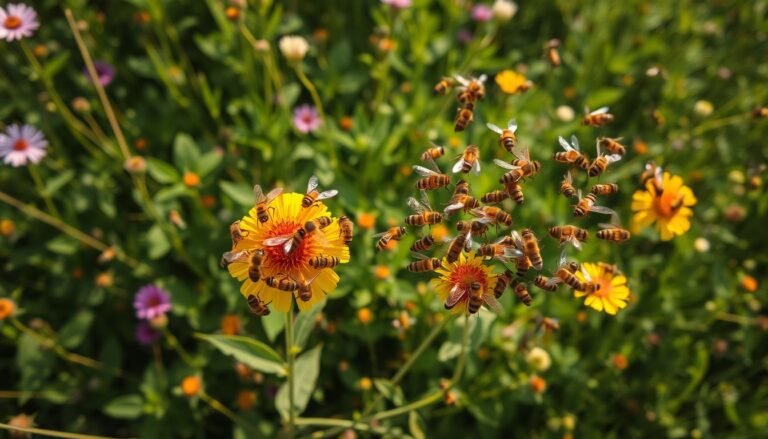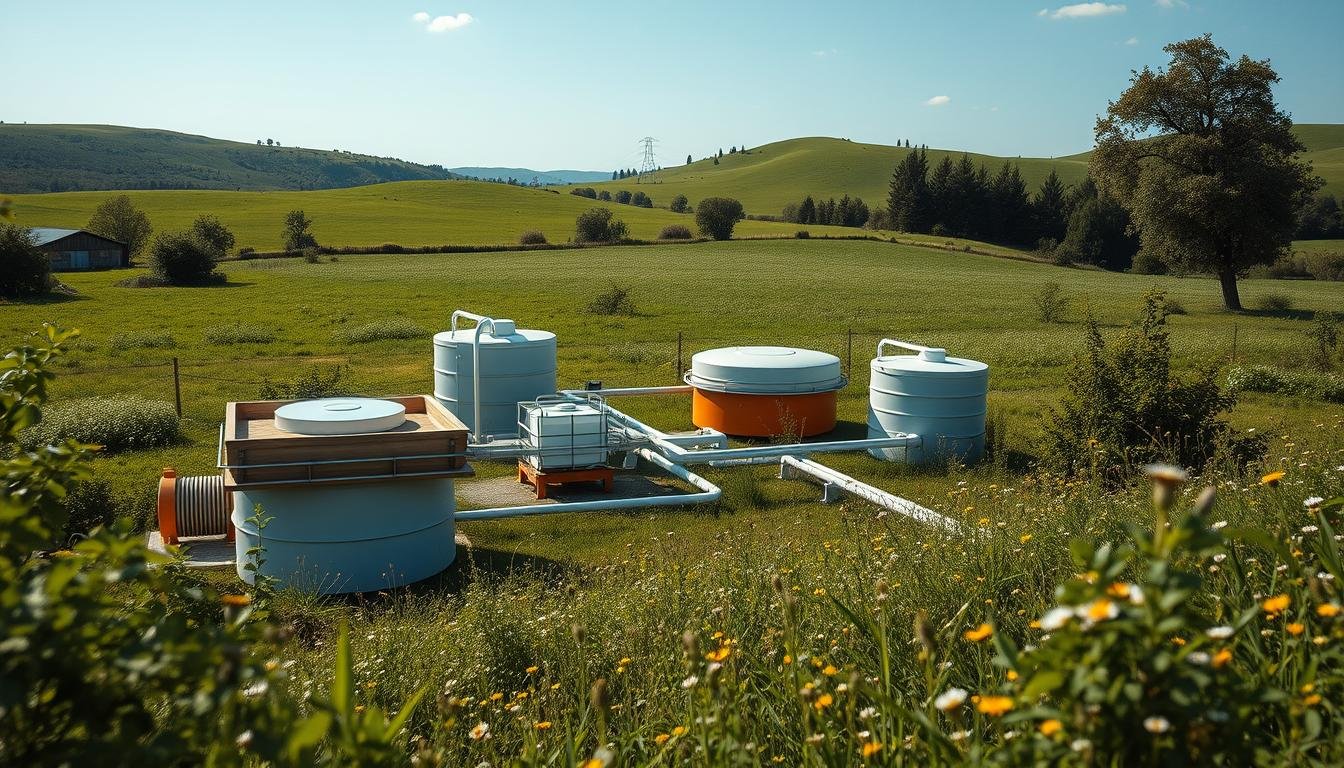
Reviewed by Thomas B. · How we review
Reliable, safe access to clean drinking spots is a core part of healthy hive management. This short guide defines a system that keeps bees hydrated year-round while cutting waste and exposure to pollutants. Adding shallow features with stones or high-traction landings helps many insects and birds, and even small bowls can keep colonies from using polluted puddles.
Beekeepers scaling up to dozens or hundreds of colonies need planned stations to lower foraging energy and protect honey yields. A consistent source reduces pesticide risk, speeds foraging, and supports better brood success. This piece previews how to assess demand, design safe stations, place them well, and maintain quality with minimal work.
Expect practical solutions from shallow bowls with stones to ponds with gentle slopes and screened pumps that prevent drownings. Thoughtful resource selection and upkeep reduce operational risks and help colonies remain stable across yards and climates.
Key Takeaways
- Define a reliable system that gives safe access year-round while limiting contamination.
- Planned stations cut foraging time and help maintain honey production.
- Simple shallow bowls and ponds with landings reduce drownings and pesticide exposure.
- Placement and maintenance matter for quick attraction and minimal manual work.
- Scale infrastructure across yards and align plans with regional climate and drought risk.
- Find practical setup tips and climate advice in this linked guide: beekeeping in different climates.
Why Water Sustainability Matters for Large Apiaries Today
A planned network of drinkers inside an apiary cuts flight time and boosts overall hive productivity.
Providing clean drink stations inside yards improves animal welfare and output. When bees travel far for water, they use energy that could become honey instead.
On-site provisioning lowers pesticide exposure from puddles, riverbeds, and livestock ponds. It also helps colonies manage brood when temperature swings hit.
- Shorter flights: more nectar and better honey margins at scale.
- Reduced contamination risk: fewer visits to agricultural sources with pesticides.
- Time efficiency: less emergency refilling and fewer neighbor issues for beekeepers.
- Yard resilience: planned sources cut competition and protect overall colony health.
Shift from ad hoc watering to designed systems that match yard resources and foraging patterns. For deeper planning and references, see beekeeping resources and books.
Assessing Colony Water Needs and Site Conditions
Estimate demand early by watching forager traffic and house-bee acceptance. Honey bees carry liquid in the crop to cool brood by placing droplets and fanning during hot day cycles.
In winter, bees use water to dissolve crystallized honey and thin viscous stores so the hive can feed efficiently when ambient moisture is low. Foragers specialize: when house bees stop accepting loads, foragers change tasks—an internal signal of shifting need.
Practical checks: count colonies, note recent temperature swings, and record peak flights on hot afternoons.
- Map existing ground and nearby sources; mark puddles, livestock troughs, and runoff risks.
- Inspect microtopography where water collects after storms—these spots draw bees but may carry contaminants.
- Document daily and weekly patterns to refine provisioning, especially where sun exposure and wind vary across the yard.
Watch steady water flights as a clear demand signal; abrupt declines often mean internal balance has changed.
Designing Safe, Clean Water Sources Bees Will Actually Use
Simple, safe drinkers with textured surfaces and gentle slopes win steady use from foragers and house bees alike.
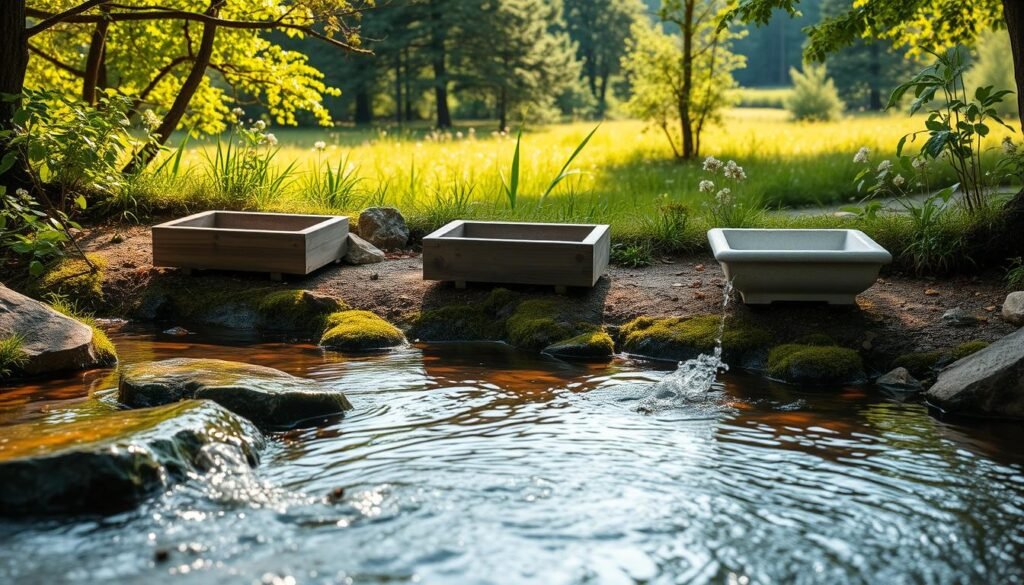
Start with shallow basins and saucers that include pebbles, marbles, or floating rafts so insects can land without slipping. A shallow bowl with textured landings keeps tarsi dry and cuts drownings.
Small ponds should have gently sloped edges, emergent plant perches, and screened pump intakes to protect aquatic larvae and avoid trapping insects. These features let bees exit and protect other wildlife.
DIY options work well: buckets with corks or sticks, saucers with stones, hummingbird feeders, and slow drip emitters. Aim for at least 50% surface raft coverage so bees can cluster without crowding.
- Shallow setups: saucers with pebbles to keep feet dry and offer steady sipping areas.
- Bucket stations: floating rafts (corks, sticks, sponges) covering ~50% of surface.
- Garden drips: slow seep hoses or emitters onto moist substrate for natural access.
- Pond rules: sloped banks, emergent perches, screened pumps.
- Scenting: faint chlorine or mineral notes can attract initial visitors; taper scent once the site is established.
- Modular design: multiple identical stations scale capacity and allow rotation during cleaning.
Placement tip: keep stations in partial sun to aid visibility and reduce algae while preventing overheating. Use sturdy stands and ensure easy access for refills and cleaning so the system stays reliable.
Optimizing Placement: Keep Sources Close, Accessible, and Not Too Close
Positioning drink stations about 100 feet from colonies balances energy savings with clear navigation.
Place a source at a short flight distance so foragers spend less time and energy hauling liquid back to the hive. Research shows distant sites raise the risk that some foragers never return, which cuts productivity and wastes resources.
Avoid setting stations directly under hive boxes. Damp entrances, orientation confusion, and increased drift make operational problems worse.
- Keep stations ~100 feet away to improve waggle-dance accuracy and steady recruitment.
- Raise trays or buckets on stands if hives sit on higher ground to lower vertical lift and speed trips.
- Space multiple sources to reduce crowding and defensive interactions during peak time.
- Use wind breaks and light-colored markers so bees re-find the site quickly and ignore neighbor pools.
“A short, predictable flight path pays off in better returns and fewer lost foragers.”
Attracting Bees to Your Water and Keeping Them Off Pools and Pet Bowls
Early, intentional provisioning keeps colonies from targeting neighbor pools and pet dishes. Set your stations before spring build-up so initial scouts recruit nestmates to a preferred water source. This habit formation limits visits to unwanted swimming areas and reduces neighbor complaints.
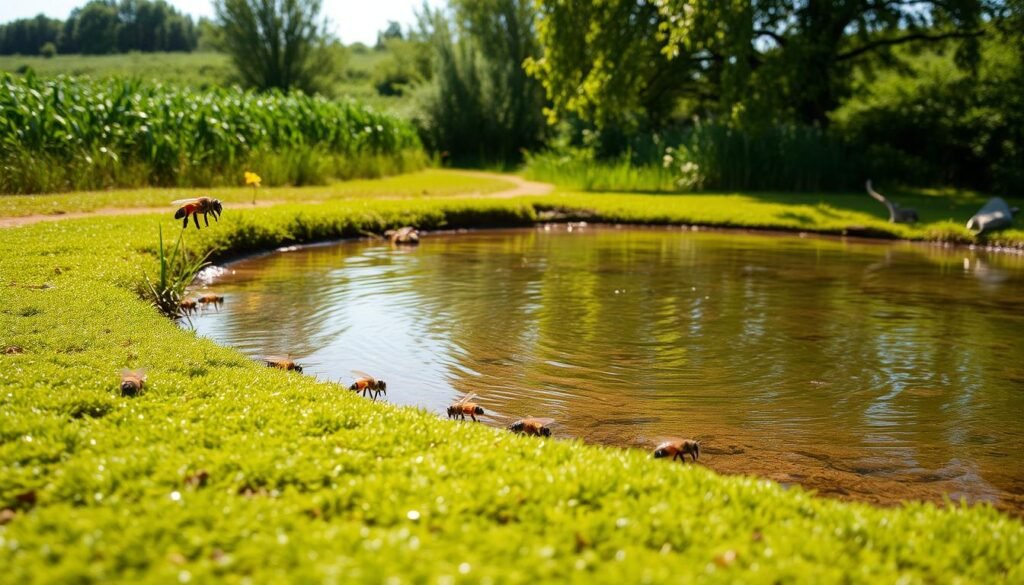
Use scent cues to guide scouts
Bees often find liquid by smell. A tiny teaspoon of bleach in a bucket or crushed oyster shell adds faint mineral notes that attract first visitors.
Weak sugar or damp leaf litter can also help. Once traffic is steady, remove additives and let plain source water keep the pattern.
Make your stations obvious and safe
Offer textured perches so a bee can land and climb easily. Multiple identical stations near hives beat distant pools at recruitment and reduce crowding.
Monitor, adjust, and communicate
Watch early foraging. If bees drift to offsite pools, tweak scent strength or move stations short distances to reset orientation.
Tip: Share your plan with neighbors and visibly service stations on hot days to prevent conflicts. For a practical setup, see the bee watering station guide.
Maintenance, Mosquito Control, and Pesticide Risk Reduction
Regular upkeep of drink stations stops mosquito breeding and keeps hive access reliable.
Change small bowls every few days during hot spells. Dump and refill containers to break mosquito larvae cycles and keep clean water available to bees. Rotate stations so one remains active while another is serviced.
For permanent ponds or reservoirs, add gentle movement with a fountain or pump. Flow discourages larvae without harming access. Screen pump intakes to protect dragonfly and damselfly nymphs and avoid accidental suction of wildlife.
Avoid pesticide sprays near sources. Sprays rarely fix mosquito problems and create collateral harm to beneficial insects and foraging bee health. Instead, rely on mechanical controls and cleaning.
- Rinse pebbles, marbles, and rafts to remove algae that makes perches slippery.
- Inspect after storms or nearby spray events; boost clean stations if runoff threatens ponds or puddles.
- Keep simple logs so beekeepers can track peak days, refill cadence, and any larvae or algae trends.
For practical management standards and disease-prevention practices, consult this BMP manual: best management practices for honey bee.
Water sustainability for large apiaries at scale
A layered network of drink points keeps colonies steady during heat spells and dry seasons.
Multiple stations per yard: capacity planning for hot days and droughts
Provide several identical stations across each yard so a single empty site does not stress a hive. Size capacity for peak conditions and balance flow so bees never deplete one point during the hottest day.
Use higher-volume reservoirs with safe perches in sun-exposed yards where evaporation is rapid. Schedule refills before afternoon peaks.
Seasonal adjustments: winter access, summer evaporation, and extreme temperatures
In cold months, keep containers unfrozen using dark bowls in sun or protected heaters rated for livestock use. Wind shields cut chill and make access safer.
During heat, add shaded options and larger surfaces. On sloped sites, elevate stations to match hive height to reduce transport effort and improve throughput.
Monitoring usage: forager behavior, refill cadence, and resource balancing
Track inbound/outbound traffic and cluster patterns to fine-tune locations and counts. Log days-to-empty per station and compare with daily temperature highs.
Build contingency capacity for multi-day droughts by pre-positioning temporary reservoirs. Standardize equipment so swaps and repairs stay quick and predictable.
| Need | Practical solution | When to act | Benefit |
|---|---|---|---|
| Peak midday demand | Multiple identical stations, extra reservoirs | Before heat waves | Prevents depletion and lost foragers |
| Rapid evaporation | Higher-volume tanks, shaded perches | Summer months | Reduced refills, steady access |
| Freeze risk | Dark containers, wind breaks, safe heaters | Winter | Unfrozen access, stable brood care |
| Operational scaling | Standardized parts, refill schedule | All year | Faster maintenance, reliable supply |
Conclusion
Simple, well-placed drink points help bees spend less time hauling and more time converting nectar to honey.
Plan a resilient network: set a clear water source near hives, add safe perches, and use mild scent cues to establish traffic early. Place multiple identical stations so one empty site never stresses a colony.
Biological payoffs: steady access keeps brood temperature stable and lets stored honey and incoming nectar convert efficiently. That saves energy and boosts returns.
Maintenance checklist: refresh small bowls on a schedule, add gentle movement in ponds, screen pumps to protect larvae, and watch daily use to scale capacity with heat and demand.
Outcome: consistent on-site clean water cuts pesticide exposure and off-site conflicts. Audit your resources, make two or three quick improvements, and expect measurable gains in hive health and honey yield.
FAQ
What are the primary reasons bees need a reliable water source?
Bees use water to cool the brood nest, thin and process nectar into honey, and dissolve crystallized stores. Clean, nearby sources reduce forager energy expenditure and help maintain hive temperature during hot days, protecting larvae and colony productivity.
How do I estimate daily demand based on colony count and climate?
Estimate needs by combining colony numbers with local temperatures and humidity. In hot, dry conditions each colony may need several liters a day; cooler climates cut that demand. Track refill cadence and forager visits to refine your estimates over time.
How should I scan an apiary for existing sources and contamination risks?
Walk the site to locate ponds, troughs, irrigation runoff, and animal watering points. Check for pesticide drift, livestock access, manure runoff, and standing puddles. Test suspect sources for chemicals or algae before directing bees to them.
What designs encourage bees to use provided supplies and reduce drownings?
Use shallow basins with pebbles, cork rafts, floating marbles, or emergent plants so bees can land safely. Gently sloped pond edges or screened pumps reduce drownings. Avoid deep, smooth-sided bowls without landing spots.
Are there simple DIY solutions that work well?
Yes. Saucers filled with stones, buckets with floating sticks or corks, slow drip systems, and modified hummingbird feeders are effective. Ensure materials are clean and placed where foragers can find them easily.
How can I make a source more attractive to initial foragers?
Light scent cues such as a weak saline solution or minute mineral notes can attract first visitors. Once bees learn the location, gradually shift to neutral supplies to avoid long-term chemical exposure.
How close should supplies be placed relative to hives?
Aim for a short flight—roughly 100 feet is ideal—to cut energy costs while preventing excessive traffic under the boxes. Avoid placing sources directly beneath entrances to limit crowding and moisture buildup near brood.
What elevation strategies help hives on varied terrain?
Place water on or slightly above hive elevation so foragers expend less energy climbing. For hives on higher ground, provide nearby stations at similar heights or on terraces to minimize transport effort.