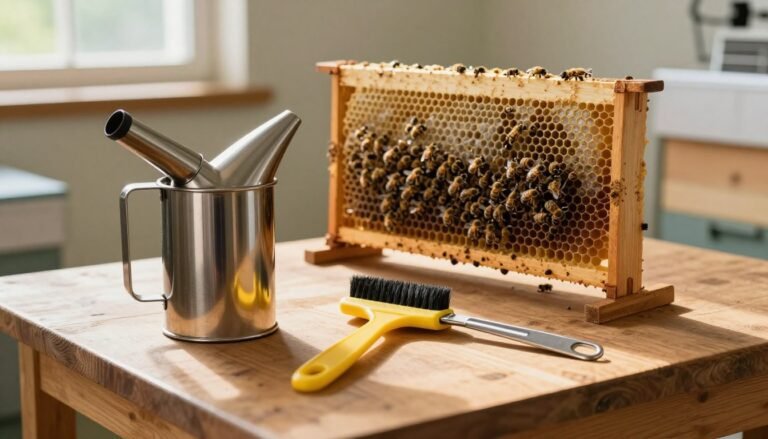
Bearding is a normal cooling behavior when temperatures climb and a hive fills with bees returning late in the day. Large groups gather outside the entrance, carry water, and fan to evaporate moisture over the brood. This helps keep the colony safe but can signal crowding or heavy nectar flow.
In this article you’ll find practical, field-tested steps built for beekeepers managing colonies through long, hot days. We explain the biology behind bees beard behavior and show clear signs that merit gentle intervention rather than frequent inspections.
Main tactics include improving airflow, adding space at the right time, offering accessible water sources, and adjusting hive placement for shade. The goal is simple: support natural cooling while avoiding actions that stress the colony.
Key Takeaways
- Bearding is often normal cooling, linked to water collection and wing fanning.
- Focus on airflow, shade, space, and nearby water rather than constant inspections.
- Watch for signs of crowding during evening returns and strong nectar flow.
- Proper timing for adding supers preserves internal ventilation and honey storage.
- Small, targeted changes help most colonies; avoid over-managing.
Bearding in Summer: What It Is and Why It Happens
Summer bearding is a simple, visible way a colony cools itself when internal heat rises. A calm cluster of bees gathers on the hive front and outer surfaces to open pathways for air and reduce temperatures inside.
Beard vs. swarm: key differences on the entrance
A beard sits near the entrance and looks relaxed. Bearding bees fan their wings and stay put. In contrast, a swarm moves away as a single, excited mass and often follows congestion or queen problems.
Normal hot-day clustering during peak afternoon temperatures
Large, calm clusters form on the hottest afternoons and again in early evening when returning foraging traffic raises density. The group helps cool the brood, which must stay near 95°F, by creating air corridors past comb and frames.
- Fanning wings at the entrance signals ventilation work.
- Festooning on comb and crowded entries may also appear during strong nectar flow.
- Quick visual checks—steady posture and even activity—usually mean no immediate intervention is needed.
Inside Hive vs. Outside Hive: How Bees Manage Heat
When heat spikes, a colony divides labor so some workers cool the nest while others move outside to ease crowding.
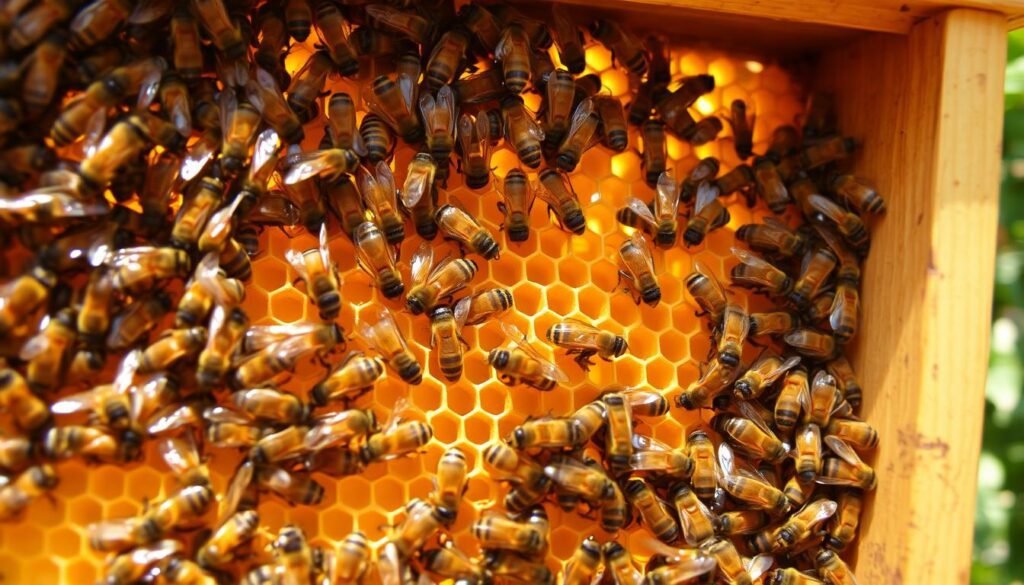
Brood needs: the comb must stay near 95°F within hive for healthy development. Workers focus on keeping the brood warm but not too hot.
Fanning and evaporative cooling
Foragers collect water and deposit a thin film on brood surfaces. Interior fanners beat their wings to force air across wet comb. This evaporative cycle drops local temperatures fast.
Airflow paths and workforce distribution
Air moves from bottom openings through gaps between frames and up through top exits in stacked boxes. Interior fanners create directed airflow, while clusters outside lower the hive’s metabolic heat.
- Signs it’s working: steady, moderate bees bearding and active ventilation at the entrance.
- Warning signs: droopy bees at night, warped comb near brood, or prolonged overheating.
- Light-touch support: keep vents clear, use screened bottoms and top exits, and place clean water nearby.
For a deeper practical guide on managing ventilation and related behaviors, see this beekeeping heat and bearding resource.
Quick Diagnostic: When Bearding Is Fine and When It Signals a Problem
A quick check at the hive front can tell you whether a beard is simple thermoregulation or a sign of stress.
Normal bearding often appears on very hot days or during calm evenings when foraging winds down. A calm, even cluster of bees hanging at the entrance with steady fanning wings usually means the colony is managing temperatures well.
Concerning patterns include agitation, chaotic traffic, or a sudden drop in foraging that lasts for more than a few days. If temperament does not improve after about ten days following a nectar-flow change, consider mite sampling and other health checks.
- Inspect quickly: open the hive just long enough to confirm clear air paths between frames and adequate space for brood and stores.
- Ventilation signs: strong fanning at the entrance and interior fanning are positive; weak fanning with high temperatures suggests restricted air flow.
- Entrances and robbing: during dearth, use entrance reducers only for weak colonies and never leave honey or syrup outside where it invites robbing.
- Population cues: an evening spike in outside clustering is normal; a persistent daytime cluster without heat drivers can signal overcrowding or queen issues.
Keep diagnostics brief and minimally invasive so bees can resume cooling. Small, timely fixes preserve hive health and lower the chance a minor issue becomes a real problem.
25. how to reduce bearding in hot climates
Summer hive fronts often tell the story: bees cluster outside when internal airflow and storage space are tight.
Prioritize airflow and space before making drastic changes. Start by opening upper exits and confirming bottom vents are clear. Align frame gaps so air can move vertically through the hive with minimal resistance.
When nectar flow increases, add a super rather than forcing inspections. Extra boxes give the colony room for stores and brood, which lowers crowding and the likelihood that bees beard at busy times.
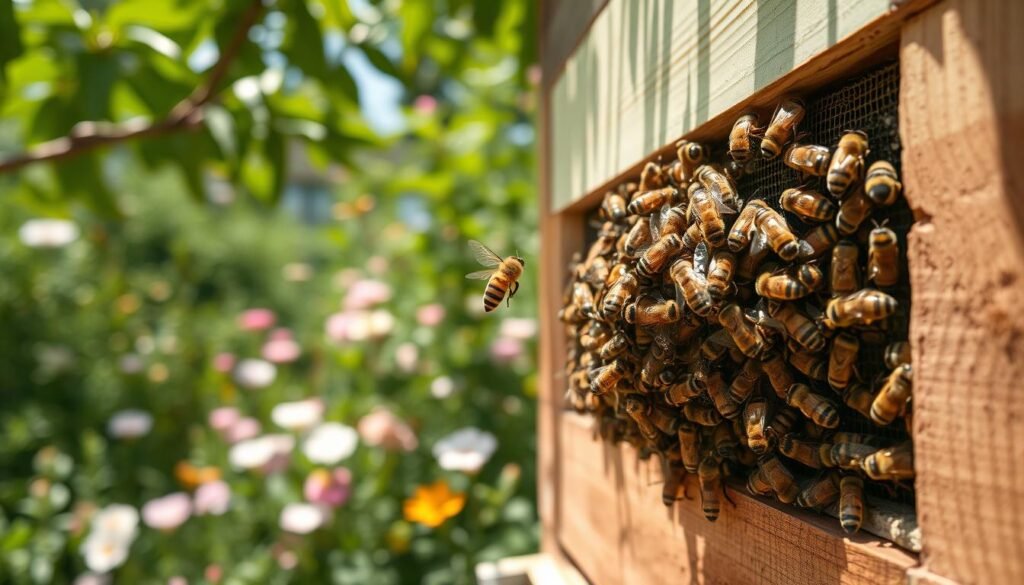
- Air first: screened bottoms, open top vents, and clear frame channels improve ventilation fast.
- Space strategically: add supers during strong flow and check that frames preserve a central brood nest.
- Minimal inspections: brief checks prevent breaking the bees’ cooling rhythm.
- Water access: keep fresh water nearby so workers can sustain evaporative cooling with short flights.
Let small changes work before more invasive steps. Document outcomes and consult a practical beekeeping guide like beekeeping in different climates for regional adjustments.
Boost Airflow: Entrances, Ventilation, and Hive Configuration
Smart ventilation helps colonies cool naturally. Improve airflow so bees can focus on brood care rather than crowd control. Small tweaks to openings and internal layout often cut bearding and stress without heavy handling.
Use screened bottom boards and open upper entrances
Install a screened bottom board to exhaust heat and moisture and support the upward draft that fanning bees create. Keep an upper entrance open during warm spells and pair it with a lower opening to form a chimney effect for moving warm air out.
Create clear air paths through frames and boxes
Align frames so air can travel straight from bottom to top. Avoid propolis-blocked gaps and remove burr comb that interrupts flow.
Seat boxes squarely so they vent where you intend, not through random cracks that can attract robbers. A tidy internal path improves brood cooling and overall hive health.
Position hives for cross-breezes without inviting robbing
Place hives to catch gentle cross-breezes while keeping entrances sheltered from strong gusts. Gentle wind helps evaporation when bees fetch water and shorten flights for evaporative cooling.
Remember that outside hive clustering is part of the colony’s strategy; ventilation upgrades should complement, not fight, bees bearding. Reassess entrances after heat waves and dearths to balance cooling with security.
- Quick checks: clear vents, functional screened bottom, straight frame lanes.
- Signs it’s working: smaller evening beards and steady brood temperatures.
Add Space Smartly: Supers, Frames, and Population Management
Timely hive expansion prevents interior compression and lets bees work without bottlenecks. During a strong nectar flow, add empty honey supers so the colony has room for stores and movement.
Watch evening activity at the entrance and signs of surging population. Crowded fronts and heavy returns mean it is time to add space.
Adding honey supers during strong nectar runs
Add a super promptly, then step back. Let bees draw comb and move stores without repeated inspections. This relieves compression on the brood and cuts long evening cluster beards.
Relieving crowded entrances and reducing cluster beards
- Use boxes and frames that keep straight air lanes so heat and moisture escape.
- Confirm frames are drawn true and not bulging; straight frames preserve traffic lanes.
- Consider splits if colonies repeatedly outgrow available hive volume.
| Action | Expected Result | Best Timing |
|---|---|---|
| Add empty supers | More storage, less brood compression | During strong flow |
| Align frames and boxes | Improved airflow and movement | At addition or quick check |
| Open upper entrance | Ventilates new space | Warmest part of day |
| Make splits | Manage population growth | Before peak heat |
Track results by noting beard size and evening duration. Use a seasonal plan like the seasonal beekeeping calendar to time expansions and inspections.
Water Strategies That Bees Actually Use
Setting out shallow, safe water early in the season trains bees where to collect. Bees fetch water mainly for evaporative cooling, not thirst. A reliable supply can cut busy trips and ease evening bearding on hot days.
Place multiple water sources near and farther from the hive so foraging bees can choose preferred sites. Some workers prefer distance; others will use the closest pan. Diversity keeps supply steady over long, hot days.
Safe landings and cleanliness
Add pebbles, wine corks, twigs, or aquatic plants so bees collect water without drowning. Use shallow pans and birdbaths with varied depths. Refresh and clean containers often; rain water is usually preferred over chlorinated tap water.
Pool problems and practical fixes
If bees crowd a pool, offer better water sources and start them early so bees imprint on your sites. Draping a towel into the pool edge creates a wicking landing that cuts drownings and human-bee conflicts.
- Placement tip: put water in partial shade to slow evaporation under strong sun.
- Do not: add scents or chemicals—clean water protects honey quality.
- Watch: adjust locations if pets or wildlife interfere with access.
Site and Sun: Shade, Orientation, and Heat Exposure
Choose hive locations that balance morning sun with afternoon shade to cut midday heat stress. Morning light helps bees warm and start foraging. Avoid full sun where afternoon temperatures regularly climb above 95°F.
Providing shade during the hottest hours without trapping humidity
Use natural trees or breathable shade cloth that blocks direct rays but preserves air movement. Dense shade that traps moisture can raise humidity and harm brood.
Light-colored lids and ventilated covers reduce heat absorption. Trim vegetation so breezes flow around stands and do not create stagnant pockets.
Timing moves before colonies break winter cluster
Plan major relocations before bees break winter cluster so colonies adapt quietly. Sudden moves during spring buildup harm queen laying and stress workers.
- Orient entrances toward gentle breezes, not strong prevailing winds.
- Lay out hives with spacing for cross-breezes and to cut reflected heat from surfaces.
- Install water sources before peak heat so bees learn preferred sites away from pools or neighbors’ yards.
“Positioning and modest shade often cut evening bearding more than frequent interventions.”
After making shade changes, confirm inside hive ventilation still works and upper exits remain clear. For guidance on heat-friendly siting and ventilation, see a practical resource on chicken housing that offers shade principles and a detailed shade and placement guide, and review hive ventilation techniques at this ventilation guide.
Managing Dearth, Robbing, and Entrances During Heat Waves
During long, dry spells, hive entrances often become flashpoints for robbing and thermal stress. Managing access and food delivery keeps colonies safe without undermining ventilation.
When nectar flow collapses, robbing can escalate fast. Use an entrance reducer for weak hives to slow thieves. Do not over-restrict an entrance if internal temperatures exceed 95°F and bearding is active.
When to use entrance reducers—and when not to
Reduce lower openings during dearths to protect stores and prevent fighting at the entrance. Open upper exits so the hive keeps a draft and workers can cool brood.
Feeding inside the hive to avoid chaos and robbing
Feed inside the hive with sealed feeders rather than leaving syrup or exposed honey outside. Open feeding draws robber bees and often leaves dead bees at the entrance.
- Delay large honey pulls if flow stops; colonies need reserves during sudden summer stress.
- Inspect for robbing signs: oily, hairless robbers, pitched fights, and piles of dead bees at the entrance.
- Keep wet frames and comb sealed or offsite to avoid attracting marauders.
- Align frames and boxes so air channels stay clear while you manage security.
Reassess daily during heat waves and track temperatures. Small, timely changes at the entrance can protect stores and preserve cooling behavior. Document each intervention so beekeepers can refine tactics for future dearth days.
Health Checks That Influence Bearding: Mites, Queen, and Brood
Queen performance and parasite loads often explain persistent evening clustering better than weather alone. Regular, focused checks let you spot problems early and keep bees cool without disrupting their work.
Testing for mites and choosing season-appropriate treatments
In summer many varroa live inside capped brood. Run routine mite checks during warm months.
If counts exceed thresholds, treat with methods suited for brood presence. Avoid oxalic acid when capped brood is heavy because it does not reach mites inside cells.
Queen performance, population surges, and bearding intensity
Check the queen by looking for steady egg-laying and a solid brood pattern. A strong queen can drive rapid growth that increases bearding if space lags.
Rebalance frames, add a super early in a surge, and keep frames aligned so airflow and movement remain clear.
- Use in-hive feeding when stores are low; never leave honey or equipment outside where it attracts robbing.
- Monitor bee temperament—persistent aggression beyond about ten days may indicate mites or queen issues.
- Track pollen, honey, brood viability, and comb condition as quick hive health checks.
| Check | Action | Why it matters |
|---|---|---|
| Mite counts | Test monthly; treat if over threshold | Controls parasites that drive stress and bearding |
| Queen assessment | Confirm eggs and brood pattern | Prevents sudden population surges that cause crowding |
| Brood inspection | Rebalance frames; add space | Maintains brood temperature and ventilation |
Record treatments, results, and timing. Keeping notes and using a seasonal plan like the beekeeping calendar helps refine decisions and protect hive health during heat spells.
Conclusion
Focus on airflow, measured space additions, and reliable water sources to support colony cooling this summer.
Bearding is a normal cooling behavior. The best way to help bees is to support ventilation with screened bottoms and open upper exits, add supers during strong flow, and offer clean water with safe landings.
Use quick diagnostics to tell normal beards from trouble and protect brood temperature with small, inside adjustments. During dearth, feed inside and never leave honey exposed; balance entrance security with cooling on hot days.
Keep routine checks for mites and queen performance so hive health stays steady. Track results, iterate on what works, and share findings with local beekeepers. For practical expansion guidance, see beekeeping expansion tips.
FAQ
What is hive bearding and how does it differ from swarming?
Bearding is when worker bees cluster on the outside of the hive, often on the front, to cool the colony during hot hours. It differs from swarming because the colony remains intact; there is no mass departure with a queen. A swarm includes scout activity, a visible break in foraging patterns, and a large group leaving the hive.
When is bearding a normal behavior versus a sign of a problem?
Bearding during peak afternoon temperatures is normal, especially in strong colonies during nectar flows. It becomes a concern if it persists overnight, coincides with reduced foraging, or appears with other signs like spotty brood, heavy mite loads, or a failing queen. Monitor water access, hive ventilation, and brood health to decide.
How do bees regulate brood temperature inside the hive?
Workers maintain brood near 95°F by clustering, shivering to generate heat, and fanning to cool. They move water into cells for evaporative cooling and adjust positioning of brood frames. Proper insulation and controlled ventilation help the colony keep stable internal temperatures.
How does fanning and airflow work to cool a hive?
Bees face out and fan with their wings to circulate air, creating directional airflow that draws warm air out and cools brood areas. Adequate entrance space and internal air paths let this behavior work efficiently, reducing the need for external bearding.
Should I add a super or more frames when my bees start bearding?
Adding a super during a strong nectar flow relieves internal congestion and creates more storage and cluster space. Only add frames or boxes when population and honey flow justify it; unnecessary additions can disrupt airflow and raise humidity.
How can I improve hive ventilation without exposing the colony to robbing?
Use a screened bottom board and consider a small upper entrance or notch for exhaust. Create clear air paths through frames by maintaining straight comb and avoiding warped frames. Position hives to get cross-breezes but avoid placing them where wind blows directly into the entrance.
Are entrance reducers helpful during hot spells?
Entrance reducers can help deter robbing and stabilize internal temperature in weak colonies. For strong colonies in heat, a too-small entrance impedes fanning and cooling. Choose reducer size based on colony strength and local robbing pressure.
How important is water for colonies cooling themselves?
Water is essential. Bees bring water to the hive for evaporative cooling and to feed brood. Provide multiple clean sources at varying distances to prevent congestion at the hive and to encourage some foragers to work farther away from the entrance.
What makes a good water source for bees?
Use shallow containers with pebbles, corks, or twigs so bees have safe landing spots. Natural sources with vegetation, like ponds with emergent plants, work well but must be clean. Rainwater is preferred over chlorinated tap water when possible.
How can I reduce bees gathering at pools and annoying swimmers?
Offer attractive alternative sources nearby—shallow tubs with landing material and clean water. Place them a short distance from the hive and farther from pool areas. Maintain those sources so they remain preferable to chlorinated pools.
How should I position hives for shade without trapping humidity?
Provide afternoon shade or light screening to cut peak sun exposure, but allow airflow on all sides. Elevate hives slightly and avoid dense vegetation directly against the hive front. Morning sun exposure helps dry dew and lowers humidity risks.
Can moving a hive for shade be done during summer?
Small shifts for shade are best done early morning or late evening when flight activity is low. Large relocations should occur outside strong foraging periods to avoid disorienting workers. Time moves before major weather changes when possible.
When is closing or reducing entrances likely to cause more harm?
Sealing entrances during hot weather can prevent adequate fanning and raise internal temperatures and humidity. Avoid drastic entrance closures in heat unless robbing or predators make it necessary; instead, address space and water availability.
Will feeding during heat waves encourage bearding or robbing?
Feeding with syrup at the hive entrance can attract robbers and increase traffic, worsening bearding and stress. If feeding is necessary, place feed inside the hive in a frame feeder to reduce external activity and robbing risk.
How do mite levels affect bearding behavior?
High mite loads weaken colonies, reduce foraging, and can increase external clustering as the hive struggles to regulate temperature. Test for varroa and use season-appropriate treatments; a healthier population will manage heat stress better.
Does queen quality influence bearding intensity?
Yes. A failing queen leads to lower brood production and uneven worker behavior. Strong, well-mated queens support robust populations that can staff fanning and water foraging effectively, reducing excessive external clustering.
How much does sunlight direction matter for hive placement?
Orientation matters. Morning sun warms the hive early and helps dry moisture, while afternoon shade prevents peak overheating. Face entrances east or southeast in hot regions, and ensure hives receive airflow rather than being boxed in by structures.
What quick checks can tell me if bearding needs intervention?
Look for bearding that persists after sunset, shriveled brood, high mite counts, low food stores, or reduced foraging. If several signs appear together, increase inspections: check brood pattern, test for varroa, and verify water and ventilation.
Are there configuration changes that improve air movement through frames?
Keep frames aligned and avoid pushing them too tight. Use shallow inner covers with ventilation holes and consider spacer strips when supers are shallow. Clear, straight brood boxes let bees establish effective internal airflow channels.
How can I relieve crowded entrances and reduce outside clustering?
Widen lower landing boards, add a small upper entrance for exhaust, or add an extra super during nectar flow. Ensure foragers have multiple exits by keeping the front clear. Avoid chokepoints that force bees to cluster outside.
What practical steps help during extended dearth or heat waves?
Provide multiple water sources, check and treat for mites, reduce hive stress by ensuring adequate space, and avoid unnecessary inspections during peak heat. If food is scarce, feed inside the hive to lower outside traffic and robbing risk.
When should I consult a local experienced beekeeper or extension service?
Seek advice if bearding persists overnight, brood patterns look poor, mite counts are high, or you notice sudden population drops. Local experts can diagnose region-specific factors like forage scarcity, disease, or breed-related behaviors.