
Published November 27, 2025 · Last Updated August 26, 2026
Beekeeping in your backyard is a rewarding hobby that connects you with nature while helping our essential pollinators thrive. Beyond the sweet reward of fresh honey, keeping bees contributes to local ecosystem health and provides fascinating insights into these remarkable creatures. This comprehensive guide will walk you through everything you need to know to start your beekeeping journey with confidence.
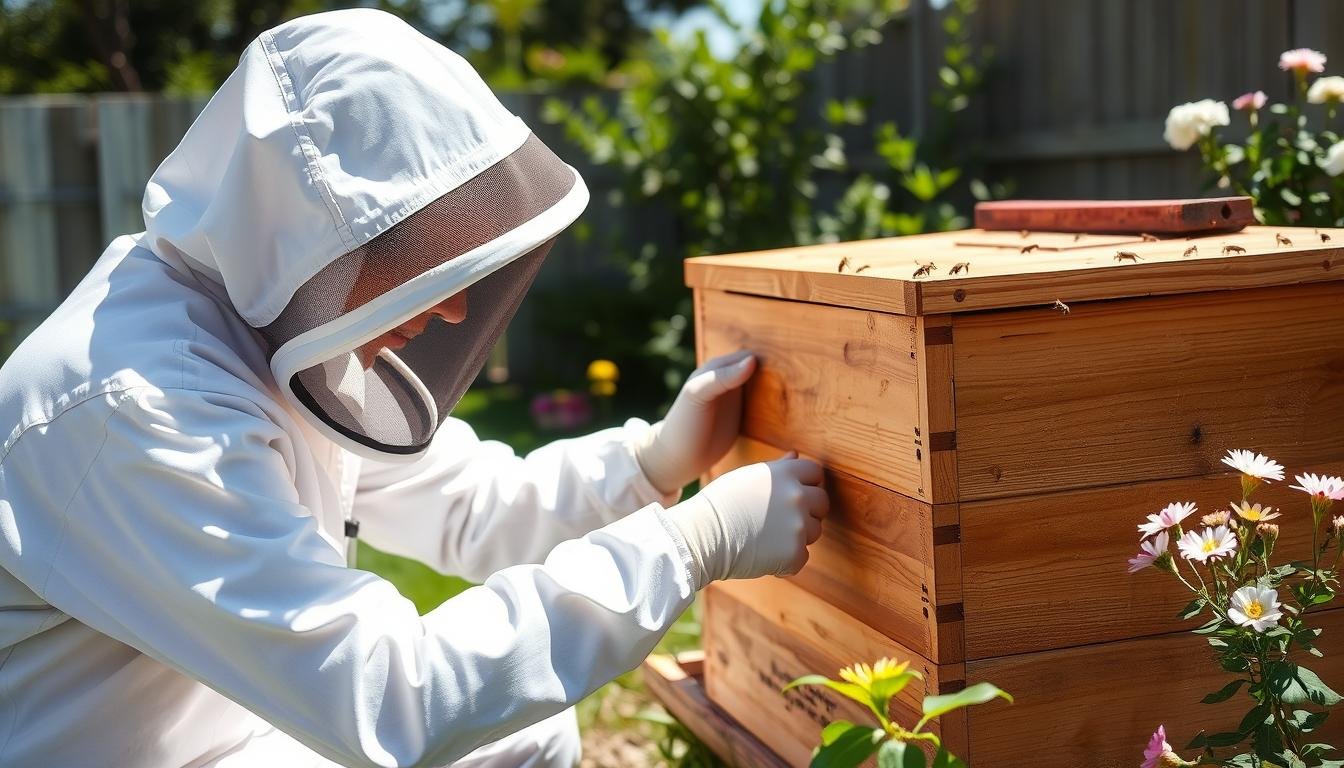
A beginner beekeeper inspecting a healthy backyard hive
Before You Start Backyard Beekeeping
Beekeeping is an enjoyable hobby, but it requires preparation, knowledge, and commitment. Before purchasing any equipment or bees, consider these essential first steps:
Check Local Regulations
Many cities and neighborhoods have specific ordinances regarding beekeeping. Some require permits, limit the number of hives, or have distance requirements from property lines. Contact your local government office or agricultural extension to learn about regulations in your area.

Not sure about your local beekeeping laws? Most agricultural extension offices provide free information about local regulations.
Consider Your Neighbors
Being a good neighbor is important when keeping bees. Talk to those living nearby about your plans. Address any concerns they might have about bee stings or swarms. Offering them some of your future honey harvest can help win their support.
Assess Your Space
You don’t need acres of land for beekeeping. Even small urban yards can accommodate hives. The ideal location provides morning sun, afternoon shade, protection from strong winds, and a nearby water source. Keep hives away from high-traffic areas and consider using fencing to direct bee flight paths upward.
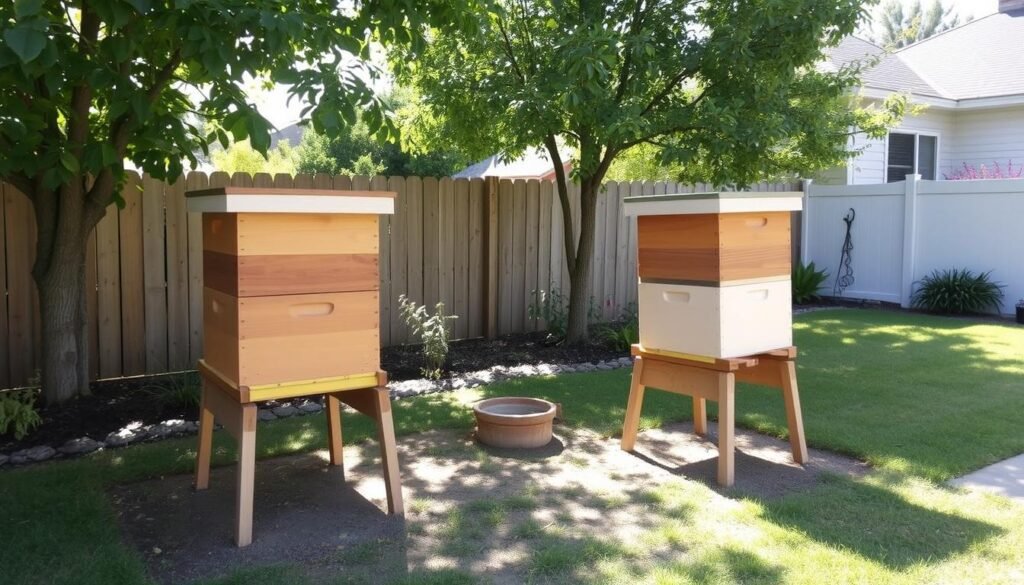
An ideal backyard setup with proper hive placement, morning sun, and nearby water source
Educate Yourself About Beekeeping
Knowledge is your most valuable tool in beekeeping. Before investing in equipment or bees, take time to learn about bee biology, behavior, and management techniques.
Join Local Associations
Local beekeeping clubs and associations offer invaluable resources for beginners. They provide mentorship opportunities, hands-on workshops, and connections to experienced beekeepers in your area.

Take Beekeeping Classes
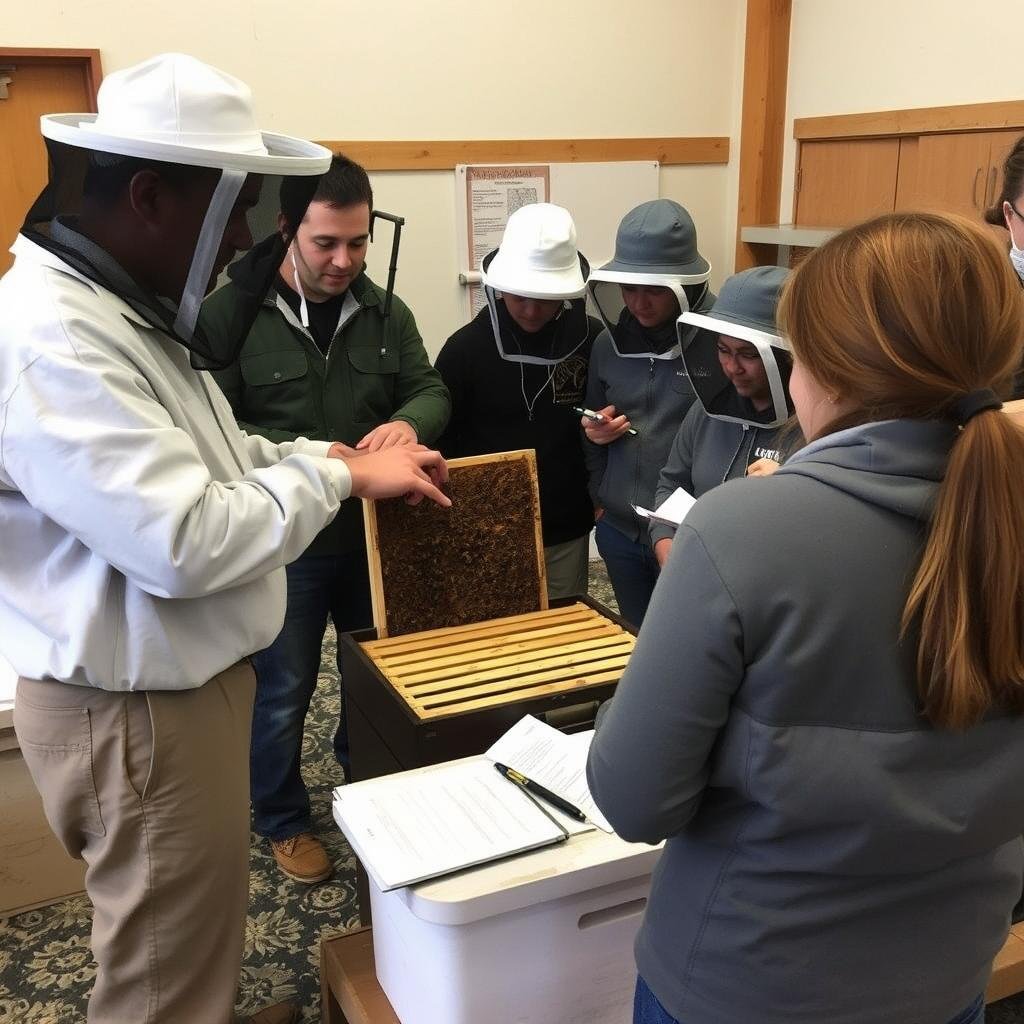
Many agricultural extensions and beekeeping associations offer beginner courses. These classes cover essential topics like hive management, pest control, and honey harvesting techniques.
Read Beekeeping Books
Comprehensive beekeeping guides provide detailed information on all aspects of keeping bees. Look for recently published books that cover modern techniques and current challenges facing honey bees.

Ready to deepen your beekeeping knowledge?
Download our free Beginner’s Guide to Backyard Beekeeping to learn more about bee biology, seasonal management, and troubleshooting common issues.
Essential Beekeeping Equipment
Starting beekeeping requires an initial investment in proper equipment. Quality gear will last for years and make your beekeeping experience safer and more enjoyable.
Beehives
The most common hive types for backyard beekeepers are:
- Langstroth Hive: The most popular choice for beginners, featuring stackable boxes with removable frames. Easy to manage and widely available.
- Top Bar Hive: A horizontal design where bees build comb downward from bars. Easier on your back but produces less honey.
- Warre Hive: A vertical hive designed to mimic bees’ natural habitat. Requires less management but makes inspection more difficult.

Common beehive types: Langstroth (left), Top Bar (center), and Warre (right)
Protective Gear
Safety should be your priority when working with bees. Essential protective equipment includes:
- Bee Suit or Jacket: Provides protection from stings. Full suits offer complete coverage, while jackets protect your upper body.
- Veil: Protects your face and neck from stings. Some come attached to jackets, others are separate.
- Gloves: Protect your hands while handling frames. Leather or nitrile gloves work well.
- Boots: Closed, high-top boots prevent bees from crawling up your legs.
Tools and Accessories
Hive Tools
A hive tool helps pry apart hive components sealed with propolis (bee glue). A frame lifter makes removing frames easier.

Smoker
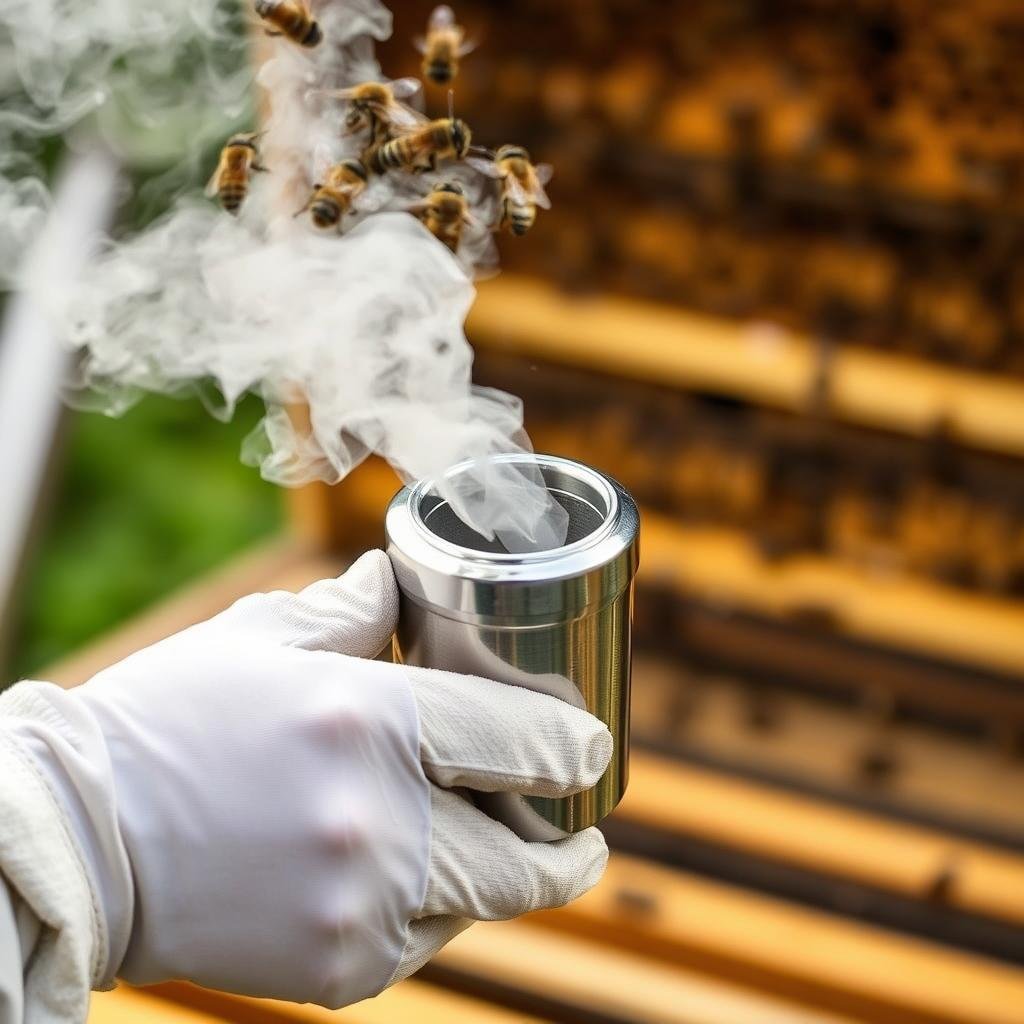
A smoker calms bees during hive inspections. The smoke masks alarm pheromones and makes bees less defensive.
Honey Extraction Equipment
For harvesting honey, you’ll need an uncapping knife, honey extractor, strainer, and storage containers.
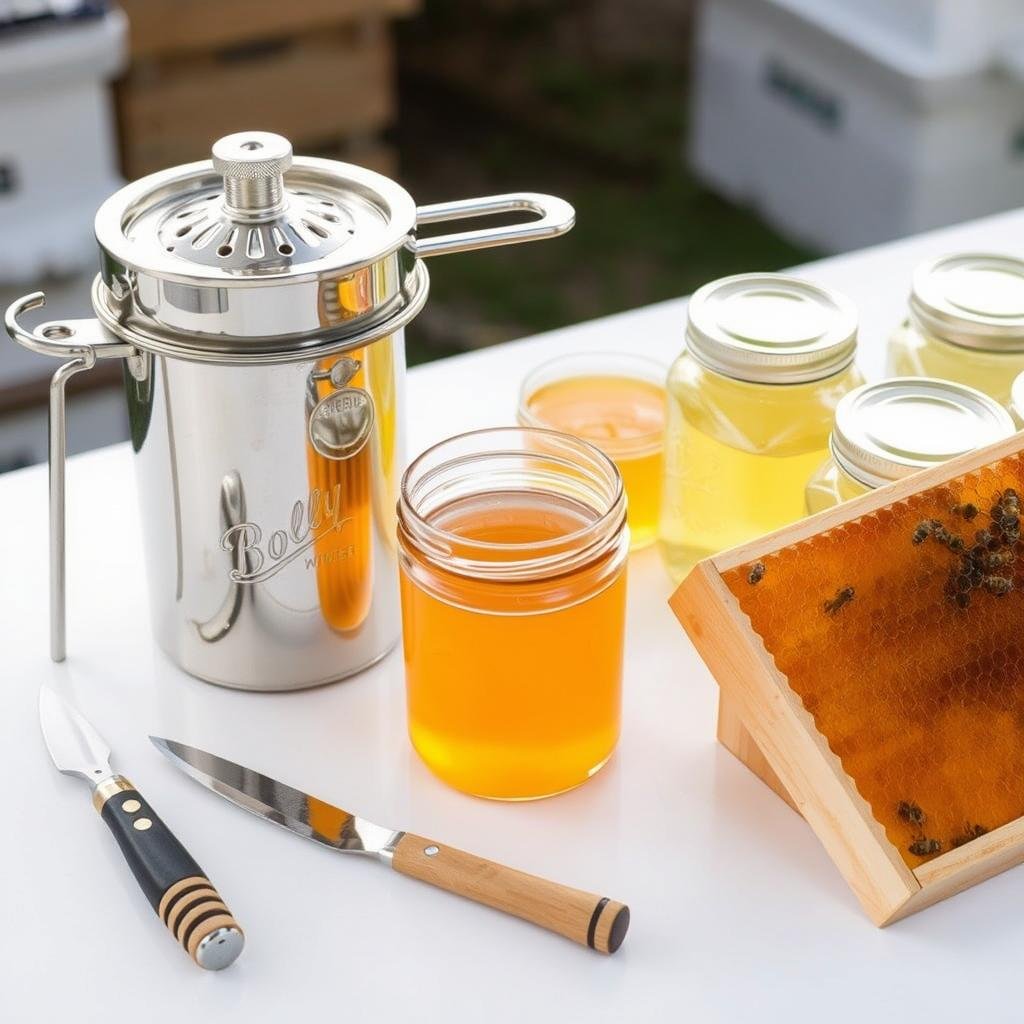
“Start with quality equipment that will last. Cutting corners on essential gear often leads to frustration and additional expenses later.”
Ready to equip your backyard apiary?
Our Beginner Beekeeper’s Equipment Checklist helps you identify exactly what you need to get started without overspending.
How to Source Your Bees
Once you have your equipment ready, it’s time to acquire bees. There are several ways to source honey bees for your backyard hives:
Package Bees
A package typically contains 3 pounds of worker bees (about 10,000) and a separately caged queen. These are shipped in screened boxes and are the most common way for beginners to start.
Advantages
- Readily available in spring
- Less expensive than nucs
- Can be shipped to your location
- Good for starting with new equipment
Disadvantages
- Takes longer to establish
- Queen may not be accepted
- Less productive in first year
- Requires more feeding and care
Nucleus Colonies (Nucs)
A nucleus colony or “nuc” is a small, functioning colony with 4-5 frames of bees, brood in various stages, a laying queen, and food stores. Think of it as a “starter hive.”
Advantages
- Already functioning as a colony
- Queen is established and laying
- Contains brood and food stores
- Faster buildup and earlier honey production
Disadvantages
- More expensive than packages
- Limited availability; order early
- Usually must be picked up locally
- May come with existing pest issues

Installing a package of bees into a new hive – a crucial first step in backyard beekeeping
Other Ways to Acquire Bees
- Catching Swarms: Free but requires experience and proper equipment. Not recommended for beginners without mentorship.
- Splitting Existing Colonies: Once you have established hives, you can create new colonies by splitting them.
- Buying Established Colonies: Purchasing complete hives from other beekeepers can give you an instant start.
Order Early! Bee suppliers often sell out by early spring. Place your order in January or February for April/May delivery.
Find reputable bee suppliers in your area
Connect with local beekeeping associations to find recommended suppliers of quality bees suited to your region.
Seasonal Beekeeping Management
Successful backyard beekeeping requires understanding the seasonal needs of your colony. Each season brings different management tasks and challenges.
| Season | Colony Activity | Beekeeper Tasks | Common Challenges |
| Spring | Rapid population growth, foraging begins, potential swarming | Install new bees, conduct regular inspections, add honey supers, manage swarm impulse | Swarm prevention, spring buildup, unpredictable weather |
| Summer | Peak foraging and honey production, maximum colony size | Monitor for pests, add honey supers as needed, ensure adequate ventilation | Varroa mites, hive beetles, overheating, nectar dearth |
| Fall | Reduced brood rearing, preparing for winter, foraging decreases | Harvest honey, treat for mites, ensure adequate winter stores, reduce hive size | Robbing, pest treatments, ensuring adequate food stores |
| Winter | Cluster formation, minimal activity, survival mode | Minimal intervention, emergency feeding if needed, ensure proper ventilation | Starvation, moisture buildup, cold exposure, mice |

Regular hive inspections are essential for successful backyard beekeeping
Common Challenges for Beginner Beekeepers
Being prepared for these common challenges will increase your chances of success:
Pests and Diseases
Honey bees face numerous threats that backyard beekeepers must monitor and manage:
- Varroa Mites: The most serious threat to honey bees. Regular monitoring and treatment are essential.
- Small Hive Beetles: Can damage comb and ferment honey. Keep strong colonies to minimize impact.
- Wax Moths: Destroy comb in weak colonies. Maintain strong hives and proper storage of equipment.
- American Foulbrood: A serious bacterial disease requiring immediate attention and possibly hive destruction.
Environmental Challenges
External factors that affect your backyard beekeeping success:
- Weather Extremes: Protect hives from excessive heat, cold, wind, and moisture.
- Pesticide Exposure: Be aware of nearby agricultural practices and communicate with neighbors about your bees.
- Nectar Dearth: Periods when flowers aren’t blooming may require supplemental feeding.
- Predators: Skunks, raccoons, bears, and other animals may damage hives seeking honey or brood.
Did you know? A healthy colony can contain 50,000-60,000 bees during peak summer months, but may reduce to 10,000-20,000 during winter.
Harvesting Honey from Your Backyard Hives
The sweet reward of beekeeping comes when it’s time to harvest honey. First-year colonies often need all their honey to survive winter, so be patient and expect your first significant harvest in year two.
- Wait for the right time: Harvest when frames are at least 80% capped with wax, indicating mature honey with proper moisture content.
- Use proper techniques: Use a bee brush, bee escape board, or gentle blower to remove bees from honey supers.
- Extract with care: Uncap the honeycomb and use an extractor to spin out the honey without damaging the comb.
- Filter and bottle: Strain honey through fine filters to remove wax particles before bottling in clean glass jars.
- Leave enough for the bees: Always ensure your colony has sufficient honey stores for winter survival.
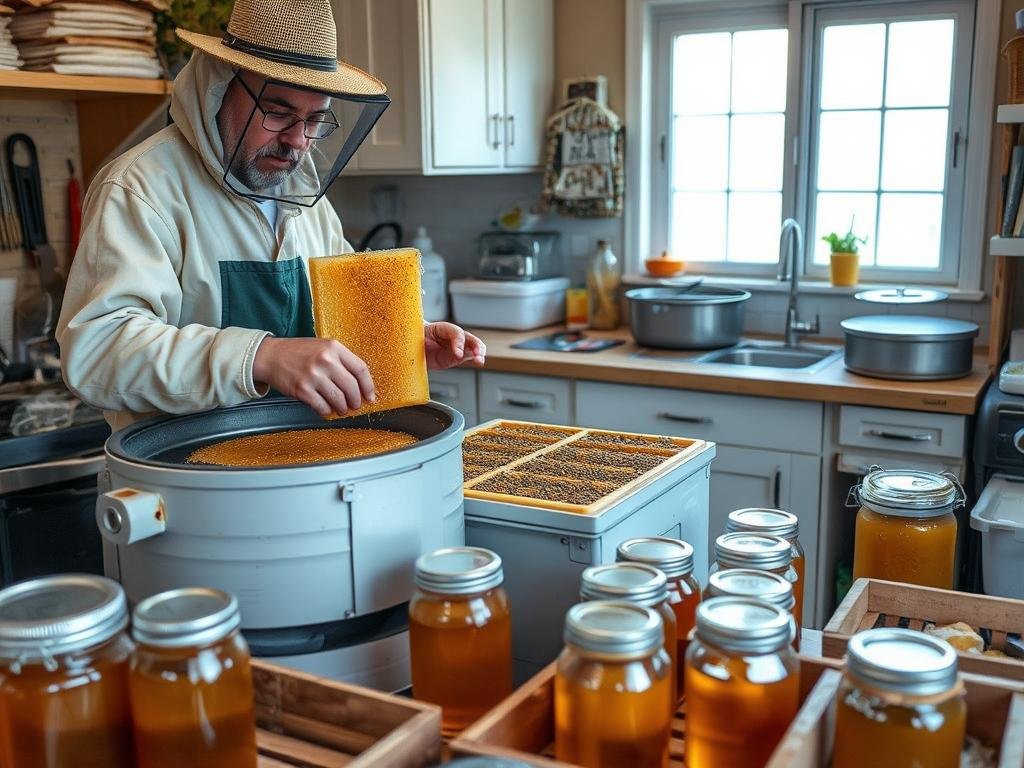
Harvesting honey is the sweet reward of backyard beekeeping
Starting Your Backyard Beekeeping Journey
Backyard beekeeping offers a fascinating window into the natural world while producing delicious honey and supporting essential pollinators. Though it requires learning and commitment, the rewards extend far beyond the honey harvest.
Remember that beekeeping is a continuous learning process. Even experienced beekeepers face new challenges and discover new techniques. Be patient with yourself and your bees as you begin this rewarding journey.
“The bee is more honored than other animals, not because she labors, but because she labors for others.”
Ready to start your beekeeping journey?
Join our community of backyard beekeepers to receive monthly tips, seasonal reminders, and connect with mentors in your area.
Further Reading
FAQ
What should someone check before starting backyard beekeeping?
Checking local regulations is an essential first step, since many cities and neighborhoods have specific ordinances limiting hive numbers or requiring permits.
What benefits does backyard beekeeping offer beyond honey production?
Backyard beekeeping contributes to local ecosystem health and offers fascinating hands-on insight into bee behavior beyond just the reward of fresh honey.
What preparation matters most before purchasing bees and equipment?
Building basic knowledge and confirming a commitment to ongoing care matters more than any specific piece of equipment before purchasing bees.


