Reviewed by Thomas B. · How we review
Add your first honey super when bees occupy about 7 to 8 of the 10 frames in the top brood box (70 to 80 percent) and the main nectar flow is starting or only a week or two away. Add the next super when the one below is about two-thirds to 80 percent full. The University of Minnesota Bee Lab uses the same 70 to 80 percent figure for the box below, and says to go earlier when the new box holds drawn comb and a flow is on.
The rules of thumb online look contradictory (6, 7 or 8 out of 10) because they answer two different questions: how full the box under the super is, and how full the super itself is. This guide separates them, ties each to the nectar flow, and walks through putting the box on.
Key Takeaways
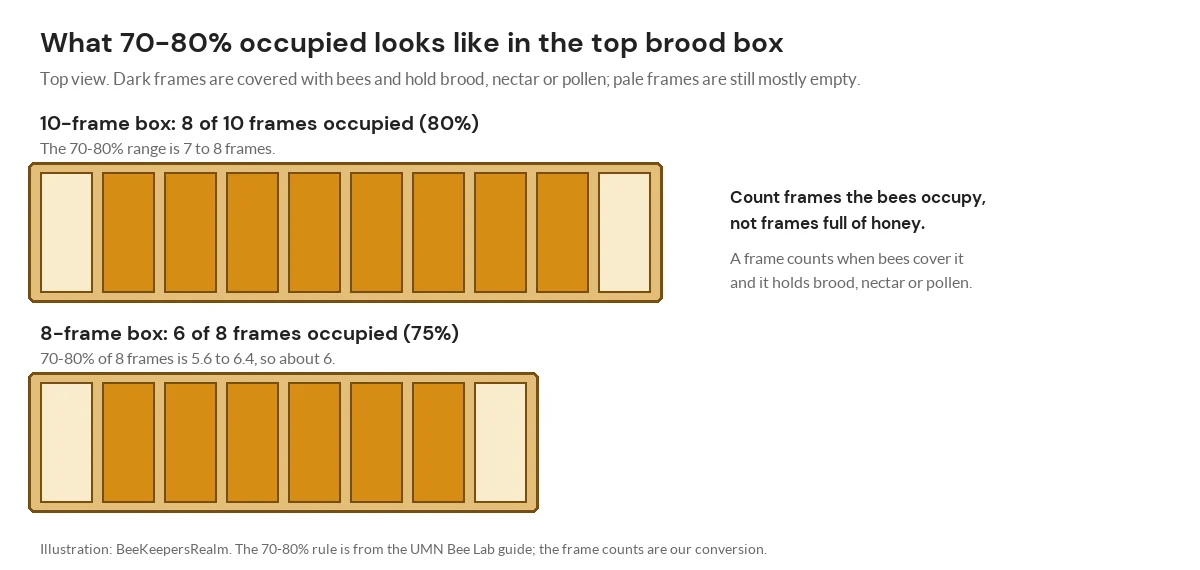
- First super: wait until bees occupy about 7 to 8 of 10 frames (70 to 80 percent) in the top brood box. “Occupied” means covered with bees, not full of honey.
- Next super: add it when about 6 of 10 combs in the current super are full and being capped, per Mississippi State University Extension, or at 75 to 80 percent per Bee Culture.
- Time it to the flow. The first super should be on shortly before the main flow, because a swarm takes about 60 percent of the workers with it.
- More space is not always better. In a 40-colony trial, colonies given supers as needed made up to 39 percent more honey than colonies given three supers at once.
- Use drawn comb if you have it, and hold the queen excluder until bees are working the new box.
Table of Contents
- How Full Should the Hive Be Before You Add a Super?
- Time It to the Nectar Flow, Not the Calendar
- What Adding a Super Too Early or Too Late Costs
- Drawn Comb or Foundation in the First Super
- How to Add a Honey Super, Step by Step
- Adding the Next Super
- When Not to Add a Super
- Frequently Asked Questions
- The Bottom Line
How Full Should the Hive Be Before You Add a Super?
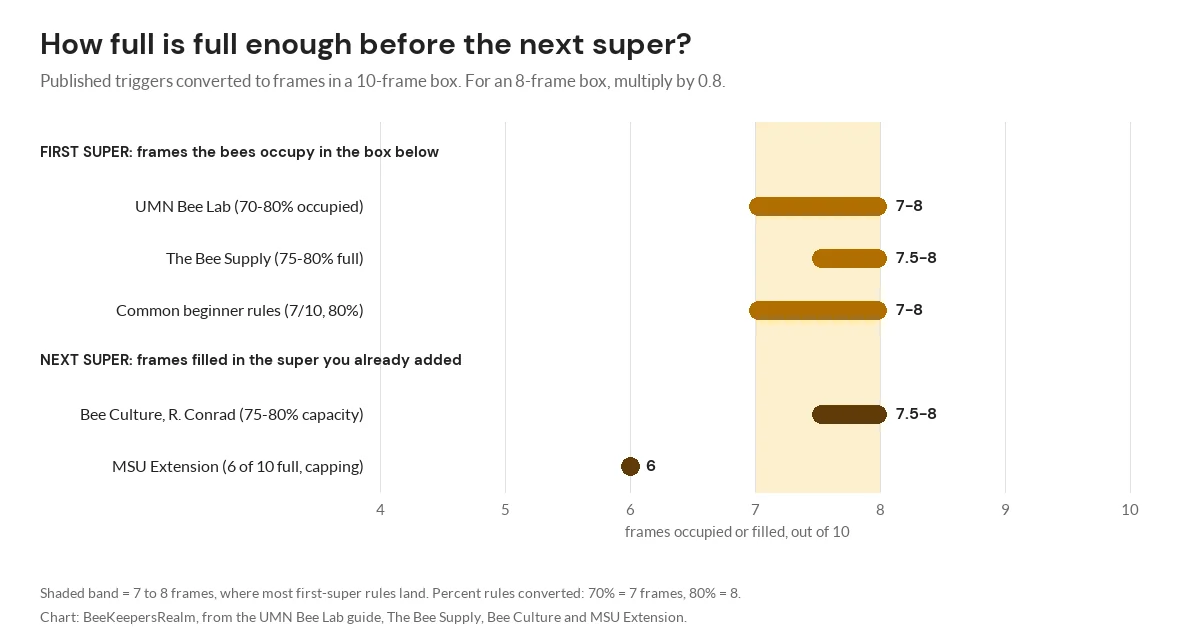
For the first super, count bees. The University of Minnesota Bee Lab guidebook says to add a queen excluder and two honey supers when the second deep box is 70 to 80 percent occupied by bees. It adds that you should provide space before 70 percent if the new box has drawn comb and a nectar flow is on. The Bee Supply’s Chari Elam calls a strong hive one that is 75 to 80 percent full of bees and resources, and notes that bees usually fill open space in the brood boxes before they move up.
For later supers, count honey. Mississippi State University Extension’s rule is that when two-thirds of the combs in the super below are nearly full and being capped, the next super should go on. Ross Conrad, writing in Bee Culture for cold-winter regions, uses 75 to 80 percent of capacity.
| Source | Rule | What it counts | 10-frame box | 8-frame box* |
|---|---|---|---|---|
| UMN Bee Lab | Second deep 70 to 80% occupied by bees | Bees on frames (first super) | 7 to 8 | About 6 |
| The Bee Supply | 75 to 80% full of bees and resources | Bees and stores (first super) | 7.5 to 8 | 6 to 6.4 |
| Common beginner rules | “7/10” and “80%” rules | Frames in use (first super) | 7 to 8 | 5.6 to 6.4 |
| Bee Culture (Conrad) | 75 to 80% of capacity | Honey in the current supers (next super) | 7.5 to 8 | 6 to 6.4 |
| MSU Extension | 6 of 10 combs full and capping | Honey in the current super (next super) | 6 | About 5 |
*Our arithmetic: 70 to 80 percent of 8 frames is 5.6 to 6.4, and 6 of 10 scales to 4.8.
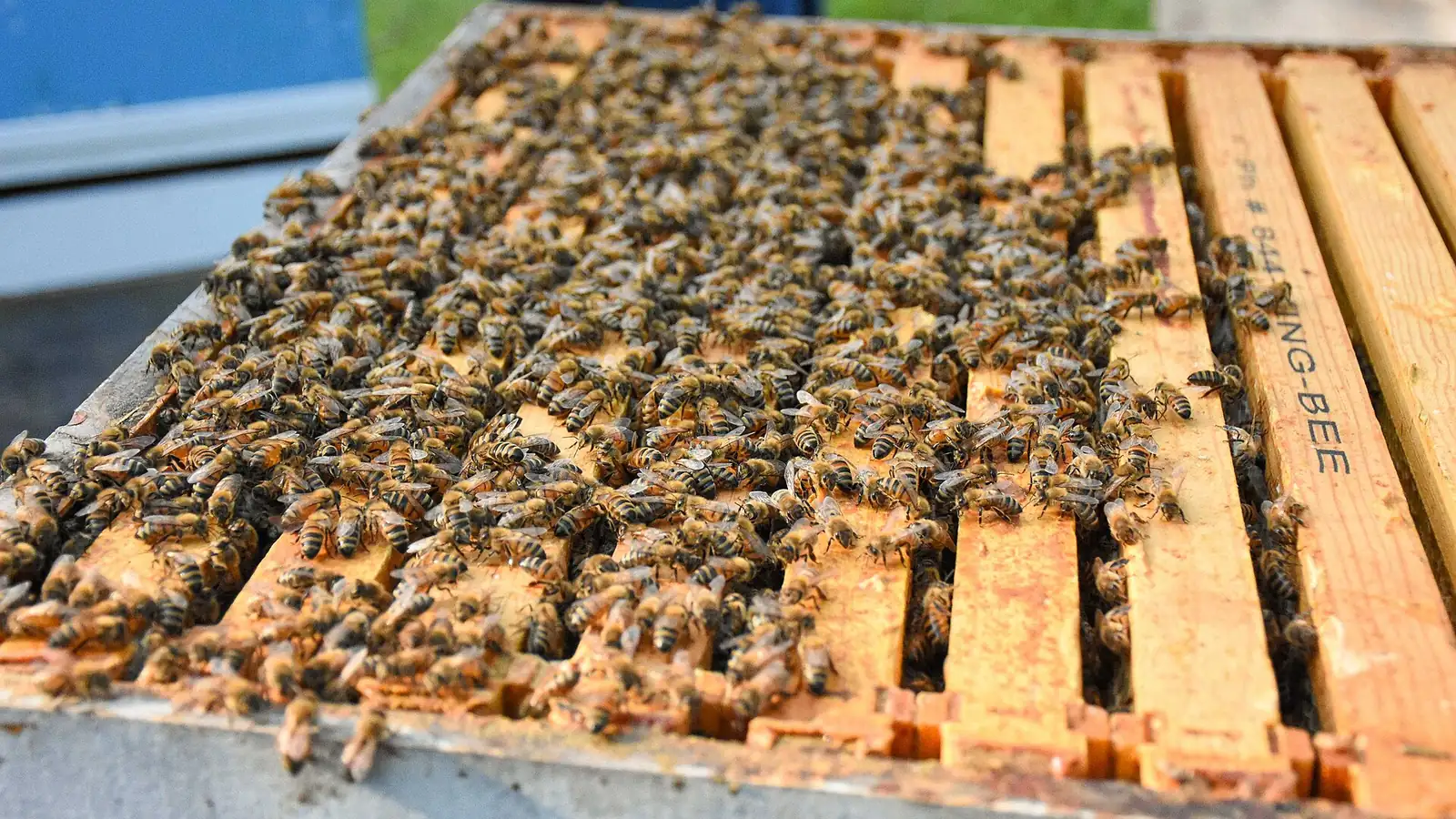
Check the outer frames, too. Conrad warns that if you super earlier, bees start working the new top box and ignore the frames along the walls below, leaving a “chimney” of full center combs and empty outer ones. For more on crowding, see our signs of an overcrowded hive.
In this video, David Burns of Burns Bees covers the timing question in the first of six chapters, then moves on to queen excluders, preparing new supers, nine-frame spacing, and top supering. His description says adding a super too late can cost you a bountiful harvest, while adding it too early can invite small hive beetles into space the bees have not yet claimed.
Time It to the Nectar Flow, Not the Calendar
The frame count says the colony is ready for space. The flow says the space will be used. The UMN guide tells beekeepers to add honey supers before the main flow, to prevent swarming and to give surplus nectar somewhere to go. It lists new white wax, burr comb filled with nectar, cells filled with stored nectar, and heavy foraging at the entrance on a nice day as signs that a flow is on. Our guide to honey flow indicators covers more cues.
Flow dates differ by region, which is why one national calendar fails:
| Region | Typical main flow | Source |
|---|---|---|
| Many areas of the US | Wraps up by mid to late June, a little later farther north | The Bee Supply |
| Mississippi | Some areas finish the spring flow by mid-May to mid-June; Chinese tallow areas run into July | MSU Extension |
| Northern Plains (eastern North Dakota, western Minnesota) | Late June into August, on sweet clover, alfalfa and canola | Our flow-planning guide |
On the northern Plains that means the first supers belong on in June; our guide to timing colonies to the flow gives a backward calendar.
Swarming is the other clock. The UMN guide places swarm season in late spring and early summer and says to add boxes before the colony needs the space. If the brood nest is filling with nectar, add supers so nectar has somewhere to go outside the brood nest. Once queen cells are capped or nearly capped, it is likely too late to prevent a swarm; our swarm prevention playbook covers that case.
What Adding a Super Too Early or Too Late Costs
“Ideally supers are added before the colony starts running out of room especially around the start of a nectar flow.”
Too early
- Comb nobody can guard. MSU warns that extra combs can overwhelm a colony whose population is shrinking, leaving it exposed to small hive beetles and greater wax moths. Conrad adds that early drawn comb adds cleaning and patrolling work, especially in a weak hive.
- Cold nights. In its advice on adding a box, the UMN guide says to wait if the forecast has nights below 45°F, because space above the cluster can slow colony growth.
- Less honey. A trial in Scientia Agricola followed 40 Africanized colonies in single-deep Langstroth hives in Brazil, 10 per group. One group got a single super and more as needed, while the others got two, three or four at the start. The as-needed group made 39.4 percent more honey than the three-super group, and foragers in the four-super group showed higher activity of two immune genes the authors use as stress markers. Kadri and colleagues used all-new foundation, so treat it as a caution, not a US rule.
Too late
“Beekeepers who fail to keep up with the storage needs of a colony lose harvestable honey, especially if the failure to provide space causes a swarming event.”
MSU puts numbers on that loss: about 60 percent of the workers leave with a swarm, and brood production stops for nearly 3 weeks while a new queen emerges, mates and starts laying. Late supering also lets a colony become honey bound, with nectar plugging the cells the queen needs.
Drawn Comb or Foundation in the First Super
Drawn comb is faster. MSU estimates that bees probably burn about 25 pounds of honey to draw 10 medium combs from foundation. Conrad supers with foundation only at the start of a major flow and only when most existing combs are full; with drawn comb he supers when space runs short and no big flow is expected. The UMN guide also says to prioritize drawn comb when you are relieving a crowded brood nest, because bees may not draw foundation fast enough to prevent swarming.
- Mix, do not scatter. UMN suggests adding a couple of drawn frames to a super of foundation and keeping the foundation frames pushed tightly together.
- Feeding is contested. The Bee Supply suggests feeding syrup until bees draw a few frames. UMN says not to feed during a nectar flow. Drawn comb avoids the argument.
- Frames per box. UMN lists supers with 9 or 10 frames. See our guides to foundationless supers and frame spacing.
How to Add a Honey Super, Step by Step
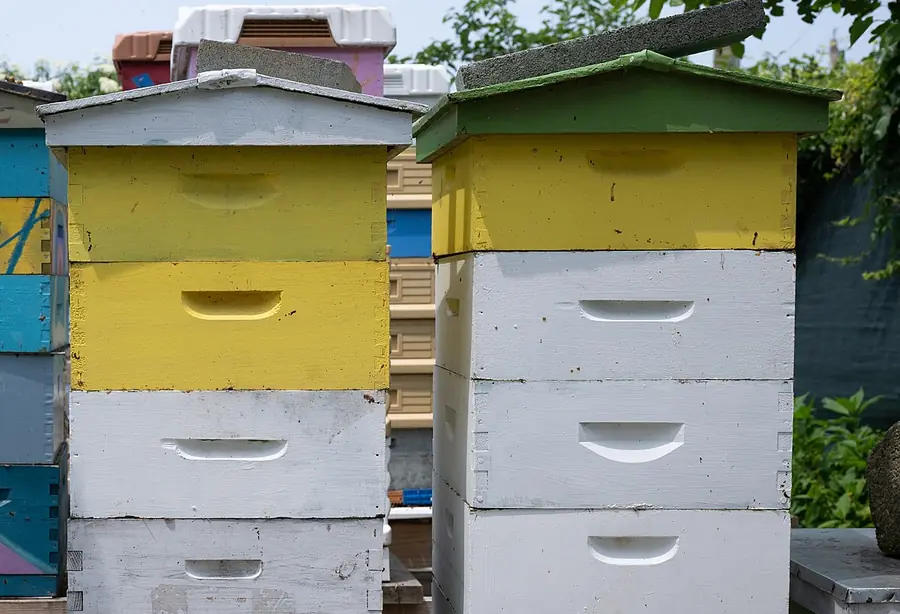
- Stage the box. Have it assembled with frames before you need it. A full medium super weighs 35 to 60 pounds and a full deep 60 to 90, per The Bee Supply, so most backyard beekeepers use mediums or shallows. Our frame grip guide helps with lifting.
- Check your mite plan. UMN says to read treatment labels for temperature and honey-super limits before supers go on. See our varroa timing calendar.
- Inspect the box below. Count occupied frames and look for swarm signs: nectar in the brood nest, no room for the queen to lay, or queen cells along the frame edges.
- Set the super on the top brood box. Use the full frame count until comb is drawn. Then replace the inner cover and top.
- Hold the excluder. UMN says to skip it until bees have drawn comb in a super of foundation. Our queen excluder timing guide covers the order.
- Recheck in 7 to 14 days. UMN says every 10 to 14 days with supers on; Conrad suggests 7 to 10 during a strong flow.
Top or bottom supering?
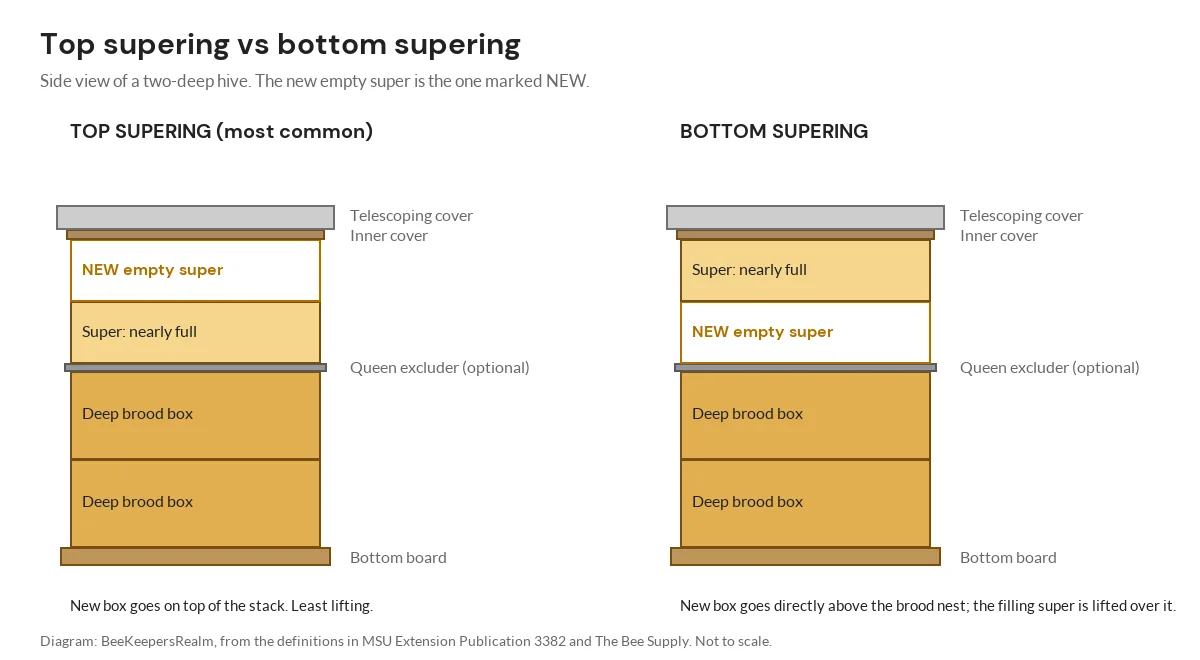
Top supering puts each new box above the last one. Bottom supering slips the new box directly above the brood nest and lifts the filling super over it. MSU says there is little published scientific evidence that either yields more honey, and that top supering involves significantly less lifting. Elam adds that a new box of foundation tucked under a nearly full super may get drawn faster.
Adding the Next Super
Add the next box when the one below is about two-thirds to 80 percent full and the flow is still on. How many boxes depends on where you are in the flow. MSU’s worked example, for a hive whose first super is filling, runs like this:
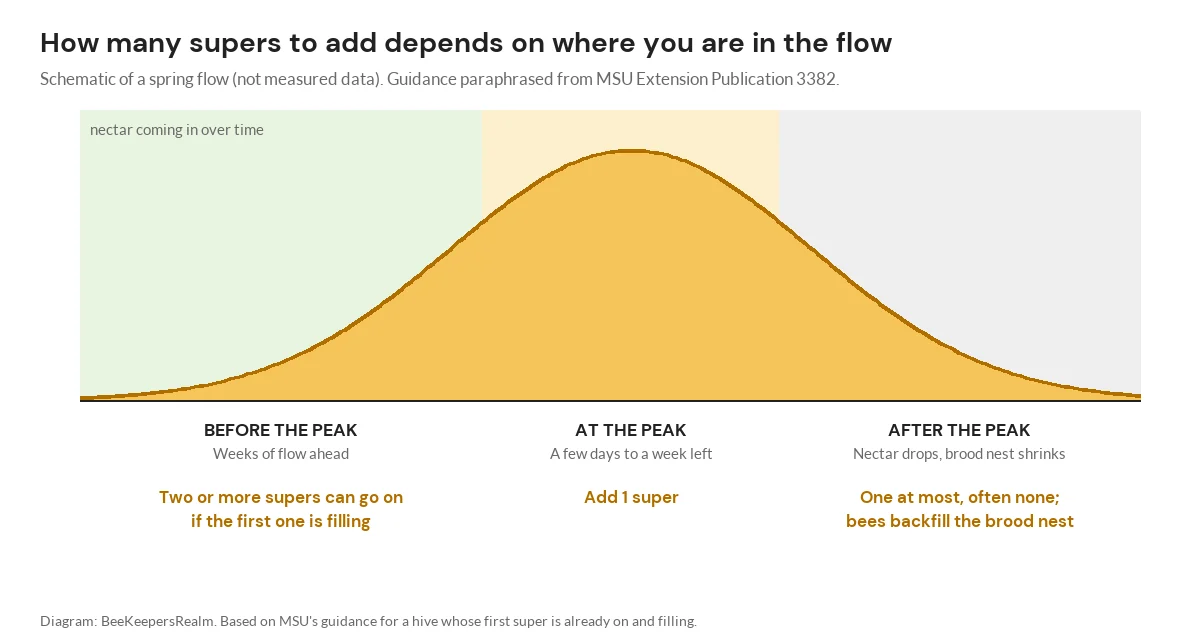
- Weeks before the peak: two or more supers can go on.
- At the peak: add one, because only days may remain.
- After the peak: often none. The brood nest shrinks and bees backfill it with the tail of the flow.
That can look at odds with the Brazilian trial, but in our reading MSU assumes a strong colony with weeks of flow ahead, while the trial gave three or four boxes of bare foundation to single-deep colonies at once. Elam says to stop adding supers within a couple of weeks of the end of the flow. When the flow ends, see how to clear supers with an escape cone or board and how to check ripeness before you pull them.
When Not to Add a Super
- Capped queen cells. UMN says that is likely too late to prevent swarming.
- A weak colony. If a super sits unfilled for a couple of weeks, Elam says to take it off, because extra space can do more harm than good.
- A first season in new equipment. UMN notes that bees use nectar to build comb, so a first-year harvest is often nil. For a nuc, see when to add a second box.
Frequently Asked Questions
What happens if you add a honey super too early?
The colony has more space to patrol. MSU warns of small hive beetles and wax moths in weak or shrinking colonies, and Conrad notes bees may ignore the outer frames below.
How fast will bees fill a honey super?
There is no fixed number. Conrad says a well-populated colony can fill a super astonishingly fast in a strong flow, and Elam says most hives make two to three supers a season.
When is it too late to add a honey super?
Within about two weeks of the end of the flow, per Elam. MSU says supering after the peak bloom is often unnecessary.
Do I need a queen excluder when I add the super?
No. It is optional, and bees may balk at it over bare foundation. Add it after they start storing in the box.
Can I add a honey super to a first-year colony?
You can, but a harvest is unlikely, because bees spend nectar building comb in new equipment (UMN).
Can you treat for varroa with honey supers on?
That depends on the product label, and many restrict supers. UMN says to check labels for temperature and honey-super limits before supers go on.
When should I take off honey supers?
Near the end of the flow, per UMN, or earlier if the flow ends sooner or the top brood box is light on honey.
The Bottom Line
Super before the colony runs out of room and before the main flow, but not so far ahead that the bees must guard empty comb. Count occupied frames for the first super, count honey for the next, and add one box at a time unless the flow is clearly just beginning.
Featured image credit: Photo: Carly Whitmore, USDA NRCS, public domain, via Wikimedia Commons, cropped.