Reviewed by Thomas B. · Last Updated October 7, 2026 · How we review
To start beekeeping in Texas, check your city and HOA rules, learn through a local club or a Texas A&M course, order a nuc in fall or winter for spring pickup, and set the hive where it gets morning sun and nearby water. The state does not require you to register. If you hope to lower your property taxes with bees, know before you buy that the land needs 5 to 20 acres and five years of agricultural use.
Educational information only, not legal or tax advice. Rules change; confirm with the Texas Apiary Inspection Service’s regulations page, your city or county, and your county appraisal district.
Key Takeaways
- Texas does not require beekeepers to register. The optional Beekeeper Registration, which replaced the old apiary registration on September 1, 2023, costs $35 a year, so older “free registration” advice is out of date.
- Registration is required if you remove bees from buildings for pay, and a beekeeper who suspects American foulbrood, Tropilaelaps mites or the yellow-legged hornet must report it.
- Hive limits and setbacks come from your city, county or HOA, not the state.
- Bees can qualify 5 to 20 acres for an agricultural valuation, but only on land with five of the past seven years in agricultural use. Two appraisal districts we checked require 6 hives on 5 acres and 12 on 20.
- Texas nectar comes in a short spring rush, then a summer dearth. Plan for water, feeding and mite checks before the fall bloom.
Table of Contents
- Seven Steps to Your First Texas Hive
- What Texas Law Requires of a New Beekeeper
- Can Bees Lower Your Property Taxes?
- What Your Bees Will Forage On, Region by Region
- Your First Year, Season by Season
- Africanized Bees in Texas
- Where to Learn and Find Bees
- Frequently Asked Questions
- The Bottom Line
Seven Steps to Your First Texas Hive
These steps follow the order Texas agencies and clubs give beginners. For the general method behind each one, see our complete beginner’s guide to starting beekeeping.
- Check where you can keep bees. Read your city or county ordinance and any HOA rules first. The Texas State Law Library’s neighbor-law guide notes that beekeeping is regulated at both the state and local level.
- Learn before you buy. The Texas Apiary Inspection Service (TAIS) says the best start is to apprentice with an established beekeeper through a local bee club.
- Decide how many colonies. Austin beekeeper Tanya Phillips of Bee Friendly Austin recommends starting with two to three colonies, so you can compare them and share frames.
- Order bees in fall or winter. Spring nucs and packages sell out early. See package bees vs. nucs for beginners.
- Buy and assemble gear before the bees arrive. Our beekeeping equipment and cost guide lists what one hive needs on day one.
- Prepare the site. Phillips suggests full sun, with partial shade late in the afternoon if needed, entrances facing south, east or southeast, and fresh water nearby but at least 10 feet from the entrances. In East Texas, the Pineywoods Beekeepers Association advises sun, because small hive beetles like shade.
- Plan for summer and mites. Expect to supply water and sometimes feed through the summer dearth, and test for varroa before fall.
In this 45-minute talk posted by the Texas Beekeepers Association in January 2023, Tara Chapman of Two Hives Honey in Austin introduces beekeeping to beginners. YouTube’s chapter markers show it covering what to do before buying your first bees, common misunderstandings and mistakes, using a smoker, pests and hive space, record keeping, site setup and feeding, and the colony’s development cycle, followed by questions.
What Texas Law Requires of a New Beekeeper
TAIS, part of Texas A&M AgriLife Research, enforces Chapter 131 of the Texas Agriculture Code through rules in Chapter 71 of the Texas Administrative Code. Its regulations page states it plainly: “The state of Texas does not require a beekeeper to register.” The rest of the rules apply only to specific activities.
| Situation | What applies |
|---|---|
| Keeping hives at home | No state registration. Optional Beekeeper Registration: $35, valid Sept. 1 to Aug. 31 |
| Hives away from your home | Name or brand in 1-inch letters on each end of the hive body, or a weatherproof contact sign in the apiary |
| Any hive | Must have movable frames |
| Suspected AFB, Tropilaelaps or yellow-legged hornet | Must notify TAIS |
| Removing bees from structures for pay | Current Beekeeper Registration required |
| Selling nucs, packages, queens or colonies | TAIS health certificate, or a notarized health affidavit with every sale |
| Bringing bees into Texas | Health certificate plus a $200 interstate permit |
| Wanting an inspection | $100 when the beekeeper requests it |
Source: TAIS Regulations and Forms & Fees pages, read October 7, 2026. TAIS also notes that, as of September 1, 2023, the old apiary registration was replaced by Beekeeper Registration and the intrastate permit was dropped. Many guides still describe free registration. For the full rules, see our Texas beekeeping laws and regulations guide.
Can Bees Lower Your Property Taxes?
Sometimes, but rarely in your first year. Since January 1, 2012, Texas Tax Code Section 23.51(2) has counted beekeeping as an agricultural use for the 1-d-1 open-space valuation:
“The term also includes the use of land to raise or keep bees for pollination or for the production of human food or other tangible products having a commercial value, provided that the land used is not less than 5 or more than 20 acres.”
Section 23.51(1) adds a history test that many “ag exemption” guides skip: the land must have been devoted principally to agricultural use for five of the preceding seven years. Bare residential land does not qualify the spring you set up hives. In practice, bees take over land that already has an agricultural history, such as former grazing land, and Fort Bend CAD treats a change in the nature of the use as needing a new application.
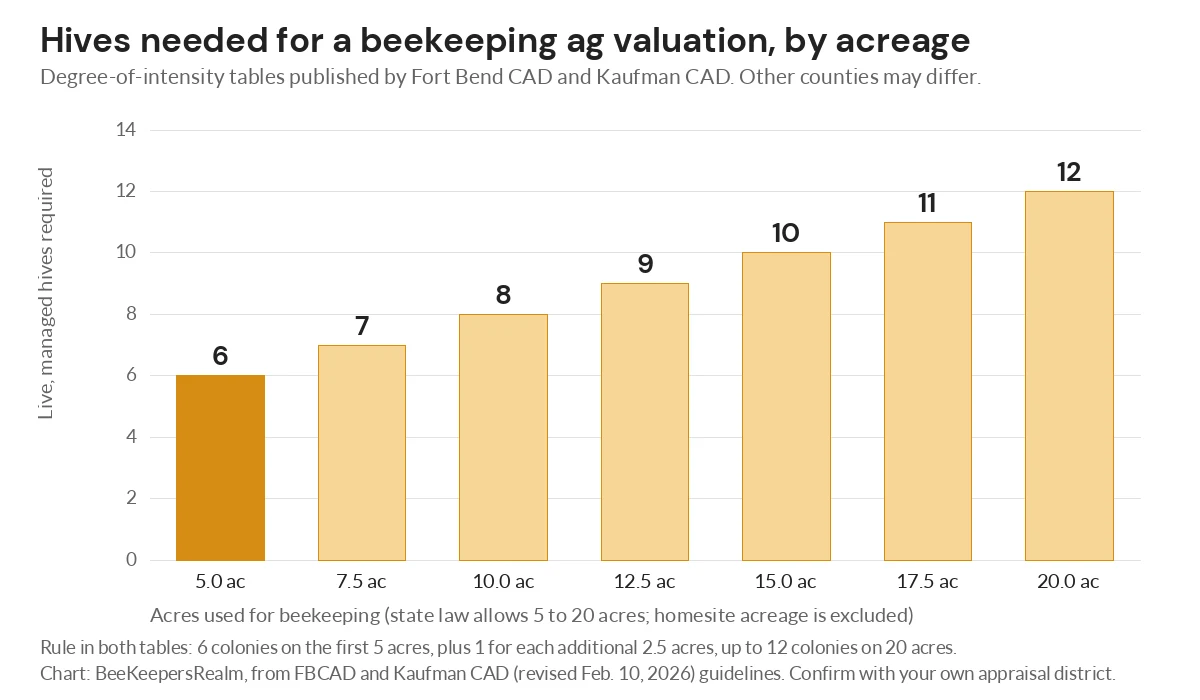
Each county appraisal district sets how many hives count as the “degree of intensity generally accepted in the area.” The Fort Bend Central Appraisal District’s guidelines and Kaufman CAD’s February 2026 guidelines use the same scale:
| Acres in beekeeping | Hives required |
|---|---|
| 5 to 7.4 | 6 |
| 7.5 to 9.9 | 7 |
| 10 to 12.4 | 8 |
| 12.5 to 14.9 | 9 |
| 15 to 17.4 | 10 |
| 17.5 to 19.9 | 11 |
| 20 | 12 |
The details vary. Kaufman CAD wants hives on the property at least seven months a year and excludes homestead acreage. Fort Bend deducts at least one acre for a homesite and wants applications before May 1. If the land later stops qualifying, Section 23.55 charges a rollback tax covering the three preceding years. Ag valuation is a big reason Texans start: in 2020, AgriLife entomologist Molly Keck said about 75% of her Beekeeping 101 students took it for the exemption. Compare other states in our state-by-state guide to agricultural property tax exemptions for beekeeping.
What Your Bees Will Forage On, Region by Region
TAIS estimates that about 5,000 nectar-bearing wild plants are native to Texas. Which ones matter depends on where you live, and so does the length of your honey flow.
| Region | Notable nectar sources | Flow pattern |
|---|---|---|
| East and Northeast Texas | White Dutch clover | Longest season: can run from February or March to year’s end |
| Southeast and Gulf Coast | Chinese tallow; privet | Tallow gives a “huge flow,” per TAIS |
| Central Texas and Hill Country | Spring wildflowers such as bluebonnets | Sizable spring flow, small fall flow |
| South Texas brush country | Huajillo, white brush, soapbush, mesquite; citrus in the Rio Grande Valley | Known for brush honeys; Uvalde huajillo honey won first place at the 1900 Paris World’s Fair |
| High Plains and Panhandle | Cotton and other crops | Freezes limit production |
| West Texas | Fewer nectar sources | Least honey; dry |
Sources: TAIS Honey page (plants, tallow, huajillo) and AgriLife Today, October 2020 (East, Central, Panhandle and West Texas flows). TAIS also credits privet for early spring buildup in the Southeast, names broomweed, goldenrod and asters as the fall forage colonies need for winter, and warns that early-blooming yellow jasmine in the woods causes bee die-offs.
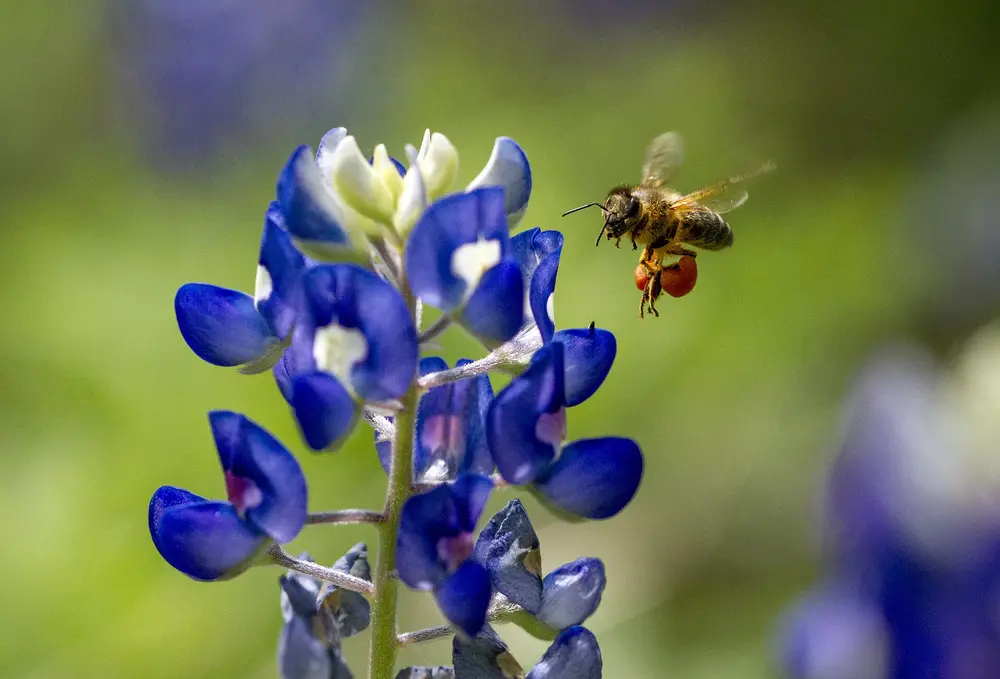
“Nectar harvest in Texas is short but abundant and spikes in mid-to-late spring. By early summer there’s not much, but then there’s a fall bloom that produces some honey as well.”
Do not expect much honey in your first year. USDA’s March 2026 honey report put the 2025 Texas average at 30 pounds per colony, down from 46 in 2024, and an AgriLife Extension survey of nearly 650 Texas beekeepers found small-scale keepers reporting 20 to 40 pounds.
Your First Year, Season by Season
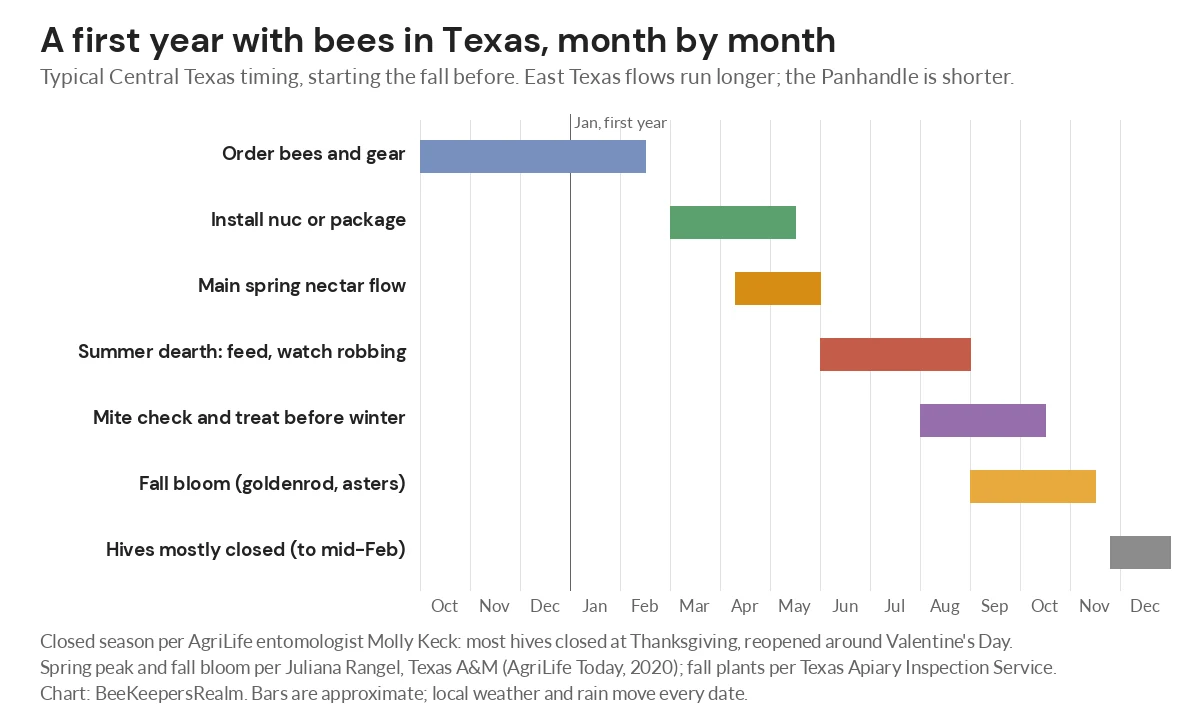
Fall and winter before: order and build
Reserve a nuc or package and assemble your boxes. Phillips notes that Central Texas bees typically arrive in April to June, and the earliest pickup dates go first.
Spring: install and let them build
Install as soon as your bees arrive, feed a new colony until it is drawing comb, and add space as it grows. The main flow is mid-to-late spring.
Summer: water, heat and dearth
By early summer, little is blooming. Keep water close, watch for robbing, and feed if stores run low. See our guides to protecting hives from extreme heat and managing a nectar dearth.
Late summer and fall: mites, then the fall bloom
AgriLife Extension reported in March 2026 that varroa mites and the viruses they spread remain the biggest threats to Texas colonies. Test in late summer with an alcohol wash or sugar roll and treat before winter. The fall bloom then helps colonies store food.
Winter: mostly closed
Keck says most Texas hives are closed up at Thanksgiving and not opened again until around Valentine’s Day, even where flowers bloom into December.
Africanized Bees in Texas
According to TAIS, Africanized honey bees first entered the United States in south Texas in the fall of 1990. By August 2006, TAIS reported them in 163 of Texas’s 254 counties. TAIS says they look the same as European honey bees, only microscopically smaller, and carry the same venom; the difference is behavior. They swarm and abscond more often, nest in odd spots like water meters, and defend more readily. TAIS lists mower and weed-eater vibration and people walking near the nest as triggers.
“The most important thing people need to realize is the fact that the AHB is just a slightly different honey bee.”
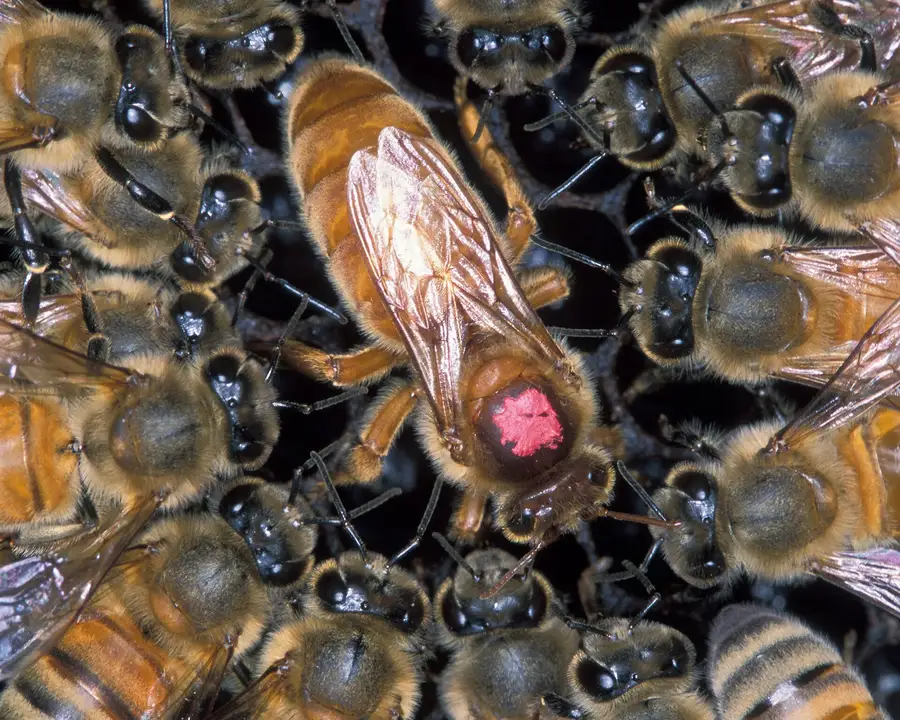
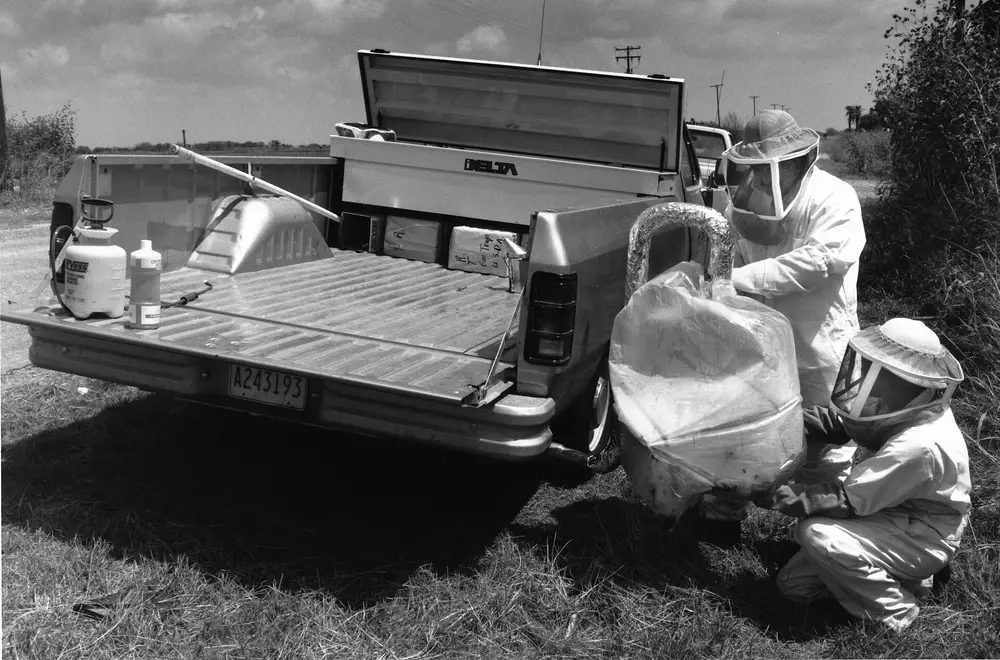
For a beginner, that means buying from an established queen breeder, requeening a colony that stays unusually defensive, keeping hives away from where people mow and walk, and leaving wild swarms and colonies in structures to experienced beekeepers at first. Read more in how to identify Africanized bees and stay safe.
Where to Learn and Find Bees
- Local clubs. The Texas Beekeepers Association keeps a locator of local associations on its website. Clubs such as the Pineywoods Beekeepers Association in East Texas run a yearly bee school, and some members sell locally raised bees. Our guide to finding a beekeeping mentor covers what to ask.
- Beekeeping 101. Texas A&M AgriLife Extension offers a self-paced, 4-hour online beginner course.
- Texas Master Beekeeper Program. Run by the Texas A&M Honey Bee Extension Team, it starts with a 10-week Apprentice course and continues through Advanced, Master and Master Craftsman levels.
- TAIS. Offers beekeeper-requested inspections ($100), handles reportable diseases, and lists registered bee-removal beekeepers.
Frequently Asked Questions
Do you need a license to keep bees in Texas?
No. Registration with TAIS is optional ($35 a year), but you need it to do paid bee removal, and your city or HOA may set its own rules.
How many acres do you need to keep bees in Texas?
None under state law; many people keep hives in backyards where local rules allow. Acreage matters only for the ag valuation, which needs 5 to 20 acres.
Do you pay property taxes if you have bees?
Yes. Bees can lower the appraisal on qualifying land, usually 6 or more hives on at least 5 acres with five years of agricultural history, under your appraisal district’s rules.
When is the best time to start beekeeping in Texas?
Order in fall or winter and install in spring, ahead of the mid-to-late spring nectar flow.
How many hives should a beginner start with?
Two is the usual advice from Texas clubs and suppliers, so you can compare colonies and move frames between them.
How much does it cost to start beekeeping in Texas?
Equipment for one hive cost $365 to $530 on day one in our October 2026 price check, before buying bees. In the appraisal districts we checked, an ag-valuation apiary needs at least six hives.
The Bottom Line
Settle your local rules and your reason for keeping bees before you buy anything, especially if property taxes are part of it. Then join a club and order bees early.