Last Updated September 15, 2026
Nearly every U.S. state includes beekeeping as a qualifying agricultural activity for property tax purposes — but “qualifying” doesn’t mean “automatic,” and the actual requirements vary dramatically from state to state. This is a genuinely different question from whether beekeeping income is tax deductible on your federal return; a property tax agricultural exemption (sometimes called an “ag exemption,” “ag classification,” or “use-value assessment”) reduces how your land itself is valued for local property tax purposes, often by 90% or more, based on its agricultural use rather than its market value. Some states set a hard minimum acreage and colony count, like Texas. Others, like Florida, have no state-mandated minimum acreage at all. A few, like California, offer more than one distinct program depending on where the land sits. Nearly every state includes beekeeping somewhere in its statutory definition of agriculture, but the practical path to actually qualifying looks meaningfully different depending on which structural model a given state has built around that definition.
This guide covers how agricultural property tax exemptions for beekeeping actually work, the different structural approaches states take (acreage minimums, colony-count formulas, income thresholds, and contract-based programs), what documentation actually supports an application, and where to go for your specific state’s exact requirements.
This article covers general educational information about how these programs are structured, not personalized tax or legal advice. Property tax law changes and county-level administration varies; confirm current requirements and deadlines with your county appraisal district, assessor, or a qualified tax professional before relying on any specific number here for your own filing.
Key Takeaways
- An agricultural property tax exemption reduces how land is valued for local property taxes, separate from whether beekeeping income is deductible on a federal return.
- States take genuinely different structural approaches: acreage-and-colony formulas (Texas, Tax Code Section 23.51, added by HB 2049 in 2012), no state minimum acreage (Florida, Statute 193.461), gross-income thresholds (Nevada, NRS 361A.030), and voluntary long-term contract programs (California’s Williamson Act and AB 551).
- Most states also require a minimum number of years of demonstrated agricultural use before land qualifies, commonly two to five years.
- Filing deadlines vary by state and sometimes by county, and are easy to miss since they don’t always align with typical tax-season deadlines.
- Dated photos, purchase receipts, hive inspection logs, and any state apiary registration are the documentation that actually supports an application if it’s ever questioned.
Table of Contents
- Property Tax Exemption vs. Income Tax Deduction
- State-by-State Comparison at a Glance
- Acreage-and-Colony Formulas: The Texas Model
- States With No Fixed Acreage Minimum: Florida
- Income-Threshold States: Nevada
- Voluntary Contract Programs: California’s Two Paths
- How Many Years of Use Are Usually Required
- Documentation That Actually Supports an Application
- Filing Deadlines Vary by State and County
- Frequently Asked Questions
Property Tax Exemption vs. Income Tax Deduction
It’s worth separating two genuinely different tax questions that beekeepers sometimes conflate. Our guide to whether beekeeping is tax deductible covers the federal income tax question — whether your beekeeping expenses can offset income on your federal return, which depends on the IRS’s hobby-versus-business test. A property tax agricultural exemption is a completely separate, state-and-county-level program that changes how your land itself is assessed for local property tax purposes, based on demonstrating a bona fide agricultural use rather than letting the land be valued at its full market rate. A beekeeper could qualify for one without the other, or both, depending on their specific situation. Confusing the two is a common and understandable mistake, since both ultimately involve the word “agricultural” and both can meaningfully reduce a beekeeper’s overall tax burden, but the paperwork, the governing law, and the office you’d actually deal with are entirely different in each case.
State-by-State Comparison at a Glance
The four states covered in detail below illustrate four genuinely different structural models other states tend to follow variations of. This is a starting reference, not a substitute for confirming your own state and county’s current rules.
| State | Structural model | Core requirement | Governing law |
|---|---|---|---|
| Texas | Acreage + colony-count formula | 5-20 acres; county-set minimum colonies (commonly ~6 for the first 5 acres) | Tax Code § 23.51(2), added by HB 2049 (2012) |
| Florida | No fixed acreage minimum | Demonstrated bona fide commercial agricultural use | Florida Statute § 193.461 |
| Nevada | Income threshold | Minimum $5,000 gross agricultural income in the prior year | NRS § 361A.030 |
| California | Voluntary multi-year contract | 5-year urban ag contract (0.1-3 acres) or 10-year Williamson Act contract | AB 551 (Urban Agriculture Incentive Zones Act); Williamson Act |
Acreage-and-Colony Formulas: The Texas Model
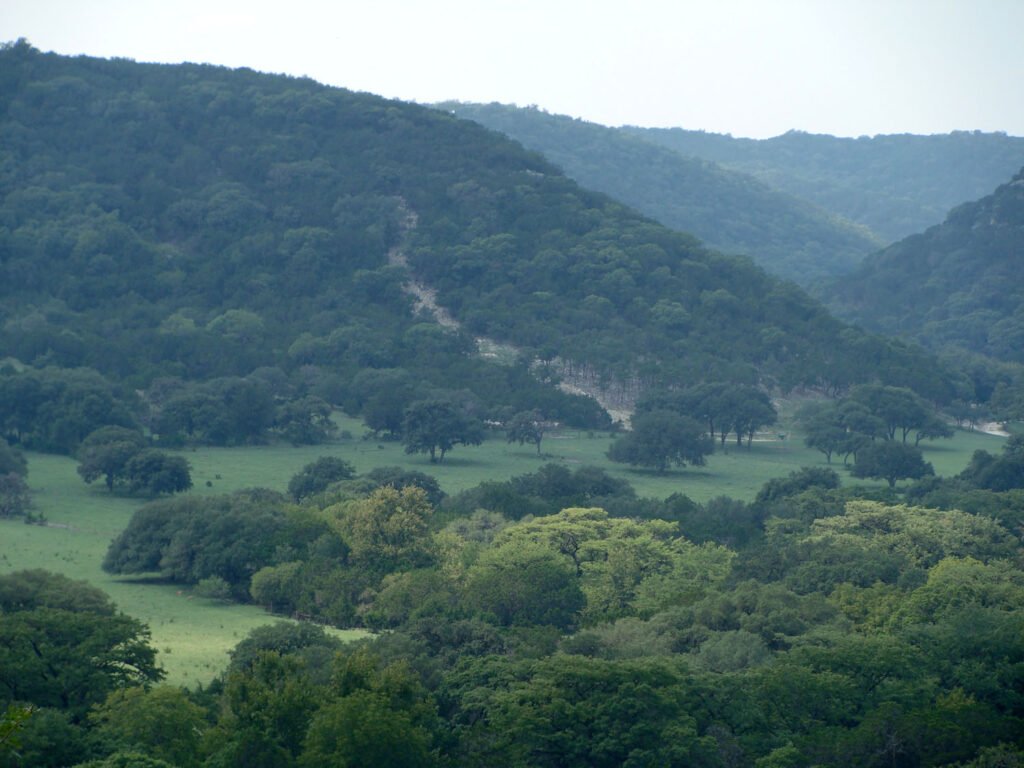
Texas represents the most detailed, formula-driven approach among the states that include beekeeping. Texas Tax Code Section 23.51(2) — amended by House Bill 2049, effective January 1, 2012, to add bees to the statutory definition of agricultural use — sets a minimum of 5 acres and a maximum of 20 acres of land eligible for a bee-based agricultural valuation. Within that range, county appraisal districts set their own specific intensity standards; a commonly cited baseline is around six managed colonies for the first five acres, with additional colonies required roughly every 1.5 to 2.5 acres beyond that depending on the county, up to the 20-acre cap. Empty equipment doesn’t count — the colonies need to be live and actively managed. Hill Country counties like Gillespie, Blanco, and Kerr have generally allowed exemptions on the smaller end of that acreage range, while some Austin-area counties have leaned toward requiring acreage and hive counts closer to the top of the range, so the exact threshold can vary even within the same state depending on the county appraisal district. This county-level variation within a single state is worth internalizing early, since general online guidance about “the Texas rule” can understate just how much discretion individual appraisal districts actually exercise within the statutory range — confirming the exact local intensity standard with your own county appraisal district is essential before planning around a specific number.
States With No Fixed Acreage Minimum: Florida
Florida takes a structurally different approach. Rather than setting a specific minimum acreage for bee-based agricultural classification, Florida Statute § 193.461 defines “bona fide agricultural purposes” through a list of evaluative factors rather than a hard acreage floor, and explicitly names bee operations among the qualifying activities alongside livestock, poultry, and horticulture.
“In determining whether the use of the land for agricultural purposes is bona fide, the following factors may be taken into consideration…”
Those factors include things like whether the land has received the sustained care a commercial agricultural operation would apply. This doesn’t mean any Florida property with a single hobby hive automatically qualifies — county property appraisers, like those in Sarasota County, still evaluate whether the use is genuinely commercial and good-faith — but it does mean a smaller Florida property has a structurally different path to potential qualification than a similarly sized property in a state with a hard acreage minimum. In practice, this shifts the burden of proof toward demonstrating genuine commercial intent and activity rather than simply meeting a numeric threshold, which can work in favor of a smaller but genuinely serious beekeeping operation.
Income-Threshold States: Nevada
Nevada illustrates yet another model, one built around demonstrated income rather than acreage or colony count. Nevada Revised Statute § 361A.030 defines “agricultural use” as land employed as a business venture for profit that produced a minimum gross income of $5,000 from agricultural pursuits during the immediately preceding calendar year, with bees specifically named among the qualifying activities. This income-based structure means a Nevada beekeeper’s path to qualifying runs through demonstrating real commercial revenue, not simply owning a set number of acres or colonies, which is a genuinely different set of records to maintain than what a Texas or Florida beekeeper would need. The Nevada Department of Taxation publishes the current land-use code manual and application guidance each year — a Nevada beekeeper pursuing this route should treat sales invoices and revenue tracking with the same seriousness a small business owner would, since the $5,000 threshold is a hard number an appraiser can simply check against submitted records.
Voluntary Contract Programs: California’s Two Paths
California offers two distinct routes, neither of which works quite like a standard exemption application. The Urban Agriculture Incentive Zones Act (Assembly Bill 551) allows city governments to designate zones where landowners who commit their land to agricultural use for at least five years receive a property tax assessment based on agricultural value rather than market value; eligible parcels generally need to fall between 0.1 and 3 acres and be free of any dwellings. The Williamson Act, adopted by the large majority of California counties, works differently still: landowners voluntarily enter minimum 10-year rolling contracts restricting their land to agricultural and compatible open-space uses within a designated agricultural preserve, in exchange for assessment based on actual use rather than potential market value. Both programs require proactively entering a multi-year contractual commitment rather than simply filing an annual exemption application, which is a meaningfully different process than the acreage-and-colony model used elsewhere. A landowner considering either California program should weigh the multi-year commitment seriously before entering it, since exiting a Williamson Act contract early generally isn’t as simple as just filing paperwork to opt back out the following year.
How Many Years of Use Are Usually Required
Beyond the specific acreage, colony, or income test, most states also require some minimum period of demonstrated agricultural use before land qualifies, commonly somewhere between two and five years, and land transitioning from a non-agricultural use often faces a longer demonstration period than land already under a different agricultural classification that’s simply switching to beekeeping. This detail catches new landowners off guard more than any single acreage number, since it means qualification generally isn’t something a beekeeper can apply for immediately after installing a first hive — it requires sustained, documented use over time. A beekeeper planning ahead for an eventual exemption application should treat that waiting period as part of the plan from the outset, rather than something to worry about only once the acreage and colony requirements are already satisfied.
Documentation That Actually Supports an Application
An appraisal office reviewing an application has no way to verify a beekeeper’s claims beyond what’s actually submitted, which makes thorough documentation the deciding factor far more often than the underlying merits of the beekeeping operation itself.
Regardless of which state’s specific formula applies, the documentation that actually supports an agricultural exemption application looks similar across state lines: dated photographs of hives and colonies over time, purchase receipts for bees and equipment, inspection and management logs showing ongoing active care, any state apiary registration paperwork, and — in income-threshold states like Nevada — records of actual sales revenue from honey or other hive products. Keeping this documentation organized from the very first season, rather than trying to reconstruct it when an application deadline approaches, is the single most useful habit a beekeeper pursuing this kind of exemption can build.
Filing Deadlines Vary by State and County
Missing a filing window generally means waiting an entire additional year before reapplying, which makes this one of the more costly mistakes a beekeeper pursuing an exemption can make.
Filing deadlines for agricultural classification differ significantly by state, and in states where county appraisal districts administer the program independently, deadlines can vary by county as well — Nevada, for example, generally requires agricultural-use applications to be filed with the county assessor by June 1 of the qualifying year for larger parcels. These deadlines don’t always align with typical income tax filing dates, which makes them easy to miss for a beekeeper who isn’t specifically tracking the separate property tax calendar. Contacting the local county tax assessor or appraisal district directly, rather than relying solely on general online guidance, is the most reliable way to confirm the exact deadline and current requirements for a specific property.
For Texas specifically, including the 5-of-7-year ag-use history test and county hive counts, see how to start beekeeping in Texas.
For the rules that apply to Florida agricultural and residential land, see Florida beekeeping laws.
Texas has its own 1-d-1 appraisal rules; see Texas beekeeping laws and the 1-d-1 rules.
Frequently Asked Questions
Is a property tax agricultural exemption the same as a tax deduction for beekeeping income?
No. A property tax exemption changes how your land is assessed for local property taxes; an income tax deduction is a separate federal question governed by IRS hobby-versus-business rules.
Do all states have the same acreage requirements for a beekeeping agricultural exemption?
No. Requirements vary significantly — Texas sets a specific 5-to-20-acre range with a colony-count formula, while Florida has no state-mandated minimum acreage at all.
Can I qualify for an agricultural exemption with just one or two backyard hives?
Generally not on its own — most programs require either a minimum acreage, colony count, or demonstrated commercial income well beyond a single hobby hive.
How long do I need to keep bees before I can apply for an agricultural exemption?
Most states require a minimum period of demonstrated agricultural use, commonly two to five years, before land qualifies.
What documentation should I keep in case my exemption is questioned?
Dated photos, purchase receipts, inspection logs, any state apiary registration, and sales records are the core documentation most appraisal offices look for.
What happens if I lose eligibility after getting the exemption — do I owe back taxes?
Often, yes. Several states, including Nevada and Texas, can assess “rollback” or deferred taxes covering several prior years if land is converted away from agricultural use, so exiting one of these programs is rarely as simple as just letting the classification lapse.
Sources
- Texas Tax Code, Chapter 23 (Subchapter D, § 23.51)
- Florida Statute § 193.461
- Nevada Department of Taxation
- California AB 551, Urban Agriculture Incentive Zones Act
Last reviewed September 15, 2026.