A pollination yard biosecurity plan is a short, written set of rules for keeping pests and diseases from moving between colonies while they sit on a grower’s land. It matters more in a pollination drop than anywhere else in beekeeping, because contract pollination is one of the few times colonies from many different operations are unloaded side by side, forage the same bloom, drift into each other’s hives, and rob each other’s dead-outs before going home to dozens of separate apiaries.
Honey bees are unusually hard livestock to keep apart. As Michigan State University’s Meghan Milbrath puts it in her American Bee Journal article on biosecurity in the bee yard, no other livestock travels the country and intermingles the way bees do. A pollination contract compresses all of that into a few weeks in one orchard. This guide covers what a practical plan for that situation includes: what to check before the move, how to lay out and work the yard, how to handle weak and dead colonies, and what to do when the colonies come home.
Key Takeaways
- Pollination yards put colonies from different operations in close contact, so drifting and robbing can move Varroa, viruses, and brood diseases between beekeepers who never share equipment directly.
- The most important biosecurity step happens before the move: send only colonies that have been inspected for brood disease and whose Varroa levels have been checked and controlled.
- In the yard, keep your pallets grouped and identified, do not share tools or equipment with other operations, and never open-feed.
- Close up or remove dead and collapsing colonies promptly; a dead-out left open is a robbing target that spreads whatever killed it.
- Treat returning colonies as possibly exposed: re-check mite loads and brood a few weeks after they come home before merging them with home-yard equipment.
Table of Contents
- Why Pollination Yards Are a Biosecurity Risk
- Developing Your Pollination Yard Biosecurity Plan
- Before the Move: Sending Only Healthy Colonies
- Laying Out and Working the Yard
- Handling Weak Colonies and Dead-Outs
- Bringing Colonies Home
- Conclusion
- FAQ
Why Pollination Yards Are a Biosecurity Risk
The risk is not the orchard itself but the mixing. A large pollination contract can bring in colonies from several states, owned by beekeepers with very different mite-control programs and disease histories, and set them down within a short flight of each other.
Three routes do most of the damage:
- Drift. Returning foragers and drones enter the wrong hive, especially when look-alike pallets sit in long rows. Drifting bees carry phoretic Varroa mites and the viruses those mites transmit into the colony that accepts them.
- Robbing. When the bloom ends or a colony weakens, strong colonies rob weak ones. Robbers carry home honey that may contain American foulbrood spores, along with mites picked up inside a collapsing colony.
- Equipment and handling. Hive tools, gloves, frames, and feed moved between colonies, or between one operation’s colonies and another’s, can carry spores and pests directly.
American foulbrood is the clearest example of why this matters: its spores are extremely long-lived and survive in honey, comb, and woodenware, which is why BeeAware’s American foulbrood guidance stresses that robbing and the movement of contaminated equipment are the main ways it spreads. Varroa and its viruses spread the same way at a larger scale, and small hive beetles and Nosema also travel with migratory colonies.
For a broader framework that commercial and migratory operations use, see this resource on biosecurity planning, which walks through writing a plan for a whole beekeeping business.
Developing Your Pollination Yard Biosecurity Plan
A useful plan is short enough to follow on a cold night at a drop site. It should name who is responsible for each step, what gets checked and recorded, and what triggers action. Milbrath’s recommendation for any operation applies here too: write the plan down and review it every year.
Defining Your Goals
Keep the goals concrete. For most operations they are: send only healthy colonies, avoid picking up anything from neighbors’ colonies, avoid passing anything to them, and bring colonies home in a condition that does not threaten the home apiary.
Setting Measurable Checkpoints
Turn those goals into checkpoints you can verify and write down:
- Every colony inspected for brood disease within a set number of days before loading.
- A Varroa sample from a set share of colonies in each yard before the move, with a treatment threshold decided in advance.
- A named person responsible for checking and removing dead-outs on each yard visit.
- A post-return mite and brood check scheduled on the calendar before the colonies leave.
Pollination agreements can support the plan. If the contract covers colony strength inspections, who removes dead or failing colonies, and when colonies must be moved out after bloom, those terms also serve biosecurity. Our pollination contract template covers the clauses worth including.
Before the Move: Sending Only Healthy Colonies
The cheapest biosecurity measure is refusing to load a problem. Once a sick colony is on a pallet in a shared yard, you have exported its problem to everyone around it.
Brood Disease Inspection
Inspect brood frames in every colony you plan to move. Look for spotty brood, sunken or perforated cappings, and discolored or ropy larval remains. Any colony with signs of American or European foulbrood should stay home and be dealt with under your state’s rules; American foulbrood is a reportable disease in many states, and your state apiarist can confirm a diagnosis.
Varroa Checks and Control
Sample mite levels with an alcohol wash or sugar roll before the move and treat colonies that are over threshold early enough for the treatment to work before loading. The Honey Bee Health Coalition’s Varroa management guide explains sampling methods, seasonal thresholds, and treatment options. Colonies that arrive carrying heavy mite loads do not only suffer themselves; they become a source of mites for every colony that robs or receives drifters from them.
Equipment and Records
- Move colonies only in equipment that belongs with them; do not use frames or boxes of unknown history to boost colonies for a contract.
- Mark each colony or pallet so it can be traced to a home yard.
- Keep registration, inspection, and treatment records with the load. Many states require apiaries to be registered, and some require inspection certificates for colonies entering the state for pollination.
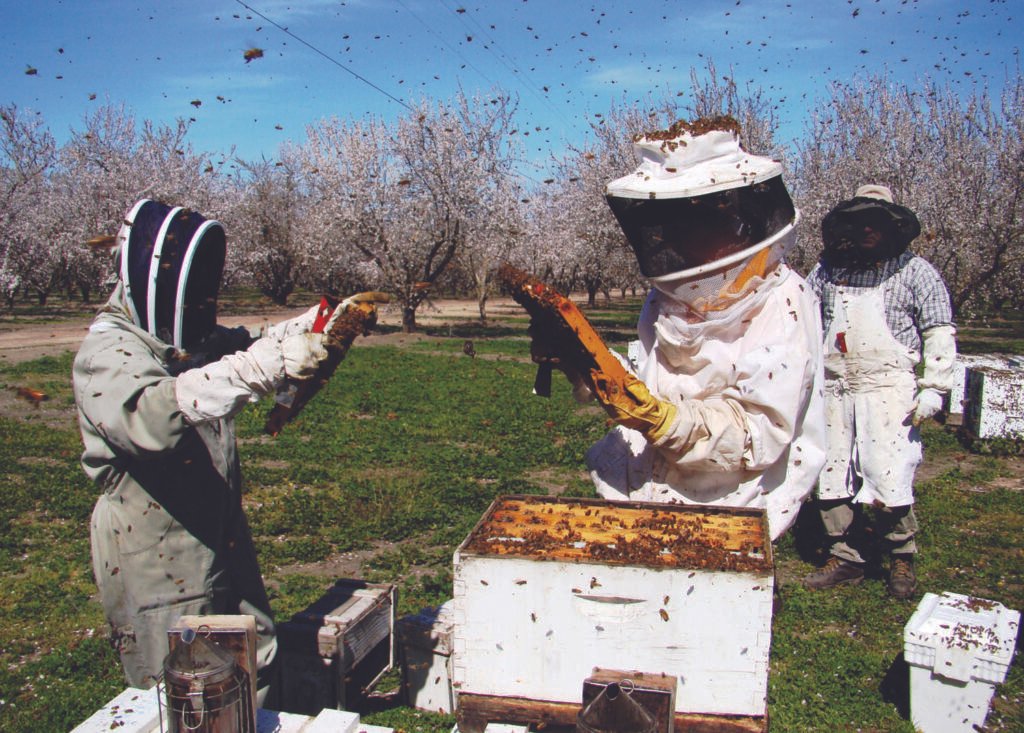
Photo by Louisa Hooven/Oregon State University, licensed under CC BY-SA 2.0 via Wikimedia Commons.
Laying Out and Working the Yard
Layout decisions are biosecurity decisions. Anything that reduces drift between colonies also reduces the movement of mites and pathogens between them.
| Practice | Why It Matters | Immediate Next Step |
|---|---|---|
| Group your own pallets together | Keeps drift mostly within your operation instead of between operations | Ask the grower or broker where other beekeepers’ colonies will sit |
| Break long rows into clusters | Long, uniform rows drive drift toward the row ends | Set pallets in short groups with gaps and varied entrance directions |
| Use your own tools only | Hive tools and gloves can carry spores and honey between colonies | Carry a spare hive tool and a sanitizer bucket or wipes in the truck |
| No open feeding | Open feeders pull in bees from every operation and trigger robbing | Feed only inside the hive, and only when necessary |
| Record colony positions | Lets you trace a problem to a pallet and a home yard | Note pallet IDs and positions on the drop-site map |
Our guide on how to reduce drift in pollination yards covers pallet layout in detail, and apiary entrance spacing for better biosecurity explains why entrance orientation and spacing matter for disease spread.
Working Colonies on Site
Keep inspections short and tidy. Do not leave burr comb, frames, or honey exposed; scrape debris into a closed container and take it with you. Work your strongest and healthiest colonies first and any suspect colonies last, then clean your tool and gloves before moving to the next yard. Milbrath’s advice for visiting other operations applies whenever you work near another beekeeper’s colonies: wear gloves you can clean or discard, and use only equipment that belongs in that yard.
No other livestock is as mobile or intermingles as much as honey bees, so beekeepers need to be extra vigilant about biosecurity.
Handling Weak Colonies and Dead-Outs
A dead or collapsing colony is the biggest single biosecurity hazard in a pollination yard. Once a colony can no longer defend its entrance, neighbors from every operation in range will rob it, and they carry home whatever it contains.
- Check for dead-outs and failing colonies on every yard visit, not only at pickup.
- Close the entrance of a dead-out immediately and remove it from the yard as soon as practical.
- Do not shake out or combine a failing colony on site if you do not know why it failed.
- If a colony shows signs of foulbrood, seal it, remove it, and contact your state apiarist rather than treating it in the yard.
The end of bloom is the highest-risk moment. When the nectar flow stops, robbing pressure jumps across the whole yard, so move colonies out promptly when the contract allows and do not leave stragglers behind.
Bringing Colonies Home
Treat returning colonies as possibly exposed, even if they looked healthy on site. Drifting and robbing during the contract can add mites, and brood disease picked up late in bloom may not be visible for a few weeks.
- Where possible, set returning colonies in a holding yard before mixing them with home-yard colonies or equipment.
- Re-check Varroa levels two to three weeks after return, when mites picked up on site will show up in samples.
- Inspect brood again before moving frames between colonies or into splits.
- Clean and sanitize pallets, tools, and vehicles between contracts.
Our migratory pollination checklist covers the rest of the move-out and return routine.
Conclusion
A pollination yard biosecurity plan does not need to be long. It needs to make sure only healthy colonies go out, that your colonies do not swap equipment, feed, or dead-outs with anyone else’s while they are there, and that returning colonies are checked before they rejoin the home apiary.
Countries that have not yet dealt with Varroa take this very seriously; the Varroa mite preparedness report for Australia’s pollination-dependent industries shows how central pollination movements are to pest spread. For farm- and property-scale thinking about visitors, vehicles, and equipment, see this resource on on-farm biosecurity planning.
FAQ
What is a pollination yard biosecurity plan?
It is a short written plan for preventing pests and diseases from spreading between colonies while they are placed together for a pollination contract. It covers pre-move inspections and mite checks, yard layout, equipment hygiene, handling of weak and dead colonies, and checks after the colonies return home.
Why are pollination yards riskier than a home apiary?
Pollination yards place colonies from many different operations close together on an unfamiliar site. Drifting bees and robbing between those colonies can move Varroa mites, viruses, and brood-disease spores between beekeepers who never share equipment directly.
What should I check before moving colonies to a pollination contract?
Inspect brood in every colony for signs of American or European foulbrood, sample Varroa levels and treat colonies over threshold early enough for the treatment to work, and keep registration, inspection, and treatment records with the load. Leave any colony with suspected brood disease at home.
How should dead or weak colonies be handled in the yard?
Close the entrance of a dead-out immediately and remove it as soon as practical, because an undefended colony will be robbed by bees from every operation nearby. If you see signs of foulbrood, seal and remove the colony and contact your state apiarist rather than treating it on site.
Is it safe to feed colonies in a shared pollination yard?
Avoid open feeding entirely; open feeders attract bees from every operation and trigger robbing. If colonies need feed, use in-hive feeders and keep any spilled syrup to a minimum.
What should I do when colonies come back from pollination?
Treat them as possibly exposed. Hold them apart from home-yard colonies where possible, re-check mite levels two to three weeks after return, inspect brood before moving frames between colonies, and clean pallets, tools, and vehicles before the next contract.