
Reviewed by Elena P. · Last Updated September 24, 2026 · How we review
To price a nucleus colony, first work out what one nuc really costs you to produce, including the queen, the comb, the box, feed, mite control, your time and the nucs that fail. That is your floor. Then check what local sellers ask for a comparable nuc and set your price according to what is actually in the box. For context, the USDA says operations with five or more colonies paid an average of $130 per nuc in 2025. Retail nucs listed for local pickup ask more: the Midwest listings we checked ran from about $190 to $250.
This guide covers setting the number. For the business side, see selling overwintered nucs as a side business. For deposit terms, see queen and nuc deposit policies.
Key Takeaways
- USDA’s 2025 average price paid was $130 per nuc, up from $109 in 2024. That is a volume-buyer average from operations with five or more colonies, not a retail price.
- Retail asking prices sit higher. Single-nuc buyers pay for local stock, a guaranteed pickup date and often a box included.
- Price from your costs up, not from a competitor’s ad down. The queen, the drawn comb and the losses are the costs sellers most often forget.
- What is in the box sets the price. Frame count, deep or medium, overwintered or spring-made, queen age and stock, and whether the box is returnable all justify different prices.
- Put the terms in writing. A clear spec, pickup window and guarantee protect your price better than a discount.
On this page
What the Market Data Actually Says
The only national, survey-based figure for nuc prices comes from the USDA National Agricultural Statistics Service. Its annual Honey report includes the prices operations paid for queens, packages and nucs. The March 2026 edition reads:
“The average prices paid in 2025 for honey bee queens, packages, and nucs were $22, $110, and $130, respectively.”
| Item | 2024 average price paid | 2025 average price paid | Change |
|---|---|---|---|
| Queen | $18 | $22 | +22% |
| Package | $89 | $110 | +24% |
| Nuc | $109 | $130 | +19% |
Source: USDA NASS, Honey (March 2026), “Queen, Package, and Nuc Prices Paid – United States.” Percentages calculated from the published figures.
Read these numbers carefully. The NASS survey collects data from operations with five or more colonies, and the figures are what those operations paid. That includes commercial beekeepers buying nucs by the truckload. They are useful as a trend (prices rose sharply from 2024 to 2025) and as a wholesale reference. They are not what a hobbyist in Fargo should expect to pay for one locally overwintered nuc.
Retail asking prices are the other reference. They are not a survey, just what sellers list. As examples, when we checked in September 2026, Lappe’s Bee Supply listed a 5-frame Italian-Carniolan hybrid nuc for May 2026 pickup in Hackensack, Minnesota at $189.95. The same supplier listed a 5-frame Buckfast nuc with a marked queen in a reusable plastic box for 2027 Iowa pickup at $250. The gap between those two listings shows how much stock and box type move the price, even within one seller. Prices change every season, so check current local listings before you set yours.
Build Your Floor Price: A Cost Worksheet
Your floor is the price below which each nuc loses money. Work it out per nuc, using your own numbers. The example column below is illustrative only. It shows how the pieces add up and is not a benchmark.
| Cost line | What to include | Illustrative example |
|---|---|---|
| Queen | Bought-in mated queen plus shipping, or your cost to raise one (mating nucs, failures) | $45 |
| Frames and comb | Replacement cost of 4-5 frames and foundation, plus the value of drawn comb leaving your operation | $30 |
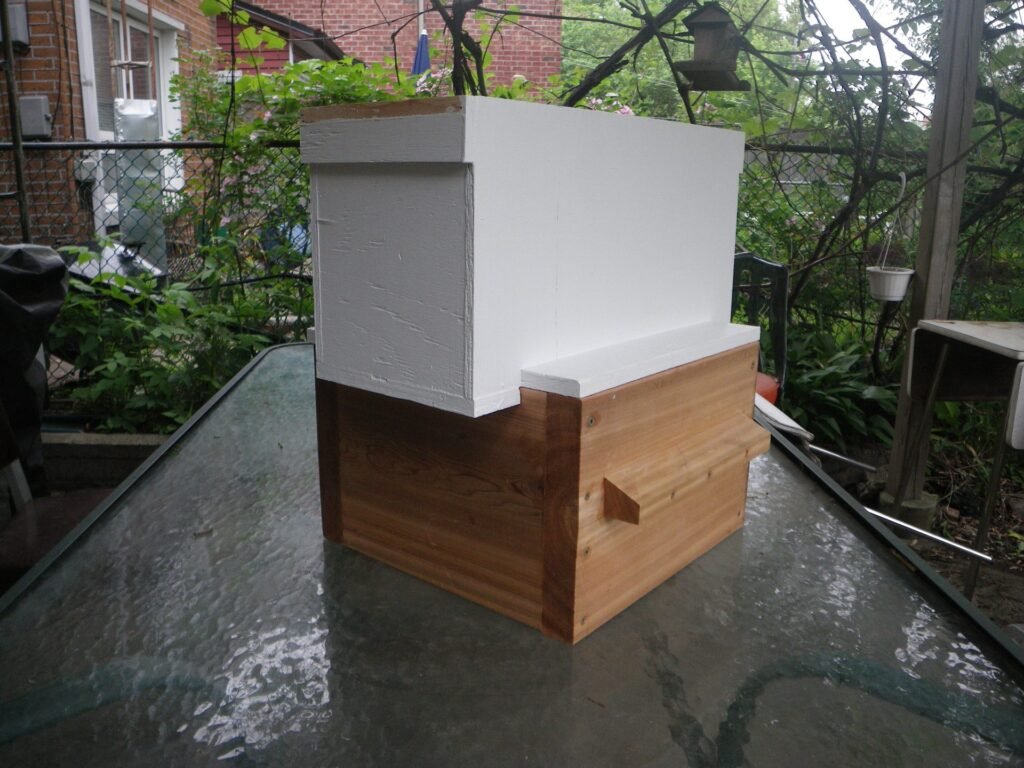
| Nuc box | Full cost if it goes with the buyer, or zero if it is returned | $15 |
| Bees and brood | What the parent colony loses: slower build-up and less honey | $30 |
| Feed and mite control | Syrup, pollen substitute and treatment for the nuc before sale | $10 |
| Labour | Hours to make, feed, inspect and hand over, times your hourly rate | 3 h x $20 = $60 |
| Losses | Share of nucs that fail to mate, abscond or come out too weak to sell | +10% of the above |
| Selling costs | Card or payment fees, advertising, travel on pickup day | $8 |
| Floor price | About $217 |
Three lines trip up most small sellers:
- Drawn comb isn’t free. Each drawn frame that leaves with a buyer is comb your own colonies must rebuild, at a real cost in wax and honey.
- Losses have to be priced in. If one nuc in ten fails to requeen or dwindles, the other nine carry its cost.
- Your time counts. Pick an hourly rate you would accept for other work. If the resulting floor is above what the market pays, that tells you something about the scale you need to run at.
If your floor sits well below local retail asking prices, you have room to price for quality. If it sits above them, cut costs (raise your own queens, return boxes) before you cut your price.
What Goes in the Box Sets the Price
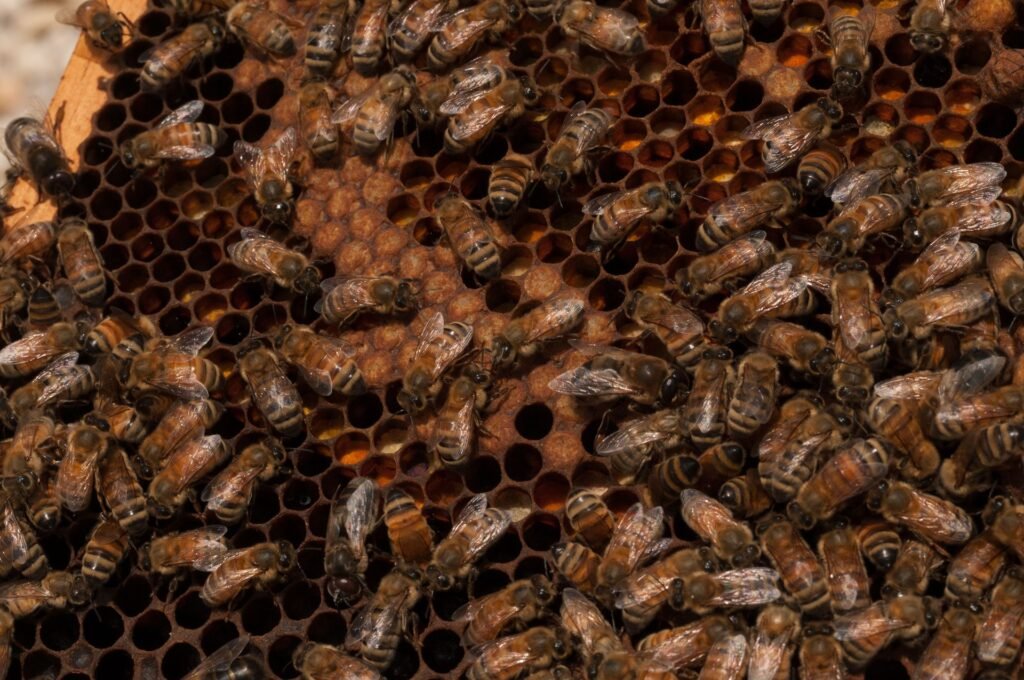
Buyers compare nucs as if they were identical, but they are not. Write a specification and price each version separately.
| Spec factor | Supports a higher price | Supports a lower price |
|---|---|---|
| Frame count | 5 frames, with 3 or more of brood in all stages | 4 frames, or only 2 of brood |
| Frame size | Deep frames that match most buyers’ brood boxes | Mediums, unless the buyer runs all-medium equipment |
| Origin | Overwintered in your own apiary, so locally adapted | Made up in spring from southern packages or queens |
| Queen | Current-year queen, laying, marked, known stock (e.g. hygienic lines) | Unmarked queen of unknown age |
| Box | Durable box included | Returnable box or buyer brings their own |
| Health | Recent mite wash result disclosed, inspection certificate | No mite data |
A buyer’s first question is usually how strong the nuc is, so define it. Our guide on how many frames of bees a strong nuc should have is a fair yardstick to publish in your listing. If you charge extra for marked queens, see marking queens for retail sale colonies. Buyers who check before they pay will be using a checklist like the one in inspecting purchased nucs for disease risk, so assume every nuc will be opened at pickup.
Pricing in the Red River Valley and Western Minnesota
A few regional factors push Upper Midwest nuc prices in particular directions:
- Late pickup dates. Local nucs are rarely ready before mid-May, and many southern-made nucs arrive around the same time. An overwintered local nuc ready early in the season is scarce, and scarce stock can carry a premium.
- Winter survival is the selling point. A colony that has already come through a northern winter is what many local buyers want. If your nucs are overwintered, say so and show the evidence.
- Licensing is part of the sale in North Dakota. The North Dakota Department of Agriculture requires anyone keeping bees, even one colony, to hold a beekeeper’s license and register hive locations each year. Tell first-time buyers. It saves them trouble and marks you as a professional seller.
- Inspection costs are real if you ship across state lines. The Minnesota Department of Agriculture offers apiary inspections for colonies moving to other states for a fee of $50 plus mileage. If your buyers include people from other states, build that into the price or charge it separately.
If you are deciding whether your spring bees earn more as nucs or on pollination contracts, see spring nuc production vs pollination contracts.
Terms That Protect Your Price
A firm price holds up best when everything around it is clear. Put these in the listing:
- Exactly what is included. Frame count and size, brood frames, stores, queen age, stock and marking, and the box.
- Deposit and balance. How much, whether it is refundable, and when the balance is due. Our deposit policy guide covers the options.
- Your guarantee. A common approach is to guarantee a queenright, laying colony at pickup, confirmed in front of the buyer, and nothing after the bees leave. Say so plainly.
- The pickup window. Give a date range, say that weather can move it, and explain what happens to uncollected nucs. For the handover itself, see packaging live bees for local pickup.
- Box exchange. If boxes are returnable, set a return deadline or charge a box deposit.
When to advertise also affects what you can charge. Our piece on the best time to advertise local nuc sales covers timing.
Common Pricing Mistakes
- Copying the cheapest ad. The cheapest local seller may be clearing surplus, or may not be costing their time at all.
- Quoting the USDA average as a retail price. It is a volume-buyer average, and quoting it to customers sets expectations your costs can’t meet.
- Charging one price for different nucs. A 4-frame nuc with a late queen and a 5-frame overwintered nuc are different products.
- Selling weak colonies to hit a number. One weak nuc costs more in reputation than the sale earns.
- Leaving the price unchanged year after year. The USDA figures rose by about a fifth in a single year. Review your costs every season.
Frequently Asked Questions
How much should I charge for a 5-frame nuc?
Start with your own production cost per nuc, including queen, comb, box, feed, labour and losses, then compare it with what local sellers ask for a similar nuc. As reference points, USDA reported $130 as the 2025 average paid by operations with five or more colonies. Retail listings for single spring nucs in the Upper Midwest that we checked ran from roughly $190 to $250.
What is the average price of a nuc in 2025?
According to USDA NASS, operations with five or more colonies paid an average of $130 per nuc in 2025, up from $109 in 2024. That is a price-paid survey figure, not a retail asking price.
Should an overwintered nuc cost more than a spring nuc?
Usually, yes. An overwintered nuc has already survived a local winter and is often ready earlier, and it costs more to produce because you carry it through winter and accept winter losses. Price it separately and say that it is overwintered in the listing.
Should the nuc box be included in the price?
It depends on your system. Including a durable box adds to your cost and justifies a higher price. Returnable boxes keep the price down but need a deposit or deadline so they actually come back.
Do I need a license to sell nucs in North Dakota?
North Dakota requires anyone who keeps bees, even one colony, to hold an annual beekeeper’s license and register hive locations with the Department of Agriculture. Check with NDDA for any rules specific to selling, and remind buyers they need a license too.
How much should a nuc deposit be?
Sellers commonly take a partial deposit to reserve a nuc and the balance at pickup, but the amount and refund terms vary. Choose terms that cover your commitment, such as a queen ordered for that buyer, and put them in writing. Our deposit policy guide covers the trade-offs.
The Bottom Line
Price nucs from the bottom up. Know your per-nuc cost, check local asking prices for a like-for-like nuc, and charge for the specification you actually deliver. Use the USDA figure to track the trend, not as a retail price, and review your numbers every season.

.jpg)
