
Table of Contents
- Bee Removal Business vs. Bee Removal Technique
- Deciding What Services You’ll Offer
- Licensing and Legal Requirements
- Insurance: The Non-Negotiable Cost
- Startup Equipment and Cost
- Pricing a Bee Removal Job
- Getting Your First Customers
- What to Do With Removed Bees
- Scaling Beyond a One-Person Operation
- Written Estimates and Liability Waivers
- Planning Around Seasonal Cash Flow
- Handling Same-Day and Emergency Calls
- Bee Removal vs. Bee Rescue: A Note on Framing
- Common Mistakes New Operators Make
Bee Removal Business vs. Bee Removal Technique
Knowing how to physically remove a colony from a wall, tree, or structure is only one piece of running an actual bee removal business — the technique itself is covered in depth in our guides on the bee cutout method and safely removing bees from a building. This guide covers the business side instead: what it takes to legally operate, price jobs profitably, and build a customer base, assuming you already have or are building the hands-on removal skills those guides teach.
Deciding What Services You’ll Offer
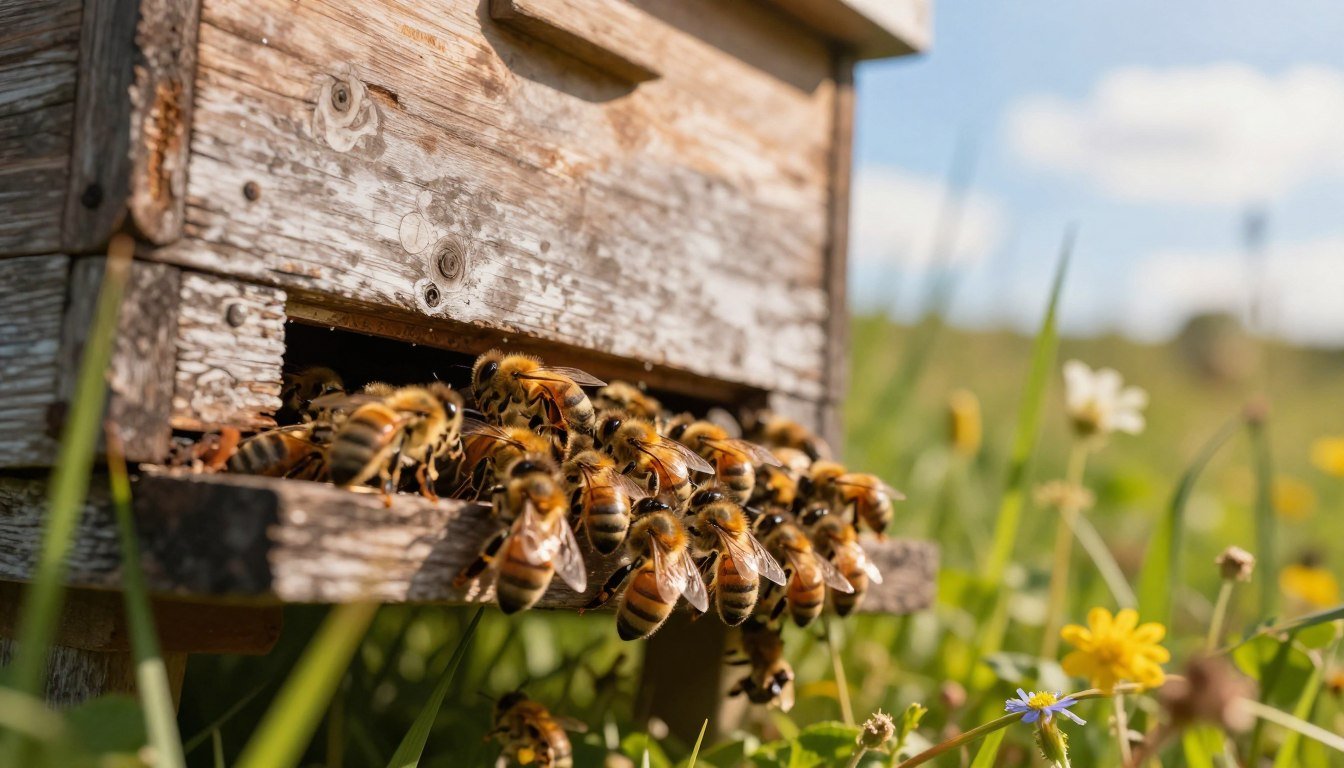
Bee removal businesses typically fall into a few service tiers, and deciding which you’ll offer shapes everything else about how you set up the business. A “swarm catch” service — collecting a temporary cluster of bees that hasn’t yet established a nest — requires minimal equipment and is often free or low-cost, since it’s genuinely quick work and a good way to build local reputation. A “cutout” service — removing an established colony, including comb, from inside a wall or structure — is a different, more skilled and more expensive job requiring demolition and repair coordination, and is where real profitability lives. Some operators also offer “trap-out” services, a slower non-destructive method using a one-way bee exit installed on the structure, useful when demolition isn’t an option. Decide early which of these you’ll actually offer, since marketing, pricing, and equipment needs differ substantially between them.
Licensing and Legal Requirements
Requirements vary significantly by state and even by county, so confirm specifics with your local agriculture department before operating, but common requirements include registering as a beekeeper with your state apiary program (often required simply to keep bees at all, regardless of business status), registering a general business entity (LLC or sole proprietorship) with your state, and in some jurisdictions a specific pest-control or wildlife-removal license if your work involves entering structures or using extermination methods as part of the service. If your removal work sometimes crosses into pest control territory — for example, if a customer wants wasps or hornets addressed alongside bees — check whether that requires a separate pesticide applicator license in your state, since bee removal and general pest control are regulated differently in many places.
Insurance: The Non-Negotiable Cost
General liability insurance is essential before taking your first paying job, since removal work often involves entering a customer’s home or business, working at height on ladders, and sometimes cutting into walls or roofing — any of which creates real liability exposure if something goes wrong. Our guide to liability insurance for beekeeping services covers the general landscape, though removal work specifically often carries a higher premium than pollination contracting due to the property-entry and structural-work risk. Many homeowners’ insurance policies and property managers will require proof of your liability coverage before allowing you onto a job site, so budget for this cost before you can realistically book work, not after.
Startup Equipment and Cost

Beyond standard beekeeping gear (suit, gloves, smoker, hive tools), a removal business typically needs a bee vacuum for extracting bees from wall cavities without killing them, an extension ladder rated for the heights you’ll work at, basic demolition tools (pry bars, a reciprocating saw) for cutout jobs, rubber bands or frame-fitting equipment to secure salvaged comb into frames, and a dedicated transport setup (nuc boxes or hive bodies secured in a vehicle) to move a live colony safely. A basic swarm-catch-only setup can be assembled for a few hundred dollars; a full cutout-capable setup with a quality bee vacuum and demolition tools typically runs into four figures, which is worth factoring into how you price your first several jobs to recoup startup cost.
Pricing a Bee Removal Job
Swarm catches are typically priced low or offered free in many areas, since they’re fast and serve as a reputation-building service — some operators charge a modest flat call-out fee to cover travel and time rather than the job itself. Cutout jobs are priced very differently, usually based on colony size, accessibility (a colony three stories up costs more to reach than one at ground level), and how much repair work the customer will need afterward — many operators charge a base rate plus an hourly or per-foot rate for structural work, since cutout time is genuinely unpredictable until the wall is actually opened. Get a clear, itemized estimate to the customer before starting, and be explicit that a cutout price is an estimate subject to change if the colony turns out larger or more established than visible from outside, since customers who aren’t warned about this upfront are far more likely to dispute a final bill.
Getting Your First Customers
Local pest control companies are a strong early referral source, since many of them don’t handle bees themselves (due to the specialized handling and regulatory differences from general pest control) and are glad to pass those calls to a specialist rather than turn away business entirely. Registering with your state’s apiary program or local beekeeping association swarm-list, if one exists, puts you in front of residents actively searching for a removal service. A simple, well-optimized local business listing (hours, service area, photos of past jobs) does more for a bee removal business than most other marketing spend, since the searches that generate this business are almost entirely local and urgent — someone finding bees in their wall wants a same-day or next-day answer, not a brand relationship.
What to Do With Removed Bees
Decide in advance whether removed colonies join your own apiary, get sold or given to local beekeepers, or are relocated to conservation land, since this affects both your equipment needs (do you need extra hive bodies on hand) and your marketing message (many customers specifically want to know the bees will be saved, not killed, and this is a genuine selling point worth highlighting). Be honest with customers about survival odds — a colony pulled from a wall during an aggressive cutout doesn’t always survive the transition, and setting that expectation upfront avoids disputes after the fact.
Scaling Beyond a One-Person Operation
As demand grows, the natural next step is training a second person on the cutout technique rather than turning away jobs during your peak swarm season (typically spring in most U.S. climates), since a single operator can only be in one place at a time and swarm season creates genuine scheduling bottlenecks. Consider whether to expand into adjacent services — wasp and hornet removal, hive relocation for other beekeepers, or educational talks and demonstrations for schools and community groups — since these use overlapping skills and equipment and can smooth out the seasonal feast-or-famine pattern that pure swarm/cutout work tends to have.
Written Estimates and Liability Waivers
Put every job’s scope and estimated cost in writing before starting work, even for a simple swarm catch, since a written estimate is your primary protection against a payment dispute after a cutout job turns out larger or more involved than it looked from outside. For cutout jobs specifically, many operators also use a liability waiver acknowledging that structural repair (patching drywall, replacing siding) is the customer’s responsibility unless repair work was explicitly quoted and included, since customers sometimes assume “bee removal” includes making the wall look untouched afterward. A simple one-page template covering scope, estimated cost with a stated range for cutouts, and repair responsibility prevents the majority of billing disputes before they start.
Planning Around Seasonal Cash Flow
Swarm season creates a genuine feast-or-famine pattern for a removal business — most calls cluster into a few weeks of spring in most U.S. climates, with the rest of the year comparatively quiet for removal work specifically. Budget for this rather than being surprised by it: many successful operators pair removal work with other seasonal beekeeping income (nuc sales, honey production, pollination contracts) that peaks at different points in the year, smoothing out what would otherwise be a business with several genuinely slow months. If removal work is your primary income, building a modest cash reserve during peak season to cover the quieter months is worth planning for from year one rather than treating it as an afterthought.
Handling Same-Day and Emergency Calls
A meaningful share of bee removal inquiries come in as urgent, same-day requests — a customer who just discovered a swarm on their porch or bees entering a wall wants reassurance and a timeline immediately, not a callback next week. Building a simple triage system helps here: swarms (visible, temporary clusters) are usually genuinely urgent and quick to resolve, while established colonies inside a wall have typically been there for some time already and rarely need to be treated as a same-day emergency, giving you room to schedule a proper cutout rather than rushing one. Being upfront on the phone about which category a caller’s situation falls into, and setting a realistic timeline accordingly, builds trust before you’ve even arrived on site.
Bee Removal vs. Bee Rescue: A Note on Framing
How you talk about this work matters commercially as well as ethically. Framing your service as “bee removal” alone can read as extermination-adjacent to a wary customer, while framing it as “live bee rescue and relocation” — genuinely accurate if that’s your practice, as covered in our bee rescue techniques guide — tends to resonate better with customers who specifically don’t want their bees killed and are actively searching for an alternative to a pest control company’s default extermination approach. This isn’t just marketing polish; it’s a genuine differentiator worth building your whole service identity around if it reflects how you actually operate.
Common Mistakes New Operators Make
Underpricing cutout jobs by quoting based on visible colony size without warning the customer the price may change once the wall is open is the most common costly mistake, leading to disputes and unpaid balances. Skipping liability insurance to save money early is a close second, since a single incident without coverage can end a new business entirely. Taking on structural demolition work without the right tools or experience — cutting into load-bearing elements, or damaging wiring and plumbing hidden in a wall — creates liability exposure well beyond the bee removal itself; know your limits and bring in a contractor for structural work outside your skill set rather than improvising.
Sources
Licensing and insurance guidance reflects general patterns across U.S. state apiary programs and small-business liability practices; confirm exact requirements with your specific state agriculture department and insurance provider, since both vary by location. For current, authoritative detail, see Clemson University Extension’s fact sheet on honey bee colony removal from structures.
FAQ
Do I need a pest control license to remove bees?
It depends on your state — many treat bee removal separately from general pest control since it’s typically live-removal rather than extermination, but a license may still be required if your services extend into wasp/hornet extermination or pesticide use. Check with your state’s agriculture or pest control licensing board.
How much should I charge for a bee cutout?
Pricing varies widely by region and job complexity, but most operators use a base rate plus additional charges for height, accessibility, colony size, and structural repair work — always quoted as an estimate that may change once the wall is opened and the colony’s true size is visible.
Can I run a bee removal business part-time?
Yes — many operators start part-time alongside other beekeeping income (honey sales, nuc sales, pollination contracts), since swarm season’s seasonal concentration makes it a natural side business before scaling into a full-time operation.
What’s the biggest startup cost?
A quality bee vacuum and liability insurance are typically the two largest startup costs — the vacuum for safely extracting bees from structures, and insurance because most customers and property managers require proof of coverage before allowing you onto a job site.
Should I offer a guarantee that bees won’t return?
Many operators offer a limited guarantee against re-entry through the exact same opening, since sealing that entry point is standard practice on any completed cutout, but be clear this doesn’t cover a new colony entering through a different opening elsewhere on the structure — a distinction worth stating explicitly in your written estimate.