
Reviewed by Elena P. · Last Updated September 24, 2026 · How we review
Renting bees for pollination follows the same sequence almost everywhere in the United States: work out how many colonies your crop needs, book a beekeeper months ahead, agree the terms in writing, prepare an accessible site, take delivery at an early bloom stage (about 5% of king blossoms open in apples, around 10% bloom for many berry and vegetable crops), check the colonies you received, keep bee-toxic sprays off the crop during bloom, and have the hives removed at the end of bloom. Payment is usually split between delivery and removal. This guide walks through each step as a season timeline, with the numbers extension specialists use.
BeeKeepersRealm is an educational site written by beekeepers in eastern North Dakota. We do not rent hives or arrange rentals. If you want to understand the market first, including who supplies colonies and what they cost, start with our overview of bee pollination services; this page is the practical, step-by-step companion.
Key Takeaways
- Size the order from published stocking rates, then adjust for planting density, weather risk and competing bloom.
- Contact a beekeeper well before bloom; large operations plan their spring and summer moves months ahead.
- Colonies should arrive at a set bloom stage, not a calendar date, so foragers find your crop before competing flowers.
- Check what you rented: random hive openings, entrance flight counts or a third-party inspection of 10% to 25% of hives.
- Give the beekeeper notice before any spray, and agree in advance who pays if colonies must be moved away and back.
Table of Contents
- Step 1: Work Out How Many Colonies You Need
- Step 2: Find and Book a Beekeeper Early
- Step 3: Put the Terms in Writing
- Step 4: Prepare the Site Before Delivery
- Step 5: Delivery Timing and Placement
- Step 6: Check the Colonies You Received
- Step 7: Protect the Bees During Bloom
- Step 8: Removal and Final Payment
- Season Timeline at a Glance
- Frequently Asked Questions
Step 1: Work Out How Many Colonies You Need
There is no single right number. Oregon State University’s PNW 623 notes that absolute pollination requirements are not established for most crops, and that bloom density, attractiveness, competing bloom, weather and colony quality all change the answer. Published rates are starting points. The table compares two widely used extension sources.
| Crop | University of New Hampshire Extension (colonies per acre) | OSU PNW 623, Pacific Northwest averages (colonies per acre) |
|---|---|---|
| Apples | 2 | 0.5 |
| Pears | not listed | 1.5 |
| Cherries | not listed | 2 |
| Highbush blueberries | 0.5 to 5 | 3 |
| Lowbush blueberries | 2 to 3 | not listed |
| Cranberries | 1 to 2 (up to 5 in poor weather) | 3 |
| Raspberries and strawberries | 1 | not listed |
| Vine crops (melons, squash, cucumbers) | 1 to 2 | not listed |
| Vegetable seed (carrot, onion) | not listed | 3 |
The gap for apples, from half a colony to two per acre, is real and reflects different planting systems and climates. Our guide to apple orchard hive density explains how to choose within that range. For other crops, see how many hives per acre for pollination, blueberry hive placement, renting hives for pumpkins and renting hives for seed crops.
PNW 623 also advises growers in wet regions to rent about one extra colony per acre as insurance against poor foraging weather, and to remember that colony strength matters as much as colony count.
Step 2: Find and Book a Beekeeper Early
PNW 623 recommends contacting your beekeeper long before the expected bloom, because beekeepers schedule their hive movements well in advance. For almonds, most agreements are settled months before February. For summer crops in the Northern Plains, the beekeeper is also weighing your fee against a honey crop, so the conversation belongs in winter, not in the week the first flowers open.
Places to look include your state beekeepers’ association, your state apiary program, neighbouring growers who already rent, and, for almonds, the pollination directory maintained by the Almond Board of California, which listed more than 40 brokers when economist Brittney Goodrich reviewed it for Choices magazine in 2019.
When you first speak, share the crop, acreage, variety mix, expected bloom window, site access and any spray programme you already know about. A beekeeper cannot quote sensibly without them.
Step 3: Put the Terms in Writing
Handshake agreements are common, but a written contract protects both sides when something goes wrong. At minimum it should state the number of colonies, the strength standard and how it is checked, the bloom stage for delivery and removal, placement, the fee and payment dates, the beekeeper’s right of entry, and the pesticide notice period. Our pollination contract template covers the wording, and pollination service payment terms covers installment options.
Step 4: Prepare the Site Before Delivery
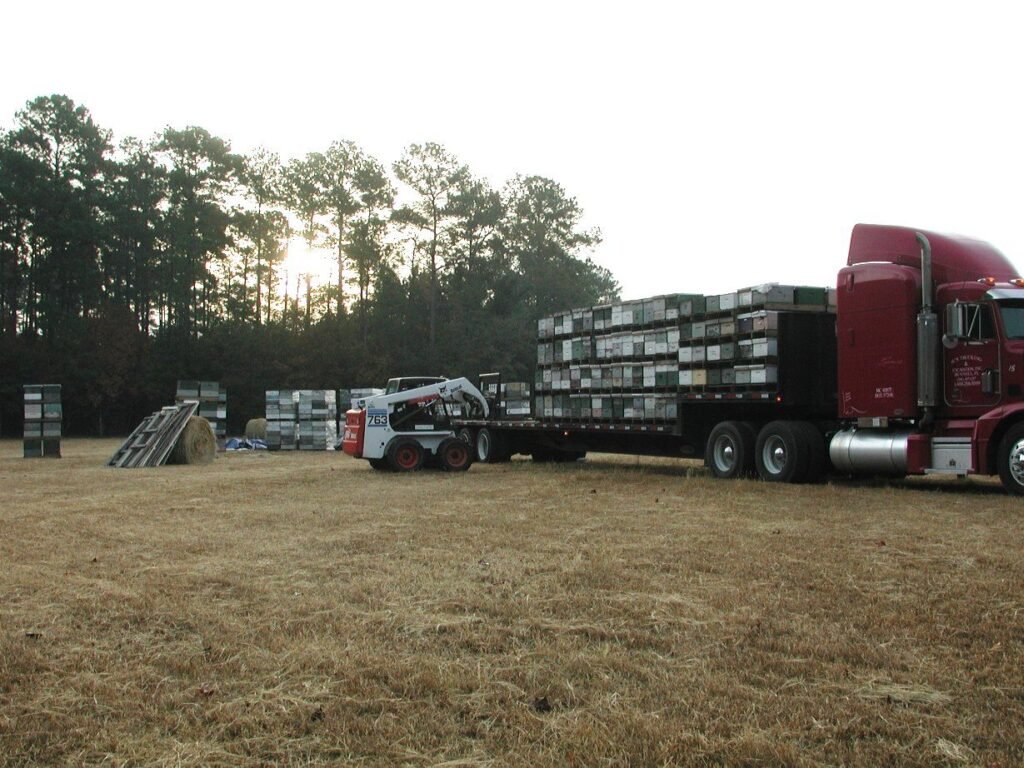
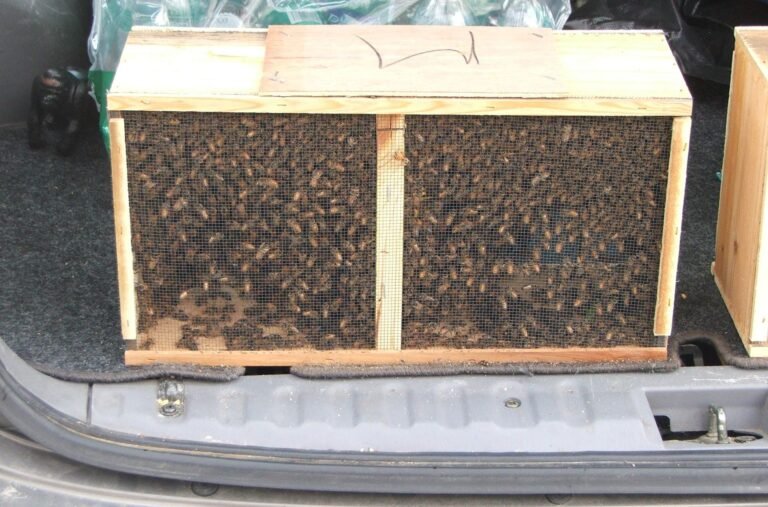
Colonies usually arrive at night on a truck or trailer and are set down by hand or with a small forklift. Before that night:
- Pick drop sites that are sunny, sheltered from wind, above frost pockets and easy for a loaded truck to reach in wet weather. The USApple and Honey Bee Health Coalition pollinator best management practices for apples also suggest choosing locations the sprayer operator can easily avoid.
- Arrange water. The sample contract in the SARE handbook Managing Alternative Pollinators has the grower provide water if none is available within half a mile of each colony.
- Finish pre-bloom sprays early. The USApple guidance asks growers to leave enough time between pre-bloom sprays and hive placement to avoid direct exposure, and the sample almond agreement from Project Apis m. sets placement no sooner than 96 hours after the last dormant spray.
- Give notice. The USApple guidance suggests about one week’s notice of the likely arrival date and two days’ notice once the exact night is set.
- Mow or manage flowering weeds such as dandelions under trees, so the crop is the most attractive bloom in reach.
Step 5: Delivery Timing and Placement
Delivering too early lets foragers settle on other flowers; delivering too late wastes the first, often most valuable, blossoms. University of New Hampshire Extension’s guide What the Grower Should Expect in Colonies Rented for Pollination gives these delivery points:
| Crop | Deliver colonies when |
|---|---|
| Apples | About 5% of king blossoms are open |
| Highbush blueberries | About 5% bloom, and before 25% |
| Lowbush blueberries | About 10% bloom |
| Raspberries and strawberries | About 10% bloom |
| Cucumbers | About 10% bloom |
| Melons and squash | At first bloom |
| Cranberries | 20% to 25% bloom, kept on site about three weeks |
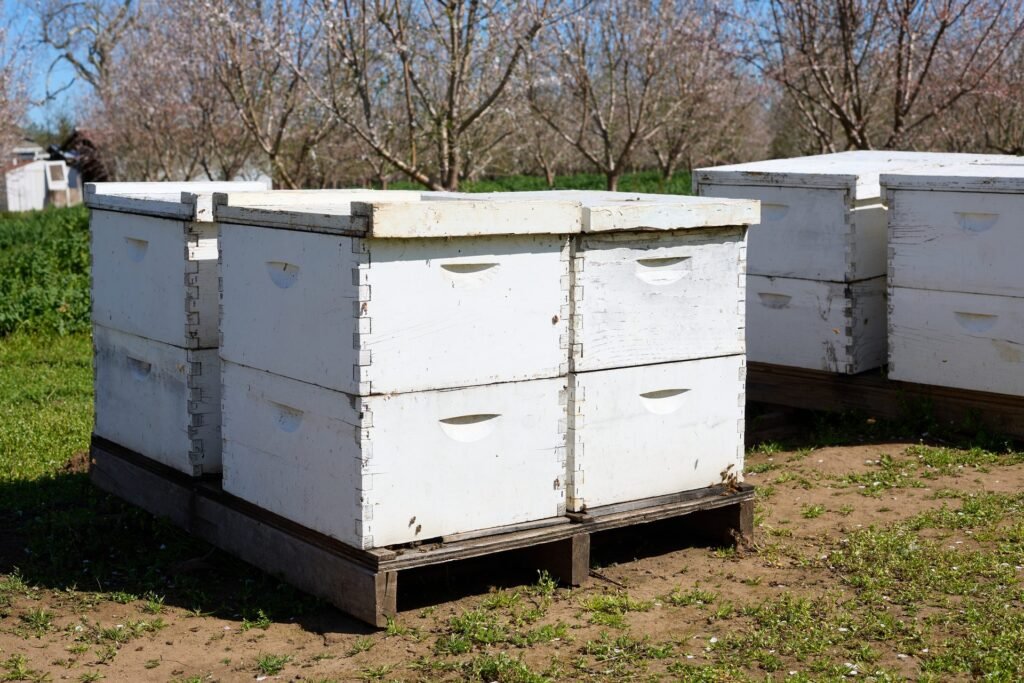
For placement, the same guide suggests groups of four to six colonies spaced 150 to 300 yards apart at one colony per acre, or groups of up to 12 at two per acre, in full sun and facing south for early-morning warmth. Keep drop sites away from low, damp spots where cold air settles.
Step 6: Check the Colonies You Received
This is the step growers most often skip, and the one that decides whether the fee was well spent. PNW 623 suggests three ways to check:
- Ask the beekeeper to open randomly chosen hives in mild weather. Do not open them yourself without permission.
- Watch the entrances on a warm, calm day. Preliminary Washington State University data cited in PNW 623 treat more than 100 incoming bees per minute at 65°F or warmer, with wind under 10 mph, as a good pollinating unit.
- Hire a third-party inspector. Goodrich reports that almond growers using one of the largest inspection services paid about $1.50 to $2.00 per inspected hive in 2016, with inspectors typically opening 10% to 25% of the hives in an orchard.
Our guides to documenting hive strength and colony strength grading explain frame counts in detail.
Step 7: Protect the Bees During Bloom
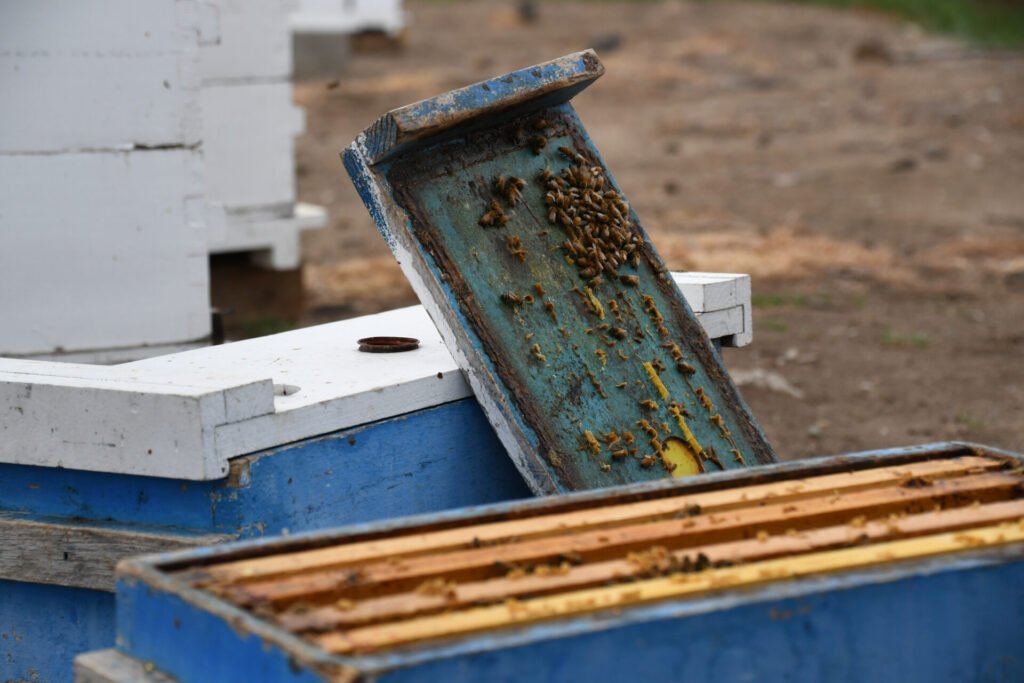
Sprays are the risk to rented colonies that growers control most directly, and most harmful exposures can be avoided with communication. Agree a notice period before any bee-toxic application; the SARE sample contract uses 48 hours and puts the cost of moving colonies away and back on the grower. Spray in the evening or at night where the label allows, calibrate to limit drift, and include fungicides and growth regulators in the conversation, since PNW 623 notes that some of these also harm bees.
Register the apiary locations with your state’s hive registry or a program such as BeeCheck so that applicators can find them. In North Dakota, the state department of agriculture runs an online portal that helps applicators locate hives within two miles of a planned application. For contract language on sprays, see pollination agreements and pesticide clauses.
Step 8: Removal and Final Payment
Washington State University Tree Fruit recommends having bees removed soon after petal fall begins, which is also when orchard insecticide programmes resume. The Project Apis m. sample agreement gives the beekeeper up to 14 days after the grower’s notice to remove colonies. Settle the date in advance and confirm it the week before.
Payment is usually staged. Marla Spivak’s University of Minnesota sample pollination agreement has the grower pay half the fee on delivery and the rest within an agreed number of days; the Project Apis m. template leaves room for installments on signing, on delivery and on completion. What should appear on the bill is covered in pollination service invoice items.
Season Timeline at a Glance
| When | Grower | Beekeeper |
|---|---|---|
| Previous fall or winter | Estimate colonies needed; contact beekeepers; share crop and site details | Quote; plan colony numbers and routes |
| Late winter | Sign contract; plan spray programme around bloom | Build colonies to the agreed strength |
| Two to three weeks before bloom | Choose drop sites; arrange water and access | Confirm truck, crew and timing |
| One week before | Give likely delivery date; finish pre-bloom sprays | Final colony checks |
| Delivery night | Confirm gates open and sites dry | Deliver at agreed bloom stage; place in groups |
| First days of bloom | Check colonies or arrange inspection | Open random hives on request; replace weak ones |
| During bloom | Give notice before any spray | Service colonies; move if toxic spray is unavoidable |
| Petal fall | Request removal; pay final installment | Remove colonies; invoice balance |
A Note for Northern Plains Growers
In eastern North Dakota and western Minnesota, most colonies spend the summer making honey or are wintered for the California almond bloom, and USDA data show paid pollination in the region is small. Summer-blooming crops compete directly with clover, alfalfa and sunflower, which is why Spivak’s guidance for June-blooming cranberries stresses that growers who want strong colonies must pay enough to cover the honey the beekeeper forgoes. North Dakota also requires every beekeeper to be licensed, to register hive locations and to post signs with contact details, so a beekeeper bringing colonies onto your land should already have that paperwork in hand.
Frequently Asked Questions
How far in advance should I rent bees for pollination?
As early as you can. Extension guidance recommends contacting the beekeeper long before bloom; in practice that means the previous fall or winter for most crops, and months ahead for almonds.
How long do rented hives stay in the crop?
For the main bloom period of the crop. For cranberries, UNH suggests keeping hives on site about three weeks and University of Minnesota guidance mentions two to three weeks; tree fruit colonies are normally removed soon after petal fall begins.
Can I place rented hives before the crop blooms?
It is generally a mistake. Bees placed too early start working whatever else is flowering and may keep going there. Extension guides tie delivery to a small percentage of bloom for that reason.
How do I know if rented colonies are strong enough?
Ask the beekeeper to open randomly chosen hives, count incoming bees at the entrances on a warm day, or pay for a third-party inspection. Your contract should state the frames-of-bees standard you are checking against.
What happens if I need to spray while the bees are here?
Give the beekeeper the notice period in your contract so the colonies can be closed, moved or protected. Sample contracts from SARE and Project Apis m. charge the grower for moving colonies out and back.
Does BeeKeepersRealm rent hives?
No. We are an educational site and do not rent colonies or arrange rentals. Your state beekeepers’ association or apiary program can point you to beekeepers who offer pollination.
The Bottom Line
A successful rental is mostly planning: a sensible colony count, an early booking, a written agreement, a site ready for night delivery, colonies checked on arrival and a spray plan everyone knows. Handle those steps in order and the bees can do the rest.


-104A8312.jpg)
