Last Updated September 16, 2026
Project Apis m. is the largest nongovernmental, nonprofit honey bee research organization in the United States, founded in 2006 by commercial beekeepers and almond growers specifically to fund practical research that gets used in the field rather than research that only advances academic knowledge. Since then it has invested more than $13 million into honey bee health projects, and its Seeds for Bees forage program has become one of the more visible on-the-ground efforts to address one of commercial beekeeping’s least talked-about problems: almond orchards bloom for a few weeks and then offer bees almost nothing to eat for the rest of the year.
Key Takeaways
- Project Apis m. was founded in 2006 as a direct collaboration between commercial beekeepers and almond growers, an unusual pairing born from the fact that California’s almond industry depends on roughly two-thirds of all managed U.S. honey bee colonies for pollination each February.
- The organization is entirely donation-funded — from beekeepers, growers, and corporate sponsors — rather than government-funded, and it has invested over $13 million in honey bee research since founding, supporting close to 200 individual projects.
- Its board is made up of working beekeepers, which the organization credits for keeping funded research focused on practical, field-usable solutions rather than purely academic questions.
- Its Seeds for Bees program pays growers to plant cover crops in and around orchards, directly targeting the forage gap bees face once almond bloom ends and the orchard floor otherwise offers nothing.
- Corporate partners have included Costco, which co-launched a scholarship program with the organization in 2013 to fund the next generation of honey bee researchers, alongside agricultural companies like Bayer CropScience.
Table of Contents
- Why Beekeepers and Almond Growers Founded It Together
- How It’s Funded and What It’s Spent On
- Seeds for Bees: Fixing the Almond Forage Gap
- Why “Practical” Research Is the Whole Point
- The Funding Picture in Numbers
- Frequently Asked Questions
Why Beekeepers and Almond Growers Founded It Together
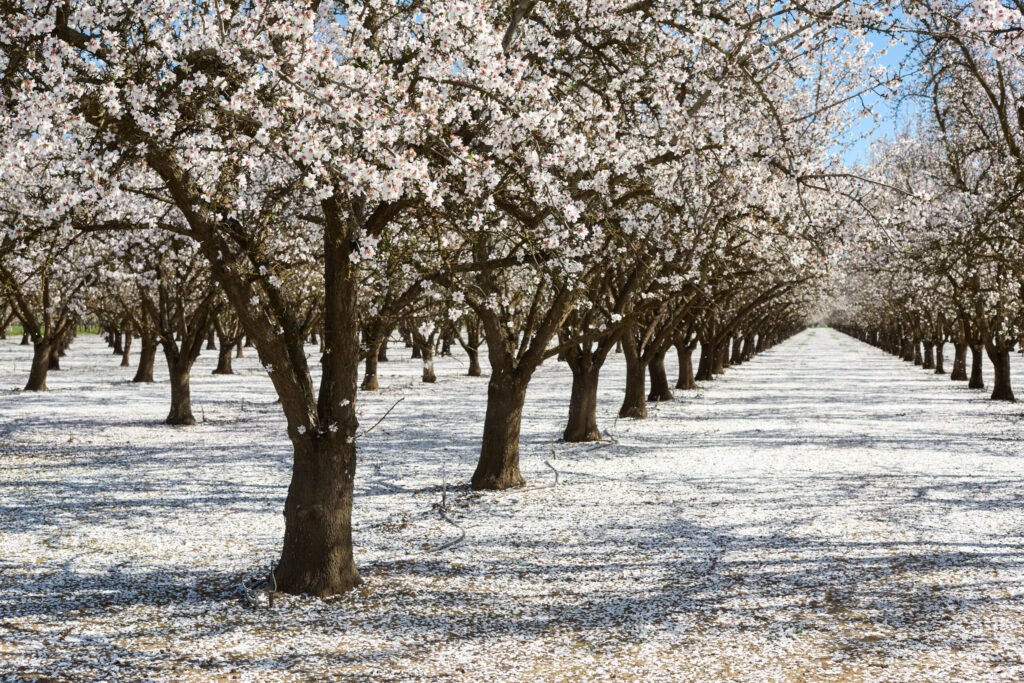
Project Apis m. exists because of a dependency most people outside commercial agriculture don’t realize is so extreme: California’s almond crop, the largest single pollination event in the world, requires roughly two hives per acre across hundreds of thousands of acres each February, drawing in a majority of all managed honey bee colonies in the entire United States for a bloom window that lasts only a few weeks. That scale means almond growers have as direct a financial stake in honey bee health as beekeepers do — a bad year for bee losses is a pollination-capacity crisis for the industry, not just a beekeeping problem. Founded in 2006, Project Apis m. was built explicitly around that shared interest, bringing commercial beekeepers and growers together to fund the kind of applied bee-health research neither side alone had been able to prioritize or pay for through existing channels.
How It’s Funded and What It’s Spent On
Unlike a federal research agency, Project Apis m. is a nonprofit entirely funded by donations — from beekeepers, from growers, and from corporate sponsors in agriculture and adjacent industries. According to the organization’s own account of its mission and history, it has invested more than $13 million into honey bee research since its 2006 founding, spread across roughly 200 individual projects. Corporate sponsorship has come from companies like Bayer CropScience, which gave $100,000 specifically to sponsor the organization’s honey bee forage program, and from Costco, which partnered with Project Apis m. in 2013 to launch a scholarship program supporting graduate students entering honey bee research — a direct investment in the pipeline of future bee scientists rather than only in near-term projects.
Seeds for Bees: Fixing the Almond Forage Gap
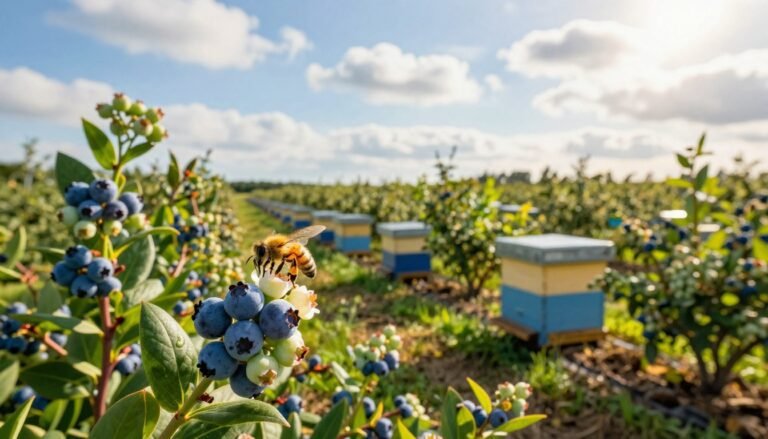
One of the organization’s most visible ongoing programs directly addresses a problem specific to almond pollination: once the bloom ends after a few weeks, a conventional almond orchard floor is typically bare dirt or mowed grass, offering bees essentially nothing to forage on for the rest of the year, even though many of those same colonies remain in the area or return seasonally. Seeds for Bees pays participating growers to plant flowering cover crops in orchard rows and margins, extending the available forage window well beyond almond bloom itself and giving colonies a meaningfully better nutritional base heading into the rest of their pollination season. The program is a direct, unglamorous fix rather than a headline-grabbing research breakthrough, but it targets exactly the kind of practical, field-level problem the organization was built to solve.
Why “Practical” Research Is the Whole Point
What distinguishes Project Apis m. from a typical academic research grant program is its board structure: it’s guided by a board of working beekeepers rather than solely by academic researchers or agency administrators, and that board explicitly prioritizes projects likely to produce tools and practices a commercial beekeeper can actually use, not just findings that advance scientific understanding for its own sake. That orientation matters in an industry where a genuinely useful piece of research — a better varroa monitoring method, a forage program that measurably improves colony nutrition, a hygienic breeding line beekeepers can actually source — can matter more to day-to-day survival than a well-cited paper that never reaches the apiary. It’s a similar practical-first philosophy to what drives this site’s coverage of the Bee Informed Partnership, another organization built around getting usable colony-health data directly into beekeepers’ hands, and it sits alongside more policy- and marketing-focused organizations like the American Beekeeping Federation and the National Honey Board as one more piece of the institutional infrastructure supporting American beekeeping, each with a different specific mission.
The Funding Picture in Numbers
The scholarship program’s structure is worth spelling out because it reveals how deliberately long-term the investment is: each award supports a single doctoral researcher for up to three continuous years at $50,000 per year, rather than a one-time grant, specifically so recipients can complete a multi-year research program instead of scrambling to renew funding annually — a structure aimed at keeping talented researchers in honey bee science rather than losing them to better-funded fields partway through a degree.
The project-level spending follows the same practical logic. Past funded work has included improved varroa mite monitoring methods, forage-quality research tied directly to the Seeds for Bees program, and breeding-line evaluations aimed at hygienic behavior — the trait colonies use to detect and remove diseased brood before it spreads — rather than open-ended studies with no clear path back to a working apiary.
That project-selection philosophy is also why the organization’s board composition gets mentioned specifically whenever Project Apis m. is compared to a typical federal or university grant program: a board of working beekeepers evaluating funding proposals brings a direct, current sense of what actually matters at the hive level, which is a genuinely different filter than an academic peer-review panel applies.
Project Apis m.’s own mission statement is direct about what it exists to do:
“Project Apis m. is dedicated to supporting honey bee health and pollination security through practical, science-based solutions.”
Project Apis m., official mission statement
| Program / Partner | Detail |
|---|---|
| Total research investment | Over $13 million since 2006, across roughly 200 projects |
| Seeds for Bees | Pays growers to plant flowering cover crops in and around orchards |
| Bayer CropScience gift | $100,000 donated to sponsor the honey bee forage program |
| PAm-Costco Scholarship (est. 2013) | Up to $50,000/year for three years per doctoral researcher; over $740,000 awarded in the US and $140,000 in Canada to date |
Frequently Asked Questions
Is Project Apis m. a government agency?
No. It’s a nonprofit organization funded entirely by donations from beekeepers, growers, and corporate sponsors, not a government or federally funded research body.
What does Project Apis m. actually fund?
Practical, field-usable honey bee health research and programs, including forage initiatives like Seeds for Bees, rather than purely academic research with no direct application for working beekeepers.
Why are almond growers involved in bee research funding?
California’s almond industry depends on roughly two-thirds of all managed U.S. honey bee colonies for pollination each February, giving growers as direct a financial stake in colony health as beekeepers themselves.
What is the Seeds for Bees program?
A Project Apis m. program that pays participating growers to plant flowering cover crops in and around orchards, extending forage availability for bees well beyond the short almond bloom window.
How much has Project Apis m. invested in research so far?
More than $13 million since its 2006 founding, across roughly 200 individual honey bee health projects, according to the organization’s own published history.