Reviewed by Thomas B. · How we review
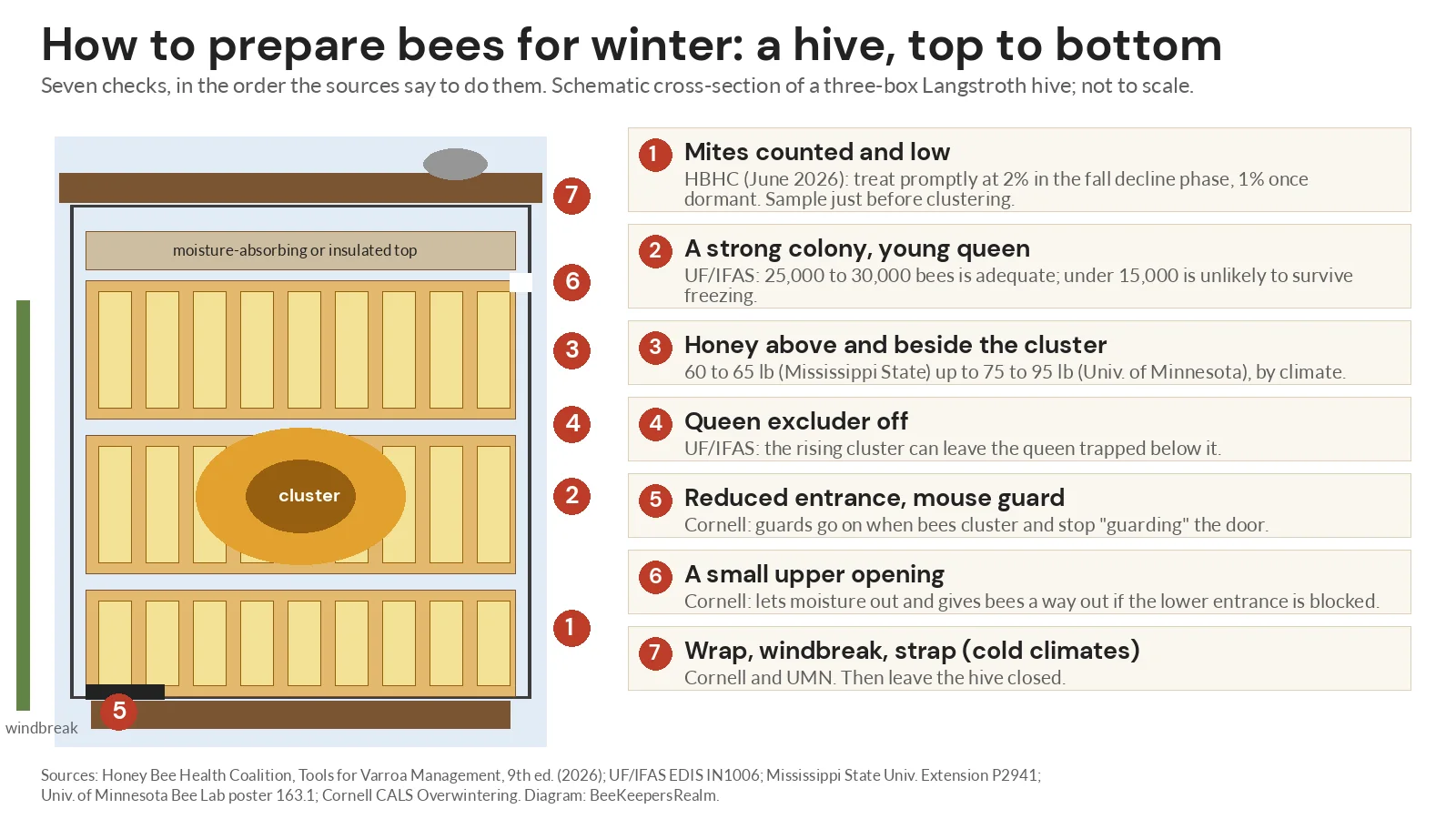
To prepare bees for winter, work in this order: count and treat mites first, confirm each colony has enough bees and a queen, check that honey is stored above and beside the cluster, then cut the hive down to the space the bees can hold, fit a mouse guard and a small upper opening, and add moisture control, insulation and wind protection where winters are cold. Start while days are still warm enough to open the hive, which in the coldest parts of the country means August.
Climate changes the numbers and the extras, not the sequence. Below, each step points to our detailed guide on it, and a table compares what extension services in cold, mid-Atlantic, Gulf and Florida climates actually tell beekeepers to do. Mite thresholds come from the Honey Bee Health Coalition’s June 2026 edition, and the loss figures are from the 2025-2026 US Beekeeping Survey.
Key Takeaways
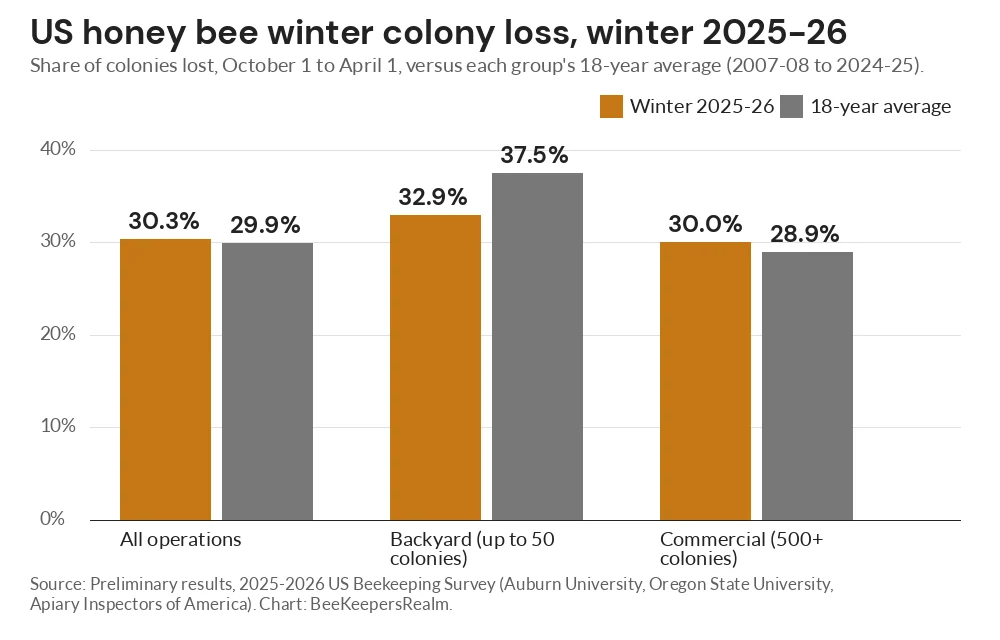
- About 30% of US colonies died last winter: an estimated 30.3% from October 1 to April 1, and 32.9% for backyard beekeepers.
- Do mites first. Bees raised from late summer through October become the winter cluster, and Mississippi State Extension warns that mite-heavy colonies raise short-lived, virus-infected winter bees.
- The Honey Bee Health Coalition says to treat promptly at 2 mites per 100 bees during fall decline and at 1 per 100 once bees are dormant, and to check every product label for its temperature range.
- Honey targets run from 60 to 65 pounds in Mississippi State’s guidance to 75 to 95 pounds in Minnesota’s. They are weights of honey, not of the hive.
- Starvation, dripping condensation and drafts are the hazards the extension guides stress. Give the hive a small upper opening, then leave it closed.
Table of Contents
- Why Winter Prep Is Worth the Effort
- The Order of Work
- Step 1: Get Mites Down Before Winter Bees Are Raised
- Step 2: Check Colony Strength and the Queen
- Step 3: Honey Above and Beside the Cluster
- Step 4: Shrink the Hive and Guard the Entrance
- Step 5: Moisture, Insulation and Wind
- What Changes Where You Live
- After the Hive Is Closed
- Frequently Asked Questions
- The Bottom Line
Why Winter Prep Is Worth the Effort
Winter is when US beekeepers lose the most colonies. In the preliminary 2025-2026 US Beekeeping Survey, run by Auburn University, Oregon State University and the Apiary Inspectors of America, an estimated 30.3% of managed colonies were lost between October 1 and April 1. That is 0.4 percentage points above the 18-year average of 29.9%, but 10 points below the previous winter, the worst the survey has recorded.
Backyard beekeepers lost 32.9%, against 30.0% for commercial operations, and state-level winter losses ranged from 6% to 81.4%. Almost half of the respondents, 48%, lost more than they consider acceptable. The survey’s authors also cite earlier work linking winter losses to how beekeepers control Varroa, which is where the order of work below begins.
The Order of Work
The sources agree more on sequence than on numbers. Cornell’s guide for cold climates starts fall management before the last nectar flow ends, because once frost arrives there is no time to turn a struggling colony around. It adds that the work has to be done while daytime temperatures are still above 50°F, since opening a colony in the cold is stressful at best and lethal at worst. Anything that needs warm weather therefore comes first: mite treatment, syrup, any look inside the box. Wrapping and insulating, which do not, come last.
| Step | What to do | You are done when | Detail |
|---|---|---|---|
| 1. Mites | Sample, then treat if over threshold | A post-treatment sample is under 2% (1% once dormant) | Step 1 |
| 2. Colony | Combine weak colonies, replace old queens | Each colony has a laying queen and roughly 25,000 or more bees | Step 2 |
| 3. Stores | Weigh or heft, feed 2:1 syrup while it is still warm | Stores meet the figure for your winter length | Step 3 |
| 4. Space and entrance | Remove supers and the queen excluder, fit a reducer and mouse guard | Bees cover every box left on, and mice cannot get in | Step 4 |
| 5. Moisture and wind | Add a small upper opening, a moisture-absorbing or insulated top, and a wrap where cold | Air can leave the top, and the lid is strapped down | Step 5 |
Thresholds: Honey Bee Health Coalition, Tools for Varroa Management, 9th edition (June 11, 2026). Colony size: UF/IFAS EDIS IN1006.
Step 1: Get Mites Down Before Winter Bees Are Raised
Varroa timing is the part most winter checklists bury. In a hive where cold winters keep bees home, bee numbers peak in July and bottom out in December, but mite numbers lag behind them. Mites are still climbing in August just as the bee population starts to shrink, which, Cornell says, leaves an unfavorable mite-to-bee ratio when the bees cluster. Its advice is to measure mites in late July or early August and treat promptly.
Mississippi State University Extension explains why timing matters so much. The bees produced from late summer through October form the wintering cluster, and they carry more body fat than summer bees so they can live several months.
“High mite loads in September and October can translate into high numbers of virus-infected winter bees that do not survive the winter.”
That publication advises making the treatment decision in early summer, so that miticides are out of the hive before winter bees are being raised. Virginia Cooperative Extension’s year calendar puts the same job in October: remove Varroa control if the colonies were treated.
The Honey Bee Health Coalition’s 2026 guide gives conservative thresholds for an alcohol or soap wash, counted as mites per 100 adult bees.
| Colony phase | Immediate control not needed | Control promptly |
|---|---|---|
| Population decrease (late summer and fall) | Under 2% | 2% |
| Dormant (clustered) | Under 1% | 1% |
Source: Honey Bee Health Coalition, Tools for Varroa Management, Table 1 (9th edition, June 11, 2026). The guide says thresholds are an evolving science, often regional, and suggests asking your local apiary inspector or extension service. It also advises sampling just before clustering to confirm the bees go into dormancy healthy.
Most products have temperature limits, so read the label before choosing one in late fall. For colonies with no brood, the same guide lists oxalic acid, by dribble or vaporization, among its best dormant-phase options and reports 82 to 99% effectiveness when brood is absent. It notes risks from opening the hive below 40°F, and that vaporizing oxalic acid is hazardous to the person applying it, so protective equipment is required.
This is educational information, not professional advice. The product label is the legal instruction, so follow it exactly. For month-by-month timing, see our Varroa treatment calendar.
Step 2: Check Colony Strength and the Queen
A treated colony still has to be big enough to hold heat. UF/IFAS calls 25,000 to 30,000 bees adequate for overwintering and says colonies under 15,000 are unlikely to survive freezing temperatures, though they may make it through in milder places. Mississippi State’s advice for early autumn is to combine hopelessly weak colonies, partly so empty equipment does not become a target for small hive beetles and wax moths. The exception is a colony sick with Varroa, Nosema or any contagious disease: do not stack it on a strong one.
Confirm a good egg-laying queen at the same visit. Mississippi State recommends replacing queens older than two years, and Virginia’s calendar lists the same job for September. Early fall is also when disease checks pay off, since UF/IFAS notes that clustered bees in a tight space let pests and pathogens multiply, and that Nosema and tracheal mites are bigger problems in winter. If you are building a small colony up for its first winter, our guide to building up a nuc before winter covers it.
Step 3: Honey Above and Beside the Cluster
How much honey a colony needs depends mostly on how long it has to live on stores, so extension guidance varies with climate. The figures below are pounds of honey or stored syrup for a full-size colony. Our winter honey guide explains why published numbers seem to disagree, mostly because some count the whole hive’s weight.
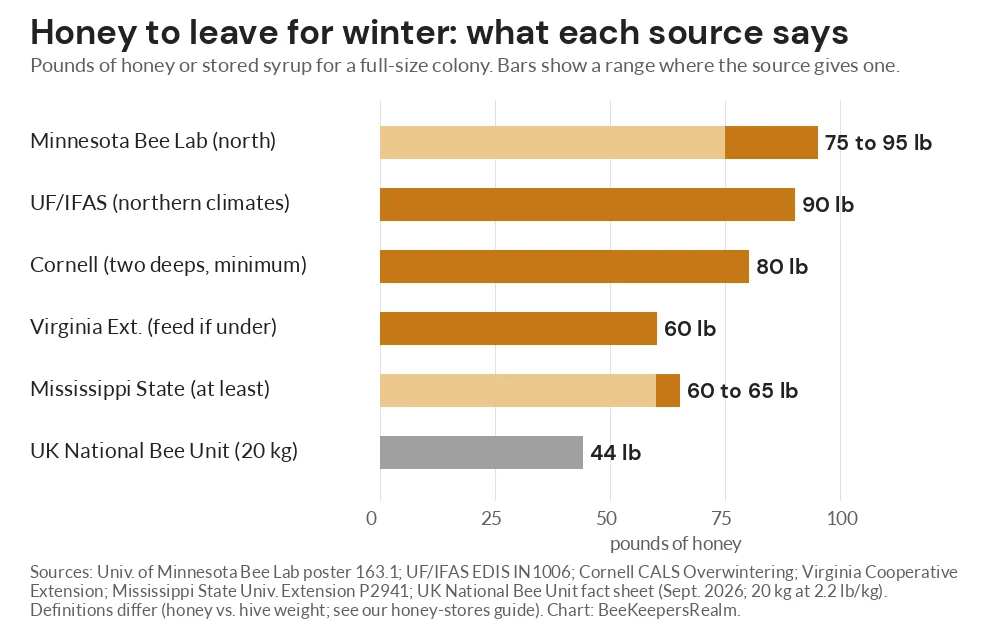
Cornell sets the minimum for a full-size hive of two deep boxes at 80 pounds and for a nuc at 50, and it argues for generosity.
“It is better to welcome live bees in the spring sporting an extra box full of last season’s honey, than to open a hive full of bees that starved to death.”
Placement counts as much as weight. UF/IFAS describes the natural pattern, with brood in the lower box ringed by pollen and then capped honey, and says stores must be above and beside the cluster because it moves upward as it eats. Mississippi State puts the heaviest combs in the center of the box. To check without opening the hive, UF/IFAS suggests a lift test: tilt the hive forward using the rear handhold of the bottom box with one hand. If it is hard to rock, there is probably enough food. Our no-open winter checks cover heft-and-listen methods.
If a colony is light, the window to fix it is short. Cornell says syrup must go on while bees can still cure it, uses 2:1 sugar to water in the fall rather than 1:1, and warns that upstate New York beekeepers cannot count on feeding past the end of September. Mississippi State says to finish by the end of October and cautions that liquid feed in very cold weather can chill the cluster. See syrup ratios by season for the mixing details.
After that, switch to solid food placed over the cluster: fondant, the mountain camp dry-sugar method, or a candy board or sugar bricks. Mississippi State warns against overheating sugar when making candy, because heat produces HMF, which is toxic to bees in tiny concentrations.
Step 4: Shrink the Hive and Guard the Entrance
Bees heat only their cluster, not the box around it, so every empty box is extra space they cannot warm. Cornell puts it bluntly: bees do not heat the hive, and drafts through cracks or warped boxes can drain heat from the cluster. Take off the supers (Virginia’s calendar says to remove all excess supers in September) and check that the boxes left on fit tightly.
Take off the queen excluder too. UF/IFAS says to remove any excluder still on after the last nectar flow, because the cluster climbs through the hive over winter and the queen can be trapped below it.
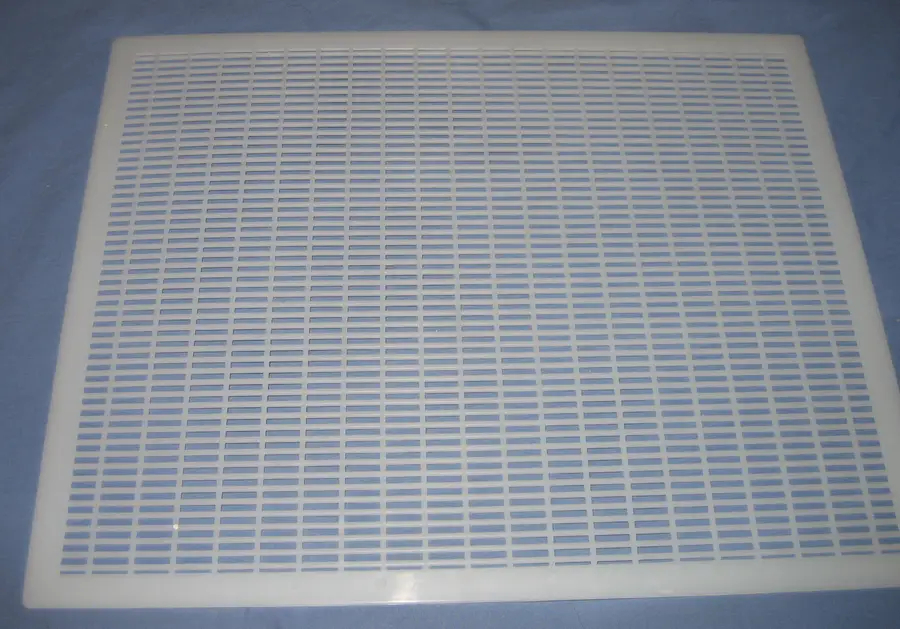
Then close the door to rodents. Cornell explains that in fall, mice look for warm places and can crawl in through lower entrances once the bees cluster and stop guarding the opening. It recommends mouse guards in the lower entrances, either bought or made from hardware cloth cut to the entrance width, at least three times the entrance height, and folded in half, and notes that a hive stand helps. Virginia’s calendar adds a reducer in October. See mouse guard hole size for what opening to leave.
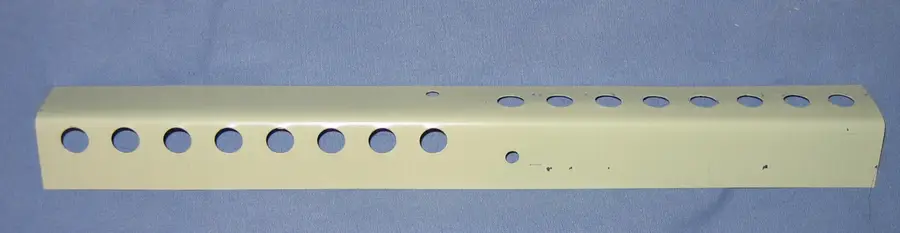
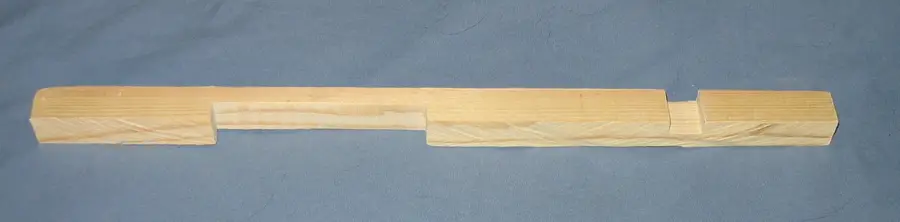
Keep a way out at the top, though. UF/IFAS says hive entrances should be open at the bottom and at the top, and Cornell notes that an upper entrance lets bees leave on a cleansing flight if the lower one is blocked by snow or dead bees. Which to open when is covered in upper versus lower entrance in winter.
Step 5: Moisture, Insulation and Wind
Bees burn honey for heat, and the byproducts are carbon dioxide and water. Carbon dioxide drifts out; the water condenses on the coldest surface, usually the underside of the cover, and drips back on the cluster.
“Wet bees in cold weather will soon be dead bees.”
Cornell’s fix is a small upper entrance, made with a shim under the inner cover or a notch in it. If the telescoping cover is not insulated, it suggests a moisture-absorbing, insulating layer over the inner cover, anything from a sheaf of straw to a shallow box filled with burlap and shavings, as long as the upper opening stays clear. The University of Minnesota Bee Lab’s wrapping poster uses a porous moisture board on the inner cover soon after the first of November, with a winter wrap over the colony and the cover set slightly crooked so air reaches the board. Our guides compare the options: quilt box versus moisture board and fixing a wet hive.
Wraps come next, where winters call for them. UF/IFAS says beekeepers in the far northern states and Canada may wrap colonies to cut wind and to warm the hive on sunny days. Cornell says wrapping helps even tight hives, though it is less critical, and gives a homemade method: roofing paper around the boxes with an overlap of at least 8 inches, stapled and tied, with the upper entrance cut open. Products are compared in the best hive wraps for cold climates, and thick-walled hives in the best beehive for cold climates. Flow Hive owners have a separate job pulling the super, covered in Flow Hive winter prep.
Finish with wind. Cornell says a windbreak cuts wind speed downwind for up to 30 times its height, works best at 40 to 60 percent solid, and should not sit in a low spot where cold, damp air pools; UF/IFAS adds that hives should still get early-morning sun. Strap the lid or weigh it down. For the full northern routine, with dates and the controlled studies behind each step, see our northern states winterizing guide.
What Changes Where You Live
Beekeeping is local, and extension services in different regions emphasize different things. This table pulls from four of them, using only what each publication says.
| Region (source) | When the fall work runs | Honey figure | What it stresses |
|---|---|---|---|
| Cold north: Cornell CALS, UF/IFAS (northern climates) | Starts in August; liquid feeding is not dependable past the end of September in upstate New York | 80 lb minimum for two deeps (Cornell); about 90 lb (UF/IFAS) | Upper entrance, insulated or moisture-absorbing top, wrap, windbreak, mouse guard |
| Mid-Atlantic: Virginia Cooperative Extension | Mite check in August; unite and requeen in September; first frosts toward the end of October | Feed heavy syrup if under 60 lb of honey (two full supers or one deep) | Reducer in October, ventilation spacer and offset boxes, cover the screened bottom in November |
| Lower South: Mississippi State University Extension | Late August to October raises the winter bees; finish feeding by the end of October; brood is usually gone by mid-November | At least 60 to 65 lb above the cluster | Mite control before winter bees, candy board as emergency food |
| Central Florida: UF/IFAS Beekeeping Management Calendar | October to December | No figure; feed if light, because “colonies can starve” | Varroa monitoring, Nosema, small hive beetles; in August, ventilation because it is hot |
Sources: Cornell CALS, Overwintering; UF/IFAS EDIS IN1006; Virginia Cooperative Extension, A Beekeeper’s Year in a Virginia Apiary; Mississippi State University Extension P2941; UF/IFAS EDIS IN848. Checked October 22, 2026.
The pattern is that the further north you keep bees, the earlier the work must start and the more insulation and moisture control are added on top of mites and food. A mild climate does not erase the job. Florida’s calendar still lists feeding, mite and Nosema checks for the cold season. Local guidance beats any national figure, so ask your state apiarist or county extension office. Related regional guides: cold-winter, short-summer climates, the Great Plains, extreme cold, indoor overwintering and, for wet maritime winters, the Pacific Northwest.
After the Hive Is Closed
UF/IFAS’s advice for winter is to manipulate hives as little as possible and, if a quick look is unavoidable, to do it only on warmer days above 50°F. Instead of opening it, watch the entrance, heft the back of the hive about once a month, and keep it clear. Cornell suggests sweeping dead bees out of the lower entrance about monthly with a thin stick, taking care not to knock on the hive, and says snow over the entrance is not an emergency because air moves through it.
Cornell says you can lift the outer telescoping cover briefly on a mild day and look: bees at the hole in the inner cover are running out of food and need fondant or granular sugar immediately. What counts as normal at the door is in our guide to dead bees in front of the hive, and what the cluster is doing inside is in what bees do in winter inside the hive.
Frequently Asked Questions
When should I start preparing bees for winter?
As soon as the last honey is off. Cornell starts in August in upstate New York, before the last nectar flow ends, and Virginia’s calendar has a mite check in August. Farther south the window shifts later, but mites come first everywhere.
How can I keep my bees alive during the winter?
Follow the sequence above: control mites, keep only colonies that are strong and queenright, leave enough honey above the cluster, remove the queen excluder, guard the entrance, vent moisture out of the top, and leave the hive closed.
How much honey should I leave my bees for winter?
Extension figures run from 60 to 65 pounds in Mississippi to 75 to 95 pounds in Minnesota. See the honey guide for frames and boxes.
How cold is too cold for bees to survive?
There is no single temperature. Cornell’s guide covers colonies where November to March highs average about 35°F and lows 18°F, and UF/IFAS describes wintering in extreme northern climates such as Alaska and northern Canada, where special fall preparations are needed. What kills clustered bees is starvation, dripping condensation, drafts, or a weak, mite-weakened colony.
Do I need to wrap my hives?
Only where winters are cold. UF/IFAS mentions wrapping for the far northern states and Canada, while Virginia’s fall list emphasizes a reducer, a ventilation spacer and the bottom board instead. Whatever you use, keep the upper opening clear.
Should I feed my bees in the fall?
Feed if stores fall short of your region’s figure, using 2:1 syrup while it is warm enough for bees to process it. After that use fondant, dry sugar or a candy board.
Do bees need winter prep in the South or Florida?
Yes, though it looks different. Florida’s calendar lists feeding if light, Varroa monitoring and Nosema checks from October to December.
The Bottom Line
Start with mites, finish with the wrap, and check your regional figures against a local source. Then close the hive and leave it alone until a warm day.