Last Updated September 14, 2026
Alongside the Langstroth hive and wax foundation, the centrifugal honey extractor completes the trio of 19th-century inventions that transformed beekeeping from a destructive, comb-sacrificing practice into the reusable, sustainable system modern beekeepers take for granted. Its inventor, Franz von Hruschka, solved a genuinely persistent practical problem that had limited honey production for essentially as long as people had kept bees in any organized fashion.
Key Takeaways
- Franz von Hruschka, an Austrian-Italian officer with a serious hobbyist interest in beekeeping, invented the centrifugal honey extractor over the winter of 1864–65, publicizing it at the Brno Beekeepers’ Conference in September 1865.
- Before the extractor, harvesting honey meant crushing the comb entirely — bees had to rebuild it from scratch, a real drain on colony resources, after every single harvest.
- Alongside the Langstroth hive and wax foundation, the extractor completed a three-part technological shift that made comb genuinely reusable, enabling the commercial-scale beekeeping industry that followed.
- Design evolved from Hruschka’s simple tin-and-wire original through tangential, then radial, frame arrangements, and from hand-cranked to motorized power — but the underlying centrifugal principle hasn’t changed.
- Hruschka is less individually remembered by the public than Langstroth, but his invention was every bit as practically transformative to the overall beekeeping system.
Table of Contents
- What Is a Honey Extractor?
- Before Extractors: The Crush-and-Strain Problem
- Franz von Hruschka’s 1865 Invention
- The Often-Told Origin Story
- How the Invention Spread
- Why Reusable Comb Was Such a Big Deal
- Enabling Commercial-Scale Honey Production
- From Tangential to Radial Design
- From Hand Crank to Motor
- Modern Extractors Today
- Crush-and-Strain vs. Early Extractors vs. Modern Extractors
- Common Misconceptions
- Frequently Asked Questions
What Is a Honey Extractor?
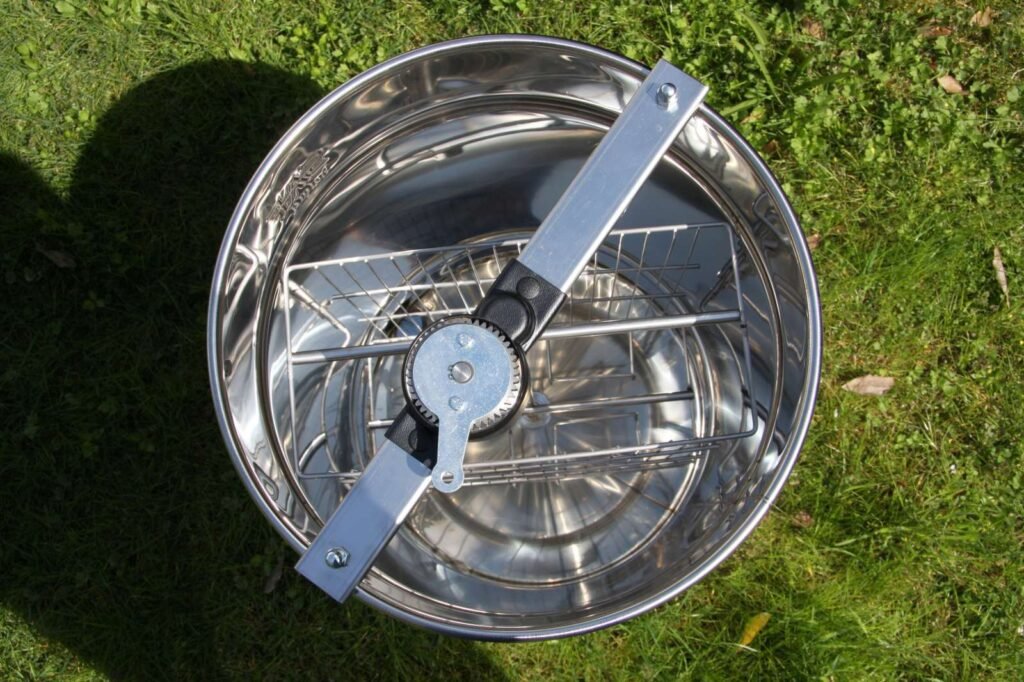
A honey extractor is a device that removes honey from comb using centrifugal force, spinning frames of uncapped honeycomb fast enough to fling the honey out against the extractor’s walls while leaving the wax comb structure itself largely intact. This allows the emptied comb to be returned to the hive for bees to refill, rather than being destroyed in the harvesting process.
Before Extractors: The Crush-and-Strain Problem
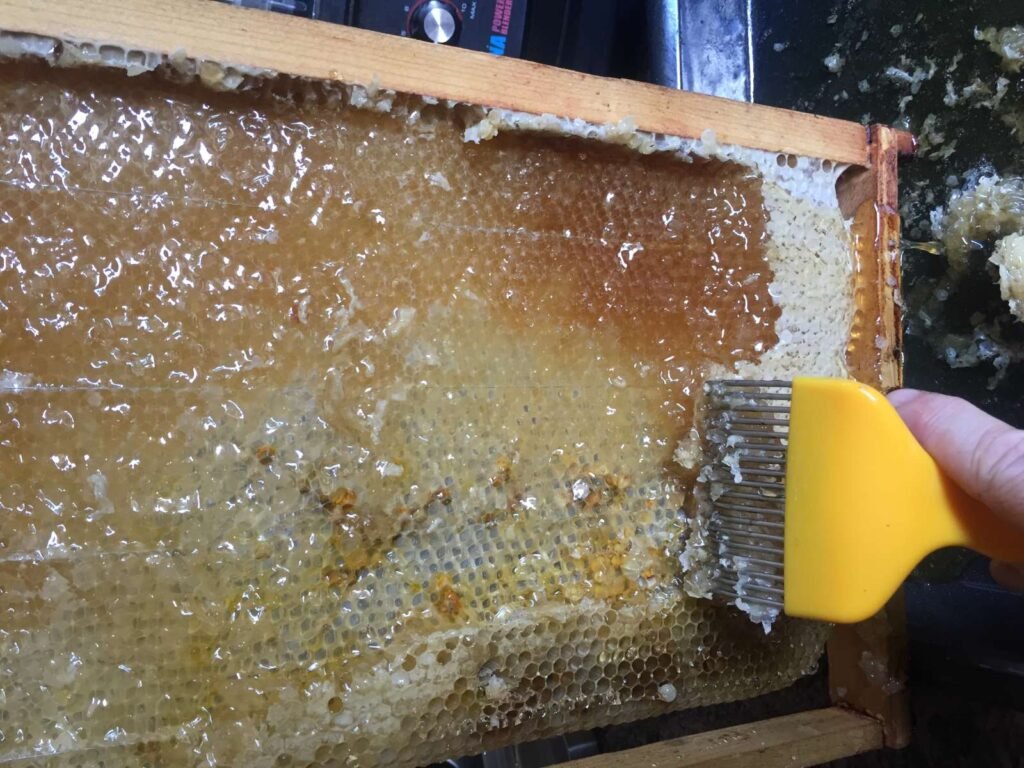
Before the centrifugal extractor existed, harvesting honey generally meant crushing the wax comb entirely and straining the resulting mess through cloth to separate honey from wax and debris. This crush-and-strain method destroyed the comb completely with every single harvest, meaning bees had to rebuild their wax comb from scratch after every honey collection — a genuinely significant drain on colony resources, since wax production requires bees to consume considerable amounts of honey and nectar just to generate the raw material for new comb.
Franz von Hruschka’s 1865 Invention
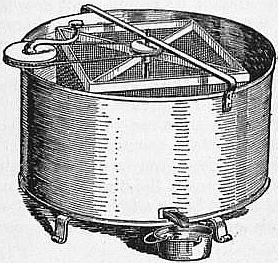
Franz von Hruschka, generally described in beekeeping history as an Austrian military officer with a genuinely serious personal interest in beekeeping, is credited with inventing the first practical centrifugal honey extractor in 1865. His device used spinning motion to fling honey out of uncapped comb cells through centrifugal force, leaving the comb structure itself intact and ready to be returned to the hive — solving the crush-and-strain problem directly rather than incrementally improving on it.
The Often-Told Origin Story
Beekeeping history commonly repeats an origin story for this invention: that Hruschka was inspired after observing comb being spun in a basket, with honey flung outward by the same centrifugal force his later device would harness deliberately. This anecdote is worth including honestly as the commonly told account rather than presenting it as an unquestionably verified historical fact, since origin stories like this one can take on embellishment over repeated retelling across more than a century and a half of beekeeping literature.
How the Invention Spread
Following Hruschka’s 1865 invention, news and demonstrations of the centrifugal extractor spread relatively quickly through European and American beekeeping circles, aided by beekeeping journals and societies of the era that actively shared new techniques and equipment innovations across borders. This rapid spread reflects just how immediately useful beekeepers recognized the invention to be, in stark contrast to some other beekeeping innovations that took considerably longer to gain widespread acceptance.
Why Reusable Comb Was Such a Big Deal
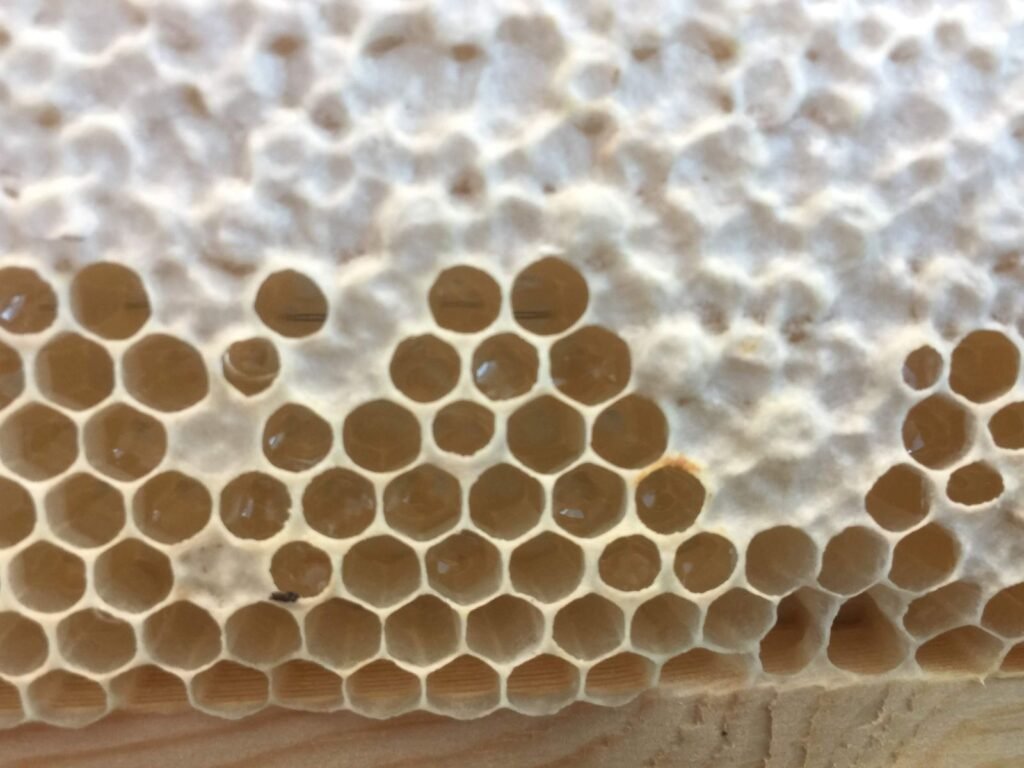
The practical impact of preserving comb rather than destroying it during every harvest was substantial: bees freed from constantly rebuilding wax comb from scratch could redirect that energy and resource investment toward honey production instead, meaningfully increasing overall yield potential. Combined with the Langstroth hive’s movable frames and Mehring’s wax foundation, the centrifugal extractor completed a genuine three-part technological shift that transformed 19th-century beekeeping from a largely destructive harvest cycle into the sustainable, comb-reusing system still in use today.
Enabling Commercial-Scale Honey Production
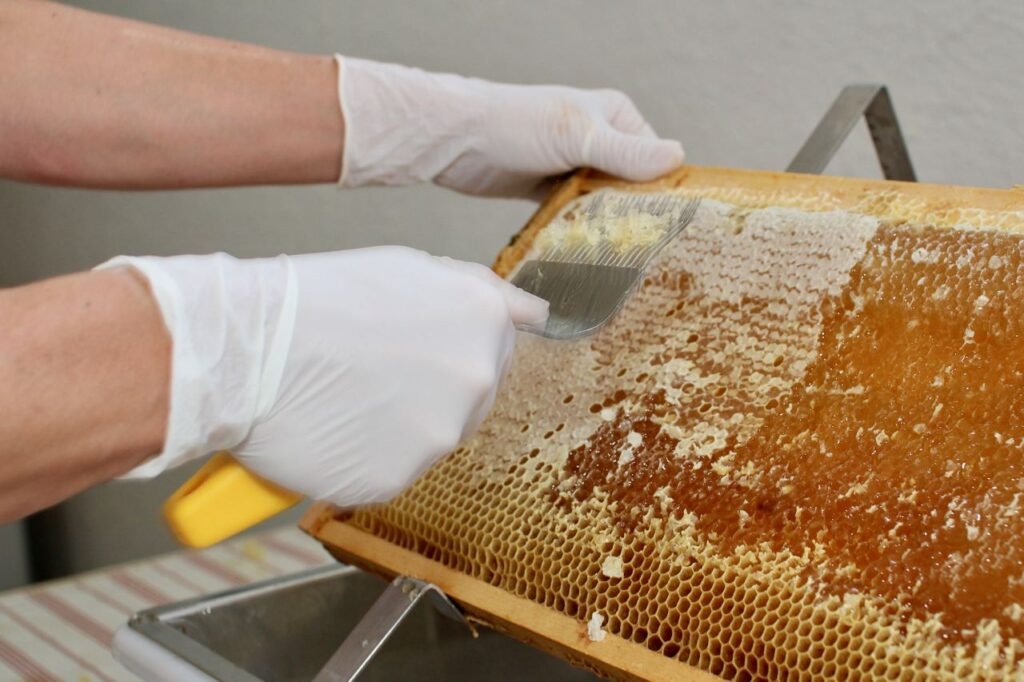
The efficiency gains from reusable comb weren’t just a convenience for individual hobbyist beekeepers; they were a genuine enabling factor for honey production at a larger commercial scale. Beekeepers managing many colonies could extract and return comb repeatedly within a single season rather than needing bees to rebuild wax from scratch after every harvest, meaningfully increasing the honey volume a given number of colonies could realistically produce and helping lay groundwork for the commercial beekeeping industry that developed over the following decades.
From Tangential to Radial Design
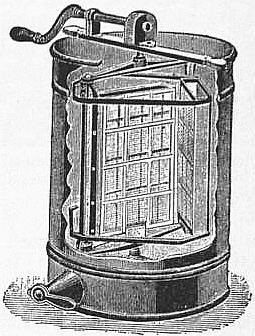
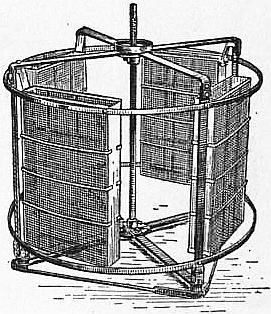
Early extractor designs held frames tangentially, meaning only one side of a frame faced outward toward the extractor wall at a time, requiring beekeepers to manually flip each frame partway through extraction to empty the opposite side. Radial extractors, developed later as a refinement on the original tangential design, hold frames pointing outward from a central axis like spokes on a wheel, allowing centrifugal force to pull honey from both sides of each frame simultaneously without manual flipping — a genuine efficiency improvement for beekeepers processing larger numbers of frames.
From Hand Crank to Motor
Hruschka’s original extractor and many early successors were hand-cranked, requiring direct manual effort to spin the frames at sufficient speed. Over the following decades, motorized extractors became increasingly available, considerably reducing the physical labor involved in extraction, particularly significant for beekeepers managing larger numbers of hives where hand-cranking every batch of frames would represent a substantial and repetitive physical burden.
Modern Extractors Today
Today’s beekeepers choose between a range of extractor sizes, designs, and automation levels, from small hand-cranked tangential models suited to hobbyist-scale operations to large motorized radial extractors and increasingly automated systems built for commercial-scale honey production, covered in more detail in the extractor brands comparison and automated extraction technology content already on this site. The underlying centrifugal principle Hruschka introduced in 1865, however, remains fundamentally unchanged across nearly all of them.
Crush-and-Strain vs. Early Extractors vs. Modern Extractors
| Feature | Crush-and-Strain | Early Extractors (1865+) | Modern Extractors |
|---|---|---|---|
| Comb fate | Destroyed every harvest | Preserved and reusable | Preserved and reusable |
| Power source | Manual crushing | Hand crank | Motor, often automated |
| Frame design | N/A | Tangential | Tangential or radial |
| Scale suitability | Small only | Small to medium | Any scale |
Common Misconceptions
The most common misconception is assuming honey extraction always preserved the comb, when for most of beekeeping history before 1865 it fundamentally did not, making the centrifugal extractor a genuinely transformative rather than incremental invention. A second common misconception is assuming radial extractor design was part of Hruschka’s original invention, when tangential design came first and radial extraction was a later refinement developed by others building on his foundational centrifugal concept.
Frequently Asked Questions
Is the honey extractor as historically significant as the Langstroth hive?
While the Langstroth hive is often given more individual credit, the extractor, wax foundation, and movable frames genuinely functioned together as a combined technological shift, and honey extraction specifically solved the comb-destruction problem that the hive design alone didn’t address.
Do any beekeepers still use the crush-and-strain method today?
Yes. Some small-scale beekeepers, and those producing comb honey specifically, still crush and strain for certain purposes. It remains far less common than extraction among beekeepers managing drawn comb that they intend to return to the hive and reuse season after season.
Was Franz von Hruschka a professional beekeeper by trade?
He is generally described in beekeeping history as a military officer with a serious personal interest in beekeeping rather than a professional beekeeper by primary occupation, which is part of what makes his practical, hands-on invention notable.
Are radial extractors always better than tangential ones?
Not necessarily for every beekeeper; radial extractors offer efficiency for larger operations, but tangential extractors remain a genuinely practical, often more affordable choice for smaller-scale or hobbyist beekeepers who don’t need to process large frame volumes quickly.
Did Hruschka patent his extractor invention?
Historical accounts generally emphasize his practical demonstration and publication of the concept — he described his old crushing method in a July 1865 beekeeping-journal article, then announced the new centrifuge design at the Brno Beekeepers’ Conference that September — more than a widely cited formal patent process, differing from how Langstroth’s hive design is more specifically remembered as a formal 1852 U.S. patent.
Did the extractor need to be used together with the Langstroth hive, or could it work with older hive designs too?
While the extractor works most efficiently with removable, standardized frames like those the Langstroth hive introduced, the basic centrifugal principle could technically be applied to comb from other hive types as well, though the full efficiency benefit of repeated comb reuse depended heavily on having frames that could be removed and returned without damaging the surrounding hive structure.
Is there a name for the broader shift these three 19th-century inventions represent in beekeeping history?
While there isn’t one single universally standardized name, beekeeping historians commonly describe this period, spanning roughly the 1850s through the 1860s, as the foundational era of modern movable-frame beekeeping, since the Langstroth hive, wax foundation, and the centrifugal extractor together established the basic technological framework still recognizable in beekeeping equipment today.
Would beekeeping today look dramatically different if the extractor had never been invented?
Almost certainly yes; without a practical way to preserve comb through repeated harvests, beekeeping would likely have remained closer to the smaller-scale, lower-yield, comb-destroying practice common before 1865, making it considerably harder for beekeeping to scale up into the larger commercial industry that developed over the following century.
Further Reading
- Moses Quinby: The Father of Practical American Beekeeping
- New Zealand’s Beekeeping History: From Cotton’s First Hives to the Manuka Boom
- The History of Instrumental Insemination in Queen Bees
Sources: “An Early History of the Honey Extractor in America,” American Bee Journal, and a historical account of Franz von Hruschka’s life and invention.