Last Updated September 16, 2026
The USDA’s Bee Research Laboratory has run continuously since 1891 except for a brief break in 1896–1897, making it the oldest federal bee research institution in the United States — and in more than 130 years of operation, it has had only a handful of directors, starting with Frank Benton and running through today’s leadership at Beltsville, Maryland. Its core mission has barely changed in over a century: diagnosing what’s killing American honey bee colonies, for beekeepers who have nowhere else authoritative to send a sick sample.
Key Takeaways
- Federal honey bee research began in 1891 under the USDA’s Division of Bee Culture, originally based in Somerset, Maryland (near today’s Chevy Chase), and moved to its current home at the Beltsville Agricultural Research Center in 1939.
- The lab’s first director was Frank Benton, the USDA’s pioneering “bee explorer” who personally imported Cyprian and Caucasian honey bee stock to the United States — profiled separately on this site.
- Its second director, E.F. Phillips, helped build American apiculture’s scientific foundation in the early 20th century, during the same era as the Isle of Wight disease scare that briefly threatened British beekeeping.
- Bee disease identification and diagnosis has been the lab’s central, consistent mission since its founding — beekeepers and regulators worldwide have long been able to send bee and brood samples to Beltsville for authoritative diagnosis.
- The lab’s more than a century of continuous operation spans nearly every major event in modern American beekeeping history, from the 1922 Honeybee Act’s import restrictions through the 1987 arrival of Varroa mites and beyond.
- Lab scientists identified the likely cause of the massive June 2024–March 2025 U.S. honey bee die-off (roughly 1.6 million colonies lost, with many beekeepers losing 60–80% of their hives) about six months after it began: viruses spread by pesticide-resistant mites — and in July 2025, the USDA proposed closing the entire Beltsville Agricultural Research Center that houses the lab, a decision contested by Maryland’s congressional delegation and farm groups and not yet finalized.
Table of Contents
- 1891: Federal Bee Research Begins
- Frank Benton, the First Director
- The 1939 Move to Beltsville
- A Century of Disease Diagnosis
- A Front-Row Seat to American Beekeeping History
- The Lab Today: A 2025 Die-Off Breakthrough and a Proposed Closure
- Frequently Asked Questions
1891: Federal Bee Research Begins
Federal honey bee research in the United States traces back to 1891, when the USDA established what became known as the Division of Bee Culture, based initially in Somerset, Maryland — a location that today falls within the Chevy Chase area on the edge of Washington, D.C. Operations ran continuously from that founding, with only a brief interruption in 1896–1897, making the lab’s history essentially unbroken for well over 130 years. That continuity is itself unusual for a federal research program of any kind, let alone one focused on a single, comparatively narrow area of agricultural science — a sign of how consistently important honey bee health has been treated as a federal agricultural priority since well before most Americans would have thought to ask their government to fund bee research at all.
Frank Benton, the First Director
The lab’s first director was Frank Benton, a figure this site has profiled in detail in its look at Benton’s career as the USDA’s bee explorer. Benton personally traveled to source and import Cyprian and Caucasian honey bee stock for American beekeepers, and also designed the mailing cage still used in adapted form for shipping queen bees today. That the person leading the country’s very first federal bee research effort was simultaneously out in the field personally importing new bee genetics says something about how hands-on and exploratory early American apiculture science was — Benton wasn’t a desk-bound administrator overseeing lab work from a distance, he was directly responsible for some of the foundational genetic stock the American beekeeping industry built on.
| Director | Notable For |
|---|---|
| Frank Benton | First director; personally imported Cyprian and Caucasian bee stock |
| E.F. Phillips | Built out the lab’s scientific rigor in the early 20th century |
| Mr. Hambleton | Continued the lab’s core disease-diagnosis mission |
| Mr. Michael | Continued the lab’s core disease-diagnosis mission |
| Dr. H. Shimanuki | Long-serving leadership during the mid-to-late 20th century |
| Mark Feldlaufer | Led the lab into the 2000s |
| Dr. Jeffery Pettis | Research leader 2002–2017; later became an independent consultant and head of Apimondia |
Only seven people have directed the lab across more than 130 years — a remarkably low turnover for any federal research program, let alone one spanning the entire history of scientific American beekeeping. USDA’s own current lab-history page was last confirmed updated in 2016 and does not name a director more recent than Pettis, so this site has not attributed a specific name to the role today rather than repeat outdated information.
The 1939 Move to Beltsville
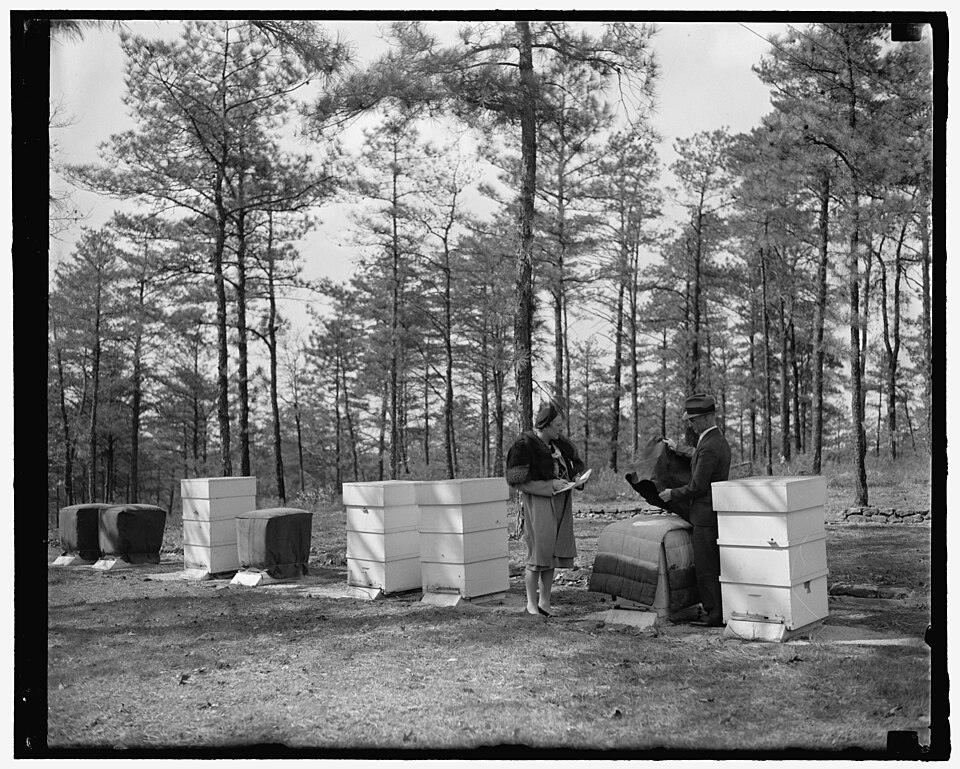
The lab relocated a number of times in its early decades before settling in 1939 at the Beltsville Agricultural Research Center in Beltsville, Maryland, where it has remained ever since — a facility that today hosts a wide range of USDA agricultural research beyond apiculture alone. By the time of the move, E.F. Phillips had succeeded Benton as director, helping build out the scientific rigor of American apiculture research during an era that included growing international concern over bee diseases, following closely on the heels of the Isle of Wight disease scare this site has covered separately, which had devastated British beekeeping in the preceding decades. The Beltsville move placed the lab within a much larger federal agricultural research campus, giving it access to shared infrastructure and scientific collaboration that its earlier, smaller Somerset location couldn’t offer.
A Century of Disease Diagnosis
Through every relocation and change in leadership, one mission has remained constant: identifying and helping control honey bee diseases. The lab’s bee disease diagnostic service has operated continuously since its founding, and for well over a century, “sending a sample to Beltsville” has been the default path for beekeepers, state apiary inspectors, and researchers worldwide who need an authoritative answer about what’s actually affecting a struggling colony. That consistency of mission across 130-plus years, spanning enormous changes in beekeeping technology and in the diseases and pests actually threatening American bees, reflects how genuinely foundational disease diagnosis has been to the entire federal apiculture research effort from day one — it was the point of the lab in 1891, and it remains the point of the lab today.
A Front-Row Seat to American Beekeeping History
Because the lab’s operation spans essentially the entire modern history of American beekeeping, its work intersects directly with several major events this site has covered separately. It predates and outlasted the debate that produced the Honeybee Act of 1922, the federal law banning live bee imports specifically to keep foreign diseases out of the country — a concern squarely within the lab’s own disease-diagnosis mandate. It was still operating, and still the default diagnostic authority, when Varroa mites were first confirmed in the United States in 1987, an event covered in this site’s history of how Varroa invaded America. Few institutions in American agricultural science can claim a documented, continuous institutional presence across that entire span of events — from the era of Frank Benton personally importing bee stock by ship, to modern molecular diagnostics for a mite that didn’t exist as an American problem until nearly a century after the lab was founded.
The Lab Today: A 2025 Die-Off Breakthrough and a Proposed Closure
The lab’s more-than-130-year mission of disease diagnosis became urgently relevant again during the massive U.S. honey bee die-off between June 2024 and March 2025, when beekeepers nationwide lost roughly 1.6 million colonies — many losing 60 to 80 percent of their hives. Roughly six months after the crisis began, Beltsville scientists identified the likely cause: viruses spread by pesticide-resistant mites. It was exactly the kind of authoritative diagnostic work the lab was built for in 1891.
That breakthrough arrived against an uncertain backdrop for the lab itself. In July 2025, the USDA announced a proposal to close the entire Beltsville Agricultural Research Center — the campus that has housed the Bee Research Laboratory since 1939 — describing the facility as underutilized and redundant.
“[The plan] right-sizes the USDA footprint, eliminates unnecessary management layers, consolidates redundant or duplicative functions, and, most importantly, allows USDA to deliver on its mission to the American people within the bounds of its available financial resources.”
— USDA spokesperson, on the proposed Beltsville Agricultural Research Center closure
The closure is proposed, not finalized: Maryland’s congressional delegation has argued it would require Congressional approval, and farm groups including the Maryland Farm Bureau have publicly opposed it and urged modernization instead. As of this writing, USDA has not specified a closure timeline or where the lab’s researchers and diagnostic work would relocate.
Frequently Asked Questions
When was the USDA’s Bee Research Laboratory founded?
Federal honey bee research began in 1891 under the USDA’s Division of Bee Culture, making it the oldest federal bee research institution in the United States.
Who was the lab’s first director?
Frank Benton, the USDA’s pioneering bee explorer who personally imported Cyprian and Caucasian honey bee stock to the United States.
Where is the lab located today?
At the Beltsville Agricultural Research Center in Beltsville, Maryland, where it has operated since 1939 after starting out in Somerset, Maryland.
What does the lab actually do?
Its core, consistent mission since 1891 has been honey bee disease identification and diagnosis, serving beekeepers, state inspectors, and researchers who need an authoritative diagnosis for a struggling colony.
How long has the lab operated continuously?
More than 130 years, with only a brief interruption in 1896–1897 — a remarkably long, largely unbroken institutional history for a single federal research program.
Is the USDA Bee Research Laboratory closing?
A closure is proposed, not confirmed. In July 2025, USDA announced a plan to close the entire Beltsville Agricultural Research Center that houses the lab, but the plan is contested by Maryland’s congressional delegation and farm groups, and no closure date or relocation plan has been announced as of this writing.
For more background on this, see USDA’s own laboratory history page and, on the 2025 die-off findings and proposed closure, KCUR/NPR’s coverage.