Five months before L.L. Langstroth patented his movable-frame hive in the United States, a German baron who had trained in law and theology, not science, designed a fully movable beehive frame of his own — independently, on the other side of the Atlantic. August von Berlepsch rarely gets mentioned in English-language beekeeping history next to Langstroth, but his invention solved the same problem at essentially the same time, and this site’s own coverage of that history has, until now, only told the American half of the story.
Key Takeaways
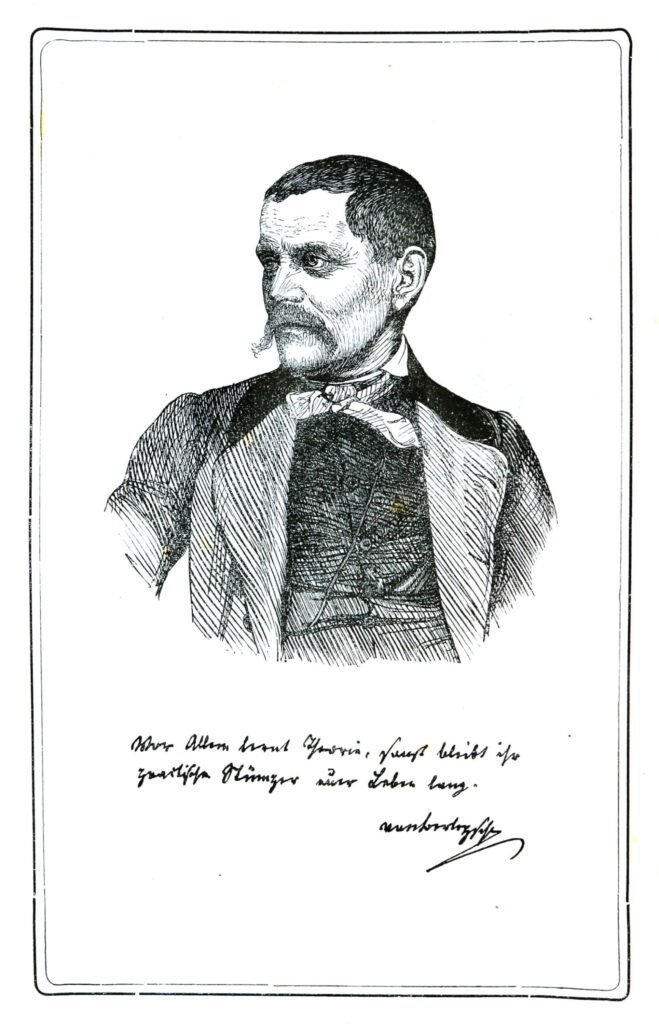
- Baron August Sittich Eugen Heinrich von Berlepsch (28 June 1815 – 17 September 1877) was a German landowner, trained in law and theology, who became one of the 19th century’s most influential practical beekeepers.
- In May 1852 he designed a fully movable beehive frame — removable on all sides rather than the fixed top-bars used in earlier Dzierzon-style hives — solving the same “how do you inspect and manage a colony without destroying the comb” problem L.L. Langstroth patented in the U.S. roughly five months later, in October 1852.
- Using hives fitted with glass observation doors, Berlepsch conducted direct experiments that confirmed fellow German beekeeper Johann Dzierzon’s then-controversial theory that drones develop from unfertilized eggs (parthenogenesis).
- He wrote several influential treatises on practical beekeeping, including Die Biene und die Bienenzucht in honigarmen Gegenden (1860) and Die Bienenzucht nach ihrem jetzigen rationellen Standpunkt (1875).
- He is buried in Munich’s Alter Südfriedhof, and a Munich street was named after him in 1886 — recognition that hasn’t translated into much English-language coverage of his work.
Table of Contents
- A Baron Trained in Law, Not Science
- The Movable Frame: 1852, Independent of Langstroth
- Confirming Dzierzon’s Parthenogenesis Theory
- Why English-Language Sources Underrate Him
- Frequently Asked Questions
A Baron Trained in Law, Not Science
August von Berlepsch was born on 28 June 1815 in Seebach, in what is now the German state of Thuringia. He studied law and theology at Gotha, Halle, and Bonn, and between 1836 and 1838 trained at the court in Mühlhausen before eventually taking over his father’s estate. Nothing in that early biography points toward a career in bee science — he came to beekeeping the way most 19th-century German landowners did, as one part of managing an estate, not as a trained naturalist.
What set him apart was the seriousness with which he then pursued it. Rather than treating beekeeping as a minor sideline, Berlepsch turned his own apiary into an active research operation, corresponding with and building on the work of other German bee scientists of the period, most notably Johann Dzierzon.
The Movable Frame: 1852, Independent of Langstroth
This site’s own history of the Langstroth hive covers how L.L. Langstroth patented his movable-frame design in October 1852, built around his discovery of “bee space” — the roughly 3/8-inch gap bees leave clear rather than filling with comb or propolis. What that coverage hasn’t included is that a workable movable frame was designed independently in Germany at essentially the same moment.
Dzierzon’s earlier hive design used fixed top-bars: beekeepers could lift out a bar of comb from above, but the comb itself was often still attached to the hive walls on the sides, making full inspection or removal awkward and destructive. In May 1852, Berlepsch improved on this with a frame that was movable and removable on all sides, not just suspended from the top. That’s a genuine, separate engineering solution to the same problem Langstroth solved with his own bee-space frame in the U.S. — and by most tellings of the timeline, Berlepsch’s design predates Langstroth’s American patent by roughly five months.
Neither beekeeper appears to have known about the other’s work at the time. The two are best understood as parallel inventors solving the same practical problem — how to inspect, manage, and harvest from a colony without cutting apart or destroying its comb — on opposite sides of the Atlantic, within months of each other.
Confirming Dzierzon’s Parthenogenesis Theory
Berlepsch’s contribution to bee science wasn’t limited to hive engineering. He built hives fitted with glass observation doors specifically so he could watch colony behavior directly rather than relying on inference from disturbed inspections. Using these observation hives, he ran direct experiments that helped confirm one of the most important — and, at the time, genuinely controversial — discoveries in 19th-century bee biology: Johann Dzierzon’s theory that drones develop from unfertilized eggs, a form of reproduction called parthenogenesis, while workers and queens develop from fertilized ones.
This mattered well beyond academic curiosity. Understanding how drones are actually produced shapes real, practical decisions beekeepers still make today — from queen breeding programs to interpreting a colony that suddenly starts producing an unusual amount of drone brood. Berlepsch’s independent, direct-observation confirmation of Dzierzon’s theory gave it a credibility it might not have earned as quickly on Dzierzon’s claims alone.
He put both strands of his work — hive engineering and direct behavioral observation — into print. His 1860 books, Die Biene und ihre Zucht mit beweglichen Waben in Gegenden ohne Spätsommertracht and Die Biene und die Bienenzucht in honigarmen Gegenden, and his later Die Bienenzucht nach ihrem jetzigen rationellen Standpunkt (1875), were practical, evidence-based treatises aimed at working beekeepers rather than purely academic audiences.
Why English-Language Sources Underrate Him
Part of why Berlepsch is so much less familiar to English-speaking beekeepers than Langstroth is simple: he wrote in German, for a German audience, and his books were never as widely translated or distributed in the English-speaking beekeeping world as Langstroth’s own writings were in the United States. Langstroth’s hive also became the dominant commercial standard across the English-speaking world — the reason this site (and nearly every modern hobbyist supply catalog) still calls a standard box hive a “Langstroth hive” rather than a “Berlepsch hive.”
That commercial dominance shouldn’t be mistaken for Berlepsch’s design being derivative or secondary. He solved the same core engineering problem, on his own, within months of Langstroth — and then went on to do genuinely important experimental work confirming one of the foundational discoveries of modern bee biology. He died in Munich on 17 September 1877 and is buried in the city’s Alter Südfriedhof; a Munich street was named after him in 1886, a level of local recognition that has never really carried over into English-language beekeeping history the way it arguably should have.
Frequently Asked Questions
Who was August von Berlepsch?
Baron August Sittich Eugen Heinrich von Berlepsch (1815–1877) was a German landowner, trained in law and theology, who became a major figure in 19th-century practical and experimental beekeeping. He’s best known for independently designing a fully movable hive frame in May 1852 and for experimentally confirming Johann Dzierzon’s parthenogenesis theory.
Did Berlepsch invent the movable-frame hive before Langstroth?
He designed his fully movable frame in May 1852, roughly five months before L.L. Langstroth’s October 1852 U.S. patent, working entirely independently and unaware of Langstroth’s work. Both are considered legitimate, separate inventors of the same underlying solution — a hive frame that can be removed without destroying the comb.
How was Berlepsch’s frame different from Dzierzon’s earlier hive design?
Dzierzon’s design used fixed top-bars that allowed some comb to be lifted from above but often remained attached to the hive’s sides. Berlepsch’s frame was movable and removable on all sides, allowing full inspection and removal without destroying the comb structure.
What did Berlepsch contribute to bee science beyond hive design?
Using hives with glass observation doors, he ran direct experiments that helped confirm Johann Dzierzon’s theory that drone bees develop from unfertilized eggs (parthenogenesis) — a foundational discovery in understanding honeybee reproduction.
Why isn’t Berlepsch as well known as Langstroth in English-language beekeeping history?
His major written works were published in German for a German audience and were never as widely translated or distributed as Langstroth’s writings. Langstroth’s hive design also became the dominant commercial standard across the English-speaking beekeeping world, which cemented his name rather than Berlepsch’s in everyday use.
Readers interested in the underlying source can consult historical records of von Berlepsch’s work.