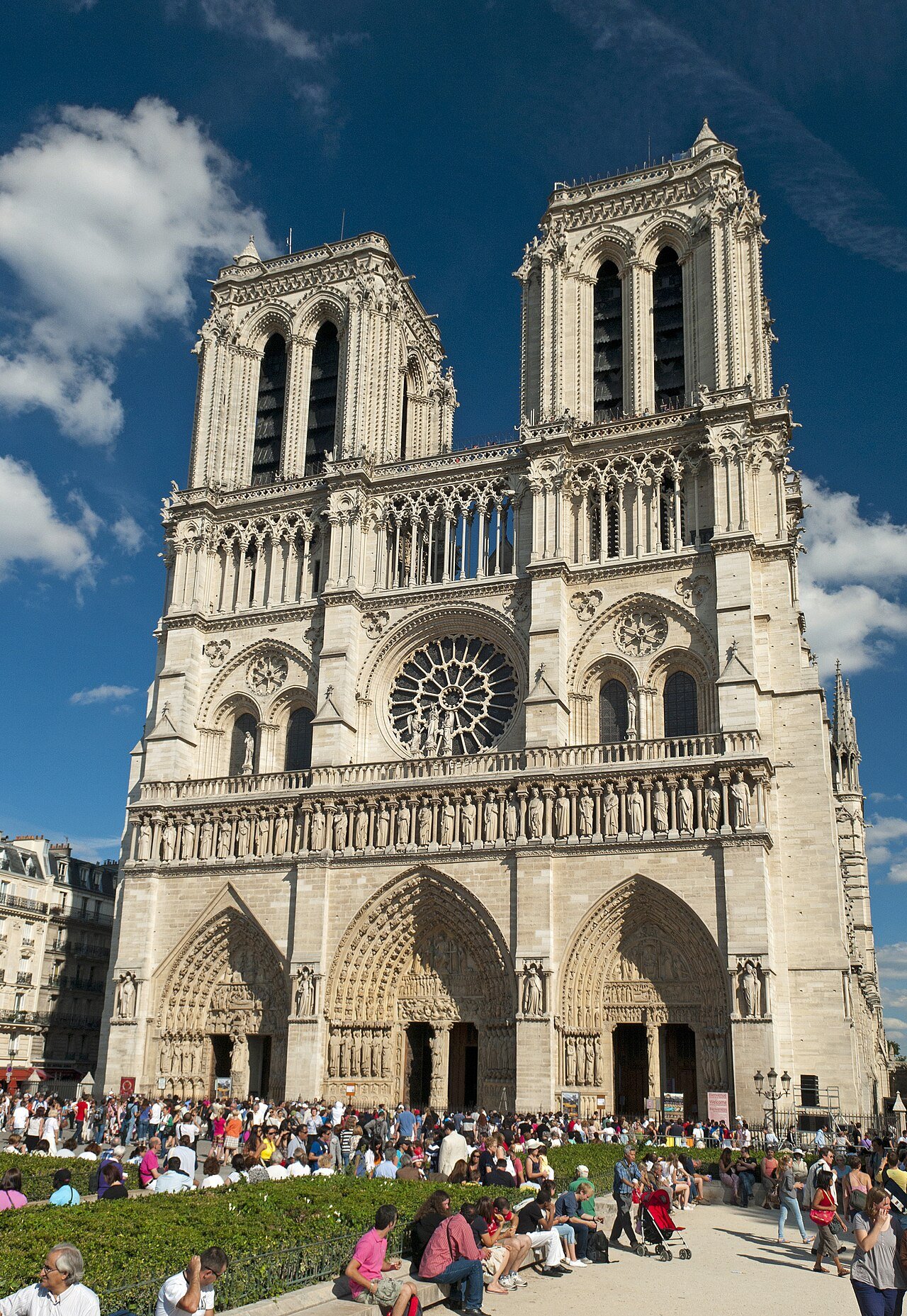
Three beehives on a lower roof of Notre-Dame Cathedral, home to roughly 180,000 bees, survived the devastating April 15, 2019 fire that destroyed the cathedral’s spire and most of its wooden roof — not because of a miracle, but because the hives sat on the sacristy roof, a separate structure about 100 feet below and away from where the fire actually burned. The story became one of the few genuinely hopeful details to emerge from that night, and it’s still frequently retold — usually without the more interesting, more accurate explanation of why it happened.
Key Takeaways
- Notre-Dame’s beehives were installed in 2013 on the roof of the sacristy, a lower annex building attached to the cathedral, as part of a Paris-wide push to support urban bee populations — not on the main roof or spire that burned.
- Beekeeper Nicolas Géant, who has tended the hives since they were installed, feared the worst until aerial and satellite photos taken in the days after the fire showed all three hives intact and bees still active at the entrances.
- The physical separation between the sacristy roof and the burning nave/spire — not a supernatural “miracle,” despite how headlines framed it — is the most credible explanation for the hives’ survival.
- Smoke exposure does not automatically kill a colony; beekeepers rely on this same principle every time they use a smoker, since smoke triggers bees to gorge on stored honey and become calmer rather than immediately swarming defensively.
- The hives were part of a broader Paris biodiversity initiative that also placed hives on other landmark rooftops, including the Palais Garnier opera house and the Grand Palais, reflecting a wider European urban-beekeeping trend this site covers in more general terms elsewhere.
Table of Contents
- What Actually Happened on April 15, 2019
- Why Location, Not Luck, Explains the Survival
- What Smoke Actually Does to a Colony
- Part of a Bigger Paris Beekeeping Story
- What Happened to the Hives Afterward
- Frequently Asked Questions
What Actually Happened on April 15, 2019
When fire broke out in Notre-Dame’s attic space on the evening of April 15, 2019, it spread rapidly through the cathedral’s medieval timber roof structure — nicknamed “the forest” for the sheer number of oak beams involved — and brought down the 19th-century spire designed by Eugène Viollet-le-Duc. Firefighters spent hours working to save the cathedral’s twin bell towers and stone structure, and largely succeeded, but the roof and spire were lost.
Beekeeper Nicolas Géant, who had looked after the cathedral’s bees since the hives were installed in 2013, told reporters in the days afterward that he initially assumed the worst. He had no way to physically check on the colonies with the site closed off and still smoldering. Access to the roofs was not possible immediately, so the only way to check on the bees was from a distance — and the news, when it came, was better than almost anyone expected: aerial and satellite images showed all three hives still standing, with bees visibly active and flying at the entrances within days of the fire.
Why Location, Not Luck, Explains the Survival
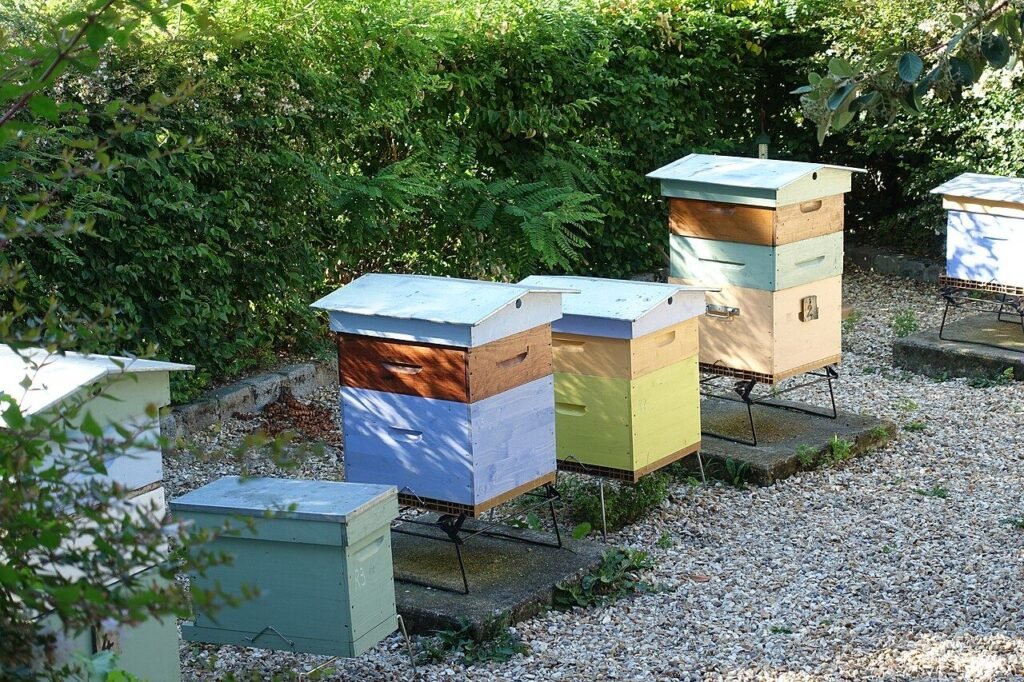
The detail that gets lost in most retellings is where, exactly, the hives were located. They sat on the roof of the sacristy — a lower annex structure attached to the cathedral’s south side that houses vestments and liturgical items — not on the cathedral’s main roof or anywhere near the spire. Reporting at the time placed the hives roughly 100 feet below and away from where the fire was actually burning. That physical separation, not chance, is the most straightforward explanation for why the colonies made it through a fire that consumed the building’s main roof entirely.
This is worth being explicit about, because “miracle” was the word most headlines reached for at the time, and it’s an understandable reaction to a genuinely striking image — thriving hives next to a smoking ruin. But the more useful, more accurate takeaway for anyone interested in the actual mechanics is that the hives were never actually inside the fire’s path in the first place.
What Smoke Actually Does to a Colony
The other piece of the story that’s frequently repeated but rarely explained is why smoke exposure alone wouldn’t necessarily have killed the bees even if the hives had been closer to the blaze. This isn’t unique to the Notre-Dame fire — it’s the same underlying bee behavior that every beekeeper relies on every time they light a smoker before opening a hive. Smoke disrupts the alarm pheromone bees use to signal danger to the rest of the colony, and it triggers a instinctive response: bees gorge themselves on stored honey, which is thought to make them calmer and less inclined to sting or fly defensively. That’s a real, well-documented behavioral response used in ordinary beekeeping practice, not a claim specific to this one event — and it’s a much more useful explanation than leaving the survival unexplained. It doesn’t mean smoke is harmless in any quantity or duration; heat and direct flame remain the actual lethal threats to a colony, which is exactly why the hives’ physical distance from the fire mattered more than anything else.
Part of a Bigger Paris Beekeeping Story
Notre-Dame’s hives weren’t an isolated novelty. They were installed in 2013 as part of a wider municipal push to support declining bee populations by placing hives on the rooftops of prominent public buildings across Paris, a movement that also put hives on the Palais Garnier opera house and the Grand Palais exhibition hall around the same period. Paris has been a genuine early mover in this kind of civic urban beekeeping, predating the broader wave of city apiary programs that later spread to other major cities. The logic behind placing hives on landmark rooftops is straightforward: these buildings offer large, undisturbed, elevated surfaces in the middle of dense urban forage areas, often with more floral diversity nearby (parks, gardens, tree-lined boulevards) than a comparable patch of countryside monoculture.
What Happened to the Hives Afterward
The colonies’ survival didn’t mean the reconstruction period was risk-free for them. Notre-Dame remained a closed construction site for years afterward, with lead contamination from the melted roof a genuine, separately documented concern for workers and the surrounding neighborhood — a real complication that a purely feel-good retelling of the bee story tends to leave out. Géant continued to care for the hives through the reconstruction period from a site that was, for years, an active industrial cleanup and rebuilding operation rather than a normal cathedral rooftop. The cathedral itself reopened to the public in December 2024 after a roughly five-and-a-half-year restoration.
Frequently Asked Questions
How many bees were on Notre-Dame’s roof during the 2019 fire?
Roughly 180,000 bees across three hives, according to beekeeper Nicolas Géant, who has cared for the colonies since they were installed in 2013.
Where exactly were the hives located?
On the roof of the sacristy, a lower annex building attached to the cathedral, roughly 100 feet below and physically separate from the main roof and spire where the fire actually burned.
Did the bees survive because of the smoke, or despite it?
The hives survived primarily because of their physical distance from the fire, not because of the smoke itself. Smoke does trigger a real, documented calming response in bees — the same one beekeepers use with a smoker — but heat and flame remain the actual lethal threats, and the hives were never close enough to the blaze to face that risk directly.
Were Notre-Dame’s hives part of a larger program?
Yes. They were installed in 2013 as part of a broader Paris initiative that also placed hives on other landmark rooftops, including the Palais Garnier opera house and the Grand Palais, as part of an early and influential urban beekeeping movement.
Is the “miracle” framing accurate?
Not really. It’s an understandable reaction to a striking image, but the hives were located on a separate, lower roof from the fire the entire time — a straightforward physical explanation rather than an inexplicable one.
For further reading, see NPR.
Image credits: Photo: Michal Osmenda, CC BY-SA 2.0, via Wikimedia Commons.