Table of Contents
- Yes, Live Bees Can Legally Be Mailed
- Different Rules for Packages vs. Queens Alone
- Why Queens Specifically Can Fly
- Temperature Tolerances During Transit
- Required Labeling and Marking
- A Notable 2022 Regulatory Change
- Practical Tips for a Smooth Delivery
- USPS vs. Other Shipping Carriers
- International Shipments Beyond the U.S.
- Who Actually Uses Mail Shipping
- How Shipping Packages Are Actually Designed
- Realistic Transit Time Expectations
- What to Do the Moment a Shipment Arrives
- State-Level Import Regulations to Check Separately
- Seasonal Timing Considerations for Ordering
- Tracking a Live Bee Shipment
- Weekend and Holiday Shipping Risk
- Supplier Mortality Guarantees and Policies
- A Long-Established Practice, Not a New Trend
- Keeping Records of Shipping Experiences
- Common Mistakes
Yes, Live Bees Can Legally Be Mailed
Live honey bees, including full packages and mated queens, are legally mailable through USPS under specific federal regulations designed to ensure the bees travel safely and disease-free — a genuinely established, long-running shipping practice that supplies a meaningful portion of the U.S. beekeeping industry’s package and queen supply chain every spring. Understanding the actual rules helps both buyers and sellers navigate the process smoothly rather than relying on secondhand assumptions about what is or isn’t allowed.
Different Rules for Packages vs. Queens Alone
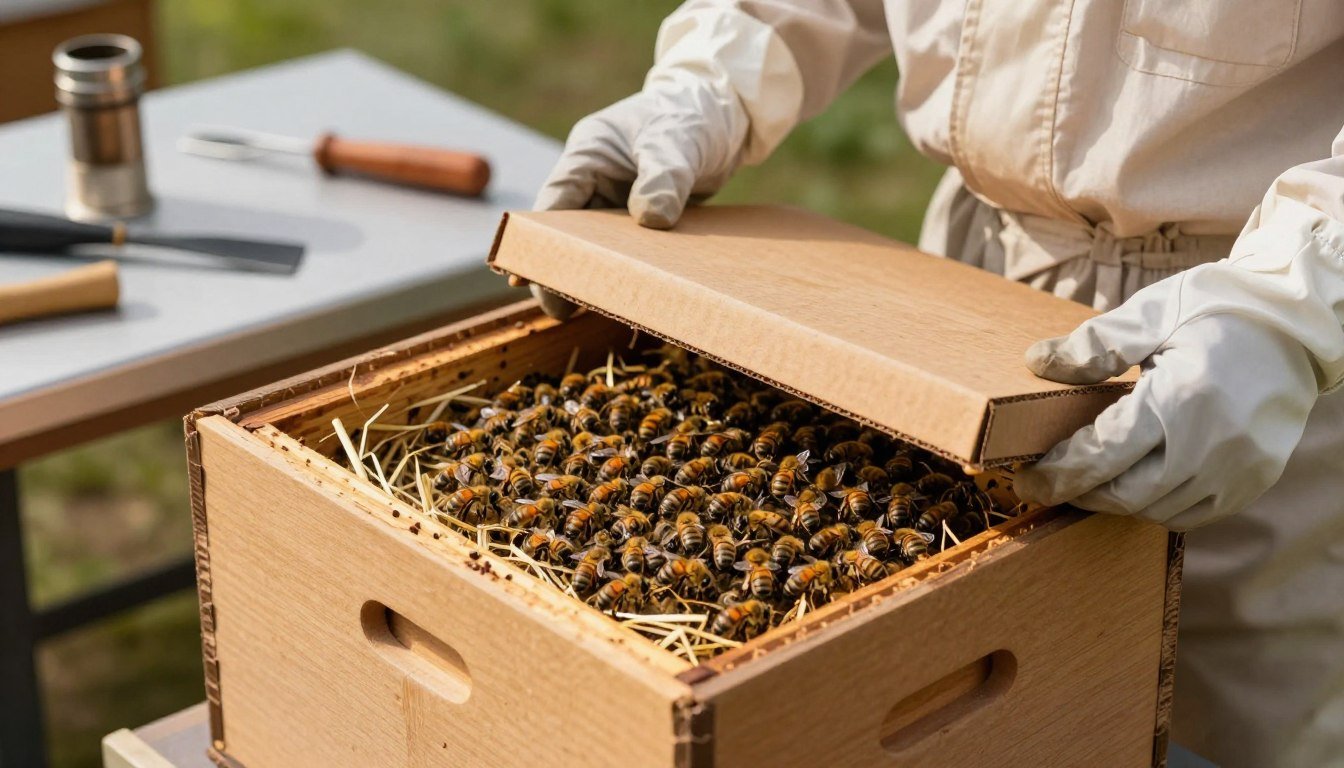
Full packages of regular worker honeybees are restricted to surface transportation only (ground shipping via Parcel Select or USPS Retail Ground), while queen honeybees specifically may be shipped via air transportation, each accompanied by up to eight attendant worker bees to keep her fed and cared for during transit. This is a meaningfully important distinction: a full package takes longer via ground shipping, while a queen-only shipment can move considerably faster by air, which is why most long-distance queen sales specifically ship queens alone rather than full packages.
Why Queens Specifically Can Fly
The air-eligibility distinction exists because a queen with a small number of attendant bees in a compact cage represents a much smaller, more easily monitored and regulated shipment than a full package containing thousands of bees, making air transport logistics and safety oversight considerably more manageable for the smaller queen-and-attendants shipment. This is part of why queen shipping (covered in more depth in our dedicated guide to shipping queen bees safely) has become the dominant mail-order model for long-distance genetic-line sourcing, including from sources like Hawaiian queen breeding.
Temperature Tolerances During Transit
Regulations specify bees must be kept within a tolerable temperature range of roughly 40-100°F during transit, a genuinely wide but not unlimited window reflecting the real thermal stress bees can survive briefly during shipping without expecting climate-controlled conditions throughout the entire journey. Both shippers and buyers should factor seasonal weather extremes into shipping timing decisions, since a shipment during an unusually hot or cold stretch outside this range carries real added risk beyond normal shipping stress.
Required Labeling and Marking
Packages containing regular worker bees must be plainly marked “Live Bees” and “Surface Only” or “Surface Mail Only” on the address side, while queen-bee shipments must be marked “Live Queen Bees” — this labeling isn’t optional paperwork, it’s what tells postal handling staff exactly what they’re processing and ensures the shipment is routed and handled through the correct live-animal protocols rather than as standard mail.
A Notable 2022 Regulatory Change
Effective June 30, 2022, USPS removed the special-handling fee previously required for surface-shipped bee packages, a genuine cost reduction for both commercial shippers and buyers that’s worth knowing about if you’re comparing older shipping-cost information against current pricing — older secondhand guides referencing this now-removed fee may give an inflated sense of total shipping cost compared to current reality.
Practical Tips for a Smooth Delivery
Experienced shippers and buyers recommend proactively contacting your local post office ahead of an expected live-bee delivery, both to alert staff a live shipment is coming and to request a call when it actually arrives, rather than leaving a package of live bees sitting in a mail truck or facility longer than necessary. This simple communication step meaningfully reduces the real risk of delayed pickup adding unnecessary transit stress to an already time-sensitive live shipment.
USPS vs. Other Shipping Carriers
| Factor | USPS | Private Carriers (UPS, FedEx) |
|---|---|---|
| Live bee shipping policy | Explicitly regulated and permitted | Varies by carrier and specific policy |
| Established bee-shipping infrastructure | Long-standing, well-established | Less standardized for this specific use case |
| Queen air shipping | Explicitly permitted under current rules | Depends on individual carrier policy |
USPS remains the dominant carrier for live bee shipping specifically because of its long-established, explicitly regulated framework for this exact use case, which most private carriers haven’t built out to the same degree — checking a specific private carrier’s current live-animal policy directly is essential if considering an alternative, since policies can vary and change.
Who Actually Uses Mail Shipping
Beekeepers sourcing queens from distant specialty or regional breeders (including Hawaiian producers), commercial queen breeders serving customers nationwide, and hobbyists in areas without convenient local package-bee pickup all rely on USPS mail shipping as a practical, established option. A beekeeper with a nearby local supplier offering in-person pickup may reasonably prefer that simpler option when it’s available, avoiding shipping stress and cost entirely.
How Shipping Packages Are Actually Designed
Both full package boxes and queen shipping cages are specifically engineered for the shipping stress bees experience — ventilated mesh screening allows adequate airflow without letting bees escape, a sugar-syrup or candy food source sustains the colony or queen’s attendants throughout transit, and package boxes typically include a separate suspended queen cage inside to protect her from being crushed by the worker cluster during handling and transport.
Realistic Transit Time Expectations
Surface-shipped packages generally take longer than a comparable air-shipped queen, with actual transit time depending heavily on distance and current postal service conditions rather than a single fixed timeline — buyers should ask their specific supplier for a realistic transit estimate rather than assuming a standard timeframe applies universally, since live-animal shipping windows genuinely do vary by season, distance, and current postal service capacity.
What to Do the Moment a Shipment Arrives
Upon arrival, promptly check that the queen or package appears alive and reasonably active, note the general condition of any attendant bees, and if using a queen, don’t rush the introduction — following standard careful introduction practices regardless of how the bees traveled. If a shipment arrives showing signs of significant distress or mortality, contacting the supplier promptly (most reputable sellers have a documented policy for this exact situation) is the appropriate next step rather than assuming nothing can be done.
State-Level Import Regulations to Check Separately
Beyond federal USPS mailing rules, individual states may impose their own additional requirements for importing live bees across state lines, such as health certificates or apiary registration documentation, meaning compliance with USPS shipping rules alone doesn’t automatically guarantee compliance with your specific destination state’s separate agricultural import regulations. Checking your state’s Department of Agriculture requirements before ordering, particularly for interstate shipments, avoids a genuinely avoidable compliance gap most buyers don’t think to check.
Seasonal Timing Considerations for Ordering
Spring represents peak demand for both package and queen shipments, meaning popular suppliers can sell out weeks or even months ahead of actual shipping dates, so ordering early — sometimes as early as the preceding fall or winter for spring delivery — is standard practice among experienced beekeepers rather than a sign of unusual planning. Waiting until you’re actively ready to install bees before ordering often means missing the most desirable shipping windows entirely, particularly for early-season options like Hawaiian-sourced queens.
Tracking a Live Bee Shipment
Most suppliers provide tracking information for live bee shipments just as they would for any other package, letting buyers monitor real-time transit progress and anticipate the actual delivery day rather than waiting passively without any visibility into the shipment’s status. Actively checking tracking in the days leading up to expected delivery helps you time your own availability to receive and promptly install the bees, minimizing the time they spend sitting in a mailbox or on a porch after actual delivery.
Weekend and Holiday Shipping Risk
A live bee shipment scheduled to arrive right before a weekend or postal holiday carries real added risk, since a delayed pickup could mean the bees sit in transit or at a facility longer than intended without care, worsening stress and survival odds compared to a straightforward weekday delivery. Confirming your specific shipping window avoids landing on a weekend or holiday, or at minimum arranging to promptly collect the shipment yourself directly from the post office rather than waiting for standard delivery, reduces this avoidable risk.
Supplier Mortality Guarantees and Policies
Reputable package and queen suppliers generally offer some form of live-arrival guarantee or replacement policy, though specific terms — the exact window for reporting an issue, what documentation or photos are required, whether it’s a full refund or store credit toward a replacement — vary meaningfully between sellers. Reading a supplier’s specific policy before ordering, rather than assuming a standard industry-wide guarantee exists, avoids an unpleasant surprise if a shipment does arrive with problems.
A Long-Established Practice, Not a New Trend
Mailing live bees is a genuinely long-established practice in American beekeeping, with postal regulations specifically accommodating live bee shipment for well over a century as the industry grew to depend on this exact distribution model for both commercial package sales and queen breeding programs. This long track record is worth knowing — it’s not an emerging or experimental shipping method, but a mature, well-refined system the industry has continuously relied on and improved for generations.
Keeping Records of Shipping Experiences
Noting which suppliers, shipping methods, and seasonal timing produced the best results for your own apiary builds a genuinely useful personal reference over successive seasons, particularly if you order from multiple sources or experiment with different suppliers over time — this kind of simple record-keeping turns each shipping experience into future-informed decision-making rather than starting from scratch with each new order.
Common Mistakes
Assuming any shipping method or carrier works identically for full packages and queen-only shipments overlooks the genuinely different surface-versus-air regulations covering each. Failing to notify your local post office ahead of an expected live shipment risks unnecessary delay in an already time-sensitive delivery. Scheduling a shipment during an extreme weather stretch without considering the 40-100°F tolerance window adds real, avoidable transit risk to the bees.
International Shipments Beyond the U.S.
Shipping bees internationally, including to Canada, involves an additional layer of customs and agricultural import regulations beyond domestic USPS rules, generally requiring specific import permits on the receiving country’s side arranged well in advance of the actual shipment. Buyers outside the U.S. should confirm their own country’s specific import requirements directly with their agricultural authority before ordering, since these requirements are separate from and in addition to whatever shipping rules apply on the U.S. sending side.
Not every supplier ships live bees; see Mann Lake vs Betterbee live-bee shipping.
Sources
Shipping regulations and labeling requirements reflect current USPS Publication 52 (Mailing Live Animals) and Domestic Mail Manual guidance on live honeybee shipment. See the USPS Postal Bulletin’s rules for mailing live bees for additional authoritative detail.
FAQ
Can a full package of bees be shipped by air?
No — current USPS regulations restrict full packages of worker bees to surface transportation only; only queen bees, accompanied by up to eight attendant bees, are eligible for air shipment.
What temperature range can bees tolerate during shipping?
Regulations specify a tolerable range of roughly 40-100°F, though both shippers and buyers should still avoid scheduling shipments during unusually extreme hot or cold weather when possible.
Do I need to pay a special handling fee to ship bees?
As of June 30, 2022, USPS removed the special-handling fee previously required for surface-shipped bee packages — a genuine cost reduction from older pricing information.
Should I notify my post office before a live bee shipment arrives?
Yes — contacting your local post office ahead of time and asking them to call upon arrival is a widely recommended practical step that reduces the risk of unnecessary delay for a time-sensitive live shipment.
Do I need any special permit to receive bees by mail?
Requirements vary by state — some states require apiary registration or import documentation beyond standard USPS mailing rules, so checking your specific state’s Department of Agriculture requirements before ordering is worthwhile, especially for interstate shipments.
How far in advance should I order package bees or queens?
Ordering in the preceding fall or winter for spring delivery is common practice among experienced beekeepers, since popular suppliers can sell out their most desirable shipping windows weeks or months ahead of the actual season.