Last Updated September 15, 2026
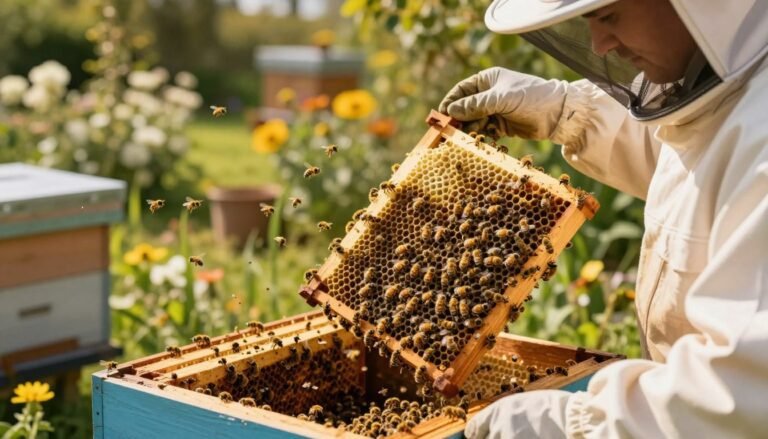
Choosing the right base for a package hive shapes colony health and growth. New beekeepers must weigh a predictable, embossed sheet against a more natural guide that lets bees build their own comb.
Foundation starter approaches give bees freedom to form cell size and comb pattern, which some argue aids natural behavior and mite management.
The embossed sheets foundation offers a neat blueprint that speeds inspections and supports extraction. That predictability matters when management time is limited.
Much of the detailed guidance below draws on the practical experience of Roger Patterson, a UK beekeeping instructor who has made and used his own starter-strip foundation for over 50 years at his own apiary and the Wisborough Green Beekeepers’ Association.
Key Takeaways
- Natural build vs control: foundation starter methods let bees choose cell size; sheets guide uniform comb.
- Management needs: foundation reduces time and helps with harvesting; starter methods require close monitoring.
- Health impacts: natural comb can influence mite dynamics and brood patterns.
- Extraction and durability: embossed sheets often withstand mechanical honey removal better.
- Match methods to goals: pick the approach that fits your apiary skills and inspection schedule.
Table of Contents
- Understanding the Basics of Hive Foundation
- The Evolution of Starter Strips vs Full Foundation for New Packages
- Why Beekeepers Choose Starter Strips
- The Role of Full Foundation in Modern Beekeeping
- Factors Influencing Comb Construction
- Managing Drone Comb Production
- Technical Considerations for Installing Starter Strips
- Best Practices for Ensuring Straight Comb
- Potential Challenges with Natural Comb Building
- Comparing Chemical Residue Risks
- When to Choose One Method Over the Other
- Frequently Asked Questions
Understanding the Basics of Hive Foundation
Many beekeepers have long relied on wired sheets to give young colonies a clear comb layout. Wired sheets make comb building predictable and help frames stay straight during inspections and honey removal.
“For many years, virtually all beekeepers used wired foundation, as it was readily available, easy to use with the different frame designs and they were taught to use it.”
— Roger Patterson, Starter Strips
Standard foundation usually comes embossed as worker cell base. This guides bees to build mostly worker comb and can limit drone comb production.
A typical hive frame is sized to hold these sheets securely. That stability helps maintain uniform comb across frames and simplifies hive management through the season.
Practical note: If you want a clear primer on frames and foundation setup, see a concise guide on frames and foundation basics and a primer on choosing a hive at how to choose a beehive.
The Evolution of Starter Strips vs Full Foundation for New Packages
Practical pressures and changing tools reshaped how hives begin—sometimes leaving comb decisions to the colony.
Historical Context
Early beekeepers worked with thinner wood frames and often relied on cross-wiring to hold comb tension. Over many years, craftsmen adjusted top bars and frame shapes to improve stability. That thrift and craft led to the routine use of starter strips rather than rigid sheets foundation, and worldwide studies showing chemical residue in commercial foundation later gave beekeepers a second reason to reconsider it.
Modern Motivations
Today many in American beekeeping choose methods to reduce chemical residue. Some prefer wax produced by their own colonies when they build comb naturally.
- Tool design: modern wedge-style top bars ease frame installation.
- Health focus: local wax lowers contamination risk.
- Colony behavior: letting bees build can reflect hive health quickly.
Why Beekeepers Choose Starter Strips
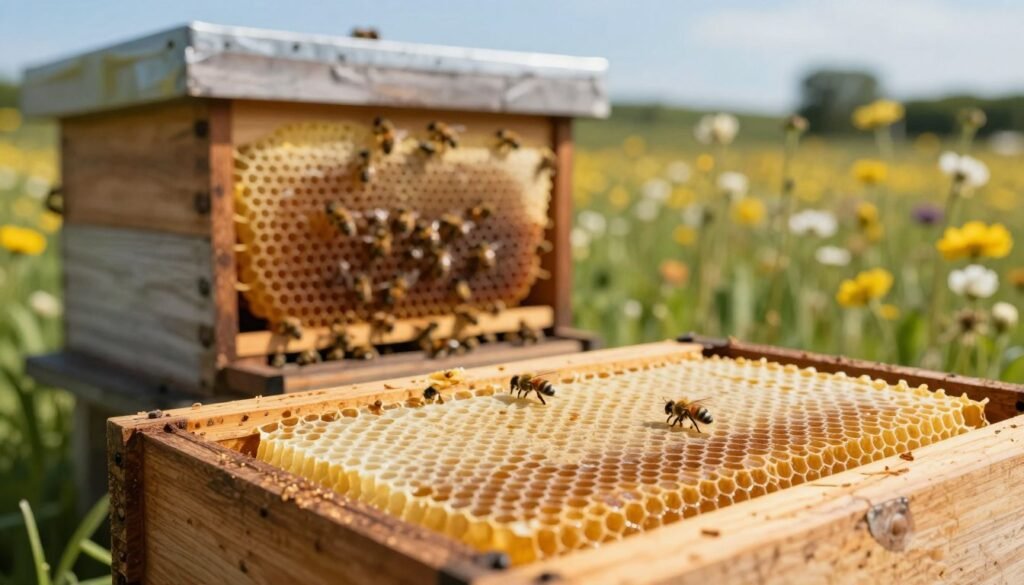
A subtle wood or wax cue inside frames invites colonies to construct comb on their own terms.
Many hobbyists and clubs prefer this gentle approach. At the Wisborough Green BKA apiaries, members watch how a small cue lets bees shape a natural comb. This method helps learners see how colonies balance worker cells and drone comb across the brood box.
Using foundationless starter strips allows keepers to observe where bees place brood and how they draw comb. Free-living colonies tend to make about 10–15% of nest area as drone comb, usually at the edge — a figure Roger Patterson arrived at from years of removing free-living colonies and measuring their self-built nests. That pattern often appears when bees build without a full template.
Practical benefits:
- Encourages a mix of cell sizes and drawn comb that reflects colony biology.
- Gives beekeepers a live lesson in brood box organization and nest layout.
- Makes it easier to study how bees build drone comb and worker cells in context.
| Feature | Using strips | Observed outcome |
|---|---|---|
| Brood pattern | Guided, flexible | Natural mix of worker and drone comb |
| Learning value | High | Shows colony decisions in the brood box |
| Comb uniformity | Variable | Drawn comb reflects colony needs |
The Role of Full Foundation in Modern Beekeeping
When scale matters, predictable comb geometry becomes a logistical advantage in large apiaries.
Standardization Benefits
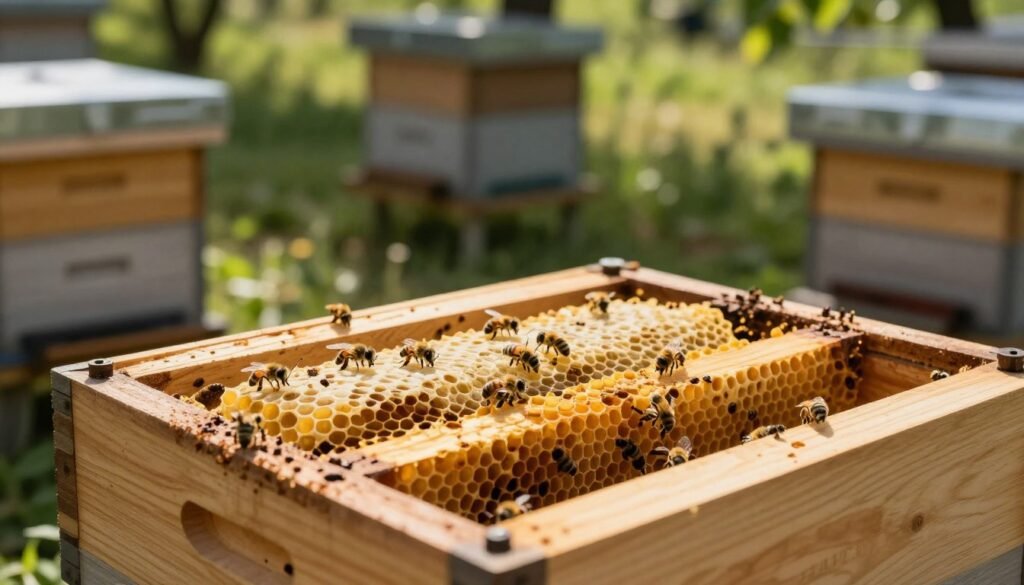
Uniform sheets reduce handling time and cut inspection surprises. Commercial operations rely on consistent frames so workers can move brood and honey combs between hives without structural issues.
Key operational advantages:
- Full sheets provide repeatable comb spacing, helping mechanical extractors perform reliably.
- Interchangeable frames simplify swarm management and split creation across yards.
- Predictable brood patterns often follow embossed guides, easing queen placement and mapping.
While starter methods show ecological benefits, the industry standard remains pressed sheets for teams that prioritize efficiency and uniformity — standardized frames let a large operation move comb between hives and yards with minimal fuss, since every frame fits the same process.
| Feature | Benefit | Impact |
|---|---|---|
| Full sheets | High uniformity | Easy frame interchange |
| Comb predictability | Stable brood layout | Simplified management |
Factors Influencing Comb Construction
Colony strength, season, and hive tilt each steer how bees build comb inside the brood box.
Colony Population
Colony size is the top driver of comb shape. Small colonies and nucs often delay or avoid building drone comb — Roger Patterson notes weak colonies rarely make much drone comb compared to dense, strong colonies with a nectar flow on.
When a hive is full of active workers, they are more likely to draw new comb quickly and include more drone cells at the edges.
Seasonal Timing
Time of year matters. Early in the year, during brood expansion and the first nectar flow, bees favor making drone comb. A strong flow speeds how fast bees build comb.
Outside peak flow, colonies conserve resources and focus on worker cells and brood maintenance.
Hive Positioning
How a hive sits affects comb regularity. If the hive is not level, bees can build irregular comb that causes a management problem.
Bees often place drone comb on the periphery of the brood box. Keeping the hive level and well-sited helps bees build straight comb and maintain uniform cell size.
| Factor | How it affects comb | Practical tip |
|---|---|---|
| Colony population | Strong colonies build comb faster; small ones delay drone comb | Boost population or combine nucs to encourage draw comb |
| Season / nectar flow | Early season and flows increase drone comb and rapid build comb | Plan frame inputs before peak flow to match colony expansion |
| Hive positioning | Unlevel hives cause irregular comb; peripheral drone comb placement | Level hives; orient entrance and stack consistently |
Watch colony cues and adjust management. If you need signs of swarming or colony expansion, see this guide on how to tell if your hive is preparing to swarm.
Managing Drone Comb Production
Placing guides near the edge of the brood box early in summer encourages bees to allocate space for drones.
Roger Patterson’s own observation of free-living colonies put natural drone comb at about 10–15% of nest area. That ratio helps mating success and healthy genetics.
Practical management means giving the colony room to build comb where it wants. Put a starter strip near the brood box periphery to nudge bees toward the correct layout.
Beekeepers should balance control and biology. Too much worker-cell template can suppress needed drone areas. Letting some natural build keeps the colony functional.
- Understand nest layout: bees place drone cells at the edge of the brood box.
- Use frames with a short strip near the rim to influence where bees build drone comb.
- Monitor early summer and adjust placement as the colony grows.
| Action | Timing | Expected outcome |
|---|---|---|
| Edge guide | Early summer | Increased peripheral drone comb |
| Full worker templates | During extraction prep | Less drone area |
| Combine weak nucs | Before flow | Faster comb draw |
For sourcing and purchasing decisions about introducing bees, see this guide on buying packaged bees and nucs.
Technical Considerations for Installing Starter Strips
A careful hand and the right tools make a big difference when fitting a narrow wax cue into a frame.
Cut while warm. Roger Patterson cuts unwired foundation into 10–12mm wide starter strips when the wax is warm and pliable, using a sharp knife for a clean edge that reduces tearing.
He nails the strip into the wedge of the top bar to lock it in place — a simple fasten that keeps the guide steady while bees begin to build comb.
Support the comb. He also wires frames horizontally with plated steel wire, which he’s found holds comb during inspections better than fishing line or leaving frames unsupported.
This video shows the same core installation steps covered above — cutting and fitting a starter strip into the top bar wedge, then checkerboarding frames to encourage straight comb.
- Full-length guides give the clearest path and help bees draw straight comb.
- Whether using foundationless starter or cut foundation, the aim is a consistent starting point so comb alignment stays uniform.
- Work quickly in warm conditions—wax is easier to cut and seat when pliable.
| Step | Action | Benefit |
|---|---|---|
| Cutting | Trim to 10–12mm while warm | Clean edge, easier handling |
| Attachment | Nail into top bar wedge | Stable guide during build |
| Support | Horizontal plated steel wiring | Prevents comb fall in inspections |
For related yard upgrades that improve handling and access, see a practical note on noise-reducing hive stands.
Best Practices for Ensuring Straight Comb
How you position a single guided frame often decides whether bees draw comb straight or crosswise.
Place frames with a starter strip between firm, straight drawn comb to get the best result.
Bees tend to follow adjacent comb. Roger Patterson puts starter-strip frames between existing straight combs for exactly this reason, so the colony mirrors the layout already in place. Insert the frame into the brood box so both sides touch solid drawn comb.
Keep the hive level. Bees build vertically; a tilted hive leads to irregular or crossways comb. During a strong nectar flow, the colony will draw comb faster and with cleaner alignment, provided the hive is steady.
- Install guided frames between straight drawn frames to encourage straight draw comb.
- Maintain even spacing top-to-bottom and side-to-side so bees have a clear path.
- If comb goes off-line, cut the irregular section and reinsert the frame between sound combs.
| Action | When | Outcome |
|---|---|---|
| Place frame between drawn comb | At installation | Straight drawn comb |
| Level hive | Any time | Vertical building |
| Remedial cutting | If comb is irregular | Restore alignment |
Potential Challenges with Natural Comb Building
Natural comb often follows its own logic, and that can surprise an eager beekeeper.
Remedial Work for Irregular Combs
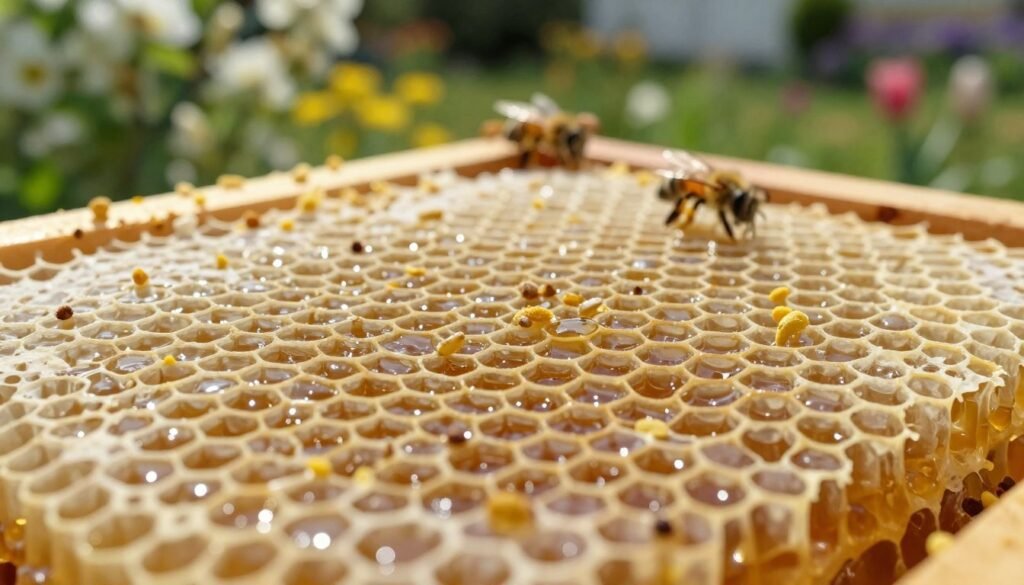
Roger Patterson points out that comb drawn on a simple cue is essentially wild comb. It may vary in cell size and tilt compared to sheet guides.
One common problem is irregular panels that cross the frame line. This often happens when the hive is not level or frames are spaced unevenly during a strong flow.
“For a beginner, I suggest using foundation to get some good, straight combs built before using starter strips.”
— Roger Patterson, Starter Strips
- Cut out badly drawn sections and replace the frame between straight drawn combs the following year.
- Check hive level and top bar alignment before heavy build seasons.
- Use a short wax cue near the brood box edge to nudge where drone comb appears.
| Action | When | Expected outcome |
|---|---|---|
| Remove irregular comb | At inspection | Prevent crossways building next season |
| Reposition frame | After cutting | Promote straight drawn comb |
| Level hive | Before flow | Reduce irregular panels |
Comparing Chemical Residue Risks
When residue levels matter, the decision about what sits inside supers can shape long-term hive health. Worldwide studies have raised concerns that some commercial products carry persistent chemicals into comb.
Beekeepers who avoid synthetic treatments often see a clear benefit: wax produced by untreated colonies is likely to contain far fewer residues than bought sheets. That reduces carryover of compounds within the hive environment.
Key reasons some managers move away from commercial material:
- Research shows commercial templates can harbor various chemical compounds that accumulate in comb and affect colony health.
- Allowing bees to build their own comb cuts a common pathway for contamination inside hives and supers.
- Those running treatment-free operations aim to keep brood and honey stores cleaner by using colony-made wax.
Practical steps include switching frame setup and knowing when to remove old comb. See a hands-on guide to convert Langstroth frames and guidance on when to discard comb after disease.
When to Choose One Method Over the Other
Deciding which comb guide to use often comes down to your goals, time, and comfort with hive techniques.
Beginners gain confidence and learn straight drawn comb by using pressed sheets first. Roger Patterson recommends this route so keepers can master spacing and inspections before trying alternative methods.
Experienced keepers who want lower chemical carryover may choose minimal cues and let the colony build natural comb. This approach supports varied cell size and helps bees allocate drone comb where needed during a strong flow.
Quick decision guide:
- If you need uniform brood patterns and easy transfers, use full sheets foundation and keep a stock of drawn comb.
- If reducing residues and encouraging natural comb is a priority, use foundationless starter strips and monitor drone comb development.
- Always ensure colonies have food and room during a nectar flow; resources matter more than the comb choice.
Want a deeper look at foundationless frames before trying them? See a practical review of foundationless methods at foundationless frames reviewed.
| Goal | Recommended approach | Expected outcome |
|---|---|---|
| Learning management | Sheets | Straight drawn comb, easier inspections |
| Residue reduction | Foundationless starter | Cleaner wax, natural cell size |
| Rapid expansion | Use starter strip cues near edges | Balanced drone comb and brood space |
Conclusion
Choose the approach that fits your goals and your bees. Some keepers want uniform frames to streamline inspections and honey handling. Others prefer a gentler cue that lets the colony shape cell size and natural layout. Roger Patterson’s decades of practice remind us that understanding how bees build matters, and drone areas play a role in colony fitness. Keep the hive level and give room during a nectar flow to support clean, straight comb growth. To explore practical foundationless options and a gradual transition, see this foundationless beekeeping guide.
Frequently Asked Questions
What are the main differences between using starter strips and full foundation when introducing a package of bees?
Starter strips provide a short band of wax to guide comb building while full sheets give a complete wax surface for immediate drawing. Strips encourage bees to build natural cell sizes and flexible comb placement, which helps when you want worker cells and natural comb. Full sheets speed up brood and honey production and standardize frame spacing and cell size, reducing the need for remedial work later.
How do colony population and seasonal timing affect comb construction?
Strong colonies with many foragers draw comb faster, whether using comb starter or full foundation. In a nectar flow or warm season, bees build quickly; in slow seasons they may focus on brood and delay comb construction. Match your approach to colony strength and time of year to avoid slow build or excess drone comb.
Will using comb starter encourage drone comb or worker cells?
Comb starter tends to let bees express their natural preferences, which usually produces worker cells if the colony is healthy and queenright. However, foundationless or narrow strip methods can sometimes lead to more drone comb if the colony’s demographics or space cues favor it. Monitor frames and remove excessive drone comb early.
How can I ensure comb hangs straight when using a comb starter or foundationless method?
Keep frames evenly spaced and level in the box, place the comb starter at the top bar centerline, and maintain consistent hive weight and temperature. Use a draw comb or thin top-bar ridge and inspect every 7–10 days to correct any skewing before large buildup occurs.
Does foundation use improve standardization and management across hives?
Yes. Full sheets promote uniform cell size and straight comb, which simplifies inspections, queen rearing, honey extraction, and swapping frames between hives. This standardization can save time across multiple hives during the active season.
When might a beekeeper prefer foundationless or starter methods over full sheets?
Choose foundationless or comb starter if you prioritize natural comb, want to avoid processed wax, or are rearing queens and need flexible cell sizes. These methods suit small-scale, conservation-minded, or top-bar operations and work well when you have time for closer management.
Are there practical installation tips for comb starters and foundation pieces?
Attach starters firmly to the top bar so they don’t fall, center them to promote even draw, and wire or anchor full sheets if using them. Warm up wax pieces in cold weather to reduce brittleness and inspect frames regularly in the first weeks to ensure proper comb orientation and attachment.