Reviewed by Elena P. · Last Updated September 23, 2026 · How we review
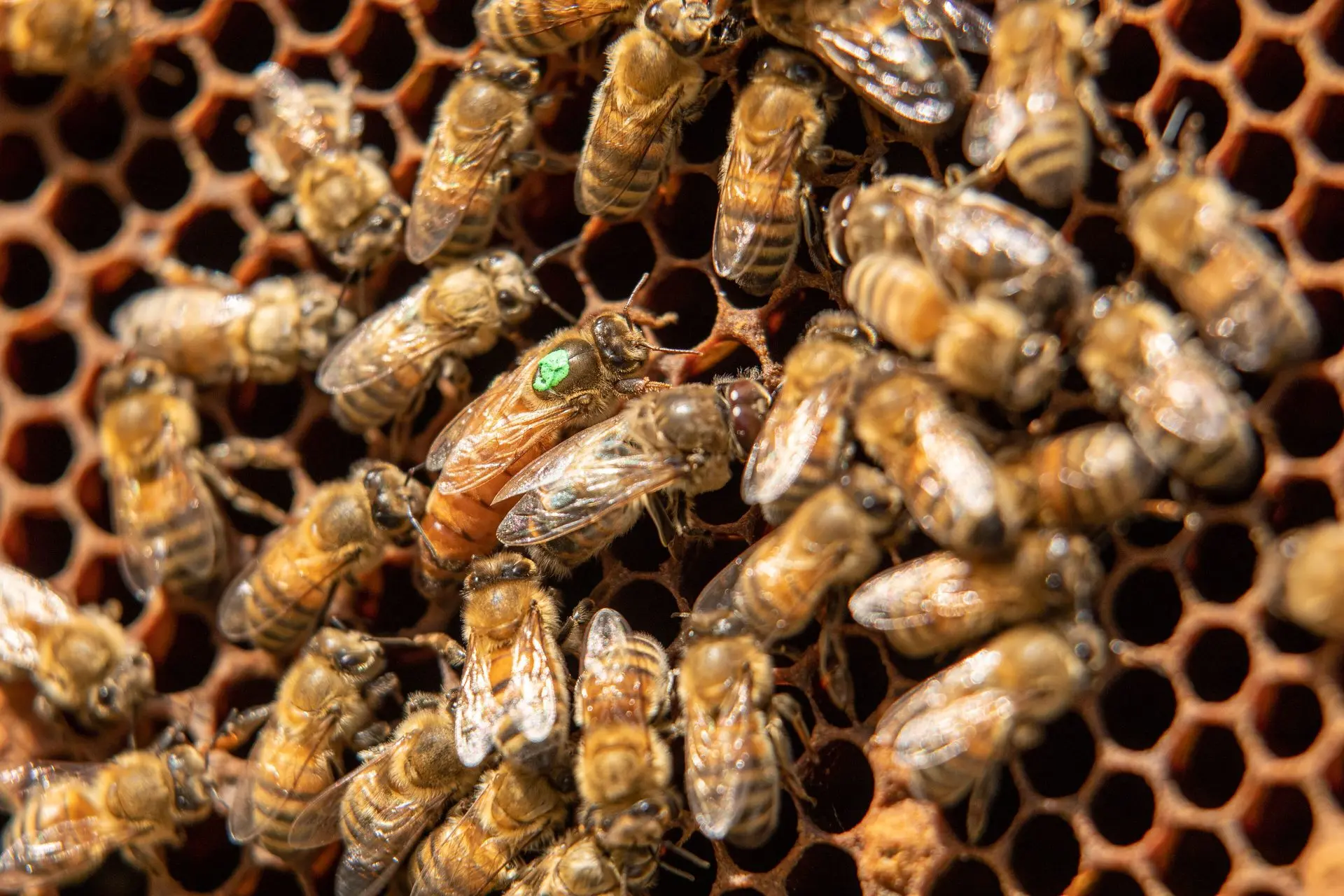
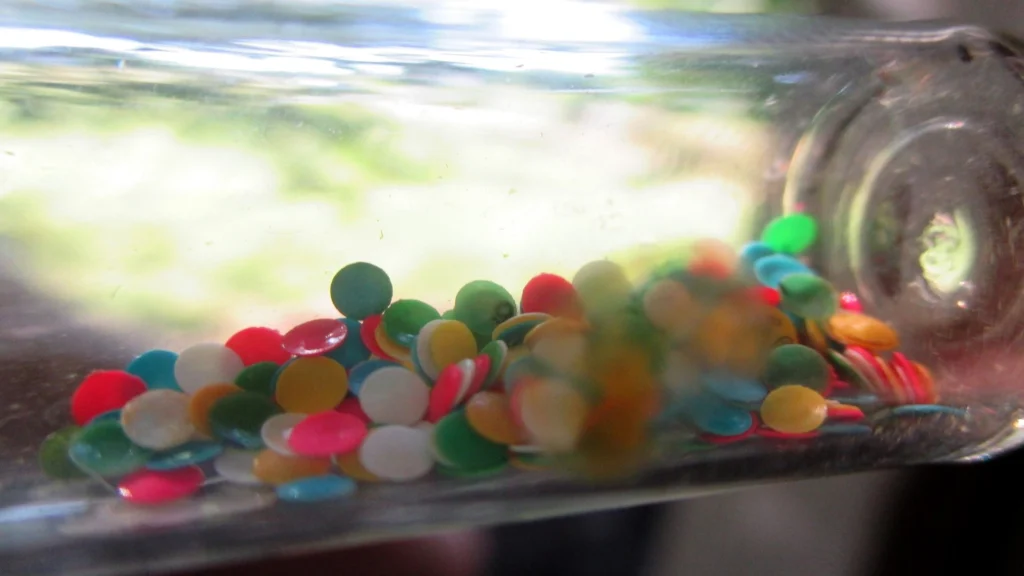
Queens are marked by the last digit of the year they were reared: white for years ending in 1 or 6, yellow for 2 or 7, red for 3 or 8, green for 4 or 9, and blue for 5 or 0. That makes 2026 a white year, 2027 yellow, 2028 red, 2029 green and 2030 blue. The easy way to remember the order is “Will You Raise Good Bees” — White, Yellow, Red, Green, Blue — and the cycle repeats every five years.
Key Takeaways
- The five-color international code is tied to the final digit of the year: 1/6 white, 2/7 yellow, 3/8 red, 4/9 green, 5/0 blue.
- 2026 queens are white; 2027 queens are yellow.
- The color records the year the queen was reared and mated, not the year you bought or installed her — which matters for queens raised late in the season.
- Because the colors repeat every five years and few queens live that long, a color on its own is almost never ambiguous in practice.
- A small peer-reviewed trial found no harm to acceptance, survival or supersedure from marking queens with paint.
Table of Contents
Queen Marking Color Chart by Year (2021–2035)
Find the year the queen was reared in the right-hand columns, then read across to the color. The pattern only depends on the last digit, so you can extend it forward indefinitely.
| Color | Year ends in | Past | Current cycle | Next cycle |
|---|---|---|---|---|
| White (or gray) | 1 or 6 | 2021 | 2026 | 2031 |
| Yellow | 2 or 7 | 2022 | 2027 | 2032 |
| Red | 3 or 8 | 2023 | 2028 | 2033 |
| Green | 4 or 9 | 2024 | 2029 | 2034 |
| Blue | 5 or 0 | 2025 | 2030 | 2035 |
White is sometimes swapped for silver or gray because a pure white dot can be hard to see on a pale-colored queen, and a white paint pen is easy to confuse with a dried-out one. Either is read as the same year.
How the Code Works
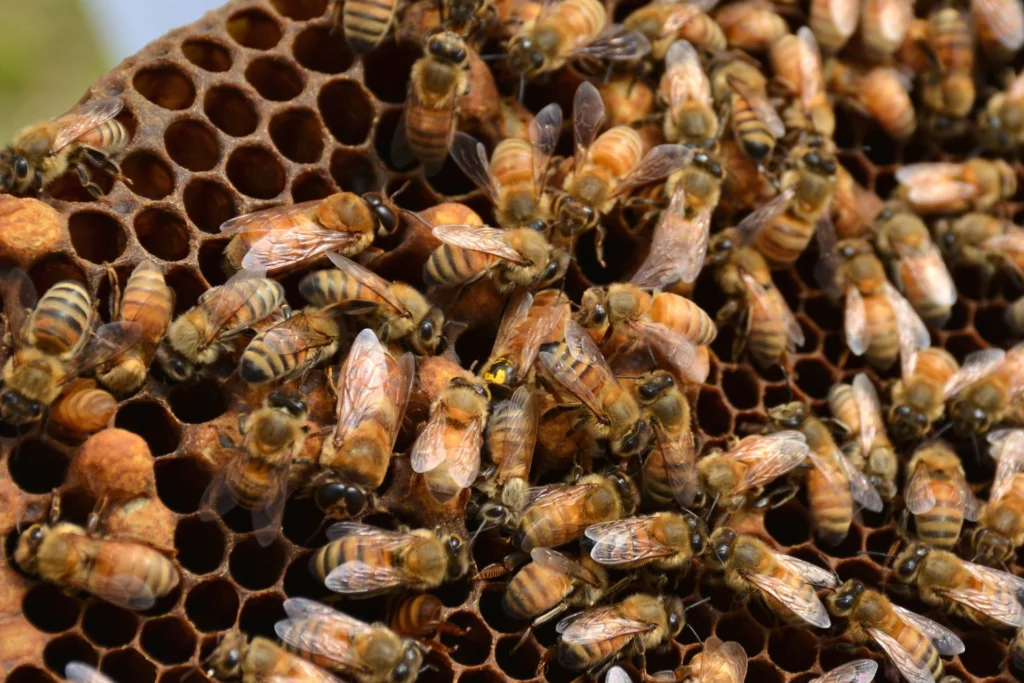
The system is simple on purpose: one color per year, five colors in a fixed order, repeating every five years. It lets any beekeeper open any colony and know roughly how old the queen is, without needing the owner’s notes. That shared convention is why queen producers use it on queens they sell. The University of Arkansas extension guide Raising Quality Queen Bees (MP518), written by apiculture instructor Jon Zawislak and queen breeder David Burns, tells producers to use the established international color system “for all queens that are offered for sale.”
- Mnemonic: “Will You Raise Good Bees” gives the order: White, Yellow, Red, Green, Blue.
- Anchor years: Remember that years ending in 0 and 5 are blue, then count forward through the mnemonic.
- Why five years is enough: Queens in managed colonies are typically replaced — by the beekeeper or by the bees — long before a color comes around again, so a white dot today is effectively always a 2026 queen, not a 2021 one.
Some beekeepers use their own colors to mark yards or bloodlines instead. That works inside one operation, but it breaks the shared meaning, so anyone buying or inspecting those colonies can’t trust the mark. If you use a private system, write it in your records and tell any buyer.
Which Year Does the Color Represent?
This is where people get tripped up. The color is for the year the queen was reared and mated, not the year you bought her or put her in a hive. University of Florida IFAS Extension puts it this way:
“Use the international color code to indicate which year the queen was reared and installed.”
Francesca Michelini, Devan Rawn and Cameron Jack, UF/IFAS Extension — The Basics of Queen Management in Beekeeping Operations (ENY2128)
For most queens those are the same year. The exceptions are common in the North:
| Situation | Correct color | Why |
|---|---|---|
| Queen reared in August 2026, found and marked in spring 2027 | White (2026) | She emerged and mated in 2026, even though you first marked her the following year. |
| Mail-order queen raised in the South and installed in May 2027 | Yellow (2027) | Reared, mated and installed in the same year. |
| Unmarked queen found in a colony you bought | Mark her with the current year’s color and note “age unknown” in your records | You can’t confirm her real age, so note that the color is only when you marked her. |
In eastern North Dakota, the Red River Valley and western Minnesota, colonies that supersede or swarm late in summer often go into winter with a queen that is only a few weeks old. If you mark her the next spring, use the previous year’s color and note it in your hive records. Our guide to the records every beekeeper should keep covers a simple way to log this.
Reading a Mark During Inspections
A mark is only useful if you know what it’s telling you. The most valuable information usually comes from a mark that has changed:
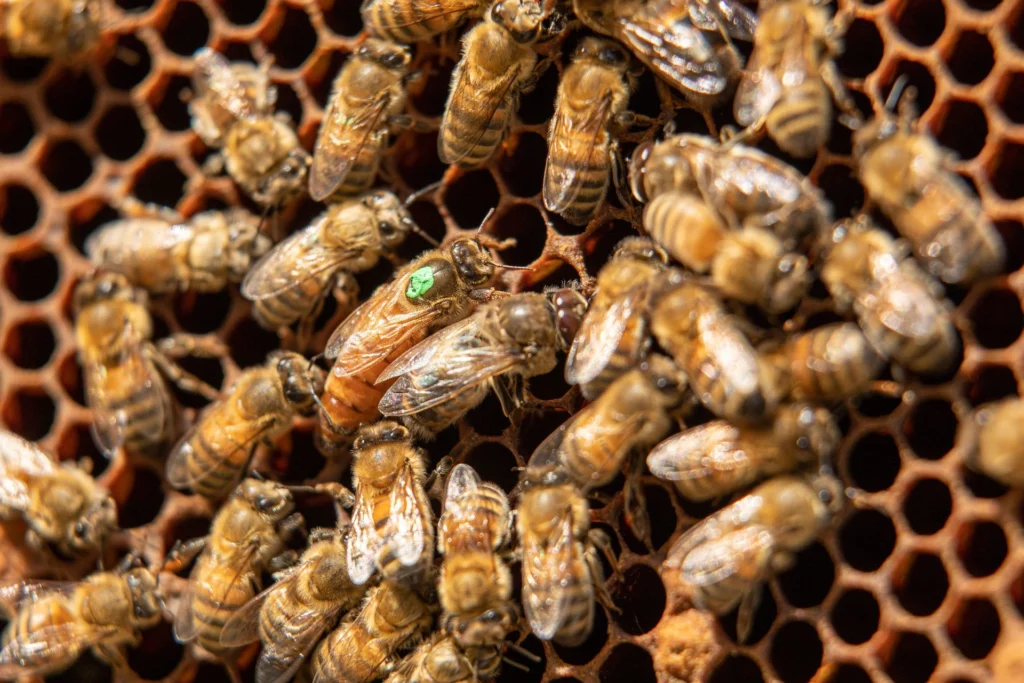
- Marked queen, expected color: The queen you installed is still there. No action needed.
- Unmarked queen where you had a marked one: The colony has replaced her by supersedure or swarming. Our guide to recognizing supersedure explains how to tell which.
- Faded or partial mark: Paint wears with age and grooming. If you are sure she is the same queen, touch it up with the original year’s color, not the current one.
- Mark in a color that doesn’t fit your records: Check whether the queen came from a supplier who marked her, or whether you confused two colonies. Don’t assume the bees swapped queens between hives.
Knowing a queen’s age helps you plan replacements. Many beekeepers requeen before a queen’s second or third summer. See how queen age affects colony performance for the trade-offs.
Does Marking Harm the Queen?
Handled properly, no. A 2025 study in the journal Agriculture, Dolasevic and colleagues, “A New Technique for Marking Queen Bees”, marked 12 queens with paint on the thorax, wings and abdomen and compared them with 12 unmarked queens. Marking had no negative effect on acceptance, survival or supersedure. After five months, the thorax had kept the most paint (about 54%), the abdomen gave the largest visible mark, and paint on the wings had almost worn off. It was a small trial, but it matches long field experience, and the traditional thorax dot remains the practical standard.
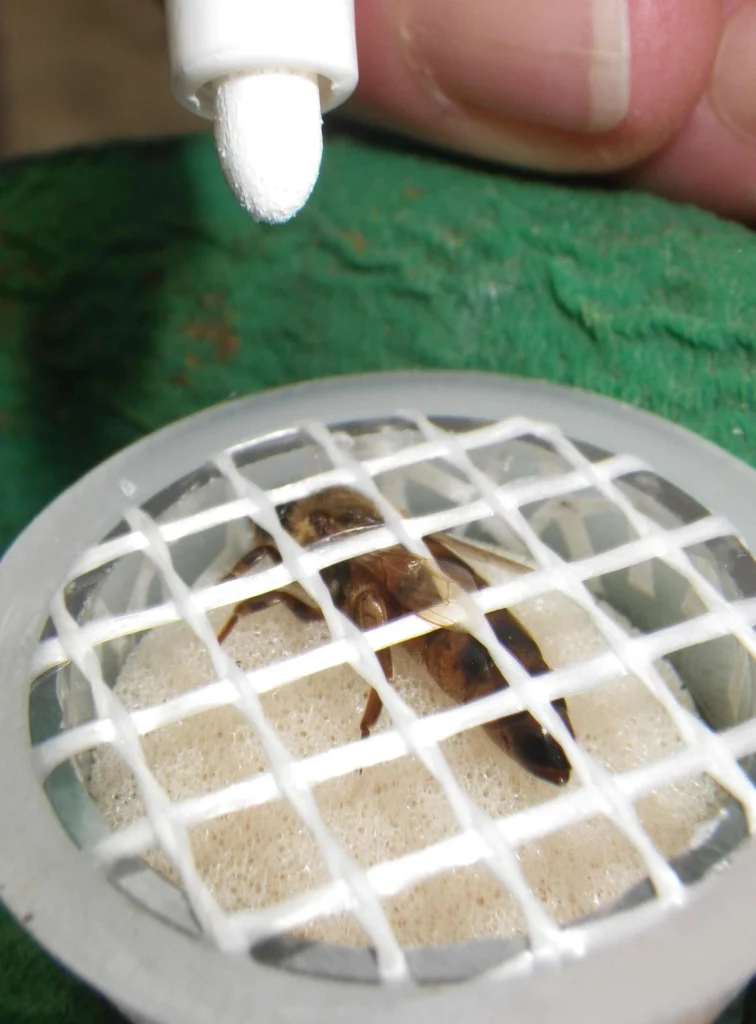
The real risks are handling ones: squeezing the queen, dabbing on too much paint, or letting her go before it dries. UF/IFAS advises allowing “a few minutes for the paint to dry.” For the step-by-step technique, see our guide to marking a queen bee safely. For equipment, compare queen marking pens and marking tubes.
If you’re also thinking about clipping, it’s a separate decision with its own pros and cons — see clipping queen wings. Selling queens or nucs? Buyers expect the international code to be used; our notes on marking queens for retail sale colonies cover what they expect.
A marking pen in the coming year's color makes a small, timely present; see more gifts for beekeepers.
Frequently Asked Questions
What color should queens be marked in 2026?
White. Years ending in 1 or 6 use white (some beekeepers use silver or gray). The 2027 color is yellow.
What does “Will You Raise Good Bees” mean?
It’s a mnemonic for the five colors in order: White, Yellow, Red, Green, Blue. Each word stands for one year in the five-year cycle, starting with years ending in 1 or 6.
Is the color based on the year the queen hatched or the year I installed her?
On the year she was reared and mated. For most queens that’s also the year you install her, but a queen raised in late summer and first marked the next spring should carry the previous year’s color.
What if my queen is marked with the wrong color?
Record her true year in your notes. If you want the mark to match, you can add a small dot of the correct color, but only if you’re sure you have the right queen and can handle her gently.
Why is my marked queen suddenly unmarked?
Usually because the colony has replaced her through supersedure or swarming. Paint can also wear off, but a completely clean thorax most often means a new queen.
Can I use my own color system instead of the international one?
You can within your own apiary, but anyone else reading the mark — a mentor, inspector or buyer — will assume the international code. If you sell bees, use the standard colors.

.jpg)
