Table of Contents
- What Makes PermaComb Different
- PermaComb vs. Plastic Foundation: A Real Distinction
- The Real Advantages
- The Real Drawbacks
- Getting Bees to Accept It
- Cleaning and Reusing PermaComb
- Best Use Cases
- Cost Comparison Over Time
- Who Should (and Shouldn’t) Use It
- Effect on Honey and Brood Quality
- Installation and Frame Compatibility
- The Disease-Management Case in More Detail
- Use in Observation Hives and Research Settings
- Mixing PermaComb With Standard Frames in One Hive
- Using PermaComb in Honey Supers vs. Brood Chambers
- Storage Between Seasons
- Ordering Considerations
- Considerations for Commercial-Scale Adoption
- Common Mistakes
What Makes PermaComb Different
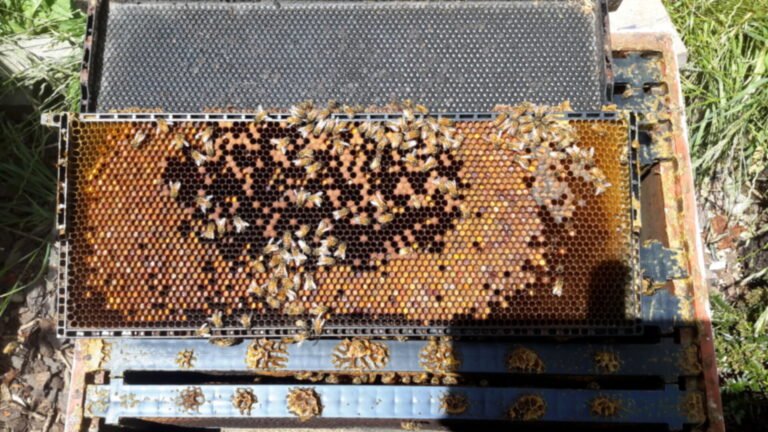
PermaComb is injection-molded plastic comb where the entire cell structure — not just a flat foundation sheet — is pre-formed in one piece, meaning bees never have to draw comb at all; they simply clean, condition, and start using the fully-formed cells directly. This is a fundamentally different product category from standard plastic foundation, which our guides on plastic vs. wax foundation and waxed vs. unwaxed plastic foundation cover — those products still require bees to draw the actual comb walls, using the foundation only as a guide sheet.
PermaComb vs. Plastic Foundation: A Real Distinction
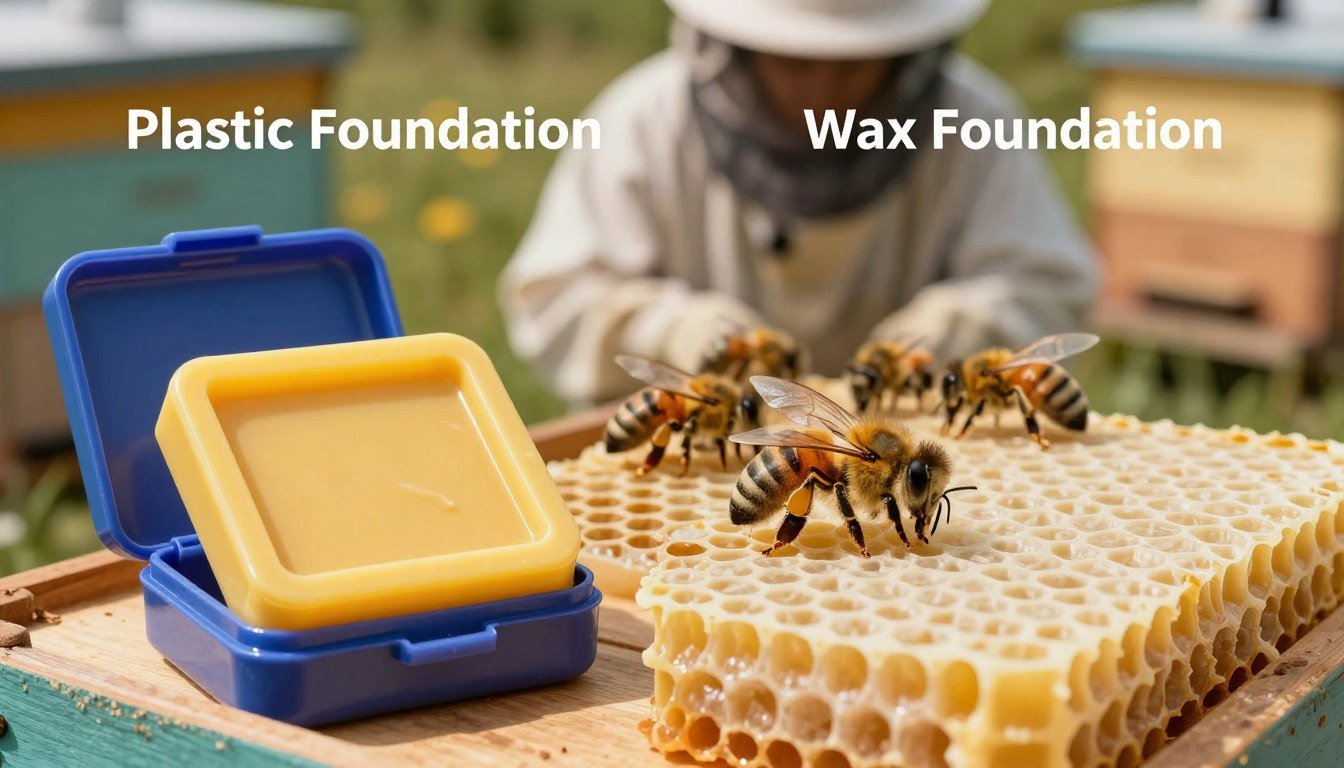
The practical difference matters more than it might first appear: with standard foundation, colony strength, nectar flow, and wax-production capacity all affect how quickly and well comb gets drawn — a weak colony or poor flow can mean slow, uneven, or incomplete comb even with good foundation. PermaComb removes that variable entirely, since the cell structure already exists regardless of colony strength or forage conditions, at the cost of losing any customization (cell size adjustment, natural comb characteristics) that comes from bees building their own comb.
The Real Advantages
Because no wax-drawing is required, PermaComb can go straight into a hive and be usable essentially immediately, which matters most for situations where drawn comb availability is the limiting factor — a new colony install during a weak nectar flow, or replacing comb quickly after equipment loss or disease-related destruction. It’s also notably durable and can be cleaned and reused across many seasons without needing replacement the way wax comb eventually does from repeated brood-rearing cycles, and it can be run through specific cleaning processes to remove disease pathogens more thoroughly than wax comb typically allows.
The Real Drawbacks
Bee acceptance is the most commonly cited real-world challenge — some colonies take readily to PermaComb, while others show noticeably slower acceptance compared to wax-drawn comb, and initial resistance is a genuine, documented pattern rather than a rare exception. Cost per unit is also meaningfully higher than a sheet of standard foundation, reflecting the more complex manufacturing process for fully pre-formed cells rather than a flat guide sheet. Some beekeepers also report the rigid, uniform cell structure feels less natural compared to bee-drawn comb’s typically finer size variation, though this is more a philosophical preference than a documented performance difference.
Getting Bees to Accept It
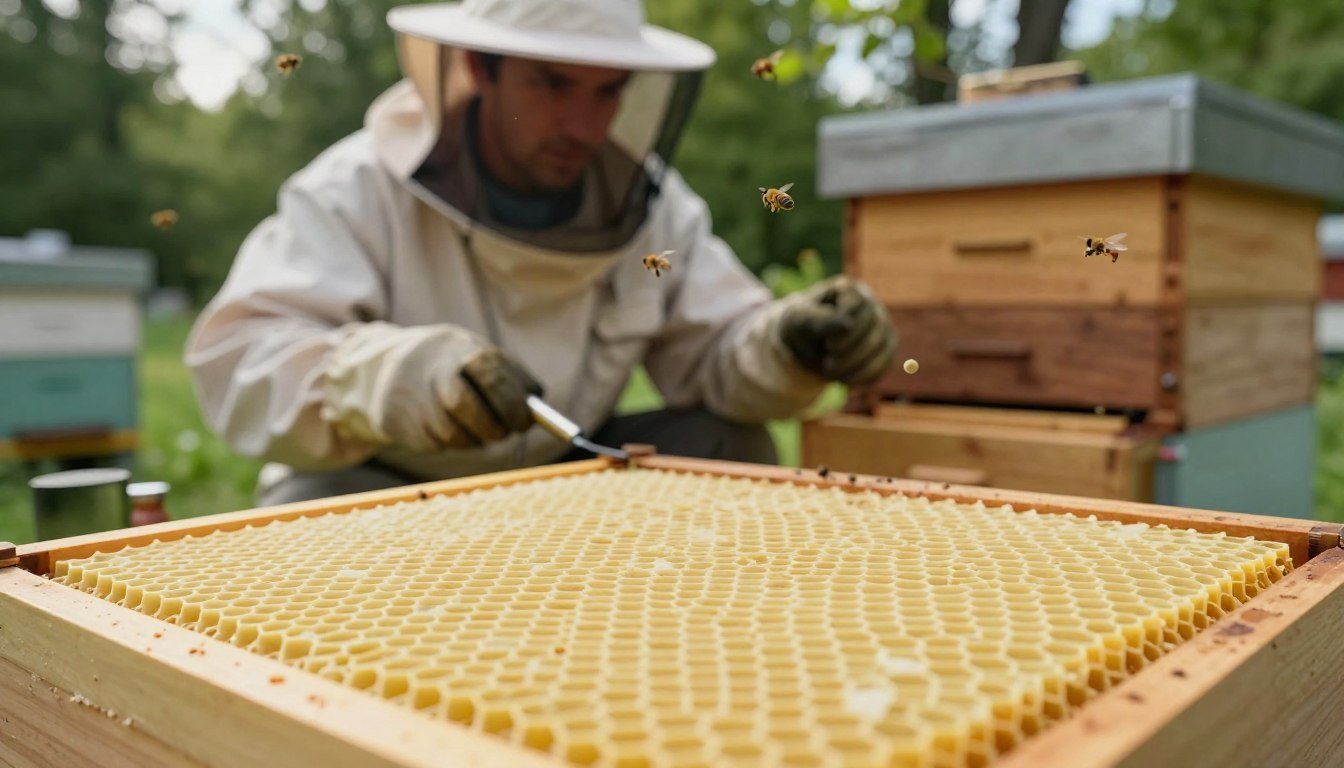
Acceptance improves meaningfully when PermaComb is coated with a thin layer of beeswax before installation, giving bees a familiar scent and texture cue that seems to reduce initial hesitation compared to installing it completely bare. Placing PermaComb frames adjacent to already-drawn wax comb, rather than isolated among other undrawn frames, also seems to encourage faster uptake, likely because bees naturally expand activity outward from established comb into adjacent frames. Patience matters too — give a colony reasonable time to adjust rather than assuming slow initial uptake means outright rejection.
Cleaning and Reusing PermaComb
One of PermaComb’s most distinctive practical advantages is genuine reusability: it can be cleaned of old comb debris, propolis, and even disease-contaminated material through washing and, in some cases, more aggressive sanitizing processes that would damage or destroy wax comb entirely. This makes it a genuinely useful option specifically for beekeepers dealing with recurring disease pressure in their equipment, where standard wax comb replacement is the normal recommended response but comes with real ongoing cost and labor.
Best Use Cases
PermaComb’s strongest use cases are situations where comb availability or biosecurity matter more than upfront cost or bee-acceptance convenience: rapid colony establishment when drawn comb isn’t otherwise available, disease-recovery situations wanting genuinely sanitizable equipment, and research or observation-hive contexts where uniform, predictable cell structure has real value. For routine, everyday hive management with a healthy colony and reasonable nectar flow, standard foundation generally remains the simpler, cheaper, and more readily accepted default.
Cost Comparison Over Time
While PermaComb’s upfront cost per frame is higher than standard foundation, its reusability across many seasons changes the total-cost picture over a longer time horizon — a beekeeper replacing wax comb every few years due to normal wear, or more frequently due to recurring disease pressure, may find PermaComb’s higher initial investment pays off over several years of reduced replacement need. Run this comparison honestly against your own actual comb-replacement frequency and disease history rather than assuming the higher sticker price is automatically not worth it.
Who Should (and Shouldn’t) Use It
Beekeepers dealing with recurring disease issues wanting more thoroughly sanitizable equipment, operations needing to rapidly re-establish comb after a loss, and research contexts wanting standardized cell structure are the clearest fits. A beginner beekeeper with a single healthy colony and no particular disease history is unlikely to see enough benefit to justify the added cost and acceptance uncertainty over standard foundation — this is a specialty tool for specific situations, not a default upgrade.
Effect on Honey and Brood Quality
Because PermaComb’s cell dimensions are fixed and uniform by manufacturing design, rather than shaped organically by the colony’s own wax-drawing process, some beekeepers report subtle differences in how honey crystallizes or how brood cappings appear compared to natural wax comb, though rigorous published comparative data on this specific point is limited. For most practical purposes — honey quality, brood viability — PermaComb performs comparably to standard comb once accepted and in regular use, with the differences beekeepers report being more anecdotal and cosmetic than functionally significant.
Installation and Frame Compatibility
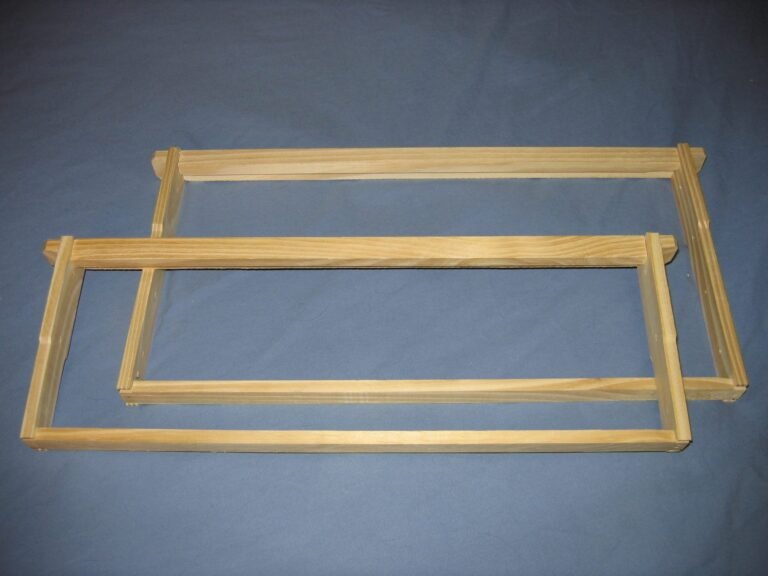
PermaComb is manufactured to fit standard frame dimensions (Langstroth deep and medium sizing being the most common), so it generally installs into existing equipment without requiring specialized frames — confirm the specific product’s dimensions match your equipment before ordering, since not every manufacturer covers every frame size or hive type. Handle it the same way you would any frame during inspections; its rigid plastic construction makes it notably more resistant to breakage during handling than fragile new wax comb, a small but genuine practical convenience during routine hive work.
The Disease-Management Case in More Detail
For a beekeeper dealing with a documented history of foulbrood or other comb-transmissible disease in their operation, PermaComb’s sanitizability is a genuinely significant advantage worth understanding in more depth — while standard practice for AFB-contaminated wax comb is typically destruction (burning or irradiation), some PermaComb cleaning protocols allow for more aggressive decontamination without destroying the underlying structure, since it’s plastic rather than wax. This doesn’t mean PermaComb sidesteps disease risk entirely or replaces proper diagnosis and management protocols, but it does mean the economic and material cost of a disease event is potentially lower with reusable comb than with wax comb that must be destroyed outright.
Use in Observation Hives and Research Settings
The uniform, predictable cell geometry that some hobbyist beekeepers see as a minor drawback compared to natural comb variation is a genuine advantage in observation hive displays and research contexts, where consistent, easily visible cell structure aids both public education displays and controlled study conditions. This is part of why PermaComb has found real adoption in these more specialized use cases beyond general commercial and hobbyist beekeeping.
Mixing PermaComb With Standard Frames in One Hive
There’s no inherent problem running a mix of PermaComb and standard wax-drawn frames within the same hive, and this is actually how many beekeepers introduce it — placing one or two PermaComb frames alongside established wax comb lets the colony adjust gradually rather than facing an entirely unfamiliar comb environment across every frame at once. This mixed approach also lets you directly compare bee behavior and acceptance between the two comb types within the same colony, giving you a genuine, first-hand basis for deciding whether to expand PermaComb use further in that colony or across your apiary.
Using PermaComb in Honey Supers vs. Brood Chambers
PermaComb can be used in either brood chambers or honey supers, though the practical considerations differ slightly between the two applications — in a brood chamber, bee acceptance and comb condition affect queen laying patterns directly, while in a honey super the main considerations are extraction compatibility and whether your specific extractor and uncapping process works well with the rigid plastic cell walls. Check your extraction equipment’s compatibility with PermaComb specifically before committing a full super to it, since uncapping and extraction technique for rigid plastic comb differs somewhat from wax comb handling.
Storage Between Seasons
Unlike wax comb, which needs protection from wax moths and other pests during off-season storage, PermaComb’s plastic construction is inherently far more resistant to pest damage, simplifying off-season storage considerably — a genuine, if secondary, practical advantage for beekeepers who’ve dealt with wax moth damage to stored drawn comb between seasons. Clean any remaining debris before storing, and keep it in a reasonably protected location, but the pest-vulnerability concerns that drive much wax-comb storage guidance simply don’t apply in the same way.
Ordering Considerations
Confirm current lead times before ordering, especially ahead of peak spring season when many beekeeping suppliers see order volume spike, since PermaComb’s more specialized manufacturing process can mean longer turnaround than mainstream foundation products carried in broad retail stock. Order enough for a genuine trial (several frames rather than just one) if you’re testing it for the first time, since evaluating acceptance and performance across a single frame gives a much less reliable picture than observing a few frames across at least one full season.
Considerations for Commercial-Scale Adoption
A commercial operation considering PermaComb at scale should weigh the upfront capital cost against realistic labor and comb-replacement savings across the full operation, ideally starting with a pilot on a subset of hives before committing broadly, similar to the staged-rollout approach worth applying to any higher-cost specialty equipment change.
Common Mistakes
Installing PermaComb completely bare, without a wax coating, and then being surprised by slow bee acceptance is the most common avoidable mistake. Expecting instant full acceptance and judging the product a failure after only a few days is a second common misjudgment, since acceptance genuinely takes patience even under good conditions. Using PermaComb as a default replacement for all comb needs, rather than reserving it for situations where its specific advantages (durability, sanitizability, immediate usability) actually matter, means paying a real cost premium without a correspondingly real benefit.
Sources
Product characteristics and comparative performance reflect publicly available manufacturer information and general beekeeping community experience with molded plastic comb products, alongside general USDA/university extension guidance on comb management and disease-related equipment sanitation. See the USDA Agricultural Research Service’s Honey Bee Breeding, Genetics and Physiology Research Unit for additional authoritative detail.
FAQ
Is PermaComb the same as plastic foundation?
No — plastic foundation is a flat guide sheet that bees still draw comb onto; PermaComb is a fully pre-formed cell structure that requires no drawing at all, a meaningfully different product category.
Do bees readily accept PermaComb?
Acceptance varies and is a genuinely documented challenge — coating it with a thin layer of beeswax before installation and placing it adjacent to already-drawn comb both tend to improve uptake.
Can PermaComb be reused across multiple seasons?
Yes — this is one of its clearest advantages, since it can be cleaned and, in some cases, more aggressively sanitized than wax comb allows, making it useful for beekeepers managing recurring disease pressure.
Is PermaComb worth the higher cost for a beginner?
Generally not necessary — its real advantages (durability, sanitizability, immediate usability) matter most in specific situations like disease recovery or rapid comb replacement, not routine beginner hive management.
Can I mix PermaComb with regular wax-drawn frames in the same hive?
Yes — many beekeepers introduce it this way, placing a frame or two alongside established comb so the colony adjusts gradually and you can directly compare bee behavior between the two comb types.