Table of Contents
- What OSBN Is
- Why Triggering Wax-Building Prevents Swarming
- Who This Method Is Built For
- Equipment Needed
- Initial Setup: 3 Weeks Before Swarm Season
- Repeat Schedule: Every 7-10 Days
- Maintaining Undrawn Frames Through Swarm Season
- OSBN vs. Checkerboarding vs. Nadiring
- Honest Limitations
- Signs OSBN Is Working
- Combining OSBN with Other Techniques
- Cost Considerations
- Common Mistakes
- FAQ
What OSBN Is
OSBN (Opening the Sides of the Brood Nest) is a swarm-prevention technique that works by deliberately triggering a colony to build fresh wax comb before swarm season begins, using the outermost frames of the brood box rather than requiring a split, an excluder, or a stock of spare drawn comb most other swarm-control methods depend on. It was developed and refined within the online beekeeping community (notably discussed extensively on Beesource forums) as an option specifically for beekeepers who don’t yet have a supply of drawn comb to work with — a real practical gap the more established methods like checkerboarding don’t fully address, since checkerboarding assumes you already have spare drawn comb on hand to alternate with stores.
Why Triggering Wax-Building Prevents Swarming
Bees strongly dislike gaps interrupting an otherwise continuous brood nest, and will move quickly to fill any such gap with new wax comb once given the opportunity. OSBN takes advantage of this by deliberately creating that gap at the edges of the brood nest, prompting the colony’s wax-building and house-bee population to redirect their energy toward rapid comb construction rather than toward the buildup that leads to swarm preparation. The theory runs parallel to checkerboarding’s survival-before-reproduction logic covered in checkerboarding: the late-winter swarm prevention method — a colony actively engaged in urgent comb-building and nectar processing to fill new space has less collective “attention” and resources going toward swarm preparation, and consuming nectar to produce wax also reduces the surplus that can otherwise read to the colony as a signal to swarm.
Who This Method Is Built For
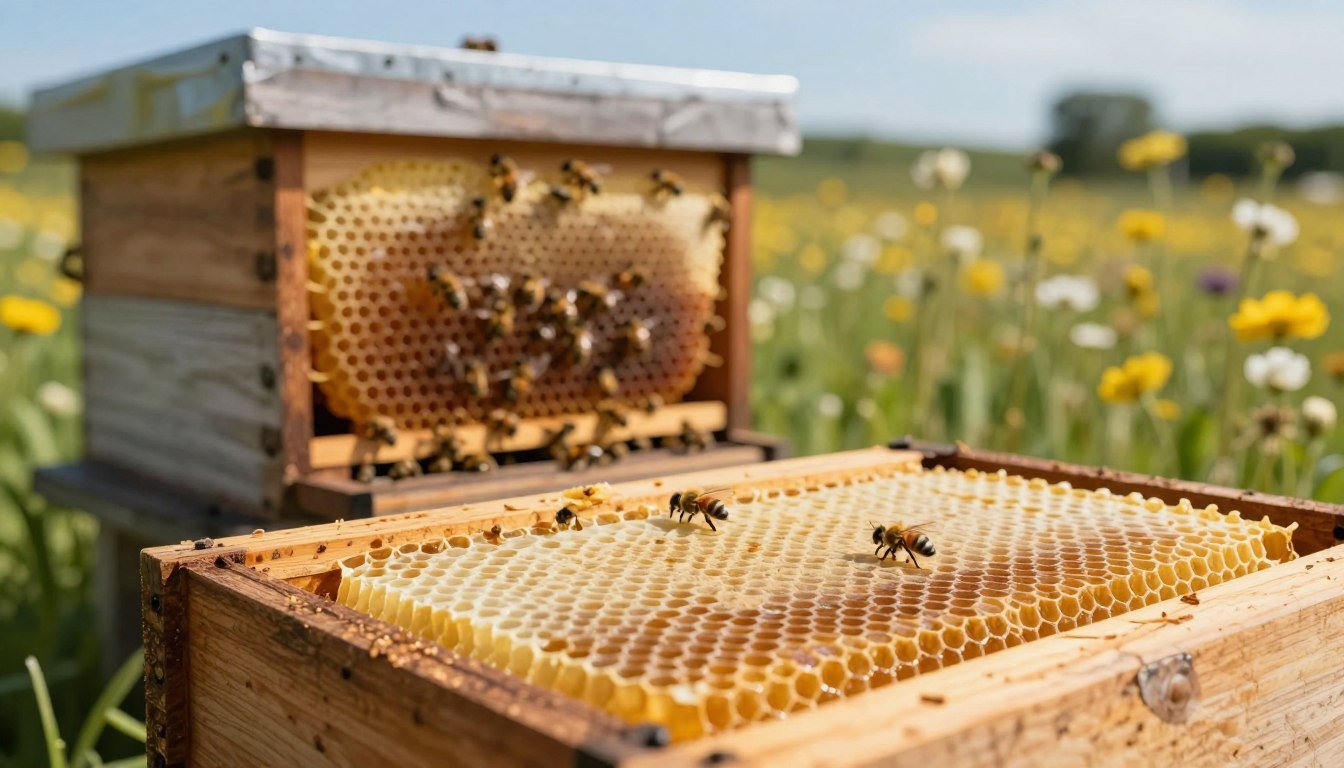
OSBN is specifically discussed as a good fit for a few situations other swarm-prevention methods don’t cover as well:
- Newer beekeepers without spare drawn comb — techniques like checkerboarding assume you have empty drawn comb ready to swap in; OSBN works with plain foundation instead.
- Beekeepers who don’t want to increase their colony count — unlike a split, OSBN keeps the colony as a single intact unit throughout.
- Beekeepers who already have enough hives and are specifically looking to avoid the extra equipment and management overhead a full split creates.
Equipment Needed
- A new box (super or additional brood box) fitted with undrawn foundation frames
- Standard hive tools for the frame-moving process
- A way to track your setup date and repeat-visit schedule, since the timing is fairly specific
Initial Setup: 3 Weeks Before Swarm Season
- Identify your local swarm season timing — this varies by region and climate, so use your own area’s typical peak swarming period as the reference point, not a fixed calendar date.
- About 3 weeks before that point, remove the outermost frame from each side of the brood box.
- Place a new box of undrawn foundation frames directly above the brood nest.
- Move the removed outermost frames up into the middle of this new box, surrounded by fresh foundation, rather than simply setting them aside.
- Fill the vacated positions at the outer edges of the brood box with fresh foundation frames.
The combination of foundation now sitting in the middle of the new upper box (where the brood-nest frames used to be) and foundation now at the outer edges of the brood box itself creates the “opened up” condition the method is named for — comb gaps in a spot the colony is strongly motivated to fill quickly. A medium super works fine for this new upper box in most setups, and doesn’t need to match the depth of your existing brood boxes — the goal is providing foundation space for wax-building and eventual honey storage, not creating a second full-depth brood chamber the way the Demaree method’s upper box does.
Repeat Schedule: Every 7-10 Days
A colony typically makes enough progress on a first round of OSBN frames within about 10 days to be ready for another round — some beekeepers work on a slightly tighter 7-10 day interval through the peak of the setup period, adding fresh foundation strips or half-sheets as earlier frames get drawn out. This isn’t a single one-time setup the way checkerboarding often is; it’s an ongoing process repeated through the weeks leading into and during swarm season, with each visit assessing how much of the previous foundation has been drawn and topping up as needed.
Maintaining Undrawn Frames Through Swarm Season
Throughout the swarm season itself, the general guidance is to maintain at least 2 undrawn frames in every box — not just at initial setup, but as an ongoing state you actively check for and restore during routine inspections. If the colony fully draws out all available foundation and no gap remains, the core mechanism the method depends on stops working until you introduce more undrawn frames. This is the main reason OSBN takes more recurring attention than some other prevention methods — it’s less “set it and check back once” and more “keep checking that the gap condition is still present” throughout the season.
OSBN vs. Checkerboarding vs. Nadiring
| Method | Requires spare drawn comb? | Follow-up frequency | Works on |
|---|---|---|---|
| OSBN | No — uses foundation | Every 7-10 days through swarm season | Brood box edges + new upper box |
| Checkerboarding | Yes — alternates with existing drawn comb | Minimal after initial setup | Honey storage area above brood nest |
| Nadiring | No — uses foundation, added below | Minimal after initial setup | New box added below the brood nest |
Beekeepers without an established supply of drawn comb — commonly the case in a beekeeper’s first couple of seasons — often find OSBN more accessible for exactly this reason, while more established beekeepers who already have drawn comb on hand from prior seasons often lean toward checkerboarding for its lower ongoing time commitment. Neither approach is objectively “better” across the board — the right choice comes down to what equipment you actually have on hand and how much recurring visit time you can realistically commit to during a busy swarm season, more than any inherent superiority of one method’s underlying mechanism over the other.
Honest Limitations
Like checkerboarding, OSBN is a community-developed technique refined through practical beekeeper experience and extensive forum discussion rather than formal controlled research, so it’s best approached as a genuinely useful tool with a plausible, widely-reported mechanism rather than a guaranteed, scientifically validated outcome. It also demands more recurring attention than some alternatives — the every-7-to-10-day check-and-refill cycle is a real time commitment across an active swarm season, not a single afternoon’s setup. For a beekeeper managing many colonies, that repeated per-hive attention can become impractical at scale, similar to the scaling limitation covered in the Snelgrove board method for its own more demanding schedule.
Signs OSBN Is Working
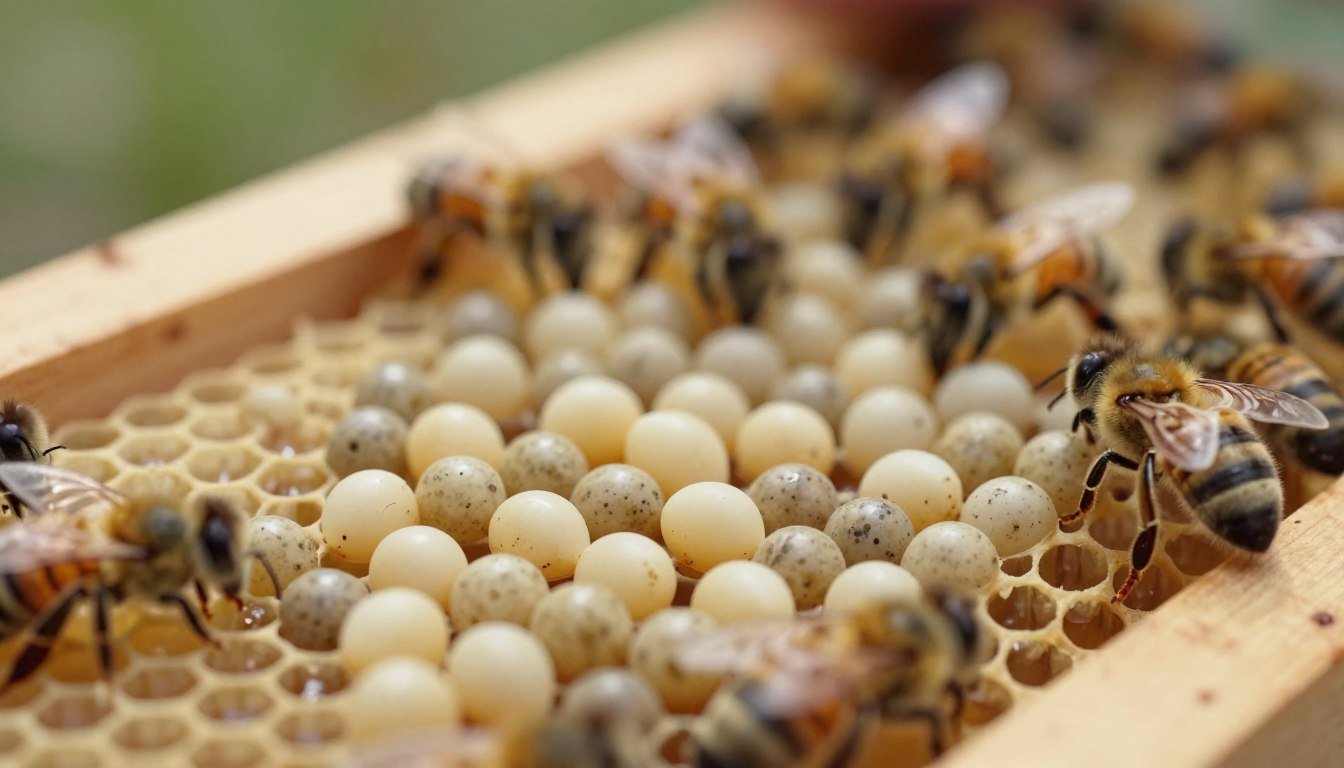
Within a few days of a properly timed OSBN setup, you should see visible fresh wax being drawn on the foundation frames at the brood box edges and in the new upper box — pale, fresh comb rather than the darker comb elsewhere in the hive. The colony should also continue steady brood nest expansion during this period rather than stalling. If, after a week or two, the foundation frames show little or no drawing activity despite the colony appearing strong, that can indicate the colony wasn’t actually short on space to begin with (in which case OSBN’s core mechanism has nothing to “fix”), or that the timing was off relative to the actual local nectar flow supporting wax production. Wax-building is energy-intensive and depends on incoming nectar, so a colony without much of a flow underway may simply not have the resources to draw comb quickly regardless of how the frames are arranged. In that situation, the fix isn’t to keep repeating the OSBN setup more aggressively — it’s to hold off until conditions genuinely support wax production, since forcing the mechanism without adequate incoming nectar just leaves the colony with unused foundation and no real swarm-prevention benefit.
Combining OSBN with Other Techniques
OSBN doesn’t have to be used in isolation. Because it works on comb-building at the edges of the brood nest specifically, it pairs reasonably well with nadiring (adding an empty box below the brood nest, discussed in more detail in the checkerboarding article’s nadiring section) — the two work on different parts of the hive’s structure and share the same underlying logic of giving the colony productive space to expand into. Some beekeepers also treat OSBN as a first-line early-season measure, keeping a more direct intervention like the Demaree method in reserve for any colony that still shows strong swarming signs despite the OSBN setup — the same layered approach recommended in the checkerboarding article’s swarm-prevention decision guide.
Common Mistakes
| Mistake | Why it matters |
|---|---|
| Starting too close to swarm season instead of 3 weeks ahead | The colony needs time to respond to the new comb-building opportunity before its swarm-preparation instinct is already well underway |
| Doing a single setup and not returning to refill | Once foundation is fully drawn out, the gap condition the method depends on disappears — this is meant to be an ongoing process, not a one-time fix |
| Letting undrawn frame count drop below 2 per box during the season | The core mechanism stops working without an active gap for the colony to fill |
| Using this as your only swarm-prevention tool on an already-strong colony | A colony already deep into swarm preparation may need a more direct intervention alongside or instead of OSBN |
Cost Considerations: Foundation vs. Drawn Comb
Part of what makes OSBN appealing to newer beekeepers is a real cost and time factor: building up a stock of drawn comb takes multiple seasons of colony work, while foundation is inexpensive and available immediately from any beekeeping supplier. A newer beekeeper facing their first real swarm season with only foundation on hand, and no drawn comb reserve to alternate into a checkerboard pattern, doesn’t have to wait a season or buy pre-drawn comb (which tends to be considerably more expensive than plain foundation, when available at all) to have a workable swarm-prevention option. That said, foundation still costs money and takes an investment of frames and boxes to set up properly — budgeting for at least one full extra box of foundation frames per colony you intend to run OSBN on is a reasonable starting expectation before the season begins, rather than trying to improvise with just a couple of spare frames.
Sources
Setup timing, repeat schedule, and maintenance guidance reflect widely documented beekeeping community discussion and practical technique-sharing on OSBN, consistent with how the method is described and refined across established beekeeping forums and reference pages. For current, authoritative detail, see University of Florida IFAS Extension’s Swarm Control for Managed Beehives guide.
FAQ
What does OSBN stand for?
Opening the Sides of the Brood Nest — a swarm-prevention technique that triggers early wax-building by creating comb gaps at the edges of the brood nest.
Do I need spare drawn comb to use OSBN?
No — this is one of its main advantages over methods like checkerboarding. OSBN works with plain foundation, making it accessible to newer beekeepers who haven’t built up a stock of drawn comb yet.
How often do I need to check on an OSBN setup?
Roughly every 7-10 days through the setup period and swarm season, refilling undrawn foundation as earlier frames get drawn out, aiming to keep at least 2 undrawn frames in every box.
Does OSBN split my colony into two?
No — the colony stays as one unit throughout. OSBN adds a new box above the brood nest and rearranges frames within the existing hive rather than dividing bees between two separate hives.
Is OSBN cheaper than other swarm-prevention methods?
Often yes for a newer beekeeper specifically, since it uses inexpensive foundation rather than requiring a stock of drawn comb, which normally takes multiple seasons to build up or costs more to buy pre-made.