

Reviewed by Daniel M. · Last Updated September 23, 2026 · How we review
For most beginners with two to ten hives, the best uncapping knife is an electric knife with a preset thermostat, such as the Pierce North American Model. You plug it in, wait about 30 seconds, and it holds the right temperature with nothing to adjust. If you have only one to three hives, a plain stainless cold knife for about $35 to $40, dipped in hot water between cuts, works fine and costs far less. If you want to control the blade temperature without paying Pierce prices, a digital-control electric knife under $100 is the middle option.
Most “best uncapping knife” lists are lineups of Amazon listings with specs copied from the sellers. This guide covers fewer knives, and every spec and price in it comes from the manufacturer’s or retailer’s product page, checked on September 23, 2026. It also matches each knife to a hive count, because that matters more for a beginner than any single feature.
Key Takeaways
- A preset thermostat is the most beginner-friendly feature. It removes the guesswork about temperature and the risk of scorching honey onto the blade.
- Match blade length to your frames. A 10-inch blade handles medium and shallow supers. Deep frames uncap more comfortably with the 12-inch Pierce model.
- With one to three hives, a cold knife plus a pan of hot water is enough. Buy two and alternate them to keep a warm blade in hand.
- Budget about $8 to $20 for a cappings scratcher. It finishes the low spots a flat blade misses, whichever knife you choose.
- Look at the warranty and the seller. Pierce’s heated knives carry a stated one- or two-year manufacturer warranty through U.S. suppliers.
Table of Contents
- Our Picks at a Glance
- How We Chose
- Best Overall for Beginners: Pierce North American Model
- Best Adjustable Knife Under $100: Digital Control Knife
- Best for One to Three Hives: A Plain Cold Knife
- Best for Deep Frames: Pierce 12-Inch Extra Long
- Match the Knife to Your Hive Count
- Using Your First Uncapping Knife
- Frequently Asked Questions
Our Picks at a Glance
| Knife | Type | Key specs (from product page) | Listed price, Sept 23, 2026 | Best for |
|---|---|---|---|---|
| Pierce North American Model (Mann Lake HD410) | Electric, preset thermostat | 10 x 2 in. 304 stainless blade; sealed thermostat; heats in 30 seconds; 450/500 W; 8 ft cord; 2-year warranty | $175.99 | Most beginners, 2 to 10+ hives |
| Uncapping Knife with Digital Control (Mann Lake HD405) | Electric, adjustable | Digital control in handle, 122°F to 356°F; 52 in. cord | $99.99 | Budget-minded beginners who want temperature control |
| Plain (non-electric) Knife, Wood Handle (Mann Lake HD437) | Cold | 11 x 1-3/8 in. stainless blade, sharpened angled edge; 5 in. handle | $39.99 | One to three hives |
| Betterbee Cold Uncapping Knife (CUK2) | Cold | 11 in. blade; offset handle; center ridge | $39.99 | One to three hives |
| Pierce 12″ Extra Long, North American Model (Mann Lake HD401) | Electric, preset thermostat | 12 x 2 in. 304 stainless blade; sealed thermostat; 8 ft cord; 2-year warranty | $218.95 | Beekeepers extracting deep frames |
Prices and stock change often. Treat the figures above as a snapshot, and check the product page before you buy.
How We Chose
We did not bench-test these knives against each other. We are not aware of any published controlled comparison of uncapping knives, and we will not invent one. Instead, we picked knives that:
- are currently sold by established U.S. beekeeping suppliers, so parts, returns, and warranty claims go through a real company;
- publish their key specs (blade size, thermostat type, and for heated knives, wattage or temperature range);
- suit a beginner’s volume and budget.
We left out knives sold only through marketplace listings with no identifiable manufacturer, even popular ones, because their specs and warranty support could not be confirmed.
If you are still deciding between a knife and another style of tool, our comparison of cold knives, heated knives, and uncapping planes explains how each works. This page is about which specific knife to buy.
Best Overall for Beginners: Pierce North American Model
Pierce Beekeeping Equipment has made heated uncapping knives for decades. Mann Lake’s product page for the North American Model dates the original patent to 1941. According to the listing:
- The blade is food-grade 304 stainless steel, 10 inches long and 2 inches wide.
- A sealed thermostat in the blade is pre-calibrated for uncapping, so there is no dial to set.
- The listing says it reaches temperature in about 30 seconds and holds steady while you work.
- It runs on 120 volts at 450/500 watts, with an 8-foot grounded cord and a turned wood handle.
- It is handmade in Southern California and carries a two-year manufacturer warranty.
Why it suits a beginner: the preset thermostat. Your first extraction day has enough to keep track of: supers, the extractor, the uncapping tank, sticky floors. A knife that is simply at the right temperature takes one decision off the list.
Trade-offs: it is the most expensive 10-inch option here, and you cannot adjust it for unusually hard or soft cappings. If you would rather control the heat, the same maker sells a version with a control box, listed as the Electric Uncapping Knife w/Control Unit (HD415) at $199.99. It is 300/350 watts, includes a stand, and has a one-year warranty.

Best Adjustable Knife Under $100: Digital Control Knife
Mann Lake’s Uncapping Knife with Digital Control (HD405) puts the controls in the handle. You set a temperature anywhere from 50°C (122°F) to 180°C (356°F), and the display shows the current blade temperature while it warms up. It runs on 120 volts with a 52-inch cord.
Why it suits a beginner: it costs little more than half the Pierce price and still gives you a heated blade, plus the option to turn the heat down if you see honey darkening on the steel.
Trade-offs: the listing does not give blade length, wattage, or manufacturer, so check the blade against your frames when it arrives. The 52-inch cord is short, so plan your uncapping station near an outlet or use a heavy-duty extension cord. Also note that the adjustable range goes well above what uncapping needs. More heat is not better. Start low and raise it only until the blade glides through the wax.
Best for One to Three Hives: A Plain Cold Knife
With a handful of hives, you may only uncap a few dozen frames a year. A cold knife handles that easily. Two good examples from established suppliers:
- Mann Lake Plain (non-electric) Knife, Wood Handle (HD437), $39.99. According to the product page, it has an 11-inch by 1-3/8-inch stainless blade with a sharpened, angled edge and a 5-inch handle.
- Betterbee Cold Uncapping Knife (CUK2), $39.99. Betterbee’s listing describes an 11-inch blade with an offset handle and a center ridge designed for cutting cappings.
Both retailers give the same advice: dip the blade in hot water between cuts, and if you can, buy two knives. Uncap with one while the other warms in the pan, then swap.
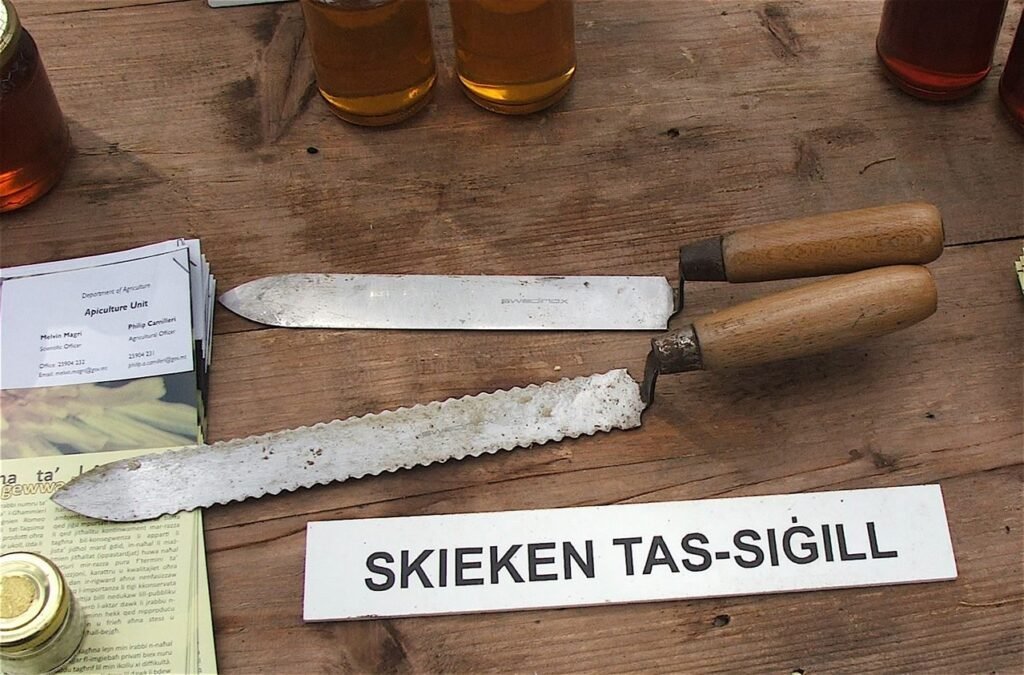
Trade-offs: a cold knife is slower and takes more effort, and it pulls at soft comb more than a hot blade does. If you expand past about five hives, you will probably want a heated knife.
Best for Deep Frames: Pierce 12-Inch Extra Long
Many beginners extract only medium supers. If you plan to extract deep frames, the extra length is worth having. Mann Lake lists the 12″ Extra Long North American Model (HD401) for deep Langstroth frames and other frames up to 12 inches tall. It has the same sealed, pre-calibrated thermostat and 304 stainless construction as the 10-inch model, with a 2-year warranty, at $218.95.
For medium and shallow supers, a 10-inch blade covers the full comb face in one stroke, and the 12-inch knife adds cost and weight without much benefit.
Match the Knife to Your Hive Count
| Your operation | Suggested setup | Approximate outlay (listed prices) |
|---|---|---|
| 1 to 3 hives, medium supers | Two cold knives, a pan of hot water, and a plastic scratcher | About $88 (2 x $39.99 + $7.99 scratcher) |
| 3 to 6 hives, want heat on a budget | Digital-control heated knife, knife stand, and scratcher | About $118 ($99.99 + $9.99 stand + $7.99 scratcher) |
| 4 to 10+ hives | Pierce North American Model, knife stand, and scratcher | About $194 ($175.99 + $9.99 + $7.99) |
| Any size, extracting deeps | Pierce 12-inch model, knife stand, and scratcher | About $237 ($218.95 + $9.99 + $7.99) |
The stand and scratcher prices are Mann Lake’s listings for its Uncapping Knife Stand (HD425) and plastic Uncapping Scratcher (HD465). A stainless scratcher (HD466) is listed at $19.99.
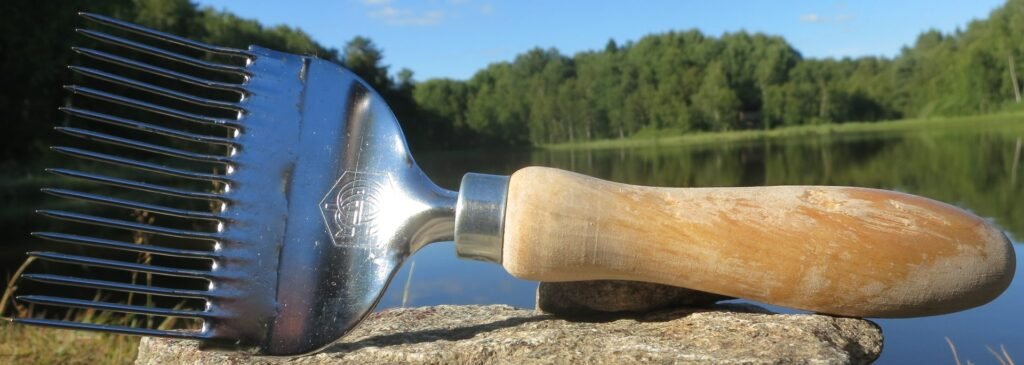
A knife is only one part of the uncapping station. You also need somewhere for the cappings to drain. See our uncapping tank buying guide before you build a station out of kitchen bowls.
Using Your First Uncapping Knife
The knife matters less than how you use it. A few habits will make your first harvest go more smoothly:
- Harvest ripe frames. Capped honey is the signal that the bees have finished drying it. Our guide to how honey matures in the comb explains how to judge when a super is ready.
- Stand the frame on end over the tank and tilt it slightly, so the cappings fall away from the comb as you cut.
- Take off only the cappings. Use a gentle sawing motion and let the blade glide just under the wax.
- Park a hot knife on a stand, never flat on the table, and wipe the blade between frames so honey does not burn onto it. Our guide to cleaning an uncapping knife covers daily care and removing burnt-on honey.
- Finish with a scratcher on any low patches the blade skipped, then move the frame into the extractor. If you are still choosing one, see radial versus tangential extractors.
“Go skin deep, don’t slice it to the bone!”
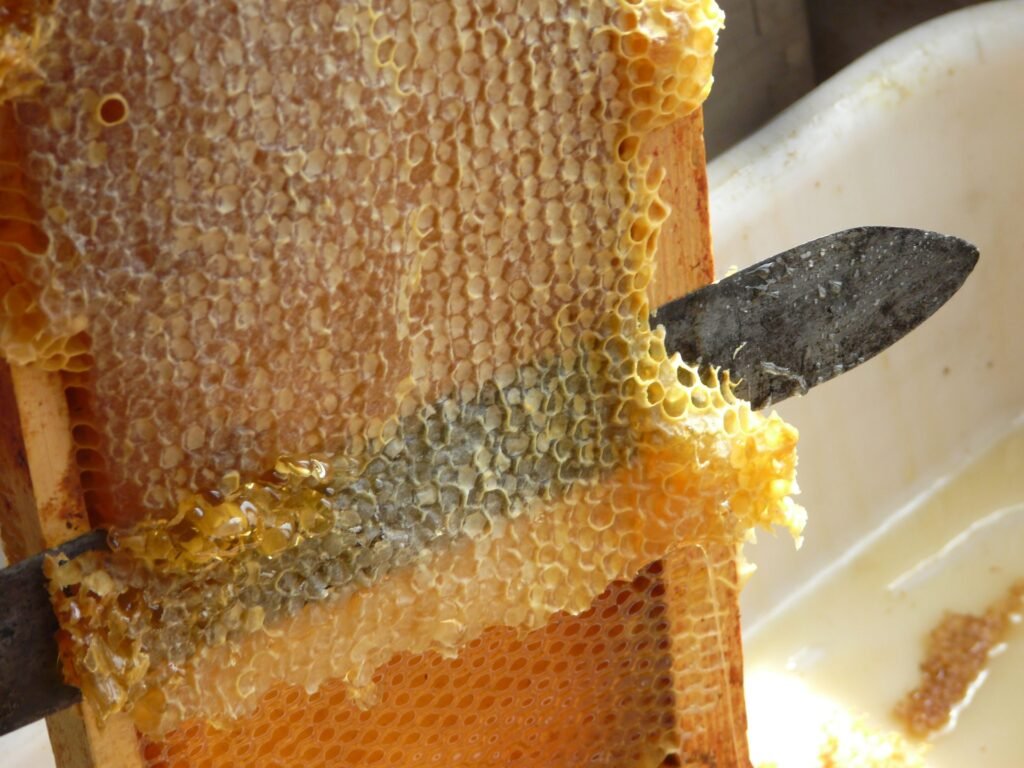
A note for northern extraction rooms. Around the Red River Valley, supers often come off in late summer and are extracted in a garage or basement that can feel cold by September. A cold knife cools quickly in those conditions, so keep the water pan hot or switch to a heated knife. Fat, fully drawn comb that stands proud of the frame is also much easier to uncap with any knife than thin comb sitting below the wood. Many beekeepers run nine frames in a ten-frame super to get that fatter comb.
After extraction, strain the honey and skim off the wax and foam. Our guide to skimming wax and foam explains how.
Frequently Asked Questions
Do beginners need an electric uncapping knife?
No. With one to three hives, a cold knife dipped in hot water works well and costs much less. An electric knife becomes worth it once you are uncapping more than a few supers at a time, or if you find cold-knife work tiring.
What temperature should an uncapping knife be?
Hot enough to glide through the wax, and no hotter. That is why preset-thermostat knives suit beginners. With an adjustable knife, start at the low end of the range and raise the heat only until the blade stops dragging. If honey smokes or darkens on the blade, it is too hot.
Can I use a kitchen bread knife to uncap honey?
For a few frames, a long serrated bread knife dipped in hot water will work. Keep it for beekeeping only afterward, because wax and propolis are hard to clean off completely. A purpose-made cold knife costs about $40 and is shaped to ride flat on the frame.
Is a 10-inch or 12-inch uncapping knife better?
A 10-inch blade handles medium and shallow supers comfortably, and it is lighter and cheaper. Choose the 12-inch model only if you extract deep frames regularly.
Is an uncapping fork or scratcher enough on its own?
A scratcher or fork can uncap a few frames, but it is slow and leaves more wax bits in the honey. Most beekeepers use one alongside a knife, for the low spots the blade misses.
How long does an electric uncapping knife last?
That depends on care, especially keeping water away from the handle and cord. Pierce’s heated knives sold by Mann Lake carry a one- or two-year manufacturer warranty depending on the model, which gives you some protection against early failure.
The Bottom Line
Buy for your hive count, not for the longest feature list. With one to three hives, start with a $40 cold knife and a scratcher. From about four hives up, a preset-thermostat heated knife like the Pierce North American Model is the easiest tool for a beginner to get right. Whichever you choose, a knife stand, a scratcher, and a proper uncapping tank will make more difference to your first harvest than the knife itself.


.jpg)