Ready to turn jars into repeat customers? The U.S. produced over 125 million pounds of honey last year, and direct-to-consumer food sales top $3 billion. That mix of demand and traffic makes midsummer an ideal time to start.
This short guide lays out a practical, step-by-step plan so you can sell honey confidently at your first or next farmers market. You’ll get clear advice on compliance, labeling, pricing, and booth setup.
Start local, keep labels simple (for example: “Raw. Local. Wildflower.”), and follow state and local rules. Learn which permits and taxes matter, then choose a market with steady foot traffic and shoppers who value origin stories.
For deeper grading and quality cues, see this guide to honey grading standards. Each section that follows builds on the last so you can move from legal basics to a tidy, profitable booth that people remember.
Key Takeaways
- Demand is strong in midsummer—plan major outreach then.
- Follow state labeling and cottage food rules before you sell.
- Simple branding and two jar sizes boost repeat sales.
- Pick markets with aligned shoppers and evaluate multiple dates.
- Clean booth design and small tastings increase customer trust.
Table of Contents
- Why farmers markets are a great way to sell raw honey right now
- Stay compliant: laws, labeling, and safe packaging for honey vendors
- Set up your business the right way before your first booth
- Choose the right farmers market: traffic, demographics, and timing
- Booth setup and on-site selling tactics that attract customers
- Pricing, product mix, and vendor etiquette that boost sales
- Selling Raw Honey at U.S. Farmers Markets: Marketing and Growth
- Conclusion
- FAQ
Why farmers markets are a great way to sell raw honey right now
Local markets let you showcase flavor and provenance in ways a photo cannot capture.
Demand indicators are strong: the U.S. produced over 125 million pounds of honey last year, and direct-to-consumer food sales topped $3 billion. That combination makes an open-air market a great way to meet shoppers who prefer minimally processed goods.
At a busy market you can offer samples, tell your story, and answer questions about harvest and storage. In many states, cottage food rules let new vendors test products without a full commercial kitchen, a helpful fact for keeping risk low.
- Face-to-face sales build trust and turn curious people into repeat customers.
- Foot traffic concentrates buyers so you spend less time finding an audience.
- Market managers and fellow farmers often share tips on setup and local rules.
Use local extension offices or your state Department of Agriculture to learn rules and opportunities. A single weekend can deliver rapid feedback on jars, labels, and price points so you can refine your offering faster.
Stay compliant: laws, labeling, and safe packaging for honey vendors
Regulations differ by county and state, so gather the facts before you print labels or fill jars. Many areas permit direct sales with minimal steps, while other places require permits, inspections, or sales limits.
Know what path fits your operation
Cottage food rules often let small producers sell from a home kitchen with fewer requirements. Commercial production usually needs certified facilities, inspections, and traceability systems. Decide early so your equipment, labels, and workflow match the chosen process.
Labeling essentials
Build compliant labels that list the product name “Honey,” net weight in ounces and grams, and your contact name and address. If you add flavors or infusions, include ingredients and adjust labeling to reflect that the item is not a plain honey product.
Packaging and claims
Use food-safe jars and lids, sanitize surfaces, and avoid reusing commercial containers. Consider tamper-evident seals and leak-proof shipping packaging for out-of-state orders.
Avoid health or disease claims; instead use defensible descriptors like “raw,” “unfiltered,” or floral source. For more details on compliant labels, see this labeling guide.
Insurance and recordkeeping
Many markets require product liability insurance and may ask to be added as additional insured. Keep a compliance binder with permits, insurance, and batch information to show managers and inspectors you operate responsibly.
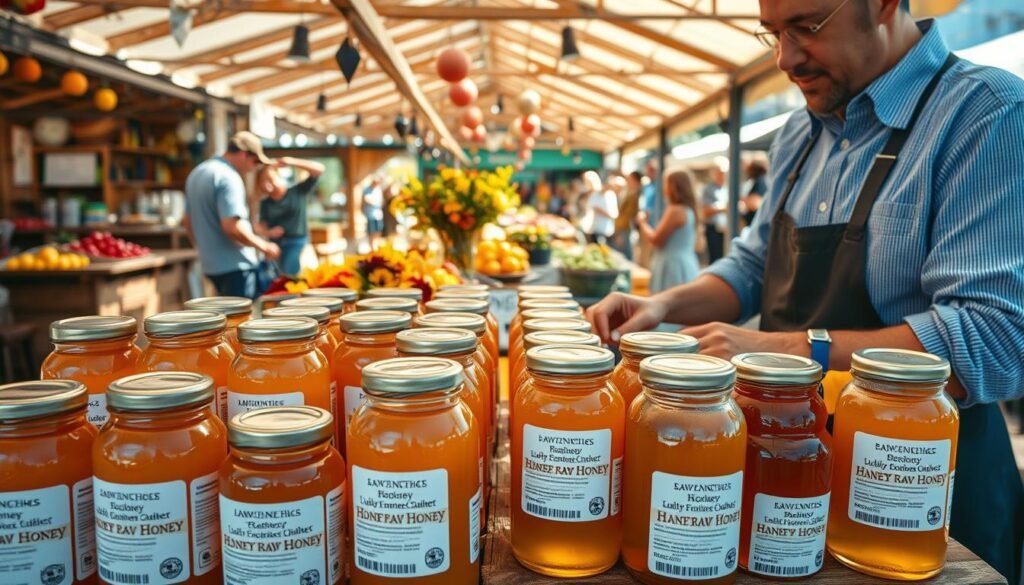
Set up your business the right way before your first booth
Get the right business name and tax ID first so permits, labels, and banking match.
Registering early clears a lot of obstacles. New sellers commonly pick a DBA or form an LLC, and apply for an EIN to open a separate bank account. This keeps personal and business records clean as you grow.
Legal basics and tax steps
City or county licenses are often required. Make sure you check local laws and sales tax rules—some states tax honey while others do not. Use local small business offices or extension services for clear information.
What to prepare for market applications
- Register your name so invoices and labels match official records.
- Gather EIN, insurance certificates, license numbers, and booth photos.
- Set up simple bookkeeping to track materials, booth fees, and mileage.
- Confirm any health permits and order compliant jars, labels, and a card reader in time for your first day.
Choose the right farmers market: traffic, demographics, and timing
Choose venues with steady foot traffic and shoppers who match your price point; that one thing often makes or breaks a booth.
Prioritize lots of foot traffic over “nice but slow” markets
Visit candidate market days and count how many people pass your ideal spot during peak hours.
Note what they carry away — a busy scene is the best way to sell jars quickly and learn tastes fast.
Match product and price to neighborhood demographics
Study the neighborhood. Areas with young professionals often pay more for premium infusions.
Set price points to match local income and preferences to avoid leaving money on the table.
Work multiple markets per week to grow steady revenue
Aim to run more than one market each week. Cluster locations so travel and setup are efficient.
Two close markets can perform very differently; test both before choosing a main route.
Be patient and consistent: give a market several weeks
- Talk to vendors about sales patterns and table presentation standards.
- Compare fees, vendor caps, and competition for your product type.
- Track jars sold per hour, average ticket, and sampling-to-sale ratio.
- Position your booth so signage reads from 15–20 feet and you don’t block neighbors.
“Give a new venue at least eight market days before deciding; repeat customers often need to see you multiple times.”
Booth setup and on-site selling tactics that attract customers
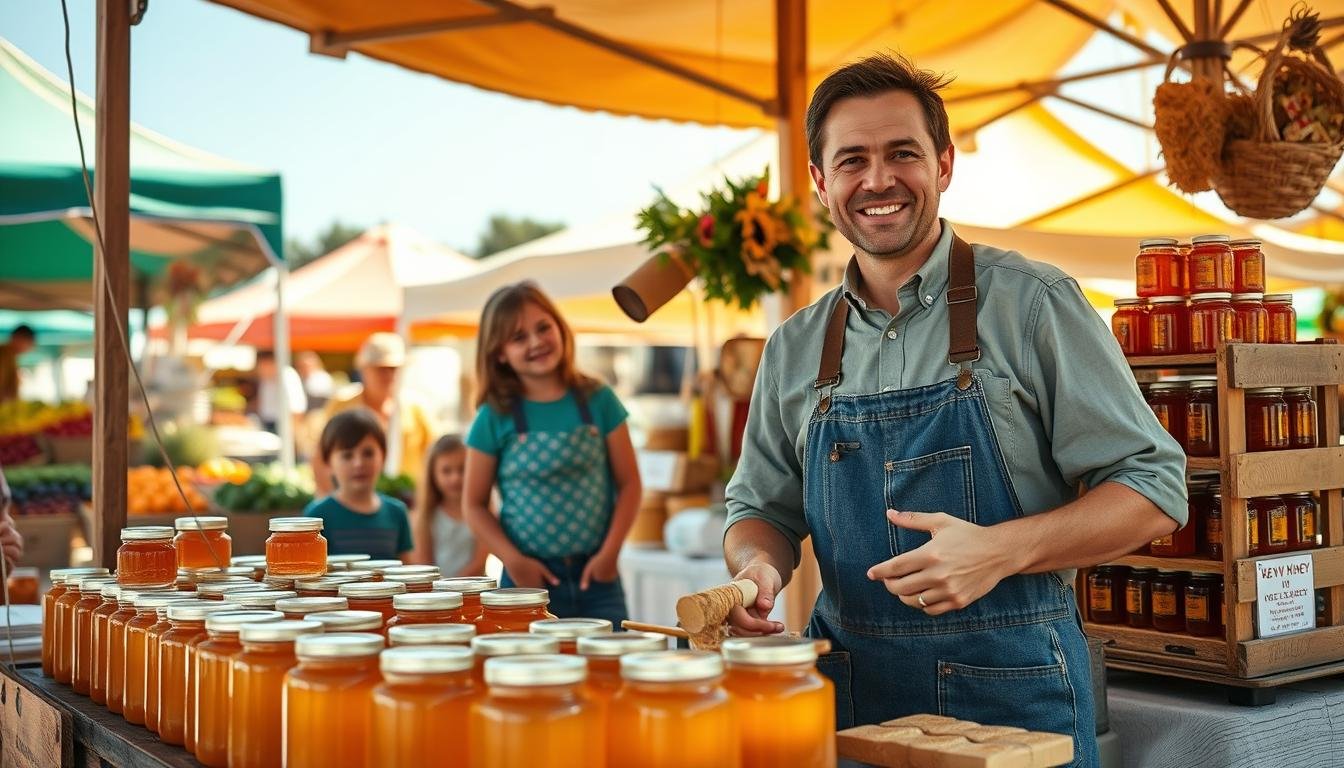
Simple visual cues and clear pricing make it easy for people to stop and browse. A bright cloth and large, legible sign help your booth read from the aisle and invite passersby to slow down.
Stand out with clear signage and a tidy table. Elevate feature jars on risers so the label faces the walk. Group sizes together and post prices where people can see them at a glance.
Be friendly but low-pressure. Greet people, then step back and let them browse. Offer hygienic tastings with single-use sticks or spoons and a small waste bin to keep the area clean.
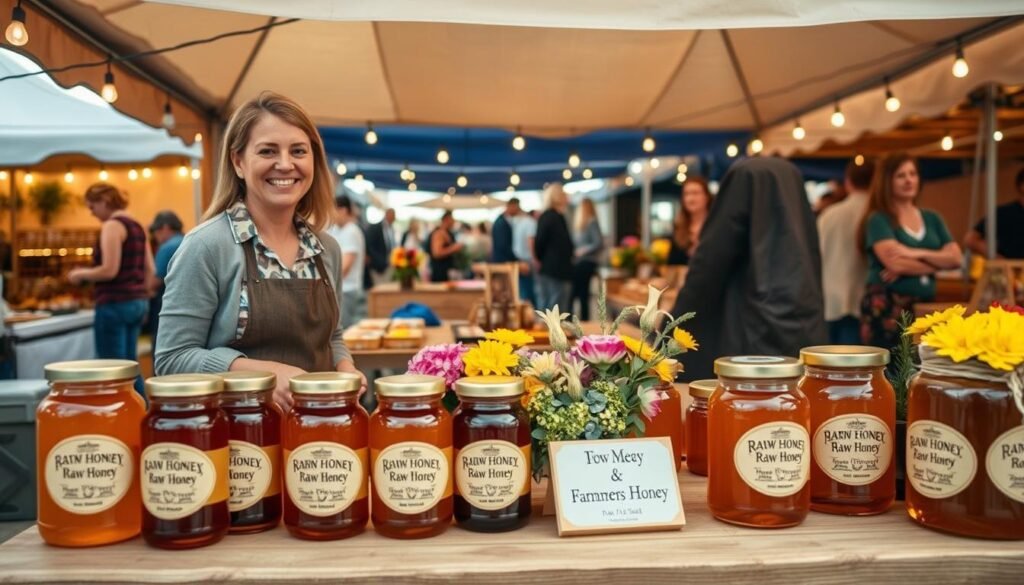
Do one thing at your table to draw interest. Simple actions—labeling jars, tying ribbons, or showing a frame photo—give people a reason to stop and ask questions about bees and harvest timing.
- Design the booth to be seen: big type on the sign and a clean cloth in brand colors.
- Keep the layout simple: feature jars front and center, clear prices, easy flow for checkout.
- Stage a small FAQ sign (Is it raw? Where are your hives? How long does it last?) to save time and build trust.
“A tidy table, polite greeting, and an active demo are the one thing many vendors use to spark real conversations.”
Pricing, product mix, and vendor etiquette that boost sales
Charge what lets you grow: factor time, travel, materials, and market fees into each jar so every sale is profitable.
Stick to your prices and align with similar vendors. Set rates that reflect ingredients, jars, labels, booth fees, and your labor. Politely decline deep discounts and avoid price wars that hurt the category.
Start simple with one size and one signature product
Begin with one jar size and a focused line—choose a clear label and a signature flavor or floral source. Simple choices speed checkout and reduce inventory errors during a busy week.
Turn first-time buyers into regulars
Print your phone, email, and social handles on jars so people can reorder between market days. A clear contact turns single purchases into steady customers.
Vendor etiquette: build the market family
Be a good neighbor: trade products, cover breaks, and introduce people to friends across the aisle. Arrive on time, follow shared rules, and resolve issues directly and respectfully.
guide to starting and operating
Selling Raw Honey at U.S. Farmers Markets: Marketing and Growth
A clear message and consistent updates make your table easy to find and your product memorable.
Promote provenance, not promises
Label with factual terms such as “raw,” “unfiltered,” “wildflower,” or “locally harvested.” These phrases highlight value without making health claims.
Build a simple web presence
Launch a small site with an About page and a Contact page. Add a blog and post weekly hive notes, recipes, or market updates so people know where to find you.
Balance online and in-person sales
If you ship, check FDA registration rules and pack jars to prevent leaks. Keep an SOP for packing and respond to email and DMs within 24 hours.
- Standardize logo, colors, and product names for easy recognition.
- Reuse blog posts as short social updates and market-day reminders.
- Show behind-the-scenes care of bees and cleaning to build trust.
| Channel | Focus | Quick Tip | Metric |
|---|---|---|---|
| Website | About, Contact, market schedule | Keep pages current | Visits/week |
| Blog | Weekly hive notes, recipes | Share longer process content | Reads/shares |
| Social | Short updates, booth location | Post day-before reminders | Engagement |
| Reorders, market alerts | Reply within 24 hrs | Open rate |
Read more on product claims and to keep marketing factual and compliant.
Conclusion
Take one practical step today: confirm your local rules, pack a basic kit, and reserve a booth for the coming week.
Combine legal readiness, disciplined pricing, and clear branding to sell honey with confidence and grow by learning each market day.
Pick high-traffic venues that match your price point and give each location several weeks to produce repeat customers. Keep labels simple and compliant, protect your operation with insurance and documented processes, and support nearby vendors to build referrals.
Maintain a small online hub — an About and Contact page — and share short updates. For market benchmarks and planning tips see market data, and for hive timing consult seasonal tasks.
FAQ
What permits and registrations do I need before selling honey at a market?
Check state and local health department rules first. Many states allow small-scale producers to sell under cottage food laws, while larger operations must meet commercial processing standards. Register your business name, consider forming an LLC, and get an EIN for taxes. Some markets also require proof of general liability insurance and a vendor permit from the city or county.
How do cottage food laws differ from commercial production?
Cottage food rules let individuals produce specific low-risk foods at home for direct sale, often with sales limits and labeling requirements. Commercial production requires a licensed facility, routine inspections, and stricter packaging and recordkeeping. Which path you choose affects where and how much you can sell.
What labeling information must appear on honey jars?
Labels typically need the product name, net weight, ingredient list (if you add anything), producer contact or business name, and the origin or floral source if you claim it. Include allergen statements if applicable and any required state cottage food disclaimers. Avoid unverified health claims on the label.
Are there packaging rules to protect product safety?
Yes. Use food-grade glass or PET jars with secure lids and tamper-evident seals. Store jars away from direct sunlight and at stable temperatures during transport and at the booth. Clean your packaging area and follow good sanitation to prevent contamination.
Can I claim my honey is medicinal or cure illnesses?
No. Making therapeutic or disease-treatment claims can trigger FDA action. Instead, describe sensory attributes—floral source, color, and tasting notes—or use general phrases like “supports wellness” only when backed by compliant labeling and marketing practices.
Do farmers markets require vendor insurance?
Many markets require general liability insurance listing the market as additional insured. Coverage protects you and the market if a customer is injured or a product causes harm. Talk to an insurance agent experienced with food vendors to find an appropriate policy.
How should I price jars and choose jar sizes?
Start with one or two jar sizes to simplify inventory and pricing. Research competitor prices in your area and account for production costs, market fees, packaging, and labor. Set prices that reflect your product’s quality while remaining competitive in the local market.
How do I know which markets are worth the time and fees?
Evaluate foot traffic, customer demographics, and vendor mix. Prefer markets with steady attendance and shoppers who match your price point. Visit as a shopper first, talk to other vendors, and try several markets for a few weeks before committing full time.
What are effective booth setup tips to attract customers?
Use bright, clean tablecloths, clear signage with product names and prices, and neatly arranged jars. Offer small tastings using disposable utensils and keep a tidy work area. Friendly eye contact and short demonstrations can pull people in without being pushy.
How can I offer tastings safely at an outdoor market?
Use single-use spoons or pre-portioned samples in sealed cups. Wear gloves when handling samples and follow market rules on food handling. Display signage explaining ingredients and avoid cross-contamination by using dedicated utensils and containers.
What paperwork should I bring to market each week?
Pack your vendor permit, certificate of insurance, sales tax permit or reseller certificate if required, and any market-specific paperwork. Also bring a cash box, mobile card reader, scales, packaging supplies, and a log of inventory and sales for recordkeeping.
How do I handle sales tax collection for different markets?
Sales tax rules vary by state and sometimes by city. Register for a sales tax permit in the state where you sell, collect the correct rate at each market, and file returns on schedule. Use a point-of-sale system that records sales by jurisdiction to simplify tax reporting.
How often should I attend a market to build a customer base?
Consistency builds recognition. Aim for multiple markets per week or the same market on a regular schedule. Give a new market several weeks to see patterns and build relationships; repeat presence helps convert visitors into repeat buyers.
What marketing should I do outside the market to grow sales?
Build a simple website and maintain social profiles on Facebook and Instagram with weekly updates. Share photos, market schedules, and stories about floral sources and beekeeping practices. Collect emails at events to send newsletters and promotions.
Are there rules about shipping jars sold online versus in person?
Shipping food products may trigger additional regulations and labeling requirements, including interstate commerce rules enforced by FDA. Check state laws for shipping into other states and follow carrier guidelines for packaging and temperature control. Some markets limit vendors who ship versus only selling direct.
How can I support other vendors while protecting my sales?
Build relationships by referring customers when your product is out of stock, collaborate on joint promotions, and respect each vendor’s pricing. A cooperative approach creates a stronger market atmosphere that benefits everyone.