Reviewed by Daniel M. · How we review
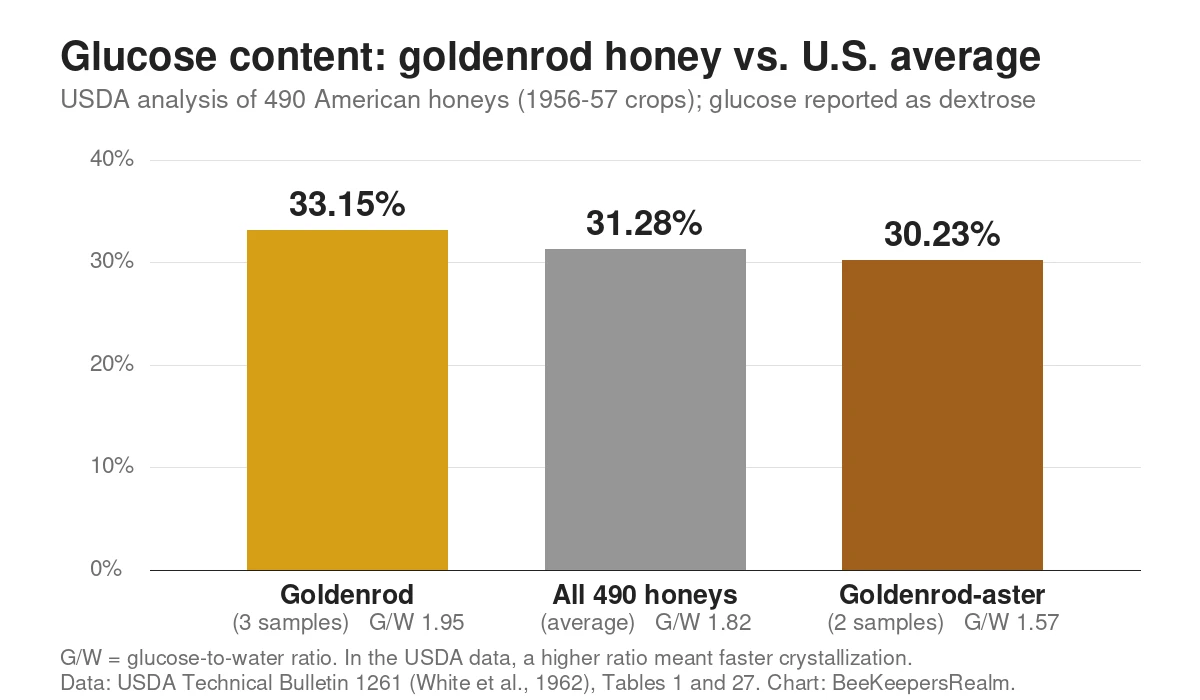
Goldenrod honey is a buttery, mildly spicy fall honey that is usually lighter than its reputation and quicker than average to crystallize. In the USDA’s analysis of 490 American honeys, single-source goldenrod samples graded White to Extra Light Amber, not maple-syrup dark, and held 33.15% glucose against a 31.28% average. Glucose is the sugar that crystallizes. Darker fall honey sold as goldenrod often carries nectar from aster or other fall flowers.
We write from eastern North Dakota, where about ten goldenrod species are native and Canada goldenrod is probably the most commonly seen, according to Chuck Lura of Prairie Public’s Natural North Dakota.
Key Takeaways
- Pure goldenrod honey tested White to Extra Light Amber in USDA analysis; blends with aster were darker.
- It is richer in glucose than average honey, so it sets sooner. That makes it a good base for creamed honey.
- The dirty-sock smell in fall hives comes from ripening nectar, not the finished honey. Still check the brood.
- Goldenrod pollen rarely causes hay fever; ragweed does, and a controlled trial found honey did not relieve allergy symptoms.
Taste and Color, With the Lab Numbers
Rusty Burlew of Honey Bee Suite calls the honey light to medium amber with a spicy taste, and sellers describe a buttery, butterscotch note. Charlotte Anderson, a master beekeeper who writes Carolina Honeybees, says it is stronger than light spring honeys and can be a little bitter. Our honey varieties comparison chart puts it beside other U.S. types.
Color is where accounts split. Zachary Huang of Michigan State University says goldenrod honey in Michigan is dark, while beekeepers in a Beesource thread report everything from light to dark, often blaming aster or knotweed for the darker crops. The USDA’s Composition of American Honeys (Technical Bulletin 1261, White et al., 1962) helps settle it. Its three goldenrod-only samples, from Pennsylvania and New Hampshire, were lighter than the two goldenrod-aster blends.
| USDA measurement | Goldenrod (3) | Goldenrod-aster (2) | All 490 honeys |
|---|---|---|---|
| Glucose | 33.15% | 30.23% | 31.28% |
| Moisture | 17.0% | 19.2% | 17.2% |
| Glucose-to-water ratio | 1.95 | 1.57 | 1.82 |
| Average color | Extra Light Amber | Light Amber | White |
| Crystals after 6 months (re-liquefied) | 1/4 to 1/2 inch layer | None | Few clumps |
Source: USDA Technical Bulletin 1261, Tables 1 and 27 (samples 336 to 340). Ratios calculated by BeeKeepersRealm. The bulletin has no North Dakota samples.
In this five-minute 2025 video, the beekeeper behind Sweet Sadie Honey Farm calls goldenrod honey buttery and a bit spicy and describes the locker-room smell near his hives. He says a bucket of pure goldenrod honey had started to crystallize when he went to jar it about two weeks later, and he lets light colonies fill up on the flow before topping them off with feed.
The Dirty-Sock Smell in Fall Hives
During a goldenrod flow, many bee yards smell sour, cheesy or like sweaty socks while bees bring in and ripen the nectar. Anderson notes that the resulting honey does not smell bad. Michigan State’s Huang calls it stinky, though not as strong as buckwheat.
A fall smell is not proof that all is well, though. Open the brood nest. During a goldenrod flow the brood looks normal. Sunken, greasy or perforated cappings and a rotten smell call for the checks in our guide to what foulbrood really smells like.
Why It Crystallizes Sooner
“…dextrose content is the most important consideration in stability of honey in storage.”
The USDA team preferred glucose divided by water as a predictor. Goldenrod’s 1.95 sits above the all-honey 1.82; as our guide to why some honeys crystallize faster explains, honey below about 1.7 tends to stay liquid and above about 2.1 sets quickly. Beekeepers report goldenrod jars setting within days to weeks. The USDA samples were slower: two of the three goldenrod honeys were still liquid when they reached the lab at 7 and 9 months old (the third had set solid), and after the lab re-liquefied them and left them undisturbed for six months, they had only partly set, from a thin layer of crystals on the bottom to about a quarter of the jar’s depth. Storage temperature, fine particles and other nectar in the mix all change the timing.
Keeping It Liquid or Making It Creamed
For liquid jars, extract and bottle promptly. To re-liquefy, warm the jar in a water bath to about 100 to 110°F until every crystal is gone; see reliquefying honey without damage.
Or work with it. Honey that wants to crystallize suits creamed honey: mix in finely crystallized seed honey and hold the batch cool for about a week so the crystals stay tiny. Our creamed honey seeding ratio guide gives amounts and temperatures.
Bee-Made vs. Goldenrod-Infused Honey
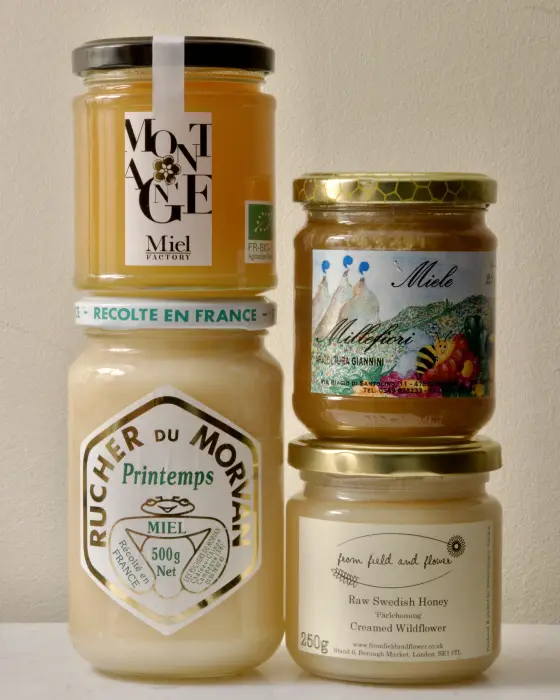
Search results also mix in goldenrod-infused honey. That is a different product: goldenrod flowers steeped in finished honey. Bees did not make it from goldenrod nectar, and nothing in the lab data above applies to it.
Harvest Timing and Winter Stores
In Huang’s 2020 photo log from East Lansing, goldenrod went from first bloom in late August to finished on October 7. Two of the USDA’s goldenrod samples came off the hives on September 28 and October 1. Huang says most beekeepers leave goldenrod honey for the bees to winter on rather than extracting it. Some worry that fast-setting stores are hard for bees to use. Burlew disagrees:
“Since they evolved with crystallized honey, they know precisely how to handle it.”
Goldenrod, Ragweed and Allergies
Educational information, not medical advice. See a doctor or allergist about hay fever.
Goldenrod is the showy plant in bloom, so it takes the blame. NDSU Extension’s Carrie Knutson explains that its pollen is heavy and sticky and unlikely to travel through the air.
“Goldenrod is often blamed for fall allergies, but ragweed is usually the real culprit.”
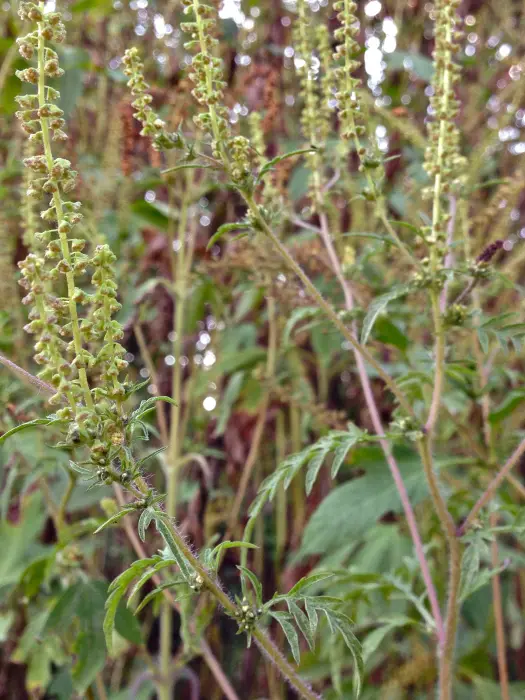
Eating honey is not a proven remedy either. In a 2002 University of Connecticut trial, 36 allergy sufferers took a daily tablespoon of local raw honey, filtered national honey or honey-flavored corn syrup, and neither honey beat the corn syrup. See our review of local honey and allergies.
Frequently Asked Questions
Does goldenrod make good honey?
Yes, if you like a bold fall honey. It is buttery and mildly spicy, and many beekeepers count on the goldenrod flow for winter stores.
Can you eat goldenrod honey?
Yes. It is ordinary honey from goldenrod nectar. The hive smell does not carry into it, and crystals do not mean it has spoiled.
What does goldenrod honey taste like?
Buttery and lightly spicy, stronger than clover honey and sometimes a little bitter.
Is goldenrod honey dark or light?
Pure samples in USDA tests were White to Extra Light Amber. Darker jars usually contain aster or other fall nectar.
Why does goldenrod honey crystallize so fast?
It holds more glucose than average honey, 33.15% versus 31.28% in USDA tests.
Is goldenrod honey good for allergies?
No trial shows it. Fall hay fever is mostly ragweed, and a randomized study found honey worked no better than corn syrup.
Is the goldenrod smell a sign of foulbrood?
Not by itself, but check the brood. Goldenrod leaves brood looking normal; foulbrood shows sunken, greasy or perforated cappings.